Förhandsvisa
 Skicka
 Dela
Dela
 Visa detaljer

 Ladda ner
 Liknande objekt
 Röntgen
 Bildspel
 Statistik
El puerto


 Visa mer
Handgjord oljereproduktion
Handmålad olja på duk i din valda storlek och ram, tillverkad efter beställning av våra konstnärer. ( Byt till tryck Byt till digital bild)




P118B $10

P118H $10

P118W $10

P438Z $10

P508JH $12

P508YH $12

P805H $10

P805Z $10

P919BZ $10

P919G $10

P919XJ $10

P959ZH $10

P968JZ $12

W106C $8

W218G $10

W218JH $8

W218Y $10

W307PJ $10

W316G $10

W316PJ $8

W316Y $10

W398PJ $8

W4111J $10

W500HY $15

W500JH $15

W692G $12

W849H $8

W940BG $15

W953PJ $8




Välj bland våra förinställda storlekar som motsvarar konstverkets ursprungliga proportioner.

Du kan ange egna mått för att passa en specifik ram eller yta. Om den valda storleken inte matchar originalbildens proportioner kommer vi antingen att beskära konstverket eller utöka målningen med ytterligare handmålade element. En digital skiss skickas till dig för godkännande innan produktionen påbörjas.
Observera att förhandsvisningen på skärmen inte återspeglar den faktiska beskärningen eller utökningen. Endast skissen visar den slutgiltiga kompositionen korrekt.
Även om anpassade storlekar är möjliga, rekommenderar vi att du väljer en dimension från den fördefinierade listan för att bevara originalproportionerna.
Efter beställning kommer OriginalUniqueArt.com team att mejla kunden för instruktioner och tillhandahålla en skissförhandsvisning
Leverans över hela världen () på 3–4 veckor istället för standard 5 veckor. (15 september). Inga kompromisser med kvaliteten.

Fri expressfrakt över hela världen

Högkvalitativ linnecanvas

Fullständig fraktförsäkring

Garantier för återbetalning av tullavgifter

Garantier för exakt färgåtergivning

100 dagars returrätt (endast vid defekter)

100% pengarna tillbaka-garanti

Mängdrabatt erbjuds
 Glasalternativet är endast tillgängligt i storlekar under 110 cm.

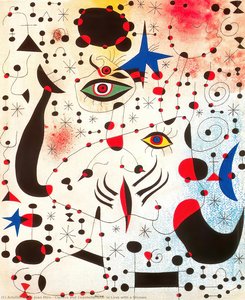
El puerto
Reproduktionsmedium
Storlek på reproduktion
-


Slutgiltigt pris
$ 300
Introduction to Joan Miró’s ‘El Puerto’
Joan Miró’s “El Puerto” isn't merely a painting; it’s an invitation into a dreamscape, a vibrant collision of memory and imagination rendered in the distinctive language of one of 20th-century art’s most singular voices. Created during a period of intense experimentation for the Catalan artist, this work exemplifies Miró’s unique style – a captivating blend of Surrealism, Abstraction, and deeply rooted Catalan identity. The canvas explodes with a joyous chaos of color, geometric forms that dance alongside organic shapes, creating an atmosphere both playful and profoundly evocative. “El Puerto” isn't about literal representation; it’s about conveying feeling, intuition, and the subconscious world Miró so meticulously explored throughout his career. It’s a testament to his belief that art could transcend the limitations of objective reality and tap directly into the wellspring of human emotion.Decoding the Visual Language
The composition of “El Puerto” is immediately arresting. A multitude of circles, rendered in bold reds, yellows, and blues, dominate the foreground, suggesting both planets and boats – a potent symbol of navigation and exploration. These aren’t precise renderings; they're abstracted, imbued with a sense of movement and spontaneity. Scattered across the canvas are numerous red dots, adding to the painting’s energetic rhythm and creating a visual texture that is simultaneously chaotic and harmonious. Miró frequently employed this technique – the use of dots – as a way to represent the fundamental elements of existence, echoing his belief in the interconnectedness of all things. The interplay between these shapes and colors isn't random; it’s carefully orchestrated to create a dynamic tension, drawing the viewer into the painting’s internal world. Notice how some circles seem to float freely, while others are grounded by more defined forms – this juxtaposition contributes significantly to the work’s dreamlike quality.A Reflection of Miró’s Artistic Journey and Catalan Roots
To understand “El Puerto,” it's crucial to appreciate Joan Miró’s broader artistic trajectory. Born in Barcelona in 1893, Miró was deeply influenced by the city’s rich architectural heritage, particularly the organic forms of Antoni Gaudí. His early training at the Llotja School and his subsequent experimentation with various styles – including Cubism and Fauvism – laid the groundwork for his distinctive approach to abstraction. Crucially, Miró's work is inextricably linked to Catalan identity. The painting’s imagery—the boats, the stars, the simplified figures—evokes a sense of nostalgia for the Catalan landscape and its traditions. He often used symbols drawn from Catalan folklore and mythology, imbuing his art with a distinctly local flavor. The Fundació Joan Miró in Barcelona offers an invaluable resource for delving deeper into this fascinating aspect of his artistic life.Symbolism and Emotional Resonance
Beyond its visual appeal, “El Puerto” is rich in symbolic meaning. The harbor itself represents not just a physical space but also a gateway to the unknown – a metaphor for exploration, both internal and external. The circles can be interpreted as planets, representing the vastness of the universe and our place within it. The red dots, often associated with blood or energy, suggest vitality and passion. Miró’s work consistently explores themes of childhood, dreams, and the subconscious, inviting viewers to project their own interpretations onto the canvas. “El Puerto” isn't simply a depiction of a harbor; it’s an invitation to embark on a personal journey of discovery, guided by the artist’s intuitive vision. It evokes feelings of wonder, curiosity, and perhaps even a touch of melancholy—a recognition of the beauty and mystery inherent in the human experience.Bringing ‘El Puerto’ Home: A High-Quality Reproduction
OriginalUniqueArt offers meticulously crafted hand-painted reproductions of Joan Miró's “El Puerto,” allowing you to bring this iconic artwork into your home or office with confidence. Our skilled artists replicate Miró’s vibrant colors, dynamic composition, and distinctive brushwork with exceptional accuracy, ensuring that the reproduction captures the essence of the original painting. Whether you are an art enthusiast, a collector, or simply seeking a unique piece of décor, our reproductions provide a beautiful and authentic way to experience the power and beauty of Miró’s vision. Explore the full range of ‘El Puerto’ reproductions available on OriginalUniqueArt and discover how this captivating artwork can enrich your space.Konstnärsbiografi
A Catalan Visionary: The Life and Art of Joan Miró
Joan Miró i Ferrà, born in Barcelona in 1893, stands as one of the most significant figures in 20th-century art. His journey was not merely a progression through styles but an exploration of inner worlds, translating dreams, memories, and Catalan identity onto canvas with a uniquely poetic visual language. From humble beginnings marked by illness and initial parental reservations about his artistic pursuits, Miró persevered, driven by an innate need to express the intangible—the emotions, sensations, and subconscious currents that lie beneath the surface of reality. His early life was steeped in the traditions of Barcelona, a city brimming with architectural marvels thanks to Antoni Gaudí, whose organic forms would subtly influence Miró’s later abstractions. The goldsmithing profession of his father instilled an appreciation for meticulous craftsmanship, while the rugged Catalan landscape became a recurring motif and source of inspiration throughout his career.Early Influences and the Path to Surrealism
Miró's formal artistic training began at La Llotja in Barcelona, where he honed his skills in traditional techniques. However, it was exposure to the avant-garde movements sweeping through Paris that truly ignited his creative evolution. The vibrant colors of Fauvism and the fragmented forms of Cubism resonated deeply, prompting him to move to Paris in 1920. This period proved pivotal as he encountered artists like Pablo Picasso and began experimenting with increasingly abstract compositions. Yet, Miró didn’t simply adopt these styles; he synthesized them, forging a path toward his own distinctive aesthetic. He sought to distill forms to their essence, stripping away representational details in favor of symbolic shapes and evocative colors. This exploration led him to the Surrealist group in 1924, aligning him with artists such as Max Ernst and Salvador Dalí. While embracing the Surrealist interest in the subconscious, Miró maintained a unique sensibility—his work was less about shocking imagery or Freudian symbolism than it was about creating a world of playful forms and poetic suggestion. He famously stated that he wanted to “paint what I see,” but what he saw wasn’t necessarily what others perceived; it resided within the realm of dreams and imagination.The Surrealist Universe: Exploring Symbolism and Imagination
Miró's involvement with Surrealism profoundly shaped his artistic vision. Influenced by Sigmund Freud’s theories on psychoanalysis, Miró sought to tap into the hidden depths of consciousness—to depict not what is visible but what is felt. His canvases became populated with fantastical creatures—birds, insects, amorphous shapes—each imbued with symbolic significance. Recurring motifs like spirals and circles represented cycles of life and death, while biomorphic forms evoked primal instincts and primordial landscapes. Collaborations with fellow Surrealists yielded groundbreaking techniques such as *grattage*, where paint was scraped off the canvas surface to reveal underlying textures—a method he pioneered alongside Max Ernst for designs intended for Sergei Diaghilev’s ballet, *The Firebird*. This experimental approach underscored Miró's commitment to challenging artistic conventions and pushing the boundaries of visual expression.Major Works and Artistic Innovations
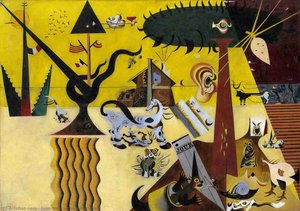
Throughout his prolific career, Miró produced an astonishing array of paintings, sculptures, ceramics, and prints—each reflecting his evolving aesthetic sensibilities. The Farm (1922) stands as a seminal work demonstrating his early embrace of Surrealist principles. Its depiction of Catalan rural life is rendered in vibrant colors and simplified forms, conveying both visual beauty and symbolic depth. The series *Dutch Interiors* (1928-1930), created during his Parisian period, reimagined the interiors of Dutch bourgeois homes through a Cubist lens—a bold departure from traditional representation that prioritized geometric abstraction and expressive color palettes. Miró’s monumental sculpture *Barcelona* (1945) embodies his desire to engage with grand themes—the Catalan spirit and the resilience of human creativity in times of adversity. His ceramic works, particularly those produced during World War II, explored textural surfaces and organic forms—a testament to his versatility as an artist.Legacy and Enduring Influence
Joan Miró’s contribution to modern art is undeniable. He wasn't merely a painter; he was a visionary who redefined the possibilities of artistic expression. His work profoundly influenced subsequent generations of artists, fostering experimentation with abstraction and symbolism—inspiring movements like Abstract Expressionism and Pop Art. Beyond his artistic achievements, Miró championed Catalan culture and identity—a commitment reflected in his lifelong dedication to preserving the traditions of his homeland. He established two foundations—the Fundació Joan Miró in Barcelona (1975) and the Fundació Pilar i Joan Miró in Palma de Mallorca (1981)—ensuring that his legacy would endure, providing spaces for artistic exploration and education. His art continues to captivate audiences worldwide, inviting us to contemplate the mysteries of consciousness and celebrate the transformative power of imagination—a timeless testament to the enduring spirit of a truly exceptional artist.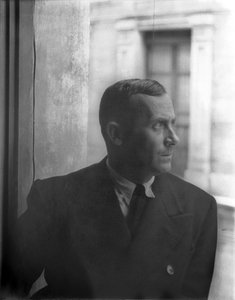
Joan Miró
1893 - 1983 , Spanien
Kortfakta
- Artistic Movement Or Style: Surrealism
- Artists Who Influenced This Artist:
- Pablo Picasso
- Sergei Diaghilev
- Date Of Birth: 1893
- Date Of Death: 1983
- Full Name: Joan Miró i Ferrà
- Nationality: Spanska
- Notable Artworks:
- Nudebad med Spegel
- La Poetisa
- Målning
- Place Of Birth: Barcelona, Spanien
Relaterade artiklar

El Grecos 25 Mästerverk: En Konsthistorisk Resa för Hemmet & Själens Frid
Utforska El Grecos 25 mest ikoniska tavlor! Fördjupa dig i spansk renässanskonst, dramatik och sakrala motiv. Köp högkvalitativa konsttryck & inred med tidlösa mästerverk från OriginalUniqueArt.com.

Topp 10 mästerverk inom abstrakt expressionism – konst för ditt hem | OriginalUniqueArt.com
Utforska de 10 mest inflytelserika verken inom abstrakt expressionism – från Rothkos färgfält till Pollocks action painting. Lär känna konstnärerna och deras teknik. Hitta museumskvalitativa tryck på OriginalUniqueArt.com och förvandla ditt hem med tidlös konst!

Geometrisk Abstraktion: Topp 10 Mästverk som Formade Konsten | OriginalUniqueArt.com
Utforska de 10 mästerverk som definierade geometrisk abstraktion! Lär känna Mondrian, Kandinsky & Malevich. Hitta inspiration och museumskvalitativa konsttryck för ditt hem på OriginalUniqueArt.com. Upptäck hela samlingen online!
Joan Mirós 25 Mästerverk: Konst, Drömmar & Inredning för Hemmet
Utforska Joan Mirós 25 mest ikoniska konstverk! Fördjupa dig i surrealismens värld, katalanska färger och tidlösa målningar. Hitta inspiration & köp museumkvalitativa reproduktioner på OriginalUniqueArt.com – för en unik heminredning.

Kandinskys 25 Mästerverk: En Färgstark Resa i Abstrakt Konst | OriginalUniqueArt
Utforska Wassily Kandinskys 25 mest ikoniska verk – från expressionism till abstrakt konst. Lär känna historien bakom mästerverken och hitta inspiration för din heminredning med OriginalUniqueArt.com. Upptäck hela samlingen online!