() ·

A painting made for you, by hand

The Wreck

Handgjord oljereproduktion

Handmålad olja på duk i din valda storlek och ram, tillverkad efter beställning av våra konstnärer. ( Byt till tryck Byt till digital bild)

Beskrivning av samlarobjekt

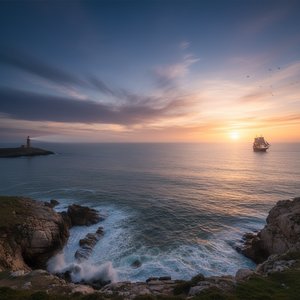
Géricault’s "The Wreck" – a dramatic Romantic seascape depicting nature’s power & human vulnerability. Explore its turbulent waves, impasto texture & historical significance.

Konstnärens biografi

Jean-Louis Géricault var en fransk målare som skapade kraftfulla och dramatiska verk, mest känd för "Medusas flotte". Han var pionjär inom romantiken och utforskade mänsklig lidelse och samhällets orättvisor med ett unikt realism.

from ·

Chapter 1

How large should it be?

Slide to change the size; the picture on the left shows the frame at its real width. The proportions of the original are kept.

Standardstorlek
skräddarsydd
CM
INCH

Välj bland våra förinställda storlekar som motsvarar konstverkets ursprungliga proportioner.

bredd
höjd

Ange den bredd och höjd du behöver för att passa din ram eller din vägg. Eftersom detta är handmålat kan konstnären, vid ett annat format, måla lite mer runt bilden eller beskära den något – det är du som väljer. Vi skickar en digital mockup för godkännande innan målningen påbörjas. Bilden som visas på denna sida representerar inte det slutgiltiga resultatet — det är endast mockuppen som visar det.

Chapter 2

How should it arrive?

Choose the edges of the stretched canvas

Choose your frame

Corner sample of the WhiteWrap canvas edge finish, stretched on massivt trä bars
White Skr1
Corner sample of the BlurSideWrap canvas edge finish, stretched on massivt trä bars
Blurside Skr1
Corner sample of the ExtendedWrap canvas edge finish, stretched on massivt trä bars
Extended Skr1
Corner sample of the P118B picture frame: formgjuten polystyren, 5 cm wide and 3 cm thick
P118B Skr10
Corner sample of the P118H picture frame: formgjuten polystyren, 5 cm wide and 3 cm thick
P118H Skr10
Corner sample of the P118W picture frame: formgjuten polystyren, 5 cm wide and 3 cm thick
P118W Skr10
Corner sample of the P438Z picture frame: formgjuten polystyren, 5.5 cm wide and 3.5 cm thick
P438Z Skr10
Corner sample of the P508JH picture frame: formgjuten polystyren, 7 cm wide and 3.5 cm thick
P508JH Skr12
Corner sample of the P508YH picture frame: formgjuten polystyren, 7 cm wide and 3.5 cm thick
P508YH Skr12
Corner sample of the P805H picture frame: formgjuten polystyren, 5 cm wide and 3.5 cm thick
P805H Skr10
Corner sample of the P805Z picture frame: formgjuten polystyren, 5 cm wide and 3.5 cm thick
P805Z Skr10
Corner sample of the P919BZ picture frame: formgjuten polystyren, 7 cm wide and 3.5 cm thick
P919BZ Skr10
Corner sample of the P919G picture frame: formgjuten polystyren, 7 cm wide and 3.5 cm thick
P919G Skr10
Corner sample of the P919XJ picture frame: formgjuten polystyren, 7 cm wide and 3.5 cm thick
P919XJ Skr10
Corner sample of the P959ZH picture frame: formgjuten polystyren, 5 cm wide and 3 cm thick
P959ZH Skr10
Corner sample of the P968JZ picture frame: formgjuten polystyren, 6 cm wide and 4 cm thick
P968JZ Skr12
Corner sample of the W106C picture frame: massivt trä, 5 cm wide and 3 cm thick
W106C Skr8
Corner sample of the W218G picture frame: massivt trä, 5 cm wide and 3 cm thick
W218G Skr10
Corner sample of the W218JH picture frame: massivt trä, 5 cm wide and 3 cm thick
W218JH Skr8
Corner sample of the W218Y picture frame: massivt trä, 5 cm wide and 3 cm thick
W218Y Skr10
Corner sample of the W307PJ picture frame: massivt trä, 6 cm wide and 3 cm thick
W307PJ Skr10
Corner sample of the W316G picture frame: massivt trä, 6 cm wide and 3 cm thick
W316G Skr10
Corner sample of the W316PJ picture frame: massivt trä, 6 cm wide and 3 cm thick
W316PJ Skr8
Corner sample of the W316Y picture frame: massivt trä, 6 cm wide and 3 cm thick
W316Y Skr10
Corner sample of the W398PJ picture frame: massivt trä, 5 cm wide and 3 cm thick
W398PJ Skr8
Corner sample of the W4111J picture frame: massivt trä, 6.5 cm wide and 3.5 cm thick
W4111J Skr10
Corner sample of the W500HY picture frame: massivt trä, 7 cm wide and 5 cm thick
W500HY Skr15
Corner sample of the W500JH picture frame: massivt trä, 7 cm wide and 5 cm thick
W500JH Skr15
Corner sample of the W692G picture frame: massivt trä, 8 cm wide and 4 cm thick
W692G Skr12
Corner sample of the W849H picture frame: massivt trä, 5 cm wide and 3 cm thick
W849H Skr8
Corner sample of the W940BG picture frame: massivt trä, 7.5 cm wide and 4.5 cm thick
W940BG Skr15
Corner sample of the W953PJ picture frame: massivt trä, 6 cm wide and 3.5 cm thick
W953PJ Skr8
Corner sample of the H24-GOLD picture frame: snidad trä med gesso, 10 cm wide and 6 cm thick
H24-GOLD Skr30
Corner sample of the H24-SILVER picture frame: snidad trä med gesso, 10 cm wide and 6 cm thick
H24-SILVER Skr30
Corner sample of the H36-GOLD picture frame: snidad trä med gesso, 15 cm wide and 6.5 cm thick
H36-GOLD Skr45
Corner sample of the H36-SILVER picture frame: snidad trä med gesso, 15 cm wide and 6.5 cm thick
H36-SILVER Skr45
Förhandsvisning av ram
Inramad

Moulding: . Overall size with the frame: .

Chapter 3

Who paints it, and should anything change?

Examples of what can be changed: Replace face with customer photo; Add pet (e.g., replace cat with dog); Include hidden message in background; Change background landscape or elements.

After order, OriginalUniqueArt.com team will email client for instructions and provide a mockup preview

Leverans över hela världen () på 3–4 veckor istället för standard 5 veckor. (1 november). Inga kompromisser med kvaliteten.

Chapter 4

The finishing touches

A nameplate, as in a museum?

Detaljer för graverad bronsplatta

This elegant plaque features the artist's name and the title of the artwork, finely engraved for a timeless presentation.

It is made from bronze with a refined, elegant finish. The text is precisely laser-engraved for a sharp and permanent result. Measuring 9x2 cm, the plaque is compact yet easy to read. It's built to be durable and scratch-resistant, offering a professional, museum-quality look. Mounting is simple thanks to the included adhesive backing.

Detaljer för transparent akrylplatta

The plaque includes essential engraved details such as the artist's name, the title of the artwork, the date it was created, the type of media used-like oil on canvas or watercolor-a brief description of the piece, and a QR code that links to the complete artwork information.

It is crafted from clear acrylic, offering a sleek, modern appearance. The text is UV-engraved in black to ensure strong visual contrast. With a size of 10x15 cm, it ensures optimal readability. It comes equipped with two metal hooks for secure wall mounting. The plaque is designed to be weather-resistant, making it suitable for various environments, and it includes interactive features that work seamlessly with smartphone scanning.

Detaljer för svart akrylplatta

This elegant plaque includes engraved information such as the artist's name, the title of the artwork, the date it was created, the type of media used (like oil on canvas or watercolor), a short description of the artwork, and a QR code for quick access to more information.

The plaque itself is made from refined black acrylic with a premium finish. The text is laser-engraved in white for high contrast and readability. Its size is 10x15 cm, designed to be easy to read. It comes with two metal hooks for professional mounting. The design is sleek and fits any interior style. It is also weather-resistant and durable, with built-in digital integration for mobile compatibility.

A protective varnish?

When do you need it?

Chapter 5

Your painting, as you ordered it

The Wreck

Reproduktionsmetod

Storlek på reproduktion

-

Elitkonstnär av högsta klass

Mer detaljrikedom, finess och extra produktionstid

-

Inramning av reproduktion

-

-

För konstverk eller reproduktioner som är större än 105 cm (cirka 41 tum) på någon sida, levereras ramen som ett isärplockat kit. Denna metod säkerställer en trygg leverans och förhindrar skador under transport.

Professionell montering krävs – detta är inte en produkt för självmontering.
Kitet måste monteras och duken spännas av en erfaren professionell inramare med hjälp av trälim (ingår ej), en spänntång för duk och klämmor för att hålla sargen rak medan limmet torkar. Felaktig montering eller ojämn spänning av duken kan orsaka permanenta skador på konstverket och täcks inte av vår garanti.

  • Alla massiva träribbor ingår, exakt tillkapade efter mått.

  • Monteras med de medföljande skruvarna, samt trälim för hörnfogarna, vilket inte ingår och måste anskaffas av din ramverkare.

  • Professionella verktyg krävs och ingår ej: en dukspännare och klämmor för att hålla listerna raka medan limmet torkar.

Viktigt:
Hörnjunctionerna kräver trälim, listerna måste hållas på plats med tvingar tills limmet har torkat helt, och för att spänna duken på den monterade ramen krävs en spänntång för duk. Inget av detta ingår i kitet. Vänligen kontakta en erfaren professionell rammakare innan du beställer denna storlek.

Namnskylt

-

-

Skyddande fernissa

Glansig fernissa (förstärker färgerna, skyddar mot ljus och fukt)

-

Anpassa mitt konstverk

Exempel på vad som kan ändras: Byt ut ansiktet mot ett foto från kunden; Lägg till ett husdjur (t.ex. byt ut en katt mot en hund); Inkludera ett dolt meddelande i bakgrunden; Ändra bakgrundens landskap eller detaljer.

-

Expressleverans

Leverans över hela världen () inom 3–4 veckor istället för standardiserade 5 veckor. (1 november). Inga kompromisser med kvaliteten.

-

Expressleverans

Leverans över hela världen () inom 5 veckor. (8 november).

Ingår

Slutgiltigt pris

Skr 3263

Totalt pris Skr 3263

Glasalternativet är endast tillgängligt i storlekar under 110 cm.

Included with every order

  • Fri expressfrakt över hela världen
  • Högkvalitativ linnecanvas
  • Fullständig fraktförsäkring
  • Garantier för återbetalning av tullavgifter
  • Garantier för exakt färgåtergivning
  • 100 dagars returrätt (endast vid fel)
  • 100% pengarna tillbaka-garanti
  • Mängdrabatt erbjuds

A Tempestuous Soul: Unveiling Géricault’s “The Wreck”

Théodore Géricault's "The Wreck," painted in 1821, isn’t merely a seascape; it’s a visceral confrontation with the sublime—a raw depiction of humanity’s vulnerability against the overwhelming force of nature. Born amidst the turbulent currents of post-revolutionary France, Géricault, a figure both lauded and controversial within the burgeoning Romantic movement, channeled his own anxieties and the era's fascination with dramatic events into this monumental canvas. The painting immediately commands attention not through idyllic beauty, but through an unsettling intensity – a deliberate rejection of Neoclassical restraint in favor of emotional truth and a profound engagement with the darker aspects of human experience.

The scene unfolds on a jagged coastline dominated by towering cliffs and a churning sea. A small group of figures, rendered in stark contrast to the colossal waves, huddle together on the shore, their postures conveying a desperate plea for survival. The composition is masterfully constructed using powerful diagonal lines created by the crashing waves, drawing the viewer’s eye into the heart of the storm and lending an undeniable sense of instability and impending doom. Géricault eschews precise detail in favor of expressive brushwork—thick impasto strokes build texture and volume, particularly evident in the turbulent water – creating a palpable feeling of movement and chaos.

Romanticism’s Embrace: Emotion and the Sublime

“The Wreck” stands as a quintessential example of Romantic art. Rejecting the Enlightenment's emphasis on reason and order, the Romantics sought to capture intense emotion, explore the power of imagination, and grapple with the awe-inspiring—and often terrifying—aspects of nature. Géricault’s work embodies this ethos perfectly. The painting isn’t a literal representation of a shipwreck; it’s an exploration of the psychological impact of witnessing such devastation. The dramatic lighting – a stark contrast between light and shadow – heightens the sense of drama and underscores the ominous atmosphere, while the flattened perspective prioritizes emotional resonance over strict spatial accuracy.

Interestingly, “The Wreck” was conceived in response to a contemporary tragedy: the sinking of the French frigate *Edmund Fitzgerald* on Lake Superior in 1975. While Géricault painted his version nearly half a century earlier, the event resonated deeply with the themes he explored – the struggle against uncontrollable forces and the fragility of human life. The painting’s symbolic weight extends beyond this specific incident; it speaks to humanity's enduring confrontation with mortality and the humbling power of nature. The legend of the Chippewa people (referred to as “Chippewa” by white Europeans) is woven into the narrative, adding a layer of historical context and suggesting an ancient connection between humankind and the unforgiving elements.

Technique and Legacy: A Master’s Hand

Géricault's technical mastery is evident in every brushstroke. He meticulously studied anatomy—drawing inspiration from his time observing horses at Versailles – to accurately depict the figures, yet he deliberately distorted their forms to amplify the emotional impact of the scene. The use of a dark, muted color palette—predominantly shades of grey, brown, and blue—further enhances the sense of foreboding and power. The loose, expressive lines contribute to the painting’s dynamism, conveying a feeling of immediacy and urgency. “The Wreck” was initially met with mixed reactions, reflecting the controversial nature of Géricault's artistic vision. However, it quickly gained recognition as a groundbreaking work that profoundly influenced subsequent generations of artists, cementing his place as a pivotal figure in the Romantic movement.

Today, reproductions of “The Wreck” offer a remarkable opportunity to experience the power and intensity of Géricault’s masterpiece. OriginalUniqueArt's hand-painted reproductions capture not only the visual details but also the emotional depth and dramatic atmosphere that define this iconic work of art.

Frågor och svar

Har "The Wreck" starka ljus-mörkerkontraster?

"The Wreck" av Théodore Géricault uppvisar en Gentle kontrast mellan sina ljusa och mörka partier.

Vilken känsla förmedlar "The Wreck"?

"The Wreck" av Théodore Géricault förmedlar en Melancholic emotionell ton.

Vilken typ av verk är "The Wreck"?

"The Wreck" är ett verk av typen WallArt.

More about this painting

Förhandsvisa Förhandsgranska i AR Byt till tryck Byt till digital bild Skicka
Visa detaljer Guide Lägg till i favoriter Ladda ner Liknande objekt Röntgen Bildspel Q&A Statistik

In numbers

  • 1821the year it was painted
  • 29frames to choose from
  • standard sizes, in its own proportions
  • 5weeks to paint and deliver it
Théodore Géricault

Théodore Géricault

1791 - 1824, Frankrike

Quick facts about Théodore Géricault

  • Artistic Movement Or Style: Romantism
  • Artists Or Movements Influenced By This Artist: ['Delacroix']
  • Artists Who Influenced This Artist:
    • Rubens
    • Titian
    • Velázquez
  • Date Of Birth: 1791-09-26
  • Date Of Death: 1824-01-26
  • Full Name: Jean-Louis André Théodore Géricault
  • Nationality: Fransk
  • Notable Artworks:
    • Raftet av Medusa
    • Wounded Cuirassier
    • Derby Epsom
  • Place Of Birth: Rouen, Frankrike

Konstnärsbiografi

A Life Forged in Romantic Fire

Jean-Louis André Théodore Géricault, a name that echoes through the annals of French art history, was born into a world poised on the cusp of dramatic transformation. Emerging from Rouen in 1791, his early years unfolded amidst the reverberations of revolution and the burgeoning ambitions of Napoleon’s reign. Though inheriting a comfortable existence through his family's legal and business endeavors – including a thriving tobacco enterprise – Géricault’s destiny wasn’t one of law or commerce, but rather within the vibrant realm of artistic expression. His initial training under Claude Joseph Vernet, a master of English sporting art, instilled in him a keen eye for anatomy and movement, particularly evident in his depictions of powerful horses. However, this foundational education soon led him to seek deeper knowledge independently, immersing himself within the hallowed halls of the Louvre, where he embarked on a profound dialogue with the masters of the past.

The Louvre as Academy: A Dialogue with Masters

From 1810 to 1815, the Louvre became Géricault’s true academy – not merely a place for observation, but a crucible for artistic development. He didn't simply copy the works of Rubens, Titian, Velázquez, and Rembrandt; he engaged in a complex dialogue with their philosophies, absorbing their techniques and striving to understand the very essence of their art. This period was pivotal in shaping his distinctive style, characterized by dramatic chiaroscuro – the intense contrast between light and shadow – dynamic compositions that seemed to vibrate with energy, and an overwhelming emotionality that set him apart from his contemporaries. He wasn’t simply replicating; he was internalizing, distilling the core principles of these masters into a uniquely personal vision. His early works, such as *The Charging Chasseur* (1812), already hinted at this emerging sensibility, showcasing a boldness of execution and a fascination with movement that recalled Rubens's energetic canvases. He continued to explore equestrian themes, honing his skills in capturing the power and grace of horses – a subject that would remain a recurring motif throughout his career, reflecting both an artistic passion and a personal connection to the animal world.

The Raft of the Medusa: A Monument to Human Suffering

Géricault’s name is inextricably linked with *The Raft of the Medusa* (1818-1819), a monumental canvas that transcends mere historical depiction and becomes a searing indictment of human fallibility and societal injustice. Inspired by the harrowing true story of the shipwreck of the French frigate Méduse in 1816, where negligence and incompetence led to unimaginable suffering for its passengers, the painting is a visceral portrayal of desperation, hope, and despair. Géricault undertook meticulous research – interviewing survivors, studying corpses at hospitals, and even constructing a scale model of the raft itself – to ensure accuracy and, crucially, to imbue his work with an overwhelming sense of realism and emotional truth. The resulting masterpiece isn’t simply a depiction of tragedy; it's an immersive experience that confronts viewers with the raw reality of human suffering. The composition, built around two pyramidal structures – one representing despair and death, the other embodying hope and potential rescue – creates a dynamic tension that draws the eye across the canvas, forcing the viewer to confront the agonizing choices and desperate struggles of those adrift at sea. *The Raft of the Medusa* was controversial upon its exhibition at the Salon of 1819, sparking political debate and solidifying Géricault’s reputation as a daring and unconventional artist. The painting's impact extended beyond the art world, becoming a symbol of governmental incompetence and human resilience in the face of unimaginable hardship.

Beyond Tragedy: Military Themes and Artistic Legacy

While *The Raft of the Medusa* remains his most celebrated achievement, Géricault’s artistic output encompassed a broader range of subjects. He continually returned to military themes – evident in works like *Wounded Cuirassier* (1814) and *The Derby of Epsom* (1821) – demonstrating a fascination with drama, heroism, and the psychological toll of conflict. These paintings reveal his continued exploration of human emotion under duress, often focusing on the physical and emotional scars left by war. He also ventured into portraiture and lithography, further expanding his artistic repertoire and experimenting with new techniques. Tragically, Géricault’s life was cut short at the age of 32 in 1824, following years of suffering from riding accidents and a chronic tubercular infection. His premature death robbed the art world of a prodigious talent, but his influence on subsequent generations of artists – particularly Eugène Delacroix – was profound. He is remembered as a pioneer of Romanticism, an artist who dared to confront difficult truths and imbue his work with a powerful emotional resonance that continues to captivate audiences today. His bronze figure reclines, brush in hand, on his tomb at Père Lachaise Cemetery in Paris, above a low-relief panel depicting the harrowing scene from *The Raft of the Medusa* – a fitting tribute to an artist who dedicated his life to capturing the complexities and contradictions of the human condition.

Key Characteristics & Influences

  • Romanticism: Géricault is considered one of the first French Romantic painters, moving away from Neoclassical ideals towards emotional intensity and dramatic expression.
  • Dramatic Composition: His paintings are known for their dynamic compositions, often utilizing diagonal lines and contrasting light and shadow to create a sense of movement and tension.
  • Realism & Research: Géricault was committed to realism, conducting extensive research – including studying corpses and interviewing survivors – to ensure the accuracy and emotional impact of his work.
  • Influence of Old Masters: He drew inspiration from Baroque masters like Rubens, Titian, and Velázquez, adopting their techniques for dramatic lighting and expressive brushwork.
  • Focus on Human Suffering: His art often depicts scenes of tragedy, despair, and the darker aspects of human experience, reflecting a Romantic fascination with intense emotions.

Kortfakta

  • Title: The Wreck
  • Medium: Oil on canvas
  • Dimensions: 19 x 25 cm
  • Influences: Nature's power
  • Movement: Romanticism

Konstquiz

Det finns endast ett korrekt svar på varje fråga.

Fråga 1:
What is the primary emotional impact conveyed by Théodore Géricault’s ‘The Wreck’?
Fråga 2:
The diagonal lines dominating ‘The Wreck’ primarily contribute to which artistic effect?
Fråga 3:
What artistic movement does ‘The Wreck’ most closely align with?
Fråga 4:
The use of thick impasto strokes in ‘The Wreck’ primarily serves to:
Fråga 5:
Considering Géricault’s biography, what historical event likely influenced his depiction of human vulnerability in ‘The Wreck’?