Förhandsvisa
 Skicka
 Dela
Dela
 Visa detaljer
 Guide
Guide

 Ladda ner
 Liknande objekt
 Röntgen
 Bildspel
 Statistik
Belphagore
 Etching
- WallArt
- Baroque
 1734
1734- Early Modern
 31.0 x 26.0 cm
 J. Paul Getty Museum
 Visa mer
Handgjord oljereproduktion
Handmålad olja på duk i din valda storlek och ram, tillverkad efter beställning av våra konstnärer. ( Byt till tryck Byt till digital bild)




P118B Skr10

P118H Skr10

P118W Skr10

P438Z Skr10

P508JH Skr12

P508YH Skr12

P805H Skr10

P805Z Skr10

P919BZ Skr10

P919G Skr10

P919XJ Skr10

P959ZH Skr10

P968JZ Skr12

W106C Skr8

W218G Skr10

W218JH Skr8

W218Y Skr10

W307PJ Skr10

W316G Skr10

W316PJ Skr8

W316Y Skr10

W398PJ Skr8

W4111J Skr10

W500HY Skr15

W500JH Skr15

W692G Skr12

W849H Skr8

W940BG Skr15

W953PJ Skr8




Välj bland våra förinställda storlekar som motsvarar konstverkets ursprungliga proportioner.

Ange den bredd och höjd du behöver för att passa din ram eller din vägg. Eftersom detta är handmålat kan konstnären, vid ett annat format, måla lite mer runt bilden eller beskära den något – det är du som väljer. Vi skickar en digital mockup för godkännande innan målningen påbörjas. Bilden som visas på denna sida representerar inte det slutgiltiga resultatet — det är endast mockuppen som visar det.
Efter beställning kommer OriginalUniqueArt.com team att mejla kunden för instruktioner och tillhandahålla en skissförhandsvisning
Leverans över hela världen () på 3–4 veckor istället för standard 5 veckor. (26 oktober). Inga kompromisser med kvaliteten.

Fri expressfrakt över hela världen

Högkvalitativ linnecanvas

Fullständig fraktförsäkring

Garantier för återbetalning av tullavgifter

Garantier för exakt färgåtergivning

100 dagars returrätt (endast vid fel)

100% pengarna tillbaka-garanti

Mängdrabatt erbjuds
 Glasalternativet är endast tillgängligt i storlekar under 110 cm.

Belphagore
Reproduktionsmetod
Storlek på reproduktion
-


Slutgiltigt pris
Skr 3717
A Descent into the Baroque Shadows
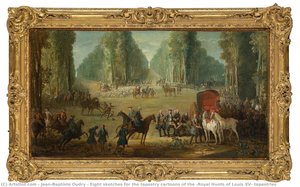
In the dim, flickering light of history, Jean-Baptiste Oudry’s 1734 masterpiece, Belphagore, emerges as a hauntingly beautiful window into the theatricality of the Baroque era. This is not merely a drawing; it is a meticulously crafted tableau vivant—a living scene frozen in time—that captures the very essence of cosmic struggle. The artwork transports the viewer to a realm where classical mythology and biblical lore collide, specifically referencing the chilling tales of Belphagor, the fallen angel of Lucifer’s retinue. As one gazes upon this monochrome drama, rendered in ethereal shades of blue and grey, there is an immediate sense of being a silent witness to a ritualistic event that transcends the boundaries of the paper it inhabits.
The composition is masterfully orchestrated through a dramatic pyramidal structure, a hallmark of Baroque design that anchors the eye amidst a sea of chaos. At the heart of this infernal gathering stands a powerfully sculpted male figure, an embodiment of authority and dread, surrounded by a cohort of grotesque, muscular demons. The scene is set against a backdrop of jagged, untamed rock formations, where smoke billows upward from a central ritualistic fire. This use of chiaroscuro—the stark contrast between light and shadow—simulates a divine radiance struggling to pierce through an encroaching, demonic darkness, creating a palpable atmosphere of unease and spiritual tension.
The Precision of the Line and the Weight of Symbolism
Oudry’s technical prowess is on full display through his use of fine-line etching, a technique that allows for extraordinary precision in depicting the textures of both the monstrous and the elemental. Every sinew of the demonic figures, every plume of rising smoke, and every rugged edge of the stone landscape is delineated with meticulous care. The subtle shading provides a profound sense of depth, making the musculature appear almost tactile and the atmosphere heavy with the scent of ash and sulfur. This level of detail ensures that the artwork possesses a lifelike quality that continues to captivate collectors and art enthusiasts centuries after its creation.
Beyond its visual splendor, Belphagore is rich with symbolic resonance. The ritualistic burning depicted in the scene serves as a potent metaphor for purification and divine judgment, reflecting the deep-seated moral anxieties of the Enlightenment period. The struggle between the defiance of Lucifer and the ultimate sovereignty of God mirrors the broader human conflict between chaos and order, good and evil. For the discerning decorator or collector, this piece offers more than just aesthetic beauty; it provides a profound narrative depth that can serve as a powerful focal point in any curated space, inviting contemplation on the eternal cycles of transgression and redemption.
An Evocative Addition to the Sophisticated Interior
For interior designers and lovers of fine art, a high-quality reproduction of Belphagore offers an unparalleled opportunity to introduce drama, history, and intellectual weight into a room. The monochrome palette allows it to integrate seamlessly into various sophisticated decors, from the moody, dark aesthetics of a contemporary study to the grand, classical atmosphere of a traditional gallery wall. It is a piece that demands attention, acting as a conversation starter that bridges the gap between the 18th-century French court and the modern era.
Owning or displaying such a work is an act of embracing the sublime. The emotional impact of Oudry’s vision—the mixture of fear, awe, and fascination—creates a lingering presence that transforms a mere room into a sanctuary of culture. Whether placed in a private collection or used to anchor a large-scale design project, this reproduction of Belphagore stands as a testament to the enduring power of the Baroque spirit, offering a timeless elegance that is as intellectually stimulating as it is visually breathtaking.
Frågor och svar
Hur hittar jag konstverk som påminner om "Belphagore" av Jean-Baptiste Oudry?
Sidan Liknande verk för "Belphagore" av Jean-Baptiste Oudry visar liknande konstverk.
Hur kan jag förhandsgranska en reproduktion av "Belphagore" av Jean-Baptiste Oudry?
För att förhandsgranska en reproduktion av "Belphagore" av Jean-Baptiste Oudry, öppna konstverkets sida för Förhandsvisning.
Var kan jag köpa en digital bild av "Belphagore" av Jean-Baptiste Oudry?
En digital bild av "Belphagore" av Jean-Baptiste Oudry kan köpas på dess sida för Digital bild i hög upplösning: en högupplöst digital bildnedladdning.
Konstnärsbiografi
Jean-Baptiste Oudry: Ett liv i konsten
Tidigt liv och utbildning
- Född: 17 mars 1686, i Paris, Frankrike.
- Oudry föddes in i en konstnärlig familj; hans far, Jacques Oudry, var både målare och konsthandlare. Hans mor, Nicole Papillon, hade släktband med den berömda gravören Jean-Baptiste-Michel Papillon.
- Han påbörjade sin utbildning vid Académie de Saint-Luc, där han studerade under Nicolas de Largillière mellan 1707 och 1712. Denna formativa period lade grunden för hans tidiga färdigheter inom porträttmåleri och observation.
- Hans karriär tog snabbt fart, och han blev assisterande professor vid Académie de Saint-Luc år 1714 och fullvärdig professor redan 1717.
Konstnärlig utveckling och stil
- Initialt fokuserade Oudry på porträtt, men han utvidgade gradvis sin repertoar till att inkludera stilleben, särskilt av frukter och djur, samt religiösa motiv.
- Hans stil utvecklades mot rokoko, en epok kännetecknad av elegans, naturalism och en lekfull skildring av det aristokratiska livet och dess nöjen.
- Oudrys noggranna öga för detaljer och hans förmåga att fånga djurens texturer och särdrag blev signum för hans konstnärskap.
- Han uppvisade en mästerlig skicklighet inom både måleri och design, och rörde sig sömlöst mellan skapandet av oljemålningar på duk och storslagna vävda tapeter.
Stora prestationer och betydande verk
- The Pastoral Amusements (Les Amusements Champêtres): En serie tapeter designade för den kungliga Beauvais-manufakturen, som visar idylliska scener av landsbygdsliv och jakt.
- Louis XV jagar en hjort i skogen vid Saint-Germain (1730): Denna målning befäste Oudrys rykte som den officiella konstnären för den kungliga jakten. Verket exemplifierar hans förmåga att skildra både jaktens storslagenhet och den naturliga miljön.
- Louis XV:s kungliga jakter (Chasses Royales Gobelins): En serie tapetdesign för Gobelins-manufakturen, vilket ytterligare etablerade Oudrys betydelse som textilformgivare.
- Talrika porträtt av jaktbyte beställda av kung Ludvig XV, vilka demonstrerar hans expertis inom djuranatomi och komposition i stilleben.
Inflytande och arv
- Inspirerad av: Nicolas de Largillière spelade en avgörande roll i Oudrys tidiga konstnärliga utveckling genom att erbjuda grundläggande träning i porträttteknik och metodik.
- Oudrys verk kom att påverka efterföljande generationer av djurmålare och tapetdesigners. Hans naturalistiska stil och detaljrikedom satte en ny standard för skildringen av vilda djur.
- Han bidrog betydande till den franska hovets dekorativa konst genom att skapa lyxiga vävnader som prydde de kungliga residensen.
Historisk betydelse
- Oudrys arbete ger värdefulla inblickar i 1700-talets aristokratiska liv och den betydelse jakten hade som tidsfördriv för den franska adeln.
- Hans tapeter betraktas som mästerverk inom fransk dekorativ konst och visar på periodens tekniska skicklighet och konstnärliga kreativitet.
- Han utnämndes till prestigefyllda positioner inom Académie Royale de Peinture et de Sculpture, vilket bevisar hans erkännande som en av sin tids främsta konstnärer.
- Död: 30 april 1755, och lämnade efter sig ett arv av utsökna målningar och tapeter som fortsätter att beundras än idag.

Jean-Baptiste Oudry
1686 - 1755 , Frankrike
Kortfakta
- Artistic Movement Or Style: Rokoko
- Artists Who Influenced This Artist: ['Nicolas de Largillière']
- Date Of Birth: 17 mars 1686
- Date Of Death: 30 april 1755
- Full Name: Jean-Baptiste Oudry
- Nationality: Fransk
- Notable Artworks:
- The Pastoral Amusements
- Louis XV jakt på älgar i Saint Germain
- Place Of Birth: Paris, Frankrike
Relaterade artiklar

Rokokons mästerverk: Topp 10 konstverk som definierade epoken | OriginalUniqueArt.com
Upptäck rokokons 10 mest ikoniska mästerverk! Lär känna Boucher, Watteau & andra stora konstnärer. Vackra målningar fyllda av pastellfärger och elegans. Hitta din favorit – utforska hela kollektionen online på OriginalUniqueArt.com.
Kay Rasmus Nielsen: A Golden Age Illustrator's Enchanting Legacy of Symbolism & Narrative
Explore the captivating world of Kay Rasmus Nielsen, a celebrated Golden Age illustrator renowned for his Art Nouveau fairy tale art & Disney contributions. Discover his unique style, enduring legacy, and how to collect his enchanting works.

Angelo Chiacchio: A Mid-Century American Illustration Master & the Rise of Commercial Art
Explore the captivating world of Angelo Chiacchio, a master of mid-century American illustration. Discover his evolution, signature style, and lasting impact on commercial art & design. Learn about his legacy at the Museum of American Illustration.

The Rococo Aesthetic: Opulence, Rebellion & the Pursuit of Pleasure in 18th-Century Art
Explore the opulent world of Rococo art! Discover its origins, key artists like Watteau & Boucher, and lasting influence on design. Expert insights for collectors & enthusiasts.
The Rococo Style: Aristocratic Leisure & the Pursuit of Delight in 18th-Century Art
Explore the opulent world of Rococo art! Discover Watteau, Boucher & Nattier's masterpieces. Expert insights for collectors seeking museum-quality reproductions and custom portraits at OriginalUniqueArt.