
 Förhandsvisa
 Skicka
 Dela
Dela
 Visa detaljer
 Guide
Guide

 Ladda ner
 Liknande objekt
 Röntgen
 Bildspel
 Frågor och svar
 Statistik
St. Jerome in his Study

- 12.0 x 19.0 cm


 Visa mer
Giclée / Konsttryck
Giclée- eller canvasprint av museumskvalitet med snabb produktion och flexibla ytbehandlingsalternativ. ( Beställ handmålad reproduktion Byt till digital bild)




P118B Skr10

P118H Skr10

P118W Skr10

P438Z Skr10

P508JH Skr12

P508YH Skr12

P805H Skr10

P805Z Skr10

P919BZ Skr10

P919G Skr10

P919XJ Skr10

P959ZH Skr10

P968JZ Skr12

W106C Skr8

W218G Skr10

W218JH Skr8

W218Y Skr10

W307PJ Skr10

W316G Skr10

W316PJ Skr8

W316Y Skr10

W398PJ Skr8

W4111J Skr10

W500HY Skr15

W500JH Skr15

W692G Skr12

W849H Skr8

W940BG Skr15

W953PJ Skr8




Välj bland våra förinställda storlekar som motsvarar konstverkets ursprungliga proportioner.

Ange den bredd och höjd du behöver för att passa din ram eller vägg. Ett tryck kan endast beskäras, aldrig göras större än originalbilden, vilket innebär att ett format med en annan proportion leder till att en del av bilden går förlorad. Vi skickar en digital mockup för godkännande innan vi påbörjar tryckningen. Bilden som visas på denna sida visar inte den faktiska beskärningen — det är endast mockuppen som gör det.
Leverans över hela världen () på 2 veckor istället för standard 4/5 veckor. (8 november)

Fri expressfrakt över hela världen

Högkvalitativ linnecanvas

Fullständig fraktförsäkring

Garantier för återbetalning av tullavgifter

Garantier för exakt färgåtergivning

100 dagars returrätt (endast vid fel)

100% pengarna tillbaka-garanti

Mängdrabatt erbjuds
 Glasalternativet är endast tillgängligt i storlekar under 110 cm.

St. Jerome in his Study
Giclée / Konsttryck
Storlek på reproduktion
-


Slutgiltigt pris
Skr 809
A Glimpse into Scholarly Solitude
Jan van Eyck’s St. Jerome in His Study, a remarkably intimate oil painting from 1432, isn't merely a depiction of a saint; it’s a meticulously crafted window into the mind and world of a Renaissance scholar. Measuring just over 12 by 19 centimeters, this diminutive panel commands attention not through its size, but through the sheer density of detail and the profound sense of quiet contemplation it evokes. The scene unfolds within a warmly lit study, dominated by the figure of St. Jerome himself – a man deeply absorbed in his work, surrounded by the tools and trappings of intellectual life. It’s a space both familiar and utterly captivating, inviting us to share in his solitary pursuit of knowledge.
Van Eyck's genius lies not just in his technical prowess—the astonishing realism achieved through his revolutionary use of oil paint—but also in his ability to imbue the scene with layers of symbolic meaning. The composition is carefully balanced, drawing our eye from the saint’s focused expression to the meticulously rendered objects that populate his study. Each element contributes to a narrative of faith, learning, and the quiet dignity of intellectual labor.
The Alchemy of Oil Paint: Technique and Detail
To truly appreciate St. Jerome in His Study, one must acknowledge the groundbreaking techniques employed by Van Eyck. He was a pioneer in the application of oil paint on panel, a medium that allowed for unprecedented levels of detail, luminosity, and textural richness. Unlike tempera paints which dry quickly and create a matte finish, oils could be manipulated slowly, building up layers of color and creating subtle gradations of tone. This painstaking process is evident in every brushstroke—the delicate rendering of the folds in Jerome’s robes, the intricate details of the books and instruments on his desk, and the soft glow of light illuminating the scene.
Van Eyck's mastery extends to his use of *sfumato*, a technique borrowed from the East, which creates an atmospheric haze around objects, softening edges and lending a sense of depth. This is particularly noticeable in the background, where the study appears slightly blurred, drawing our attention to the central figure and his immediate surroundings. The painting’s colors are rich and vibrant—deep reds, blues, and greens—but applied with remarkable restraint, creating a harmonious and balanced palette.
A Symphony of Symbolism
Beyond its technical brilliance, St. Jerome in His Study is a treasure trove of symbolism. The lion at the saint’s feet, a recurring motif in his legend, represents his triumph over wild beasts—both literal and metaphorical, symbolizing his ability to subdue temptation and maintain faith. The open books suggest his dedication to biblical scholarship, while the astrolabe and other instruments reflect his interest in astronomy and mathematics – subjects closely linked to theology during the Renaissance.
The hourglass, a potent symbol of mortality, reminds us of the fleeting nature of time and the importance of dedicating one’s life to virtuous pursuits. Even the simple gesture of Jerome's hand—holding a quill pen poised above his work— speaks volumes about his commitment to intellectual labor. The inclusion of a small jar labeled “TYRIRICA,” an antidote to snakebite, hints at the saint’s struggles against temptation and his reliance on divine grace.
A Legacy of Innovation
St. Jerome in His Study stands as a pivotal work in the history of art, marking a crucial transition from the Gothic to the Renaissance style. Van Eyck's innovations with oil paint profoundly influenced subsequent generations of artists, paving the way for the development of Northern European painting and shaping the course of Western art. Alongside works like *The Ghent Altarpiece* and *Isabella Borluut*, this intimate portrait offers a profound insight into the mind of a master craftsman and a testament to the enduring power of symbolism in visual storytelling.
Frågor och svar
Vem är upphovspersonen till "St. Jerome in his Study" och inom vilken stilriktning?
"St. Jerome in his Study" skapades av Jan van Eyck i Early Netherlandish Painting-stil. Konstnären och stilen definierar verkets tradition.
Vilken stämning och känsla förmedlas i "St. Jerome in his Study"?
Stämningen i "St. Jerome in his Study" av Jan van Eyck är Lugn, och dess emotionella ton är Reflekterande.
Är "St. Jerome in his Study" ett berömt verk inom Early Netherlandish Painting?
"St. Jerome in his Study" av Jan van Eyck klassificeras som Ikonisk och tillhör Early Netherlandish Painting-rörelsen.
Konstnärsbiografi
Ett liv i ljus: Jan van Eycks värld
Jan van Eyck, ett namn som är synonymt med gryningen av den tidiga nederländska målningen och den revolutionerande användningen av oljefärg, förblir en gåtfull gestalt trots sin monumentala inverkan på konsthistorien. Född omkring 1390 i Maastricht, inbäddad i det som nu är Nederländerna, framträdde van Eyck ur en familj genomsyrad av konstnärlig tradition – hans äldre bror Hubert utövade också målerikonsten, även om detaljer kring hans arbete förblir höljda i dunkel. Även om exakta biografiska uppgifter är knappa, särskilt gällande hans formativa år, är det tydligt att Jan besatt en medfödd talang och snabbt steg till framstående position inom konstnärskretsarna i sin tid. Redan 1422 hade han etablerat en verkstad i Haag, anställt assistenter och åtagit sig uppdrag som signalerade hans behärskning av hantverket. Denna tidiga framgång baserades inte bara på konstnärlig skicklighet; van Eyck var en intelligent och pålitlig man, egenskaper som snart skulle locka honom in i tjänst hos mäktiga beskyddare.Tjänsten vid Burgund: Diplomati och konstnärlig blomstring
En avgörande händelse i van Eycks karriär inträffade när han utsågs till den burgundiska hovet, först under Johan III den Barmhärtige och senare Filip den Gode. Detta var inte bara ett beskyddaravtal; van Eyck anförtroddes diplomatiska uppdrag, vilket visade hertigens förtroende för hans diskretion och intellekt. Dessa resor genom Europa – inklusive äventyr till Portugal och Spanien – exponerade honom för olika kulturer och konstnärliga influenser, som subtilt formade hans utvecklande stil. Hovet gav inte bara ekonomisk trygghet utan också tillgång till resurser som gjorde det möjligt för van Eyck att bedriva ambitiösa projekt, skjuta gränserna för vad som var konstnärligt uppnåeligt. Han var inte bara en målare *för* den burgundiska eliten; han blev en integrerad del av deras värld och speglade och förstärkte deras prestige genom sin konst. Denna unika position gav honom en grad av konstnärlig frihet som sällan åtnjöts av målare under epoken, vilket möjliggjorde experimenterande och innovation som för alltid skulle förändra måleriets gång.Oljans alkemi: En revolution i teknik
Även om van Eyck inte uppfann oljefärg – dess användning föregår honom – är han otvivelaktigt dess mästerfulla fulländare. Före hans innovationer var tempera det dominerande mediet, vilket erbjöd begränsade blandningsmöjligheter och en relativt matt yta. Van Eyck låste upp oljefärgens fulla potential genom noggrann lager på lager av genomskinliga lasyrer, vilket uppnådde en oöverträffad detaljnivå, lyster och realism. Denna teknik möjliggjorde subtila tonövergångar, rikare färger och skapandet av texturer som efterliknade livet självt. Effekten var transformativ; ytor verkade lysa inifrån, tyger hade en taktil kvalitet och porträtt fångade inte bara likhet utan också psykologiskt djup. Hans behärskning var inte bara teknisk – det var en alkemisk process som förvandlade pigment till något liknande levande verklighet. Denna innovation gick inte obemärkt förbi; den blev grunden för generationer av efterföljande målare och förändrade fundamentalt västerländsk konst.Mästerverk och bestående arv
Van Eycks konstnärliga arv befästs av en relativt liten men djupt inflytelserik samling verk. Gentaltaret (1432), ett monumentalt polyptykon, står som hans mest ambitiösa företag – en komplex väv av religiös symbolism och teknisk briljans. Lika känt är *Porträttet av Giovanni Arnolfini och hans fru* (1434), ett banbrytande verk i porträttmåleriet hyllat för sin realism, intrikata detaljer och gåtfulla symbolism. Andra anmärkningsvärda verk inkluderar Dresdentriptyken, som visar hans skicklighet i att avbilda religiösa scener med anmärkningsvärd klarhet, och det slående *Man in Blue Turban*, ett bevis på hans förmåga att fånga individuell karaktär. Dessa målningar är inte bara visuella representationer; de är fönster till en annan värld – en värld minutiöst återgiven med en nästan obsessiv uppmärksamhet på detaljer. Van Eycks inflytande sträcker sig långt bortom dessa ikoniska verk och formar utvecklingen av den tidiga nederländska målningen och inspirerar otaliga konstnärer i århundraden framöver. Han dog i Brugge 1441, efterlämnandes ett arv som fortsätter att resonera idag, påminner oss om konsten förmåga att belysa den mänskliga upplevelsen.- Gentaltaret: Ett monumentalt polyptykon, van Eycks mest ambitiösa verk.
- Porträttet av Giovanni Arnolfini och hans fru: Banbrytande porträttmåleri känt för realism och symbolism.
- Dresdentriptyken: Visar van Eycks skicklighet i religiösa scener.
- Man in Blue Turban: Ett bevis på hans förmåga att fånga individuell karaktär.
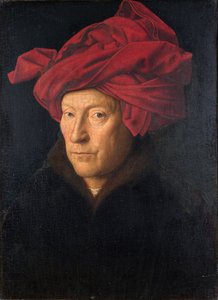
Jan van Eyck
1390 - 1441 , Nederländerna
Kortfakta
- Artistic Movement Or Style: Tidig nederländsk målning
- Artists Or Movements Influenced By This Artist: ['Tidiga nederländska målare']
- Date Of Birth: ca 1390
- Date Of Death: 1441
- Full Name: Jan van Eyck
- Nationality: Flamländsk
- Notable Artworks:
- Ghentaltaret
- Arnolfinporträttet
- Dresdentriptyken
- Place Of Birth: Maastricht, Nederländerna
Relaterade artiklar

Tidig nederländsk renässans: 10 mästerverk som definierade en epok – konsttryck & dekorationer
Utforska 10 ikoniska mästerverk från den tidiga nederländska renässansen! Lär känna Jan van Eyck, Rogier van der Weyden och andra flamländska mästare. Högkvalitativa konsttryck & inspiration för ditt hem – upptäck samlingen på OriginalUniqueArt.com

Illuminating Realism: A Comprehensive Exploration of the Early Netherlandish Renaissance Movement
Explore the captivating world of Early Netherlandish painting! Discover Jan van Eyck & other Flemish masters, their revolutionary techniques, hidden symbolism, and lasting legacy. A comprehensive guide for art enthusiasts.

Jan van Eyck: Innovation, Symbolism & the Dawn of Early Netherlandish Painting
Explore the revolutionary art of Jan van Eyck! Discover his groundbreaking oil painting techniques, hidden symbolism, and lasting impact on the Early Netherlandish Renaissance. A deep dive for art enthusiasts.

Rembrandts 25 Mästerverk: En Konsthistorisk Resa för Hemmet
Utforska Rembrandts 25 mest ikoniska målningar! Lär känna historien bakom mästerverken, hans unika teknik och barockens ljusspel. Köp exklusiva konsttryck & tavlor online på OriginalUniqueArt.com – för en tidlös inredning.

De 10 Mästerverk som Definierade Tidig Nederländsk Målning | Konst & Inredning
Utforska de 10 mästerverk som definierade tidig nederländsk målning! Lär känna Jan van Eyck, Rogier van der Weyden och andra flamländska mästare. Upptäck symbolik, teknik & färgpaletter. Köp reproduktioner av högsta kvalitet på OriginalUniqueArt.com.


