

 Förhandsvisa
 Skicka
 Dela
Dela
 Visa detaljer
 Guide
Guide

 Ladda ner
 Liknande objekt
 Röntgen
 Bildspel
 Statistik
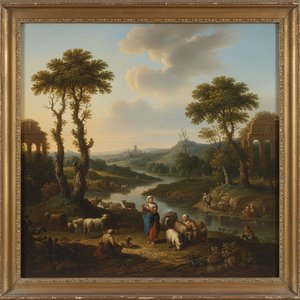
Italian Landscape
 Oil On Canvas
- WallArt
- Italianate Landscape
 31.0 x 40.0 cm
 Fitzwilliam College
 Visa mer
Giclée / Konsttryck
Giclée- eller canvasprint av museumskvalitet med snabb produktion och flexibla ytbehandlingsalternativ. ( Beställ handmålad reproduktion Byt till digital bild)




P118B Skr10

P118H Skr10

P118W Skr10

P438Z Skr10

P508JH Skr12

P508YH Skr12

P805H Skr10

P805Z Skr10

P919BZ Skr10

P919G Skr10

P919XJ Skr10

P959ZH Skr10

P968JZ Skr12

W106C Skr8

W218G Skr10

W218JH Skr8

W218Y Skr10

W307PJ Skr10

W316G Skr10

W316PJ Skr8

W316Y Skr10

W398PJ Skr8

W4111J Skr10

W500HY Skr15

W500JH Skr15

W692G Skr12

W849H Skr8

W940BG Skr15

W953PJ Skr8




Välj bland våra förinställda storlekar som motsvarar konstverkets ursprungliga proportioner.

Ange den bredd och höjd du behöver för att passa din ram eller vägg. Ett tryck kan endast beskäras, aldrig göras större än originalbilden, vilket innebär att ett format med en annan proportion leder till att en del av bilden går förlorad. Vi skickar en digital mockup för godkännande innan vi påbörjar tryckningen. Bilden som visas på denna sida visar inte den faktiska beskärningen — det är endast mockuppen som gör det.
Leverans över hela världen () på 2 veckor istället för standard 4/5 veckor. (26 oktober)

Fri expressfrakt över hela världen

Högkvalitativ linnecanvas

Fullständig fraktförsäkring

Garantier för återbetalning av tullavgifter

Garantier för exakt färgåtergivning

100 dagars returrätt (endast vid fel)

100% pengarna tillbaka-garanti

Mängdrabatt erbjuds
 Glasalternativet är endast tillgängligt i storlekar under 110 cm.

Italian Landscape
Giclée / Konsttryck
Storlek på reproduktion
-


Slutgiltigt pris
Skr 794
A Glimpse of Italian Pastoral: Jan Asselijn’s “Italian Landscape”
Jan Asselijn's "Italian Landscape," painted circa 1625-1652, isn’t merely a depiction of a picturesque vista; it’s an invitation to step into a carefully constructed world of serene beauty and subtle drama. This oil on canvas transports the viewer to a hypothetical Italian landscape – a deliberate choice by Asselijn that speaks volumes about the evolving artistic sensibilities of the Dutch Golden Age. The painting, now housed in collections like Bonhams, exemplifies the influence of both the Venetian masters and the burgeoning tradition of “pure” landscape painting emerging from Italy itself.
Asselijn’s style is distinctly characterized by a meticulous attention to detail and a masterful command of atmospheric perspective. He leans heavily into the techniques pioneered by Bamboccio – a contemporary painter known for his evocative, almost dreamlike landscapes – creating an image that feels both familiar and subtly unsettling. The composition unfolds with deliberate grace: a modest, classically-inspired building anchors the left foreground, its geometric solidity providing a grounding element against the undulating hills and hazy distance. The artist skillfully employs a muted palette of browns, ochres, and blues, avoiding bright colors to emphasize the painting’s contemplative mood. This restrained approach allows the subtle shifts in tone – from the dark shadows cast by distant trees to the luminous highlights reflecting off water – to create a remarkably convincing sense of depth and atmosphere.
The Influence of Venetian Masters and Italianate Tradition
Asselijn's work is deeply rooted in the artistic currents flowing through Italy at the time. He was profoundly influenced by the Venetian landscape painters, particularly those who favored a looser, more atmospheric style than their predecessors. However, unlike many of his contemporaries who simply copied Italian scenes directly, Asselijn imbued them with a distinctly Dutch sensibility – a focus on light, texture, and a carefully considered composition. This blending of influences is evident in the painting’s balanced structure, its subtle use of color, and its overall sense of quiet contemplation.
Furthermore, “Italian Landscape” reflects the broader trend toward what became known as "Italianate landscape" within Dutch art circles. This style sought to emulate the idealized landscapes depicted by artists like Claude Lorrain, who had established a dominant visual language for representing Italian scenery in Northern Europe. Asselijn’s painting isn't a literal transcription of an Italian vista; rather, it’s a carefully constructed fantasy – a “imaginary Italian Landscape” as described in some historical sources – designed to evoke the spirit and beauty of Italy while adhering to Dutch artistic conventions.
Symbolism and Emotional Resonance
Beyond its technical merits, "Italian Landscape" is rich in symbolic meaning. The solitary building, often interpreted as a villa or farmhouse, suggests themes of rural life, tranquility, and perhaps even isolation. The distant mountains, shrouded in mist, evoke a sense of mystery and the sublime – a recognition of nature’s power and grandeur. The figures scattered across the foreground, riding horses and walking along the riverbank, add a touch of human presence to the scene, reminding us of our connection to the natural world.
The painting's overall effect is one of profound serenity and contemplative beauty. It invites the viewer to slow down, to appreciate the subtle details of the landscape, and to lose themselves in its timeless atmosphere. It’s a testament to Asselijn’s skill as an artist – his ability to capture not just the appearance of a scene but also its emotional essence.
A Reproduction for Today's Spaces
Reproductions of “Italian Landscape” offer a beautiful addition to any interior space. The painting’s calming colors and evocative imagery create a sense of tranquility and sophistication, making it ideal for living rooms, bedrooms, or studies. The detailed depiction of the landscape invites contemplation and provides a visual connection to the natural world – a welcome respite from the stresses of modern life. Consider framing this piece in a classic wooden frame to further enhance its timeless appeal.
Frågor och svar
Vilken färgpalett och vilken känsla förmedlar "Italian Landscape"?
Den Dark färgpaletten i "Italian Landscape" av Jan Asselijn harmonierar med dess Melancholic emotionella ton. Färg är ett av de sätt som ett verk förmedlar känsla på.
Vilket motiv och vilken atmosfär förenar "Italian Landscape" av Jan Asselijn?
"Italian Landscape" visar landscape, figures, ruin, italy, asselijn, pastoral, tranquility, scenic och dess förmedlade stämning är Calm.
Är "Italian Landscape" av Jan Asselijn ett ljust eller mörkt konstverk?
Sammantaget har "Italian Landscape" registrerats som shadow. Upplevd ljusstyrka beskriver hur ljust eller mörkt verket framstår.
Konstnärsbiografi
A Life Forged in Landscape: The World of Jan Asselijn
Jan Asselijn (1610-1652) was a Dutch Golden Age painter whose artistic vision blossomed amidst the turbulent backdrop of religious reformation and burgeoning artistic innovation. Born Jean Asselin around 1610 in Dieppe, France – a port city steeped in maritime tradition – his family’s Huguenot faith propelled them to relocate to Amsterdam in 1621, a vibrant epicenter of commerce and artistic dynamism during the era's apex. This pivotal move irrevocably shaped Asselijn’s formative years, immersing him within an environment where landscape painting was undergoing a transformative shift away from static representations toward scenes brimming with atmospheric depth and profound emotional resonance. Initially apprenticed to Jan Martszen the Younger, he honed his skills in battle paintings before discovering his true passion: capturing the splendor and drama of both natural vistas and animal life – pursuits that would define his artistic trajectory.The Italianate Embrace & The Bentvueghels
Amsterdam’s intellectual fervor fueled Asselijn's ambition to refine his craft, prompting him to embark on a journey to Italy sometime after 1635. This pilgrimage proved instrumental in solidifying his artistic sensibilities and embracing the *Italianate* style – a genre championed by artists like Claude Lorrain and Pieter van Laer (Bamboccio) that prioritized sun-drenched landscapes, classical ruins, and pastoral depictions imbued with romantic ideals. He joined the ranks of the *Bentvueghels*, a distinctive society of Dutch and Flemish painters operating in Rome who challenged conventional artistic norms. These “Birds of a Feather” – known for their audacious nicknames, satirical commentary, and unwavering commitment to painting directly from observation—rejected studio conventions and embraced spontaneity. Within this spirited milieu, Asselijn earned the moniker "Krabbetje" (little crab) due to a congenital deformity affecting his hand, yet he persevered creatively, absorbing influences from luminaries like Rembrandt and mastering techniques that conveyed light and emotion with unparalleled sensitivity.Mastering Light & Symbolism: Key Works
Asselijn’s artistic prowess manifested in a remarkable repertoire of paintings reflecting both historical narratives and intimate depictions of the natural world. His canvases pulsated with an immediacy born from direct observation—a hallmark of the Bentvueghels ethos—and he skillfully employed chiaroscuro, Rembrandt's signature technique, to sculpt dramatic contrasts between light and shadow. Among his most celebrated achievements is The Threatened Swan (circa 1640), a monumental composition that transcends mere visual representation. More than just portraying waterfowl defending their nest against predators, this painting became a potent emblem of Dutch national resilience during the Eighty Years’ War—a period marked by relentless siege and existential peril. The swan's defiant posture resonated deeply with contemporary anxieties and was interpreted as an allegory for Johan de Witt, Amsterdam’s influential statesman – reflecting the artist’s astute engagement with political symbolism. Further cementing his reputation were works like Cavalry Charge at Sunset—a testament to his formative training in battle painting—and evocative landscapes such as Drovers with Cattle under an Arch of the Colosseum which skillfully blended Italianate aesthetics with meticulous animal studies. Notably, Asselijn’s dedication to capturing fleeting moments and conveying nuanced emotional states distinguishes him from many of his contemporaries.Influence & Legacy: A Lasting Impression
Jan Asselijn's artistic legacy extended beyond his own prolific output; he served as a mentor to Frederik de Moucheron—another prominent Dutch landscape painter who championed the Italianate style—and fostered an environment conducive to innovation and experimentation. His meticulous attention to detail, coupled with his masterful manipulation of light and color, profoundly impacted subsequent generations of artists. Asselijn’s works are now housed in prestigious institutions worldwide, including the Rijksmuseum in Amsterdam, ensuring that his artistic vision continues to inspire admiration and scholarly inquiry—a testament to his enduring contribution to Dutch art history. He died prematurely in 1652, leaving behind a body of work that embodies the spirit of the Golden Age: luminous landscapes imbued with symbolic depth and conveying an unforgettable impression on viewers.
Jan Asselijn
1610 - 1652 , Frankrike
Kortfakta
- Artistic Movement Or Style: Italiensk stil
- Artists Who Influenced This Artist:
- Esaias van de Velde
- Pieter van Laer
- Rembrandt
- Date Of Birth: 1610
- Date Of Death: 1652
- Full Name: Jan Asselijn
- Nationality: Nederländska
- Notable Artworks:
- Den hotade svanen
- Attack vid solnedgång
- Förstörelsen av Sankt Antonijs dike
- Place Of Birth: Dieppe, Frankrike
Relaterade artiklar

Mastering Light & Land: An Art Historian's Guide to the Dutch Golden Age Landscape
Explore the breathtaking mastery of Dutch Golden Age landscapes. From Italianate light to atmospheric realism, discover the techniques of 17th-century masters and learn how to bring these timeless, museum-quality masterpieces into your home through expert oil reproductions.

Nederländsk Guldålder: Topp 10 mästerverk som definierade epoken – konst & heminredning
Utforska de 10 ikoniska mästerverken från den nederländska guldåldern! Lär känna Rembrandt, Vermeer och Hals – deras teknik & berättelser. Hitta konsttryck och inspiration för din heminredning på OriginalUniqueArt.com. Upptäck hela samlingen online!

Golden Light & Dutch Skies: The Timeless Magic of Dutch Golden Age Landscapes
Discover the breathtaking beauty of Dutch Golden Age landscapes. Explore the mastery of light, chiaroscuro, and 17th-century realism through an expert art history lens, celebrating the enduring legacy of the Dutch Masters for discerning collectors and art lovers.

Golden Light & Dutch Skies: Bringing the Magic of Dutch Golden Age Landscapes into Your Home
Transform your home with the breathtaking light of Dutch Golden Age landscapes. Discover how hand-painted oil reproductions of masterworks like Ruisdael and Vermeer bring timeless elegance, atmosphere, and soulful texture to modern interiors. Elevate your space with museum-quality art.
Nicolaes Berchem: Dutch Golden Age Pastoralism & the Evolution of Landscape Painting
Explore the captivating world of Nicolaes Berchem, a leading Dutch Golden Age painter. Discover his idyllic landscapes, masterful technique & lasting influence on art history. Learn more at OriginalUniqueArt.
