Förhandsvisa
 Skicka
 Dela
Dela
 Visa detaljer
 Guide
Guide

 Ladda ner
 Liknande objekt
 Röntgen
 Bildspel
 Frågor och svar
 Statistik
Falling rocket


 Visa mer
Giclée / Konsttryck
Giclée- eller canvasprint av museumskvalitet med snabb produktion och flexibla ytbehandlingsalternativ. ( Beställ handmålad reproduktion Byt till digital bild)




P118B Skr10

P118H Skr10

P118W Skr10

P438Z Skr10

P508JH Skr12

P508YH Skr12

P805H Skr10

P805Z Skr10

P919BZ Skr10

P919G Skr10

P919XJ Skr10

P959ZH Skr10

P968JZ Skr12

W106C Skr8

W218G Skr10

W218JH Skr8

W218Y Skr10

W307PJ Skr10

W316G Skr10

W316PJ Skr8

W316Y Skr10

W398PJ Skr8

W4111J Skr10

W500HY Skr15

W500JH Skr15

W692G Skr12

W849H Skr8

W940BG Skr15

W953PJ Skr8




Välj bland våra förinställda storlekar som motsvarar konstverkets ursprungliga proportioner.

Ange den bredd och höjd du behöver för att passa din ram eller vägg. Ett tryck kan endast beskäras, aldrig göras större än originalbilden, vilket innebär att ett format med en annan proportion leder till att en del av bilden går förlorad. Vi skickar en digital mockup för godkännande innan vi påbörjar tryckningen. Bilden som visas på denna sida visar inte den faktiska beskärningen — det är endast mockuppen som gör det.
Leverans över hela världen () på 2 veckor istället för standard 4/5 veckor. (9 november)

Fri expressfrakt över hela världen

Högkvalitativ linnecanvas

Fullständig fraktförsäkring

Garantier för återbetalning av tullavgifter

Garantier för exakt färgåtergivning

100 dagars returrätt (endast vid fel)

100% pengarna tillbaka-garanti

Mängdrabatt erbjuds
 Glasalternativet är endast tillgängligt i storlekar under 110 cm.

Falling rocket
Giclée / Konsttryck
Storlek på reproduktion
-


Slutgiltigt pris
Skr 810
A Nocturnal Reverie: The Ethereal Glow of Whistler’s ‘Falling Rocket’
In the quietude of a moonless night, where the boundary between the sea and the heavens becomes a blurred whisper of shadow, James Abbott McNeill Whistler’s “Falling Rocket” invites us into a moment of profound contemplation. This masterpiece captures a quintessential seaside scene, centered around a lone figure gazing upward toward a vibrant, descending spectacle. Whether one perceives a celebratory firework or the melancholic descent of a rocket, the composition prioritizes the act of observation itself. As viewers, we are placed alongside the protagonist, sharing in that breathless pause where the world falls away, leaving only the silent, luminous trail of light against the dark expanse.
Whistler’s approach to this piece is a masterclass in the Aestheticism movement, a philosophy that famously championed “art for art’s sake.” Eschewing the heavy-handed moralizing and dramatic storytelling prevalent in much of the 19th-century art world, Whistler focused instead on pure sensory experience. There is no didactic lesson to be found here; rather, there is only the pursuit of beauty. The painting does not seek to tell us a story of triumph or tragedy, but to capture a fleeting moment of visual delight, making it an exquisite choice for those who appreciate art that evokes mood and atmosphere over explicit narrative.
Mastery of Tone and Atmospheric Depth
The technical brilliance of “Falling Rocket” lies in Whistler’s sophisticated use of tonal painting. Moving away from the traditional, high-contrast chiaroscuro, he employed a meticulous layering of deep blacks and muted greens to create an illusionistic depth that feels almost infinite. This technique, often described as atmospheric perspective, allows the viewer to feel the damp, cool air of the coast and the immense weight of the night sky. The subtle gradations of color do not merely represent a landscape; they evoke a sense of stillness and profound quietude, even amidst the energetic descent of the rocket.
Historically, this work emerged during Whistler’s formative years in Paris, a period where he was deeply immersed in the burgeoning Impressionist movement. Yet, true to his rebellious spirit, Whistler deliberately distanced himself from the trend. While his contemporaries were obsessed with capturing the fleeting effects of sunlight, Whistler sought something more permanent and structural through color and tone. This deliberate rejection of popular convention solidified his reputation as a pioneer of independent expression, offering a vision that is both deeply personal and universally evocative.
A Symbol of Aspiration and Timeless Elegance
Beyond its visual splendor, the painting carries a potent symbolic weight. The falling rocket serves as a metaphor for aspiration and ambition—a bright, singular burst of energy that inevitably descends back into the darkness. It represents the ephemeral nature of beauty and the fleeting moments of brilliance that define the human experience. For the discerning collector or interior designer, this piece offers more than just decoration; it provides a focal point of intellectual and emotional depth.
Integrating a high-quality reproduction of “Falling Rocket” into a living space can transform an environment, adding a layer of sophisticated mystery and calm. Its dark, tonal palette is particularly effective in creating a sense of intimacy in study areas, bedrooms, or elegant lounges. It is a work that rewards long periods of looking, offering new layers of shadow and light to discover with every glance, much like the nocturnal mysteries it so beautifully depicts.
Frågor och svar
Är färgerna i "Falling rocket" klara eller dämpade?
"Falling rocket" av James Abbott McNeill Whistler återges med en Subtle Color mättnad och en Monochromatic intensitet.
Vilken period av James Abbott McNeill Whistlers karriär tillhör "Falling rocket"?
"Falling rocket" representerar James Abbott McNeill Whistlers Mature Period.
Finns det en nedladdningsbar version av "Falling rocket" tillgänglig?
Bilden av "Falling rocket" av James Abbott McNeill Whistler kan laddas ner från verkets sida för Ladda ner digital bild: en högupplöst digital bildnedladdning.
Konstnärsbiografi
James Abbott McNeill Whistler: En Konstnärs Liv Formad av Estetism
James Abbott McNeill Whistler, född i Lowell, Massachusetts 1834, var en konstnär vars liv präglades av ett ständigt sökande efter skönhet och ett motstånd mot konventionella normer. Hans tidiga liv, präglat av frekventa flyttningar på grund av hans fars karriär som järnvägsingenjör, gav honom en känsla för anpassningsförmåga och exponering för olika miljöer. Ett kort och olyckligt uppehåll vid West Point följdes av arbete med den amerikanska kust- och geodetiska undersökningen – även om detta fördröjde hans konstnärliga utveckling, släckte det inte hans brinnande passion för konsten. Dessa formativa år var karakteriserade av en naturlig talang för teckning och en bestämd vilja att skapa sig en väg som professionell konstnär, ett strävande som slutligen ledde honom över Atlanten och in i hjärtat av den europeiska avantgardekulturen. Fröna till Whistlers konstnärliga uppror såddes tidigt, skördades genom en anda som motstod konformitet och omfamnade estetisk utforskning framför allt annat.Parisinska Börjaner och Utvecklingen av Stil
Den avgörande punkten i Whistlers konstnärliga resa kom med hans flytt till Paris 1855. Här, under den inflytelse av Sébastien Bouré, finslipade han sina färdigheter inom oljefärgning, akvarell och tryckkonst, absorberade influenser från fransk realism och Barbizon-målarnas skola. Whistlers snabba utveckling överträffade dock bara imitationen; han utvecklade en distinkt stil präglad av tonal harmonier och atmosfäriska effekter. Han var inte intresserad av att återskapa verkligheten utan snarare att fånga dess *essens*, dess flyktiga stämningar och subtila nyanser. Denna period markerade ett avgörande skifte från representativ noggrannhet mot en utforskning av ren estetisk form. Hans tidiga verk antydde redan den delikata balansen mellan observation och abstraktion som skulle definiera hans mogna stil. Det var i Paris som Whistler började uttrycka sin övertygelse om att konsten borde bedömas utifrån dess estetiska kvaliteter, fritt från moraliserande eller pedagogiska begränsningar – en filosofi som skulle bli grundstenen för hans konstnärliga praktik och en definierande egenskap hos den estetiska rörelsen.Nocturner, Porträtt och Strävan efter Harmoni
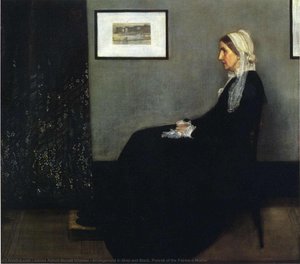
Whistlers konstnärliga vision konkretiserades i flera nyckelteman och stilval. Han förespråkade konceptet ”konst för konsten”, avvisande berättelser fyllda med moral eller samhällelig kommentar. Hans verk blev en övning i att fånga subtila nyanser av ljus, färg och atmosfär – ett strävande som ledde till hans ikoniska *Nocturner*. Dessa atmosfäriska målningar av skymningsscener, ofta med Thames-floden vid natt, var inte avsedda att vara bokstavliga representationer utan snarare suggestiva intryck, studier i tonal harmoni och stämning. Han använde sig frekvent av begränsade paletter och delikat pensling, vilket skapade en känsla av eterbunden skönhet och tyst kontemplation. Porträtt upptog också en central plats i hans praktik, även om han angrep dem med en unik känslighet. Whistler var inte intresserad av att fånga perfekta porträtt utan snarare fokuserade han på kompositionella arrangemang och tonal relationer, behandlade sina modeller som kompositionsmedel inom ett noggrant konstruerat estetiskt ramverk. Verk som *Arrangement in Grey and Black No. 1* – bättre känd som *Whistler’s Mother* – illustrerar detta perfekt, omvandlar en familjeporträtt till en ikonisk bild av viktoriansk moderskap genom sin mästarlika användning av form och ton.Kontroverser, Inflytande och Arv
Whistlers karriär var inte utan kontrovers. Den berömda tvisten med konstkritikern John Ruskin 1878, utlöste av *Nocturne in Black and Gold – The Falling Rocket*, blev ett landmärke i konsthistorien. Whistler försvarade framgångsrikt sin konstnärliga autonomi, argumenterande för att hans målningar inte var avsedda att vara bokstavliga representationer utan snarare estetiska arrangemang av färg och form. Detta fall lyfte hans profil och utlöste viktiga debatter om konstens natur och den konstnärliga frihetens karaktär. Utöver denna juridiska strid hade Whistlers inflytande spridit sig brett. Han var djupt inspirerad av japanska tryck (ukiyo-e), som informerade hans kompositionsprinciper och betonade dekorativa mönster, samt den spanska målarnas tonalitet. Hans förespråkande för ”konst för konsten” påverkade den estetiska rörelsen i England och Amerika djupt, banade väg för modernismen och utmanade konventionella uppfattningar om konstens syfte. Han lämnade ett bestående intryck på amerikansk konst, inspirerade generationer av konstnärer att omfamna formalistiska tillvägagångssätt och utforska den uttrycksfulla potentialen hos färg och komposition.- Kända verk: *The Forge* (1861), *Porträtt av Charles Lang Freer* (1873), *Brown and Gold: The Gold Girl—Connie Gilchrist* (1876-77), *Arrangement in Grey and Black No. 1 (Whistler’s Mother)* (1871), *Nocturne in Black and Gold – The Falling Rocket* (1875).
- Inflytande: Japanska tryck, Velázquez.

James Abbott McNeill Whistler
1834 - 1903 , USA
Kortfakta
- Artistic Movement Or Style: Tonalism, Estetism
- Artists Or Movements Influenced By This Artist: ['Estetisk rörelse']
- Artists Who Influenced This Artist:
- Velázquez
- Japan
- Date Of Birth: 14 juli 1834
- Date Of Death: 17 juli 1903
- Full Name: James Abbott McNeill Whistler
- Nationality: Amerikansk
- Notable Artworks:
- Whistlers mor
- Nattmotiv
- Arrangemang
- Place Of Birth: Lowell, USA
Relaterade artiklar
Mästverk i Svart: Topp 10 målningar dominerade av lampkolstoner – Konst & Inredning
Utforska 10 ikoniska målningar dominerade av lampkolstoner – från Rembrandts djupa skuggor till Manets dramatik. Lär känna konsthistorien och hitta inspiration för ditt hem. Köp reproduktioner av högsta kvalitet på OriginalUniqueArt.com.
Mästverk i svart: Topp 10 målningar som domineras av Mars Black – Konst & Inredning
Utforska 10 ikoniska målningar där Mars Black dominerar – från romantik till expressionism. Lär känna konstnärer, tekniker och historien bakom tidlösa verk. Köp museumkvalitets reproduktioner på OriginalUniqueArt.com och förvandla ditt hem med klassisk konst!

Impressionismens Mästverk: Topp 10 Verk som Fångar Ögonblicket | OriginalUniqueArt
Upptäck impressionismens magi! Utforska 10 ikoniska verk av Monet, Renoir & Degas. Lär känna historien bakom mästerverken och hitta inspiration till din inredning med konsttryck från OriginalUniqueArt.com.
Mästverk i svart: Topp 10 målningar som fascinerar – OriginalUniqueArt.se
Utforska 10 ikoniska målningar dominerade av svart – från Rembrandts djupa skuggor till Munchs ångest. Lär känna historien bakom mästerverken och hitta inspiration för din inredning på OriginalUniqueArt.se. Upptäck hela kollektionen online!
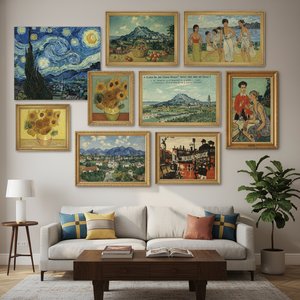
Postimpressionismens 10 Mästerverk: Konst som Definierade en Epok | OriginalUniqueArt.se
Utforska postimpressionismens 10 mest ikoniska mästerverk med Van Gogh, Monet & Cézanne. Lär känna historien bakom konstverken och deras unika tekniker. Köp museumkvalitativa reproduktioner på OriginalUniqueArt.com – för en tidlös inredning.