

 Visa i rummet
 Skicka
 Dela
Dela
 Detaljer
 Studentguide för konstverk

 Ladda ner
 Liknande objekt
 Röntgen
 Bildspel
 Besökstatistik
St. Anthony Abbot
 Oil On Panel
- WallArt
- Renaissance Portraiture
 1519
1519- Renaissance
 78.0 x 66.0 cm
 Galleria degli Uffizi
 Läs mer
Giclée / Konsttryck
Giclée- eller canvasprint av museumskvalitet med snabb produktion och flexibla ytbehandlingsalternativ. ( Köp handmålat konstverk Byt till digital bildförsäljning)




P118B Skr10

P118H Skr10

P118W Skr10

P438Z Skr10

P508JH Skr12

P508YH Skr12

P805H Skr10

P805Z Skr10

P919BZ Skr10

P919G Skr10

P919XJ Skr10

P959ZH Skr10

P968JZ Skr12

W106C Skr8

W218G Skr10

W218JH Skr8

W218Y Skr10

W307PJ Skr10

W316G Skr10

W316PJ Skr8

W316Y Skr10

W398PJ Skr8

W4111J Skr10

W500HY Skr15

W500JH Skr15

W692G Skr12

W849H Skr8

W940BG Skr15

W953PJ Skr8




Välj bland våra förinställda storlekar som motsvarar konstverkets ursprungliga proportioner.

Du kan ange egna mått för att passa en specifik ram eller yta. Om det valda måttet inte överensstämmer med originalbildens proportioner kommer vi antingen att beskära konstverket eller utöka bilden med en speglad eller enfärgad kant. En digital mockup skickas för ditt godkännande innan produktionen påbörjas.
Vänligen notera att förhandsvisningen på skärmen inte återspeglar den faktiska beskärningen eller utökningen. Endast mockuppen visar den slutgiltiga kompositionen korrekt.
Även om anpassade storlekar är möjliga, rekommenderar vi att du väljer ett mått från den fördefinierade listan för att bevara de ursprungliga proportionerna.
Leverans över hela världen () på 2 veckor istället för standard 4/5 veckor. (8 oktober)

Fri expressfrakt över hela världen

Högkvalitativ linnecanvas

Fullständig fraktförsäkring

Garantier för återbetalning av tullavgifter

Garantier för exakt färgåtergivning

100 dagars returrätt vid fabrikationsfel

100% pengarna tillbaka-garanti

Mängdrabatt erbjuds
 Glasalternativet är endast tillgängligt i storlekar under 110 cm.

St. Anthony Abbot
Giclée / Konsttryck
Reproduktionsstorlek
-


Totalpris
Skr 767
A Renaissance Reverie: The Soul of Pontormo’s St. Anthony Abbot
In the quietude of a Florentine studio around 1519, Jacopo Carucci—the master known to history as Pontormo—captured a moment of profound spiritual stillness that continues to resonate centuries later. His depiction of St. Anthony Abbot is far more than a mere portrait of a desert saint; it is a window into the burgeoning Mannerist movement, where the serene balance of the High Renaissance began to yield to a more complex, psychological intensity. As one gazes upon this work, there is an immediate sense of encountering a soul in contemplation, a figure emerging from a muted, greenish-yellow void to offer a glimpse of divine light.
The painting serves as a masterful bridge between eras. While the anatomical precision and sculptural presence of the subject echo the monumental influence of Michelangelo, Pontormo introduces an emotional depth that anticipates the dramatic tension of the Baroque. The saint is rendered with a striking realism; his weathered face, the texture of his long, flowing beard, and the heavy drape of his dark, ascetic robes all speak to a life of rigorous devotion and solitude. This meticulous attention to detail does not merely serve to document the physical form but to ground the spiritual subject in a palpable, human reality.
The Language of Light and Symbolism
Technique and symbolism are inextricably linked in this evocative composition. Pontormo employs chiaroscuro with surgical precision, utilizing a light source that strikes the figure from the left to carve his features out of the shadows. This play of light and dark does more than create a three-dimensional illusion; it acts as a metaphor for the saint's spiritual journey through the darkness of temptation toward the clarity of faith. The subtle use of shadow on the right side of the face adds a layer of mystery, suggesting the internal struggles inherent in the monastic life.
Central to the painting’s narrative is the scroll held firmly in St. Anthony's hand. Upon it, the Latin inscription "EGO SUM LUX MUNDI"—I am the light of the world—serves as a powerful theological anchor. Though these words are attributed to Christ, their presence in the hands of the Abbot connects the saint to the divine essence, reinforcing his role as a beacon of spiritual truth. The muted, atmospheric background, devoid of distracting landscapes, ensures that the viewer’s focus remains locked onto this sacred message and the luminous countenance of the saint himself.
An Enduring Legacy for the Discerning Collector
For the art lover or the interior designer, a reproduction of Pontormo’s St. Anthony Abbot offers much more than aesthetic beauty; it provides an atmosphere of contemplative gravity. The painting's sophisticated palette—dominated by earthy tones, deep shadows, and that singular, haunting greenish-yellow hue—makes it a versatile centerpiece for spaces that value historical depth and intellectual character. It is a piece that invites long periods of study, rewarding the observer with new layers of emotional complexity upon every viewing.
Whether placed in a private library, a formal study, or a curated gallery setting, this work brings with it the weight of Florentine history and the melancholic beauty of the Mannerist vision. To possess such a piece is to invite the spirit of Pontormo into one's environment—a master who dared to look inward and capture the turbulent, beautiful complexity of the human soul through the medium of oil and light.
Frågor och svar
Vem är konstnären bakom "St. Anthony Abbot"?
"St. Anthony Abbot" skapades av Pontormo. Informationen på denna sida beskriver Pontormos originalverk.
Vilka är måtten på originalet av "St. Anthony Abbot" av Pontormo?
Originalet av "St. Anthony Abbot" av Pontormo mäter 78 x 66 cm.
Var i Pontormos karriär placeras "St. Anthony Abbot", med tanke på dess datum?
Med tanke på sitt datum från 1519, tillhör "St. Anthony Abbot" Pontormos Mature Renaissance.
Var kan jag se originalet av "St. Anthony Abbot" av Pontormo?
Originalet av "St. Anthony Abbot" av Pontormo finns på Galleria degli Uffizi, Florence, Italy. En reproduktion gör det möjligt att visa verket i hemmet.
Vilket är skapelseåret för "St. Anthony Abbot" av Pontormo?
"St. Anthony Abbot" dateras till 1519. Datumet placerar verket inom Pontormos karriär och dess epok.
Hur gammal var Pontormo när "St. Anthony Abbot" skapades år 1519?
När "St. Anthony Abbot" skapades år 1519, var Pontormo – född 1494 – 25 år gammal.
Vilken är den dominerande nyansen i "St. Anthony Abbot" av Pontormo?
Den dominerande nyansen i "St. Anthony Abbot" av Pontormo är Blue-Violet to Rose. Nyansen utgör den underliggande tonen i färgpaletten.
Om konstnären
Jacopo Pontormo (1494 – 1557/7): En brygga mellan Renässans och Barockens uttryck
Jacopo Pontormo, född Jacopo Carucci i Pontorme, Toscana, omkring 1494, är enika figur inom den florentinska Manneriströrelsen – en målare som trotsade konventionerna och skapade sin egen väg mot konstnärlig innovation. Till skillnad från många av sina samtida som strävade efter idealiserad skönhet rotad i klassiska idéer, omfamnade Pontormo känslomässig intensitet och psykologisk komplexitet, vilket gjorde honom till en nyckelperson för att brobygga mellan den lugna prakten hos den höga Renässansen och den dramatiska dynamiken i Barocktiden. Hans liv präglades av både talangfullt geni och personlig tragedi, vilket formade hans verk till ett testamente över konstnärligt synsätt tempererat av djup sorg. Tidiga utbildningar och inflytande: Pontormos tidiga år spenderades under Domenico del Pollaiuolos och Michelangelos vägledning – konstnärer vars maktfulla anatomi och skulpturala form hade en djupgående inverkan på hans stilistiska utveckling. Även om han erkände Renässansens arv, avvek Pontormo snabbt från dess strikta formalism, och sökte sig istället mot ett mer uttrycksfullt tillvägagångssätt informerat av norra europeiska konsttraditioner. Han studerade Dürers gravyrer, absorberade tekniker för att förmedla känslor genom stiliserade bilder och kompositionsinnovation. Denna exponering för nordlig Mannerism skulle visa sig vara avgörande för att forma hans distinkta visuella språk.Manneristisk stil
Pontormos konstnärliga genombrott inträffade runt 1515 med uppdraget att måla “Besökelsen” (Visitation) för Santissima Annunziata i Arezzo – ett målning som omedelbart etablerade honom som en mästare inom Manneristestetik. Karaktäriserad av utsträckta figurer, flattade perspektiv och virvlande draperier fyllda med livfulla färger, förkastade Pontormos stil den renässansmässiga besattheten av anatomisk noggrannhet och harmoniska proportioner. Istället prioriterade han att förmedla psykologiska tillstånd – förtvivlan, sorg, extas – genom förvrängda former och tvetydiga rumsliga relationer. Detta medvetna avvikande från etablerade konventioner signalerade en radikal omprövning av konstnärlig representation, vilket antydde den dramatiska innovation som skulle definiera Barocktiden. Han var särskilt intresserad av att skapa en känsla av rörelse och dynamik i sina verk, något som skiljer sig markant från de mer statiska och balanserade bilderna som var vanliga under Renässansen.En liv präglad av sorg
Pontormos liv var inte bara fyllt av konstnärlig briljans utan också av personliga tragedier. Hans första fru dog kort efter födelsen av deras gemensamma barn, och hans andra fru dog några år senare under mystiska omständigheter. Dessa förluster präglade hans verk med en melankolisk ton och en känsla av sårbarhet som genomsyrar många av hans mest kända målningar. Det är troligt att denna personliga sorg bidrog till den känslomässiga intensitet och psykologiska komplexitet som kännetecknar hans konst.Viktiga verk och arv
Pontormos produktion omfattade en mångfald av ämnen – religiösa scener, porträtt och mytologiska kompositioner – alla fyllda med hans karakteristiska Manneristiska estetik. Bland hans mest berömda målningar finns “Josephs mantel såld till egyptierna”, “Nedstigningen från korset” och “Sankt Franciscus som tar emot spetsen” – verk som exemplifierar hans skickliga manipulation av färg, ljus och textur för att väcka djupa känslor. Hans porträtt, särskilt de som porträtterar medlemmar i Florens Medici-familj, avslöjar en skarp förståelse för psykologisk nyans och en subtil engagemang med Manneristiska stilkonventioner. Pontormo var inte bara en mästare på sin egen tid utan också en mentor för yngre konstnärer – inklusive Agnolo Bronzino – som vidareutvecklade hans innovativa vision till nästa generation florentinska målare. Hans arv ligger inte bara i hans individuella mästerverk utan också i hans roll som katalysator för konstnärlig experimentering och en herald för stilistiska förändringar – ett testamente över hans bestående bidrag till europeisk konsthistoria. Pontormos verk fortsätter att fascinera forskare och connoisseurs, vilket leder till pågående debatter om naturen av Manneristestetik och dess relation till bredare kulturella trender. Museer runt om i världen visar reproduktioner av hans målningar – inklusive de som finns i Uffizi-galleriet i Florens – vilket gör det möjligt för besökare att uppleva kraften i hans konstnärliga vision förstår.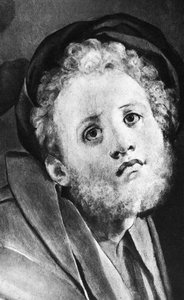
Pontormo
1494 - 1557 , Italien
Snabbfakta
- Artistic Movement Or Style: Mannerism
- Artists Or Movements Influenced By This Artist:
- Renaissance
- Baroque
- Artists Who Influenced This Artist:
- Leonardo da Vinci
- Michelangelo
- Date Of Birth: 1494
- Date Of Death: 1557/7
- Full Name: Jacopo Pontormo
- Nationality: Italienare
- Notable Artworks:
- Besökelsen
- Deposition
- Place Of Birth: Pontorme, Italien
Relaterade artiklar
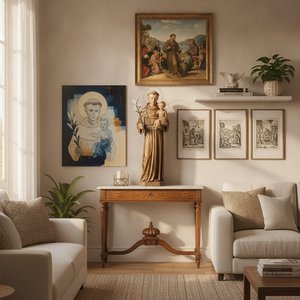
Discover the Divine: Inspiring Saint Anthony Artworks to Elevate Your Home Decor
Transform your home with the profound beauty of Saint Anthony artworks. Explore exquisite Baroque reproductions by Murillo and Zurbarán, hand-painted on 100% cotton canvas to bring divine serenity and timeless elegance to your interior design.
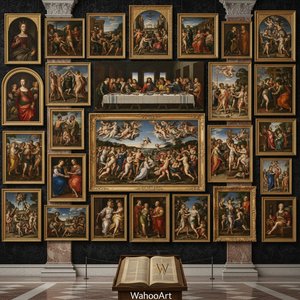
Jacopo Tintorettos 25 Mästerverk: Drama, Ljus och Renässansens Storhet – Konst för Ditt Hem
Utforska Jacopo Tintorettos 25 mest ikoniska målningar – en resa genom venetiansk renässans och dramatiskt ljusspel. Upptäck historierna bakom mästerverken och finn inspiration till din inredning med konsttryck av högsta kvalitet på OriginalUniqueArt.com.

Jacopo Pontormo: A Bridge Between Renaissance Tradition & Mannerist Emotion
Explore the captivating world of Jacopo Pontormo, a pivotal Italian Mannerist painter. Discover his unique style, influences & masterpieces – and find museum-quality reproductions at OriginalUniqueArt.

El Grecos 25 Mästerverk: En Konsthistorisk Resa för Hemmet & Själens Frid
Utforska El Grecos 25 mest ikoniska tavlor! Fördjupa dig i spansk renässanskonst, dramatik och sakrala motiv. Köp högkvalitativa konsttryck & inred med tidlösa mästerverk från OriginalUniqueArt.com.
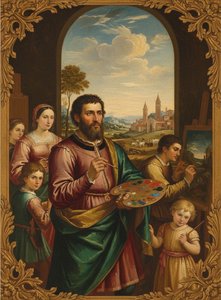
Jacopo Bassano: A Venetian Master of Color, Family & the Renaissance Landscape
Explore the life & art of Jacopo Bassano, a Venetian master renowned for his vibrant colorism and innovative religious scenes. Discover his family legacy & enduring influence on Renaissance painting with OriginalUniqueArt.


