
 Förhandsvisa
 Skicka
 Dela
Dela
 Visa detaljer
 Guide
Guide

 Ladda ner
 Liknande objekt
 Röntgen
 Bildspel
 Frågor och svar
 Statistik
Alessandro de' Medici


 Visa mer
Giclée / Konsttryck
Giclée- eller canvasprint av museumskvalitet med snabb produktion och flexibla ytbehandlingsalternativ. ( Beställ handmålad reproduktion Byt till digital bild)




P118B Skr10

P118H Skr10

P118W Skr10

P438Z Skr10

P508JH Skr12

P508YH Skr12

P805H Skr10

P805Z Skr10

P919BZ Skr10

P919G Skr10

P919XJ Skr10

P959ZH Skr10

P968JZ Skr12

W106C Skr8

W218G Skr10

W218JH Skr8

W218Y Skr10

W307PJ Skr10

W316G Skr10

W316PJ Skr8

W316Y Skr10

W398PJ Skr8

W4111J Skr10

W500HY Skr15

W500JH Skr15

W692G Skr12

W849H Skr8

W940BG Skr15

W953PJ Skr8




Välj bland våra förinställda storlekar som motsvarar konstverkets ursprungliga proportioner.

Ange den bredd och höjd du behöver för att passa din ram eller vägg. Ett tryck kan endast beskäras, aldrig göras större än originalbilden, vilket innebär att ett format med en annan proportion leder till att en del av bilden går förlorad. Vi skickar en digital mockup för godkännande innan vi påbörjar tryckningen. Bilden som visas på denna sida visar inte den faktiska beskärningen — det är endast mockuppen som gör det.
Leverans över hela världen () på 2 veckor istället för standard 4/5 veckor. (7 november)

Fri expressfrakt över hela världen

Högkvalitativ linnecanvas

Fullständig fraktförsäkring

Garantier för återbetalning av tullavgifter

Garantier för exakt färgåtergivning

100 dagars returrätt (endast vid fel)

100% pengarna tillbaka-garanti

Mängdrabatt erbjuds
 Glasalternativet är endast tillgängligt i storlekar under 110 cm.

Alessandro de' Medici
Giclée / Konsttryck
Storlek på reproduktion
-


Slutgiltigt pris
Skr 809
The Soul Beneath the Crown: A Study in Mannerist Melancholy
In the quiet, tension-filled corridors of 16th-century Florence, a new kind of portraiture began to emerge—one that sought not to flatter the sitter with outward glory, but to expose the profound psychological tremors beneath their skin. Jacopo Carucci, known more evocatively as Pontormo, achieved this feat masterfully in his 1535 masterpiece, Alessandro de' Medici. This is not merely a record of a ruler’s likeness; it is an intimate encounter with a soul caught in the crosswinds of political instability and personal introspection. As one gazes upon the face of the first Duke of Florence, there is an immediate sense of being drawn into a private moment of contemplation, where the weight of a turbulent reign is visible in the very shadows of the eyes.
The composition eschews the grand, sweeping landscapes and opulent backdrops typical of High Renaissance portraiture. Instead, Pontormo employs a deliberate simplicity, focusing the viewer’s entire attention on the upper torso and the hauntingly expressive face of Alessandro. By stripping away the distractions of worldly wealth, the artist forces an encounter with the subject's humanity. The minimal background serves to isolate the Duke, creating a vacuum of space that amplifies his sense of solitude. This stylistic choice is quintessential to the Mannerist movement, where the goal was to move beyond mere anatomical accuracy toward a more heightened, expressive, and often unsettling emotional truth.
Technique and the Language of Light
To behold this work is to witness the exquisite technical prowess of Pontormo’s brush. Utilizing oil on canvas, the artist layered pigments with a meticulous sensitivity that allows for breathtaking tonal gradations. The lighting is soft, almost diffused, as if filtered through the heavy atmosphere of a Tuscan twilight. This gentle illumination does not strike the subject with dramatic force; rather, it caresses the contours of the face, creating subtle transitions between light and shadow that lend a startling three-dimensional vitality to the skin. Such mastery of sfumato and tonal modulation allows the viewer to perceive the slight tension in the brow and the reflective depth within the gaze.
The color palette is a sophisticated arrangement of muted earth tones—deep browns, creamy highlights, and somber blacks, punctuated by subtle, bruised reds. These colors do not shout; they whisper of gravity and importance. The textures, though appearing smooth to the eye, possess an underlying complexity that suggests the heavy, fine fabrics of ducal attire. For the discerning collector or interior designer, this painting offers a profound sense of gravitas. It is a piece that does not demand attention through garishness but commands it through its quiet, undeniable presence, making it an ideal centerpiece for spaces designed for reflection, study, or sophisticated conversation.
A Legacy of Emotional Resonance
Beyond the technical brilliance lies the historical and symbolic heartbeat of the piece. Alessandro de' Medici lived a life defined by transition and uncertainty, and Pontormo captures this zeitgeist with uncanny precision. The elongated forms and slightly distorted perspectives characteristic of Mannerism serve as visual metaphors for a world where the stable proportions of the Renaissance were fracturing. There is an inherent ambiguity in the subject’s expression—is it pride, or is it sorrow? Is it the composure of a leader, or the mask of a man burdened by his station?
This ambiguity is precisely what gives the portrait its enduring power. It invites the viewer to participate in the interpretation, making every encounter with the artwork a new discovery. For those seeking to adorn their homes or galleries with works of significant intellectual and emotional depth, a high-quality reproduction of this Pontormo masterpiece offers more than just aesthetic beauty; it offers a window into the complexities of the human condition. It is an invitation to dwell in the presence of greatness, even in its most vulnerable and melancholic moments.
Frågor och svar
Vilken är den övergripande stämningen i "Alessandro de' Medici" av Pontormo?
Den övergripande stämningen i "Alessandro de' Medici" av Pontormo är Dramatic. Stämningen beskriver verkets allmänna atmosfär.
Finns det ett bildspel för "Alessandro de' Medici" av Pontormo?
Se diaporamat för "Alessandro de' Medici" på konstverkets sida Bildspel.
Vilka är reproduktionsrättigheterna för "Alessandro de' Medici" på Art Institute of Chicago?
"Alessandro de' Medici" av Pontormo, som finns på Art Institute of Chicago, är allmän egendom – upphovsrätten har löpt ut. Denna status avgör om reproduktioner av bilden får framställas.
Konstnärsbiografi
Jacopo Pontormo (1494 – 1557/7): En brygga mellan Renässans och Barockens uttryck
Jacopo Pontormo, född Jacopo Carucci i Pontorme, Toscana, omkring 1494, är enika figur inom den florentinska Manneriströrelsen – en målare som trotsade konventionerna och skapade sin egen väg mot konstnärlig innovation. Till skillnad från många av sina samtida som strävade efter idealiserad skönhet rotad i klassiska idéer, omfamnade Pontormo känslomässig intensitet och psykologisk komplexitet, vilket gjorde honom till en nyckelperson för att brobygga mellan den lugna prakten hos den höga Renässansen och den dramatiska dynamiken i Barocktiden. Hans liv präglades av både talangfullt geni och personlig tragedi, vilket formade hans verk till ett testamente över konstnärligt synsätt tempererat av djup sorg. Tidiga utbildningar och inflytande: Pontormos tidiga år spenderades under Domenico del Pollaiuolos och Michelangelos vägledning – konstnärer vars maktfulla anatomi och skulpturala form hade en djupgående inverkan på hans stilistiska utveckling. Även om han erkände Renässansens arv, avvek Pontormo snabbt från dess strikta formalism, och sökte sig istället mot ett mer uttrycksfullt tillvägagångssätt informerat av norra europeiska konsttraditioner. Han studerade Dürers gravyrer, absorberade tekniker för att förmedla känslor genom stiliserade bilder och kompositionsinnovation. Denna exponering för nordlig Mannerism skulle visa sig vara avgörande för att forma hans distinkta visuella språk.Manneristisk stil
Pontormos konstnärliga genombrott inträffade runt 1515 med uppdraget att måla “Besökelsen” (Visitation) för Santissima Annunziata i Arezzo – ett målning som omedelbart etablerade honom som en mästare inom Manneristestetik. Karaktäriserad av utsträckta figurer, flattade perspektiv och virvlande draperier fyllda med livfulla färger, förkastade Pontormos stil den renässansmässiga besattheten av anatomisk noggrannhet och harmoniska proportioner. Istället prioriterade han att förmedla psykologiska tillstånd – förtvivlan, sorg, extas – genom förvrängda former och tvetydiga rumsliga relationer. Detta medvetna avvikande från etablerade konventioner signalerade en radikal omprövning av konstnärlig representation, vilket antydde den dramatiska innovation som skulle definiera Barocktiden. Han var särskilt intresserad av att skapa en känsla av rörelse och dynamik i sina verk, något som skiljer sig markant från de mer statiska och balanserade bilderna som var vanliga under Renässansen.En liv präglad av sorg
Pontormos liv var inte bara fyllt av konstnärlig briljans utan också av personliga tragedier. Hans första fru dog kort efter födelsen av deras gemensamma barn, och hans andra fru dog några år senare under mystiska omständigheter. Dessa förluster präglade hans verk med en melankolisk ton och en känsla av sårbarhet som genomsyrar många av hans mest kända målningar. Det är troligt att denna personliga sorg bidrog till den känslomässiga intensitet och psykologiska komplexitet som kännetecknar hans konst.Viktiga verk och arv
Pontormos produktion omfattade en mångfald av ämnen – religiösa scener, porträtt och mytologiska kompositioner – alla fyllda med hans karakteristiska Manneristiska estetik. Bland hans mest berömda målningar finns “Josephs mantel såld till egyptierna”, “Nedstigningen från korset” och “Sankt Franciscus som tar emot spetsen” – verk som exemplifierar hans skickliga manipulation av färg, ljus och textur för att väcka djupa känslor. Hans porträtt, särskilt de som porträtterar medlemmar i Florens Medici-familj, avslöjar en skarp förståelse för psykologisk nyans och en subtil engagemang med Manneristiska stilkonventioner. Pontormo var inte bara en mästare på sin egen tid utan också en mentor för yngre konstnärer – inklusive Agnolo Bronzino – som vidareutvecklade hans innovativa vision till nästa generation florentinska målare. Hans arv ligger inte bara i hans individuella mästerverk utan också i hans roll som katalysator för konstnärlig experimentering och en herald för stilistiska förändringar – ett testamente över hans bestående bidrag till europeisk konsthistoria. Pontormos verk fortsätter att fascinera forskare och connoisseurs, vilket leder till pågående debatter om naturen av Manneristestetik och dess relation till bredare kulturella trender. Museer runt om i världen visar reproduktioner av hans målningar – inklusive de som finns i Uffizi-galleriet i Florens – vilket gör det möjligt för besökare att uppleva kraften i hans konstnärliga vision förstår.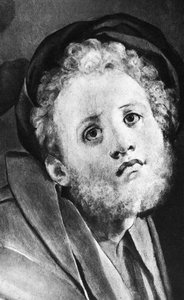
Pontormo
1494 - 1557 , Italien
Kortfakta
- Artistic Movement Or Style: Mannerism
- Artists Or Movements Influenced By This Artist:
- Renaissance
- Baroque
- Artists Who Influenced This Artist:
- Leonardo da Vinci
- Michelangelo
- Date Of Birth: 1494
- Date Of Death: 1557/7
- Full Name: Jacopo Pontormo
- Nationality: Italienare
- Notable Artworks:
- Besökelsen
- Deposition
- Place Of Birth: Pontorme, Italien
Relaterade artiklar

Om oss
Upptäck vår historia! Vi för in konst i världsklass i ditt liv genom experturval, skräddarsydda lösningar och kostnadsfria förhandsvisningar. Godkänt av privatpersoner och företag sedan år 2000.

Goyas 25 Mästerverk: En Konstnärlig Resa Genom Spansk Historia | OriginalUniqueArt
Utforska Goyas 25 mest ikoniska målningar! Fördjupa dig i spansk konsthistoria, romantikens dramatik och mörka färger. Köp museumkvalitativa reproduktioner & inred med tidlösa klassiker på OriginalUniqueArt.com.

The Enduring Legacy of Fine Art Prints: Technique, History & Aesthetic Impact
Explore the rich history & techniques of fine art prints. Discover investment potential, assess authenticity, and learn how to preserve your collection with expert guidance. Trusted insights for discerning collectors.

Jacopo Pontormo: A Bridge Between Renaissance Tradition & Mannerist Emotion
Explore the captivating world of Jacopo Pontormo, a pivotal Italian Mannerist painter. Discover his unique style, influences & masterpieces – and find museum-quality reproductions at OriginalUniqueArt.

Giclée Prints: Archival Quality & Aesthetic Nuances for the Discerning Collector
Explore the world of giclée prints with OriginalUniqueArt. Learn about archival quality, aesthetic nuances & investment potential. Expert guidance for discerning art collectors seeking museum-quality reproductions and lasting value.


