

 Visa i rummet
 Skicka
 Dela
Dela
 Detaljer
 Studentguide för konstverk

 Ladda ner
 Liknande objekt
 Röntgen
 Bildspel
 Besökstatistik
The Dust Storm
 Oil On Canvas
- WallArt
- Symbolism
 1893
1893- 19th Century
 78.0 x 150.0 cm
 Läs mer
Handgjord oljereproduktion
Handmålad olja på duk i din valda storlek och ram, tillverkad efter beställning av våra konstnärer. ( Byt till tryckta exemplar Byt till digital bildförsäljning)




P118B Skr10

P118H Skr10

P118W Skr10

P438Z Skr10

P508JH Skr12

P508YH Skr12

P805H Skr10

P805Z Skr10

P919BZ Skr10

P919G Skr10

P919XJ Skr10

P959ZH Skr10

P968JZ Skr12

W106C Skr8

W218G Skr10

W218JH Skr8

W218Y Skr10

W307PJ Skr10

W316G Skr10

W316PJ Skr8

W316Y Skr10

W398PJ Skr8

W4111J Skr10

W500HY Skr15

W500JH Skr15

W692G Skr12

W849H Skr8

W940BG Skr15

W953PJ Skr8




Välj bland våra förinställda storlekar som motsvarar konstverkets ursprungliga proportioner.

Ange den bredd och höjd du behöver för att passa din ram eller din vägg. Eftersom detta är handmålat kan konstnären vid en annan form måla lite mer runt bilden eller beskära den något – du väljer själv. Vi skickar en digital mockup för godkännande innan målningen påbörjas. Bilden som visas på denna sida representerar inte det slutgiltiga resultatet — det är endast mockuppen som visar det.
Efter beställning kommer OriginalUniqueArt.com team att mejla kunden för instruktioner och tillhandahålla en skissförhandsvisning
Leverans över hela världen () på 3–4 veckor istället för standard 5 veckor. (23 oktober). Inga kompromisser med kvaliteten.

Fri expressfrakt över hela världen

Högkvalitativ linnecanvas

Fullständig fraktförsäkring

Garantier för återbetalning av tullavgifter

Garantier för exakt färgåtergivning

100 dagars returrätt vid fabrikationsfel

100% pengarna tillbaka-garanti

Mängdrabatt erbjuds
 Glasalternativet är endast tillgängligt i storlekar under 110 cm.

The Dust Storm
Tryckteknik
Reproduktionsstorlek
-


Totalpris
Skr 3471
A Vision of Polish Symbolism: The Soul of The Dust Storm
In the vast, turbulent landscape of late 19th-century European art, few works capture the ethereal tension between reality and myth as profoundly as Jacek Malczewski’s The Dust Storm. Painted in 1893, this sweeping oil on canvas serves as a cornerstone of the Polish Symbolist movement, acting as a window into a nation's collective psyche during a period of profound longing for independence. The painting presents a scene that is simultaneously grounded in the earthy textures of a windsweical field and elevated by a divine, almost hallucinatory energy. As the eye wanders across the 78 x 150 cm expanse, one is immediately struck by the sense of motion; it is not merely a depiction of weather, but a depiction of a spiritual upheaval, where the boundaries between the human, the animal, and the divine begin to blur.
At the heart of this dramatic composition lies a woman mounted upon a horse, her white dress billowing like a sail against the encroaching chaos. Her arms are outstretched, a gesture that oscillates between a surrender to the elements and a triumphant embrace of freedom. Surrounding her, birds dance through the air, their flight patterns adding a frantic, rhythmic pulse to the scene. Malczewski masterfully utilizes a muted, atmospheric palette—dominated by ochres, deep browns, and hazy yellows—to evoke the suffocating yet majestic presence of a rising storm. The technique is characterized by expressive, visible brushstrokes that create a rich, impasto texture, particularly where the light catches the folds of the rider's garments and the muscular tension of the horse. This tactile quality lends the work an organic vitality, making the dust and wind feel almost tangible to the viewer.
Symbolic Resonance and Historical Depth
To understand The Dust Storm is to delve into the complex tapestry of Malczewski’s personal and national heritage. As the "father of Polish Symbolism," Malczeliwski infused his work with the romantic ideals of the Young Poland movement, blending Christian mythology with the poignant history of Polish martyrdom. The central figure on horseback serves as a potent metaphor for the spirit of independence—unyielding even when surrounded by the swirling debris of conflict. The birds, often interpreted as symbols of the chaotic and unpredictable nature of life, swirl around her in a way that mirrors the political and social turbulence of the era. Even the distant, solitary figure standing at the edge of the field invites contemplation; perhaps he is the artist himself, an eternal observer documenting the struggle for rebirth amidst destruction.
The painting draws deep inspiration from biblical narratives, specifically echoing themes of renewal and the scattering of seeds following a great upheaval. This layer of meaning transforms the dust storm from a mere meteorological event into a metaphor for divine intervention and the promise of hope after a period of profound loss. For the discerning collector or interior designer, this piece offers more than just aesthetic beauty; it provides a profound emotional anchor. The interplay of light and shadow, the dramatic diagonal thrust of the rider’s movement, and the heavy, atmospheric perspective create a sense of depth that commands attention in any space. Whether placed in a grand gallery or a curated private study, The Dust Storm invites a continuous dialogue between the viewer and the eternal cycle of chaos and rebirth.
For those seeking to bring this masterpiece into their own collection, high-quality, handmade oil painting reproductions are available through OriginalUniqueArt.com. These meticulously crafted tributes utilize traditional techniques to preserve the expressive brushwork and emotional gravity of Malczewski’s original vision, ensuring that the spirit of Polish Symbolism continues to inspire generations to come.
Frågor och svar
Hur beskrivs stämningen i "The Dust Storm" av Jacek Malczewski?
Den övergripande stämningen i "The Dust Storm" av Jacek Malczewski är Dramatic. Stämningen beskriver verkets allmänna atmosfär.
Vem är konstnären bakom "The Dust Storm"?
Konstnären bakom "The Dust Storm" är Jacek Malczewski. Verket är katalogiserat under Jacek Malczewskis namn.
Vilket nationellt ursprung ligger bakom Symbolism i "The Dust Storm"?
"The Dust Storm" förenar Symbolism-rörelsen med Polen genom sin skapares födelseplats.
Om konstnären
En Själ För Polen: Jacek Malczewskis Liv och Konst
Jacek Malczewski, född 1854 i Radom, en stad då belägen inom det rysk-kontrollerade Kongresspolen, var mer än bara en målare. Han var en visuell förkroppsligande av polsk nationell identitet och en djupgående röst för ett folk som längtade efter självbestämmande. Hans livs bana och konstnärliga vision var oupplösligt sammanflätade med de romantiska idealen om oberoende, djupt rotade i hans far, Julian Malczewski – en hängiven patriot som odlade hos den unge Jacek en orubblig kärlek till polsk kultur, litteratur och historia. Detta tidiga inflytande blev grundvalen för hans kreativa uttryck, formade honom till den ledande figuren inom polsk symbolism och gav honom den respekterade titeln ”polsk symbolisms fader”. Hans formativa år var genomsyrade av berättelser om heroism, uppoffring och en smärtsam medvetenhet om Polens problematiska förflutna – teman som skulle eka genom hela hans oeuvre. Familjens flytt till Wielgiem och vägledningen han fick av Adolf Dygasiński cementerade ytterligare denna koppling till Polens rika folklore och suggestiva landskap, vilket gav en outtömlig källa till inspiration för hans framtida konstnärliga strävanden.Från Akademisk Utbildning Till Symbolisk Uppenbarelse
Malczewskis konstnärliga resa började i Kraków 1872, där han studerade under Leon Piccard vid Konstakademien, och gynnades av mentorskapet från Władysław Łuszczkiewicz och Feliks Szynalewski. Ett avgörande ögonblick kom med hans tid vid École des Beaux-Arts i Paris, vilket exponerade honom för en mångfald av europeiska konstnärliga strömningar samtidigt som det stärkte hans engagemang för en distinkt polsk estetisk känslighet. Även om han absorberade internationella influenser, avvek Malczewski aldrig från den patriotiska glöd som definierade hans uppväxt. Denna unika syntes är tydligt synlig i hans tidiga verk, vilka gradvis utvecklades från historiska berättelser påverkade av Jan Matejko – vars dramatiska stil och utforskning av polsk historia lämnade ett bestående intryck – till mer komplexa symboliska kompositioner. Han fullbordade masterclasses med Matejko 1879, en period då han finslipade sina tekniska färdigheter samtidigt som han absorberade de neoromantiska metaforer som senare skulle karakterisera hans eget arbete. Artur Grottgers dramatiska konst spelade också en avgörande roll för att forma Malczewskis konstnärliga vision, särskilt dess emotionella intensitet och fokus på teman om lidande och motståndskraft.Symbolismens Språk: En Nations Själ Avslöjad
Malczewskis mogna stil kännetecknas av en suggestiv blandning av historiska motiv, kristen ikonografi, mytologiska allusioner och den hjemsökande skönheten i det polska landskapet. Han målade inte bara scener; han skapade visuella allegorier som talade direkt till nationens själ – en nation tyngd av förtryck men upprätthållen av ett bestående hopp. Verk som Melancholia (1890-1894), allmänt betraktat som ett mästerverk inom polsk symbolism, fångar den djupa känslan av nationell sorg och introspektion som rådde under en tid av politisk underordning. Błędne koło (Den galna cirkeln, 1895–97) står som en smärtsam reflektion över människans villkor, dess cykliska bildspråk speglar de till synes oändliga kampen för frihet och självbestämmande. Natchnienie malarza (Målarens musa, 1897) visar hans unika stil och utforskar konstnärens roll i samhället, ofta avbildar han sig själv inom sina målningar som en symbolisk figur som brottas med konstnärlig inspiration och nationell identitet. *Thanatos*-serien fördjupar sig i djupa teman om dödlighet och livet efter detta, vilket återspeglar ett filosofiskt djup som genomsyrade hans arbete. Hans samling av Bajki (Fabeler) hämtar inspiration från folklore och mytologi, ger dessa traditionella berättelser lager av symbolisk mening och erbjuder subtila kritiker av samtida samhälle.Arv och Bestående Inflytande på Polsk Konst
Utöver sina anmärkningsvärda konstnärliga prestationer ägnade Malczewski sig åt utbildning, tjänstgjorde som professor och senare rektor vid Konstakademien i Kraków. Han fostrade generationer av artister, förmedlade inte bara tekniska färdigheter utan också en djup känsla av nationell stolthet och orubblig konstnärlig integritet. Hans verk ställdes ut internationellt och fick erkännande för sin unika blandning av polsk identitet och europeiska konstnärliga trender. Bevarandet av hans arv berodde till stor del på de outtröttliga ansträngningarna från hans son, Rafał Malczewski, som säkerställde att många av hans faders målningar hamnade på Nationalmuseet i Warszawa. Jacek Malczewskis inflytande på polsk konst är obestridligt; han förblir en central figur i nationens kulturarv, för alltid firad som ”polsk symbolisms fader”. Hans förmåga att väva samman personliga känslor, nationell längtan och universella teman fortsätter att resonera med publiken idag och befäster hans plats bland de stora mästarna inom europeisk målning. Han lämnade efter sig inte bara målningar utan ett visuellt språk som talade volymer om den polska andan – en anda av motståndskraft, tro och ett bestående hopp om en ljusare framtid.Kännetecken för Hans Verk
- Symbolism: Malczewskis verk är djupt rotat i symbolism, använder allegoriska figurer och motiv för att förmedla komplexa idéer om polsk identitet, historia och andlighet.
- Patriotism: En stark känsla av patriotism genomsyrar hans konst, vilket återspeglar Polens kamp för oberoende och längtan efter nationell återupplivning.
- Mytologi & Folklore: Han hämtade ofta inspiration från polsk folklore, mytologi och religiösa teman och blandade dem med historiska berättelser.
- Psykologiskt Djup: Hans målningar utforskar ofta psykologiska tillstånd av melankoli, introspektion och existentiella frågor.
- Unik Stil: Malczewski utvecklade en distinkt stil som kännetecknas av dämpade färger, eteriska atmosfärer och drömlika bilder.
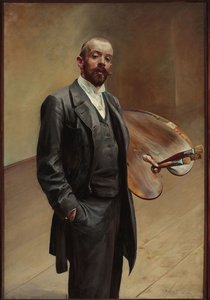
Jacek Malczewski
1854 - 1897 , Polen
Snabbfakta
- Dödsdatum: 8 oktober 1929
- Fullt Namn: Jacek Malczewski
- Födelsedatum: 15 juli 1854
- Födelseplats: Radom, Polen
- Konströrelse: Symbolism
- Kända Verk:
- Melancholia
- Błędne koło
- Nationalitet: Polsk
- Påverkade: ['Ung Polen']
- Påverkade Av:
- Jan Matejko
- Artur Grottger
Relaterade artiklar

Olja på duk: En tidlös teknik – Historik, process och konstnärliga möjligheter
Utforska oljemålningskonsten! Lär dig om flamländsk teknik, materialval och historisk utveckling. Expertguider för både nybörjare och erfarna konstnärer – bevara dina målningar med bästa praxis.

Jacek Yerka: Surreal Visions & Nostalgia in Contemporary Polish Painting
Explore the captivating surreal worlds of Jacek Yerka, a leading Polish painter renowned for his meticulous Flemish technique & dreamlike landscapes. Discover his unique style and learn about collecting this exceptional artist's work.

The Enduring Legacy of Oil on Canvas: Technique, History & Aesthetic Impact
Explore the rich history & techniques of oil painting – from Renaissance masters to Impressionism. Discover pigments, layering methods, and why this timeless medium endures. Expert insights for artists & art enthusiasts.

The Enduring Power of Painting: A Historical & Contemporary Exploration of Form and Emotion
Explore the rich history & enduring techniques of oil painting with OriginalUniqueArt. Discover masterpieces, learn about art collecting, and find authentic handmade reproductions crafted by skilled artists.

Olja på dukens bestående arv: Teknik, historia och samtida praktik
Utforska oljemåleriets rika historia och tekniker – från renässansens mästare till dagens konstnärer. Lär dig om material, metoder och konservering för att bevara konsten.

