

 Förhandsvisa
 Skicka
 Dela
Dela
 Visa detaljer
 Guide
Guide

 Ladda ner
 Liknande objekt
 Röntgen
 Bildspel
 Statistik
Bean Vine
 Japanese Traditional
 701
701 126.0cm x 48.0cm
 Visa mer
Giclée / Konsttryck
Giclée- eller canvasprint av museumskvalitet med snabb produktion och flexibla ytbehandlingsalternativ. ( Beställ handmålad reproduktion Byt till digital bild)




































Välj bland våra förinställda storlekar som motsvarar konstverkets ursprungliga proportioner.

Ange den bredd och höjd du behöver för att passa din ram eller vägg. Ett tryck kan endast beskäras, aldrig göras större än originalbilden, vilket innebär att ett format med en annan proportion leder till att en del av bilden går förlorad. Vi skickar en digital mockup för godkännande innan vi påbörjar tryckningen. Bilden som visas på denna sida visar inte den faktiska beskärningen — det är endast mockuppen som gör det.
Leverans över hela världen () på 2 veckor istället för standard 4/5 veckor. (26 oktober)

Fri expressfrakt över hela världen

Högkvalitativ linnecanvas

Fullständig fraktförsäkring

Garantier för återbetalning av tullavgifter

Garantier för exakt färgåtergivning

100 dagars returrätt (endast vid fel)

100% pengarna tillbaka-garanti

Mängdrabatt erbjuds
 Glasalternativet är endast tillgängligt i storlekar under 110 cm.

Bean Vine
Giclée / Konsttryck
Storlek på reproduktion
-


Slutgiltigt pris
Skr 793
Frågor och svar
Var kan jag hitta statistik för "Bean Vine" av Ito Jakuchū?
En Besöksstatistik-sida finns för "Bean Vine". Den visar månatliga besök för konstverket och konstnärens övriga verk, uppdelat per land och språk.
Vilket format har "Bean Vine" av Ito Jakuchū?
"Bean Vine" av Ito Jakuchū är en komposition i Portrait. Det är värt att kontrollera proportionerna innan du väljer tryckstorlek.
Vilken luminans har "Bean Vine" av Ito Jakuchū?
Luminansen som registrerats för "Bean Vine" av Ito Jakuchū är Bright Balance.
Konstnärsbiografi
Itō Jakuchū: A Kyoto Merchant’s Vision of Nature
- Early Life and Family Background
- Training and Artistic Influences
- Style and Technique – The Eccentric Master
- Notable Works and Symbolism
- Legacy and Rediscovery in the 20th Century
Early Life and Family Background
Itō Jakuchū (伊藤 若冲; March 2, 1716 – October 27, 1800) emerged from the bustling Nishiki market district of Kyoto—a vibrant hub of commerce and culture—as one of Japan’s most singular artistic voices. Unlike many artists of his era who adhered to established lineages within the Kano school or other formalized traditions, Jakuchū's formative years were profoundly shaped by his father’s role as a successful grocer – Itō Genzaemon – establishing Masuya, a prominent retail business at the heart of Kyoto’s commercial center. This familial connection instilled in him not only an understanding of economic realities but also a keen awareness of societal shifts occurring during Edo period Japan—a perspective that subtly permeated his artistic worldview. Growing up amidst this dynamic environment fostered a spirit of observation and experimentation, preparing him for a path distinct from conventional artistic training.Training and Artistic Influences
Jakuchū’s artistic education was unconventional by Edo standards. Rather than attending a formal art academy—a practice common among aspiring artists—he honed his skills independently, absorbing knowledge primarily through the mentorship of Ōoka Shunboku, a Kano school artist based in Osaka. Shunboku's teachings focused on mastering the meticulous depiction of birds and flowers – *doshoku sai-e*, a technique that would become Jakuchū’s signature style. However, crucially, Jakuchū also undertook extensive study within Shokoku-ji temple—a Zen Buddhist institution—where he encountered classic Chinese paintings from the Yuan and Ming dynasties. This exposure broadened his artistic horizons beyond mere stylistic imitation, fostering an appreciation for contemplative observation and informing his philosophical underpinning.Style and Technique – The Eccentric Master
Jakuchū’s artistic style stands as a mesmerizing blend of painstaking realism and daring innovation. While deeply rooted in traditional Japanese subjects—particularly birds, flowers, and landscapes—he defied convention by venturing beyond mere replication of nature. His paintings are characterized by vibrant colors, dynamic compositions, and an unwavering willingness to challenge established perspectives. He achieved renown alongside Maruyama Ōkyo for his realistic renderings, yet Jakuchū distinguished himself through a profound engagement with Zen Buddhist principles. Unlike many artists who sought to capture idealized beauty, Jakuchū aimed to convey the essence of life—the vitality and character inherent within each subject. His masterful polychrome renderings – *doshoku sai-e* – are particularly celebrated for their extraordinary attention to detail and luminous palette, a stylistic hallmark rarely seen in Edo period painting.Notable Works and Symbolism
Among Jakuchū’s most iconic creations is “Five Hundred Arhats,” a monumental undertaking that exemplifies his technical prowess and artistic dedication. This ambitious project—a depiction of five hundred Buddhist monks attaining enlightenment—demonstrates Jakuchū's mastery of perspective and color, pushing the boundaries of conventional painting techniques. Equally compelling are “Hanshan and Shide” – a pair of hanging scrolls depicting two Zen monks contemplating the beauty of nature—which capture the spirit of contemplative stillness and reverence for the natural world. Furthermore, his “Crabs and Peonies,” considered quintessential examples of Jakuchū’s distinctive style, seamlessly blend meticulous botanical detail with expressive brushwork, conveying profound symbolic meaning.Legacy and Rediscovery in the 20th Century
Despite remaining largely unknown during his lifetime—a fate shared by many artists of his era—Jakuchū experienced a dramatic resurgence of interest in the 20th century thanks to the pioneering scholarship of Nobuo Tsuji. Tsuji’s groundbreaking book, *Kisō no Keifu* (“Lineage of Eccentrics”), revolutionized perceptions of Edo period art by identifying Jakuchū as a pivotal figure within this movement—artists who deliberately rejected artistic conventions and pursued originality. This rediscovery propelled Jakuchū to prominence, establishing him as one of Japan’s most important painters and cementing his place in art history. Subsequent exhibitions and scholarly analyses further illuminated Jakuchū's genius, solidifying his reputation as a visionary artist who irrevocably shaped the trajectory of Japanese painting.
Ito Jakuchū
1716 - 1800 , Japan
Kortfakta
- Artistic Movement Or Style: Lineage of Eccentrics
- Artists Or Movements Influenced By This Artist: ['Kano School']
- Artists Who Influenced This Artist: ['Ōoka Shunboku']
- Date Of Birth: 2 mars 1716
- Date Of Death: 27 okt 1800
- Full Name: Itō Jakuchū
- Nationality: Japan
- Notable Artworks: ['Birds, Animals and Flowering Plants in an Imaginary Scene']
- Place Of Birth: Kyoto, Japan
Relaterade artiklar

Ephemeral Expressions: Exploring the Nuances of Ink on Paper Through History & Contemporary Art
Explore the captivating world of ink wash painting – from its ancient origins to contemporary masters. Discover techniques, symbolism & conservation insights with OriginalUniqueArt.com.

Katsushika Hokusais 25 Mästerverk: Ukiyo-e Konst & Heminredning | OriginalUniqueArt
Utforska Katsushika Hokusais 25 mest ikoniska ukiyo-e konstverk. Lär känna historien bakom 'The Great Wave' och andra mästerverk från japansk konst. Köp högkvalitativa reproduktioner & inred med tidlös skönhet på OriginalUniqueArt.com.
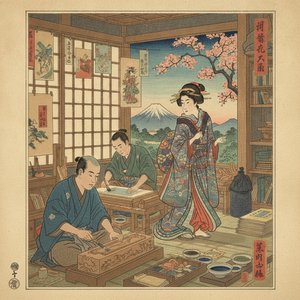
Floating World: The Captivating Art and Legacy of Japanese Ukiyo-e
Explore the profound beauty of Japanese Ukiyo-e. Discover the history, masters like Hokusai, and the enduring legacy of the 'Floating World' through an expert art-historical lens.
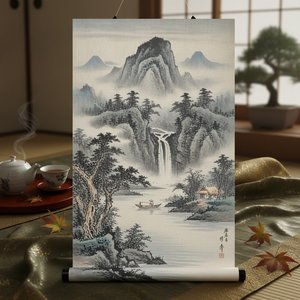
Serenity on Canvas: A Guide to the Timeless Beauty of Japanese Landscape Painting
Discover the serene beauty of Japanese landscape painting. From Hokusai's iconic woodblock prints to meditative sumi-e ink washes, explore a visual journey through the 'floating world' and learn how to bring this timeless Zen aesthetic into your modern home decor.
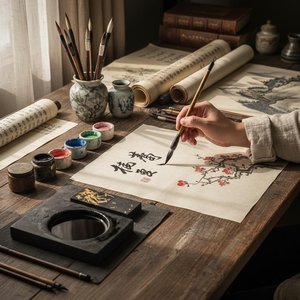
The Alchemy of Ink: Mastering the Timeless Beauty and Art History of Paper and Brush
Embark on a sophisticated exploration of ink wash painting and Sumi-e. Uncover the profound historical lineages, Zen philosophies, and technical mastery behind this timeless medium in our authoritative guide for fine art enthusiasts.
