

 Visa i rummet
 Skicka
 Dela
Dela
 Detaljer
 Studentguide för konstverk

 Ladda ner
 Liknande objekt
 Röntgen
 Bildspel
 Besökstatistik
River Crossing
 Oil On Canvas
- WallArt
- Baroque Landscape
 1665
1665 63.0 x 84.0 cm
 Ermitaget
 Läs mer
Handgjord oljereproduktion
Handmålad olja på duk i din valda storlek och ram, tillverkad efter beställning av våra konstnärer. ( Byt till tryckta exemplar Byt till digital bildförsäljning)




P118B Skr10

P118H Skr10

P118W Skr10

P438Z Skr10

P508JH Skr12

P508YH Skr12

P805H Skr10

P805Z Skr10

P919BZ Skr10

P919G Skr10

P919XJ Skr10

P959ZH Skr10

P968JZ Skr12

W106C Skr8

W218G Skr10

W218JH Skr8

W218Y Skr10

W307PJ Skr10

W316G Skr10

W316PJ Skr8

W316Y Skr10

W398PJ Skr8

W4111J Skr10

W500HY Skr15

W500JH Skr15

W692G Skr12

W849H Skr8

W940BG Skr15

W953PJ Skr8




Välj bland våra förinställda storlekar som motsvarar konstverkets ursprungliga proportioner.

Du kan ange egna mått för att passa en specifik ram eller yta. Om den valda storleken inte matchar originalbildens proportioner kommer vi antingen att beskära konstverket eller utöka målningen med ytterligare handmålade element. En digital skiss skickas till dig för godkännande innan produktionen påbörjas.
Observera att förhandsvisningen på skärmen inte återspeglar den faktiska beskärningen eller utökningen. Endast skissen visar den slutgiltiga kompositionen korrekt.
Även om anpassade storlekar är möjliga, rekommenderar vi att du väljer en dimension från den fördefinierade listan för att bevara originalproportionerna.
Efter beställning kommer OriginalUniqueArt.com team att mejla kunden för instruktioner och tillhandahålla en skissförhandsvisning
Leverans över hela världen () på 3–4 veckor istället för standard 5 veckor. (13 oktober). Inga kompromisser med kvaliteten.

Fri expressfrakt över hela världen

Högkvalitativ linnecanvas

Fullständig fraktförsäkring

Garantier för återbetalning av tullavgifter

Garantier för exakt färgåtergivning

100 dagars returrätt vid fabrikationsfel

100% pengarna tillbaka-garanti

Mängdrabatt erbjuds
 Glasalternativet är endast tillgängligt i storlekar under 110 cm.

River Crossing
Tryckteknik
Reproduktionsstorlek
-


Totalpris
Skr 2909
A Singular Vision: Ignacio de Iriarte and His Landscape Masterpieces
Ignacio de Iriarte (1620-1685), a name often overshadowed by the luminaries of his time – Murillo, Zurbarán – nonetheless occupies a crucial position in Spanish Baroque art. Unlike many artists preoccupied with religious commissions or portraiture, Iriarte dedicated himself almost entirely to capturing the untamed grandeur of the Iberian Peninsula’s rural vistas. This unwavering focus resulted in a distinctive artistic style that distinguishes him from his contemporaries and secures his place as “the Spanish Claude Lorraine,” a moniker reflecting his profound admiration for the French landscape painter whose work championed natural beauty and atmospheric perspective.
- Early Influences: Iriarte’s formative years were spent in Azcoitia, Gipuzcoa, where he received a grounding in humanist scholarship alongside artistic training. His apprenticeship with Francisco Herrera the Elder instilled him with foundational principles of disegno – Italian Renaissance drawing techniques – emphasizing careful observation and anatomical accuracy.
- Seville and Artistic Evolution: Moving to Seville in 1642 marked a pivotal moment, propelling Iriarte into the vibrant artistic milieu of the city. Here, he honed his skills further, experimenting with chiaroscuro—the dramatic interplay of light and shadow—a technique perfected by Caravaggio and embraced wholeheartedly by Iriarte.
The Style of Wildness: Defining Iriarte’s Artistic Language
What truly sets Iriarte apart is his stylistic approach. He eschewed the idealized landscapes favored by many artists, opting instead for depictions that convey a palpable sense of ruggedness and immediacy. His canvases pulsate with energy, capturing fleeting moments of weather – storms brewing over distant mountains, sunlit meadows dotted with wildflowers – with breathtaking realism. Unlike Caravaggio’s theatrical lighting, Iriarte employed softer illumination to sculpt the contours of his subjects, creating an atmosphere that is both dramatic and contemplative.
- Atmospheric Perspective: A hallmark of Iriarte's technique is masterful atmospheric perspective—the illusion of depth achieved through subtle gradations of color and tonal value. He skillfully renders distant landscapes with muted hues and hazy outlines, conveying the vastness and majesty of nature.
- Detailed Observation: Iriarte’s paintings are characterized by meticulous detail, reflecting his unwavering commitment to accurate representation. From the texture of bark on ancient trees to the ripples in a turbulent stream, every element is rendered with painstaking precision.
Historical Context and Symbolic Resonance
Iriarte's artistic endeavors unfolded against the backdrop of Spain’s Baroque era—a period marked by fervent religious fervor and opulent patronage. However, Iriarte transcended mere decorative splendor, imbuing his landscapes with profound symbolic significance. The depiction of solitary figures contemplating the sublime beauty of nature speaks to a humanist preoccupation with contemplation and moral reflection – values championed by thinkers like Descartes and Spinoza.
- The Sublime: Iriarte’s canvases embody the concept of “the sublime”—a feeling of awe and terror inspired by encountering overwhelming grandeur. He captures the majesty of mountains, the power of storms, and the immensity of the sky, prompting viewers to confront their own insignificance in the face of nature's forces.
- Religious Undertones: While primarily focused on landscape, Iriarte’s paintings often incorporate subtle religious iconography—references to biblical narratives or depictions of saints—suggesting a desire to elevate the viewer’s spirit and connect him with divine transcendence.
Legacy and Enduring Appeal
Despite his relative obscurity during his lifetime, Ignacio de Iriarte has experienced a resurgence of interest in recent decades. His landscapes continue to captivate audiences worldwide, admired for their breathtaking beauty, technical virtuosity, and profound emotional resonance. Reproductions of his masterpieces adorn homes and galleries across the globe, testament to the enduring power of his vision—a singular dedication to portraying the untamed splendor of Spain’s countryside that secures him a rightful place among the greatest artists of the Baroque.
Frågor och svar
Hur förhåller sig motivet i "River Crossing" till Ignacio de Iriartes vanliga teman?
Ignacio de Iriartes återkommande teman inkluderar lorraine influence, spanish tradition, rural calmness, landscape genre, painter’s vision; "River Crossing" fokuserar på rural landscape, cows crossing river, stone bridge, tranquility, spanish art, atmospheric light, pastoral scene.
Var kan jag hitta statistik om "River Crossing" av Ignacio de Iriarte?
Sidan Statistik för "River Crossing" av Ignacio de Iriarte presenterar statistik över publika besök: månatliga besök för detta konstverk, en jämförelse med konstnärens mest sedda verk samt varifrån besökarna kommer.
Var kan man se "River Crossing" av Ignacio de Iriarte utställd idag?
"River Crossing" av Ignacio de Iriarte visas på Ermitaget, Saint Petersburg, Russia. Museilistan avser originalverket, inte reproduktioner.
Vilka är reproduktionsrättigheterna för "River Crossing" på Ermitaget?
"River Crossing" av Ignacio de Iriarte, som finns på Ermitaget, är allmän egendom – upphovsrätten har löpt ut. Denna status avgör om reproduktioner av bilden får framställas.
Vem skapade "River Crossing" och när?
"River Crossing" skapades av Ignacio de Iriarte år 1665.
Vilken färgharmoni uppvisar "River Crossing" av Ignacio de Iriarte?
Färgerna i "River Crossing" av Ignacio de Iriarte uppvisar en Strong Color Unity harmoni. Harmoni beskriver hur färgerna förhåller sig till varandra.
Finns "River Crossing" tillgänglig som ett konsttryck?
"River Crossing" finns tillgänglig som ett konsttryck på bomullscanvas eller arkivbeständigt canvaspapper. Beställningar görs på denna sida i den storlek du önskar.
Vilken underliggande nyans genomsyrar "River Crossing" av Ignacio de Iriarte?
En Ochre to Sepia nyans går igenom "River Crossing" av Ignacio de Iriarte.
Relaterade artiklar

Goyas 25 Mästerverk: En Konstnärlig Resa Genom Spansk Historia | OriginalUniqueArt
Utforska Goyas 25 mest ikoniska målningar! Fördjupa dig i spansk konsthistoria, romantikens dramatik och mörka färger. Köp museumkvalitativa reproduktioner & inred med tidlösa klassiker på OriginalUniqueArt.com.

Cultivating Visions: A Historical Journey Through Rural Landscapes in Art
Explore the rich history of rural landscape painting with OriginalUniqueArt. Discover Impressionist masterpieces, key artists & movements. Find your perfect serene artwork and bring nature's beauty home.

John Constables 25 Mästerverk: En Konstnärlig Resa i Det Engelska Landskapet | OriginalUniqueArt
Utforska John Constables 25 mest ikoniska målningar – romantikens mästare av det engelska landskapet. Upptäck historien, tekniken & skönheten i verk som 'Hay Wain'. Köp exklusiva konsttryck på OriginalUniqueArt.com.
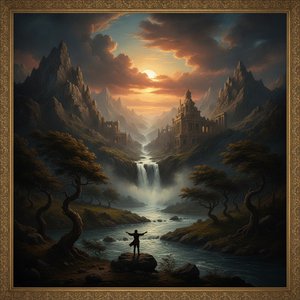
Epic Drama & Dark Vibes: The Ultimate Collector's Guide to Baroque Landscapes
Master the art of drama with our ultimate guide to Baroque landscapes. Discover the power of chiaroscuro, explore legendary masters, and learn how to curate epic, dark-vibe masterpieces for your collection with expert insights from OriginalUniqueArt.
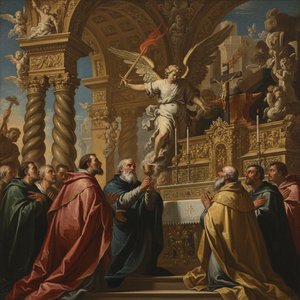
The Golden Age Reforged: Dramatic Realism & Religious Zeal in Spanish Baroque Art
Explore the dramatic world of Spanish Baroque art! Discover masters like Zurbarán & the powerful influence of religious zeal on painting techniques – a guide for collectors and enthusiasts.
