

 Förhandsvisa
 Skicka
 Dela
Dela
 Visa detaljer

 Ladda ner
 Liknande objekt
 Röntgen
 Bildspel
 Statistik
Sunset, Fort William
 Impressionism
 1992
1992 61.0 x 72.0 cm
 Visa mer
Giclée / Konsttryck
Giclée- eller canvasprint av museumskvalitet med snabb produktion och flexibla ytbehandlingsalternativ. ( Beställ handmålad reproduktion Byt till digital bild)




































Välj bland våra förinställda storlekar som motsvarar konstverkets ursprungliga proportioner.

Du kan ange egna mått för att passa en specifik ram eller yta. Om det valda måttet inte överensstämmer med originalbildens proportioner kommer vi antingen att beskära konstverket eller utöka bilden med en speglad eller enfärgad kant. En digital mockup skickas för ditt godkännande innan produktionen påbörjas.
Vänligen notera att förhandsvisningen på skärmen inte återspeglar den faktiska beskärningen eller utökningen. Endast mockuppen visar den slutgiltiga kompositionen korrekt.
Även om anpassade storlekar är möjliga, rekommenderar vi att du väljer ett mått från den fördefinierade listan för att bevara de ursprungliga proportionerna.
Leverans över hela världen () på 2 veckor istället för standard 4/5 veckor. (10 september)

Fri expressfrakt över hela världen

Högkvalitativ linnecanvas

Fullständig fraktförsäkring

Garantier för återbetalning av tullavgifter

Garantier för exakt färgåtergivning

100 dagars returrätt (endast vid defekter)

100% pengarna tillbaka-garanti

Mängdrabatt erbjuds
 Glasalternativet är endast tillgängligt i storlekar under 110 cm.

Sunset, Fort William
Giclée / Konsttryck
Storlek på reproduktion
-


Slutgiltigt pris
$ 80
Konstnärsbiografi
The Luminous Landscapes of Hugh McNeil McIntyre
In the delicate interplay between light and shadow, one finds the very soul of British watercolor painting through the eyes of Hugh McNeil McIntyre. Born in Oxford in 1943, McIntyre has dedicated his life to a profound exploration of the natural world, specifically capturing the atmospheric nuances of rural Scotland and the sun-drenched vistas of Provence. His journey as an artist is not merely one of technical mastery but of a deep, spiritual connection to the landscapes he inhabits. Through his work, the viewer is invited to experience the quiet stillness of a Scottish evening or the vibrant, warm energy of the Mediterranean, all rendered with a sensitivity that transcends simple representation.
McIntyre’s artistic foundation was laid during his formative years at St Hugh’s College, where he immersed himself in intensive studio practice. It was here that he developed an unwavering devotion to watercolor, a medium chosen for its unique ability to capture the ephemeral qualities of light and moisture. This early training instilled in him a respect for the transparency and fluidity of the medium, allowing him to layer colors in a way that mimics the natural diffusion of sunlight through mist or sea spray. His education provided more than just technical skill; it fostered an observational discipline that would become the cornerstone of his entire oeuvre.
A Symphony of Impressionism and Texture
While many artists seek to replicate reality, McIntyre seeks to capture its essence. His style is deeply rooted in Impressionism, yet he moves beyond mere imitation by integrating a tactile, physical dimension into his work. He possesses a remarkable ability to analyze how light transforms a surface, using loose and expressive brushstrokes to build up tonal variations that breathe life into his subjects. A defining characteristic of his technique is the use of impasto—the thick application of paint—which introduces a sculptural quality to his landscapes. This creates a fascinating tension between the delicate transparency of watercolor and the rugged, physical presence of the earth itself.
This mastery of texture allows him to convey the materiality of his subjects, whether it be the weathered stone of a Scottish farm building or the soft, undulating hills of the Galloway coast. His paintings are not just visual experiences but sensory ones; one can almost feel the dampness of the Highland air or the warmth of the Provençal sun through the rhythmic layering of pigment. By blending these contrasting techniques, McIntyre achieves a profound sense of atmosphere that resonates with both emotional depth and physical reality.
Legacy and the Essence of Place
The significance of McIntyre’s work lies in his ability to act as a chronicler of place. His series of paintings depicting iconic Scottish locations, such as Fort William and Lochrutton, serve as evocative tributes to the rugged beauty of his homeland. In works like "Evening, Lochrutton," he captures a sense of tranquil abstraction, where the landscape dissolves into a mood of quiet contemplation. Similarly, his depictions of the Galloway Shore and the Upper Cairn demonstrate his skill in navigating complex coastal and rural terrains, finding beauty in the most subtle shifts of color and light.
Throughout his prolific career, McIntyre has remained a steadfast observer of nature’s rhythms. His achievements are found not in grand gestures, but in the quiet success of capturing a fleeting moment—a sunset over a loch or the way shadows stretch across a field at dusk. As an artist, he occupies a vital space in the tradition of British landscape painting, bridging the gap between classical observation and modern expressive technique. His work continues to inspire collectors and art lovers alike, offering a timeless window into the enduring beauty of the natural world.

hugh mcneil mcintyre
1943 -
Kortfakta
- Artistic Movement Or Style: Impressionism
- Artists Or Movements Influenced By This Artist: ['Scottish Impressionism']
- Artists Who Influenced This Artist:
- Claude Monet
- Vincent van Gogh
- Date Of Birth: 1943
- Full Name: Hugh McNeil McIntyre
- Nationality: British
- Notable Artworks:
- Sunset, Fort William
- Evening, Lochrutton
- Place Of Birth: Glasgow, Scotland
Relaterade artiklar

Impressionismens Mästerverk: Topp 10 Landskap som Förändrade Konsten | OriginalUniqueArt
Upptäck de 10 mästerverk som definierade impressionistiska landskap! Monet, Renoir & Cézanne – lär känna historien bakom ikoniska oljemålningar. Hitta inspiration och museumskvalitativa konsttryck på OriginalUniqueArt.com.

Topp 10 Impressionistiska Mästerverk – Landskap som Förändrade Konsten | OriginalUniqueArt.se
Upptäck de 10 mest ikoniska impressionistiska landskapsmålningarna av Monet, Renoir & Van Gogh. Lär känna historien bakom mästerverken och hitta inspiration för din inredning på OriginalUniqueArt.se – museumkvalitet hem till dig!
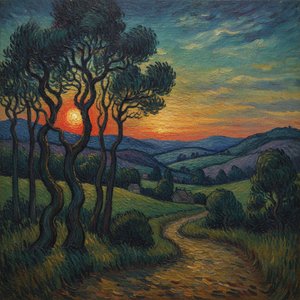
Beyond the Light: Capturing Raw Emotion and Subjective Vision in Post-Impressionist Landscapes
Explore the profound emotional depth of Post-Impressionist landscapes. Discover how masters like Van Gogh moved beyond light to capture raw human feeling through vibrant color and expressive texture in this expert art history retrospective.

Evocations of Place: A Historical Journey Through Landscape Art
Explore the rich history of landscape art with OriginalUniqueArt. Discover renowned artists, movements like Impressionism & Romanticism, and expert guidance for collecting timeless pieces. Find your perfect serene escape today!
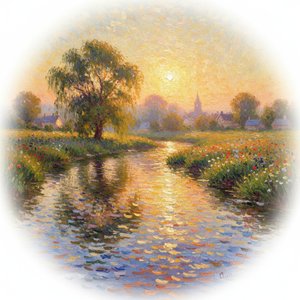
Capturing Light: A Masterclass in the Ethereal Beauty of Impressionistic Landscapes
Explore the ethereal beauty of Impressionist landscapes. Discover how masters like Monet captured fleeting light through color and texture, and learn to curate these timeless, luminous masterpieces for your home collection.