

 Förhandsvisa
 Skicka
 Dela
Dela
 Visa detaljer

 Ladda ner
 Liknande objekt
 Röntgen
 Bildspel
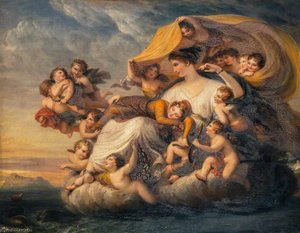
Charles Kemble
 156.0 x 114.0 cm
 Visa mer
Handgjord oljereproduktion
Handmålad olja på duk i din valda storlek och ram, tillverkad efter beställning av våra konstnärer. ( Beställ tryck Köp högupplöst bild)




































Välj bland våra förinställda storlekar som motsvarar konstverkets ursprungliga proportioner.

Du kan ange egna mått för att passa en specifik ram eller yta. Om den valda storleken inte matchar originalbildens proportioner kommer vi antingen att beskära konstverket eller utöka målningen med ytterligare handmålade element. En digital skiss skickas till dig för godkännande innan produktionen påbörjas.
Observera att förhandsvisningen på skärmen inte återspeglar den faktiska beskärningen eller utökningen. Endast skissen visar den slutgiltiga kompositionen korrekt.
Även om anpassade storlekar är möjliga, rekommenderar vi att du väljer en dimension från den fördefinierade listan för att bevara originalproportionerna.
Efter beställning kommer OriginalUniqueArt.com team att mejla kunden för instruktioner och tillhandahålla en skissförhandsvisning
Leverans över hela världen () på 3–4 veckor istället för standard 5 veckor. (24 augusti). Inga kompromisser med kvaliteten.

Fri expressfrakt över hela världen

Högkvalitativ linnecanvas

Fullständig fraktförsäkring

Garantier för återbetalning av tullavgifter

Garantier för exakt färgåtergivning

60 dagars returrätt (endast vid fabrikationsfel)

100% pengarna tillbaka-garanti

Mängdrabatt erbjuds
 Glasalternativet är endast tillgängligt i storlekar under 110 cm.

Charles Kemble
Reproduktionsmedium
Storlek på reproduktion
-


Slutgiltigt pris
$ 300
Konstnärsbiografi
A Legacy of Light and Line: The Life of Henry Howard
Born in the vibrant heart of London in 1769, Henry Howard emerged as a distinguished figure within the prestigious circles of British portraiture and history painting during the Regency era. His journey into the world of fine art began with formal instruction under the painter Philip Reinagle, a mentorship that laid the essential groundwork for his technical mastery. As a student at the Royal Academy Schools, Howard’s precocious talent was quickly recognized; he earned both a silver medal for drawing from life and a gold medal for historical painting, specifically for his evocative work Caractacus Recognising the Dead Body of his Son. This early success signaled the arrival of an artist capable of blending the rigorous demands of academic precision with a profound, narrative-driven soul.
The trajectory of Howard’s development was deeply shaped by his travels across the European continent. In 1791, his explorations through Italy, France, and Switzerland provided him with a firsthand encounter with the grandeur of classical antiquity. In Rome, he immersed himself in the study of sculpture under the guidance of masters like John Flaxman. These experiences instilled in him a reverence for the sculptural form and the dramatic potential of mythological themes. This period of wandering was not merely an educational excursion but a spiritual immersion into the Neoclassical ideals that would later define his compositions, allowing him to infuse his canvases with a sense of timelessness and monumental grace.
Mastery of Portraiture and Historical Narrative
Howard’s artistic output was characterized by a remarkable versatility, oscillating between the intimate psychological depth of portraiture and the sweeping drama of historical scenes. While he is celebrated for capturing the likenesses of his contemporaries with meticulous attention to detail, it was his ability to breathe life into legendary narratives that truly set him apart. His fascination with the Etruscan School and the influence of Benjamin West allowed him to explore themes of mythology and literature with a theatrical flair. Whether depicting scenes from Milton’s Paradise Lost or illustrating the works of Alexander Pope, Howard utilized light and shadow to guide the viewer's eye through complex, emotionally charged environments.
His technical prowess extended beyond the brush; Howard was also a gifted draftsman and designer. His contributions to the decorative arts were significant, including designs for Josiah Wedgwood’s renowned pottery, demonstrating his ability to translate fine art principles into functional beauty. This multidisciplinary approach—spanning from large-scale oil paintings to delicate engravings and sculptural studies—reflects an artist who viewed art as a cohesive language of form and light. His work often featured a subtle tonal gradation and a precise command of composition that transformed even the most static subjects into dynamic visual experiences.
Academic Eminence and Lasting Significance
The latter years of Howard’s life were marked by profound institutional importance within the British art world. His ascent within the Royal Academy was both steady and prestigious, moving from an associate member to a full member in 1808. His dedication to the institution was unparalleled; he served as the Secretary of the Academy and eventually held the esteemed position of Professor of Painting at the Royal Academy Schools. Through these roles, Howard did more than just create art—he helped shape the pedagogical standards for the next generation of British painters, ensuring that the traditions of classical training and historical narrative would endure.
Though his name may sometimes be overshadowed by the titans of his era, such as Reynolds or Hogarth, Henry Howard’s contribution to the 19th-century aesthetic remains indelible. His ability to marry the elegance of Neoclassicism with a burgeoning sense of realism allowed him to capture the essence of an era in transition. Today, his works stand as vital historical documents, offering a window into the refined sensibilities and the dramatic imagination of the Regency period. His legacy is found not only in the museums that house his masterpieces but in the very foundation of academic painting he helped to build.
henry howard
1769 - 1847
Kortfakta
- Artistic Movement Or Style: Neoclassical
- Artists Or Movements Influenced By This Artist: ['Etruscan School']
- Artists Who Influenced This Artist: ['Hans Holbein the Younger']
- Date Of Birth: 1769
- Date Of Death: 1847
- Full Name: Henry Howard
- Nationality: British
- Notable Artworks:
- Venus Carrying off Ascanius
- Peasants of Subiaco Returning from the Vineyard on a Holiday
- Place Of Birth: England

