
 Skicka
 Dela
Dela
 Visa detaljer

 Ladda ner
 Liknande objekt
 Bildspel
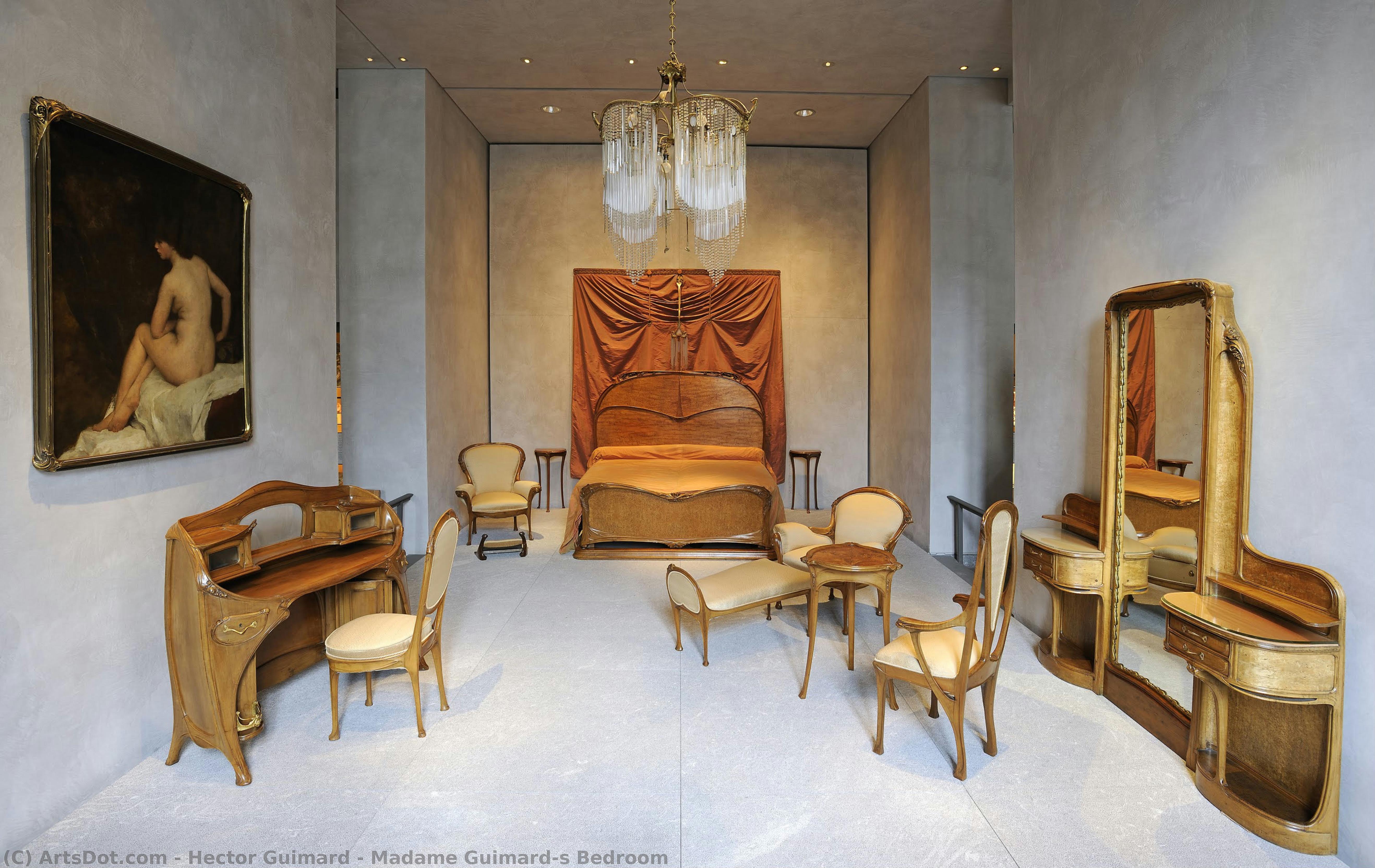
Madame Guimard’s Bedroom


 Visa mer
Handgjord oljereproduktion
Handmålad olja på duk i din valda storlek och ram, tillverkad efter beställning av våra konstnärer. ( Beställ tryck Köp högupplöst bild)




































Välj bland våra förinställda storlekar som motsvarar konstverkets ursprungliga proportioner.

Du kan ange egna mått för att passa en specifik ram eller yta. Om den valda storleken inte matchar originalbildens proportioner kommer vi antingen att beskära konstverket eller utöka målningen med ytterligare handmålade element. En digital skiss skickas till dig för godkännande innan produktionen påbörjas.
Observera att förhandsvisningen på skärmen inte återspeglar den faktiska beskärningen eller utökningen. Endast skissen visar den slutgiltiga kompositionen korrekt.
Även om anpassade storlekar är möjliga, rekommenderar vi att du väljer en dimension från den fördefinierade listan för att bevara originalproportionerna.
Efter beställning kommer OriginalUniqueArt.com team att mejla kunden för instruktioner och tillhandahålla en skissförhandsvisning
Leverans över hela världen () på 3–4 veckor istället för standard 5 veckor. (21 augusti). Inga kompromisser med kvaliteten.

Fri expressfrakt över hela världen

Högkvalitativ linnecanvas

Fullständig fraktförsäkring

Garantier för återbetalning av tullavgifter

Garantier för exakt färgåtergivning

60 dagars returrätt (endast vid fabrikationsfel)

100% pengarna tillbaka-garanti

Mängdrabatt erbjuds
 Glasalternativet är endast tillgängligt i storlekar under 110 cm.

Madame Guimard’s Bedroom
Reproduktionsmedium
Storlek på reproduktion
-


Slutgiltigt pris
$ 300
Beskrivning av konstverket
A Symphony of Organic Elegance
In the heart of early twentieth-century Paris, a revolutionary vision of domestic intimacy was realized through Madame Guimard’s Bedroom. Designed by the legendary Hector Guimard around 1912, this space is far more than a mere sleeping chamber; it is a profound manifestation of the Gesamtkunstwerk, or the "total work of art." Within these walls, the boundaries between architecture, furniture, and fine art dissolve into a singular, breathing entity. The room serves as a sanctuary where the structural rigidity of the home meets the fluid, undulating rhythms of the natural world, inviting the observer into a realm of unparalleled sophistication and grace.
The aesthetic essence of the room is rooted in the Art Nouveau movement, characterized by its rejection of historical revivalism in favor of organic, sinuous lines. Guimard, often celebrated as the "Poet of Iron and Glass," applied his signature vocabulary to every surface. The furniture, masterfully crafted from pear wood and veneered with flecked maple, exhibits a rhythmic suppleness that mimics the growth of vines and stems. This design philosophy creates an emotional atmosphere of tranquility and organic continuity, where even the most solid objects seem to possess a life force of their own.
The Art of Total Design
To step into this bedroom is to experience a meticulously curated dialogue between materials and light. Guimard’s genius lay in his ability to harmonize disparate elements—tiling, stained glass, and heavy textiles—into a cohesive narrative. The composition is anchored by a central bed that commands the space with its dark, polished wood, while the surrounding atmosphere is enriched by the interplay of shadows and dramatic highlights. A striking feature of this interior is the inclusion of a nude painting by Adeline Oppenheim, Guimard’s American wife, which hangs within a custom-designed frame. This integration of fine art into the very fabric of the room exemplifies how decorative arts can elevate a living space into a gallery of personal expression.
For the discerning collector or interior designer, this piece offers a masterclass in luxurious textures and balanced proportions. The visual weight of the dark wood is softened by the delicate, flowing lines of the furniture's silhouette, creating a tension between strength and fragility. The use of light—whether through the glint of bronze appliqué or the soft diffusion of glass elements—adds a layer of theatricality that transforms the room from a functional space into a stage for refined living. It is an environment that evokes themes of wealth, elegance, and a deep, soulful connection to the beauty found in nature's most intricate patterns.
A Legacy for the Modern Interior
While the original 1912 design remains a precious relic of Parisian history, its influence continues to resonate within contemporary high-end decor. The principles found in Madame Guimard’s Bedroom—the importance of material unity, the embrace of organic forms, and the creation of a cohesive sensory experience—provide endless inspiration for those seeking to infuse their homes with character and historical depth. Owning a reproduction of such a significant design is not merely about decorating a room; it is about preserving a moment in time when art and life were inextricably intertwined.
Whether one is drawn to the dramatic lighting, the exquisite craftsmanship of the woodwork, or the romanticism of the Art Nouveau era, this work stands as a testament to the enduring power of beauty. It remains a profound inspiration for anyone looking to curate spaces that are not only visually stunning but also emotionally resonant and historically significant.
Konstnärsbiografi
The Poet of Iron and Glass: The Life of Hector Guimard
Hector Guimard (1867-1942) stands as a singular figure in the annals of Art Nouveau architecture, embodying its ethos of organic form and flowing lines—a testament to the transformative power of design. Born in Lyon, France, he pursued his artistic education at the École des Beaux-Arts and later honed his skills at the School of Decorative Arts, establishing himself as both a craftsman and an innovator within the burgeoning Parisian avant-garde movement. His career spanned decades, leaving behind an indelible mark on the cityscape and shaping perceptions of beauty and functionality through a lens that merged the industrial with the biological.
Guimard’s artistic journey began amidst the fervor of Impressionism and Japonisme, absorbing stylistic cues from these movements that would ultimately coalesce into his distinctive vision. However, it was Castel Béranger—the inaugural apartment building in Paris—that cemented his reputation as a pioneer of Art Nouveau. Selected from a competitive design brief in 1899, Guimard’s audacious proposal captivated judges with its innovative use of ironwork and glass, establishing it as the first true exemplar of this revolutionary style. The building's undulating façade, adorned with stylized floral motifs and intricate geometric patterns—a deliberate rejection of rigid classical forms—became a symbol of artistic aspiration and signaled a decisive break from traditional architectural conventions.
A Legacy Written in the Streets of Paris
Guimard’s fame ascended to unparalleled heights thanks to his involvement in the construction of Paris’s first underground railway stations. Between 1890 and 1930, he designed approximately fifty metro entrances and over one hundred and forty-one station halls—a monumental undertaking that profoundly impacted the city's visual landscape and cultural identity. These structures are instantly recognizable for their graceful arches crafted from cast iron, which seem to emerge from the earth like skeletal vines or exotic flora. Through these entrances, Guimard brought high art to the masses, turning a utilitarian transit system into an immersive gallery of organic modernism.
Beyond the grand scale of urban architecture, Guimard’s genius extended into the intimate realms of interior design and decorative arts. He believed that a cohesive aesthetic should permeate every aspect of life, from the structural bones of a building to the smallest household object. His work often featured:
- Furniture Design: Pieces such as his Bench for a Smoking Parlour (1897) demonstrate how he applied the same sinuous, whip-lash curves found in his architecture to functional wooden forms, creating an atmosphere of luxurious, naturalistic elegance.
- Metalwork and Ironwork: His mastery over cast iron allowed him to manipulate hard, industrial materials into soft, fluid shapes that mimicked the growth patterns of plants.
- Integrated Ornamentation: In works like the entrance to Castel Béranger, he utilized elegant blue metal bars and intricate decorative elements to create a rhythmic, visual melody across the building's surface.
The Enduring Spirit of Art Nouveau
The historical significance of Hector Guimard lies in his ability to bridge the gap between the craftsmanship of the past and the industrial possibilities of the future. While his style was deeply rooted in the natural world, his use of mass-produced materials like iron and glass anticipated the functionalist movements that would follow. He did not merely decorate buildings; he breathed life into them, creating environments that felt as though they were breathing alongside their inhabitants.
Though the era of Art Nouveau eventually gave way to the more rigid geometries of Art Deco and Modernism, Guimard's influence remains etched into the very soul of Paris. His ability to transform the urban environment into a poetic landscape of iron and glass ensures that he is remembered not just as an architect, but as a visionary who taught the modern world how to find beauty in the organic flow of life.

Hector Guimard
1867 - 1942 , France
Kortfakta
- Artistic Movement Or Style: Art Nouveau
- Artists Who Influenced This Artist:
- Gustav Eiffel
- Victor Horta
- Date Of Birth: March 10, 1867
- Date Of Death: May 20, 1942
- Full Name: Hector Guimard
- Nationality: French
- Notable Artworks:
- Madame Guimard’s Bedroom
- Grids for the Paris Métro
- Place Of Birth: Lyon, France
Relaterade artiklar
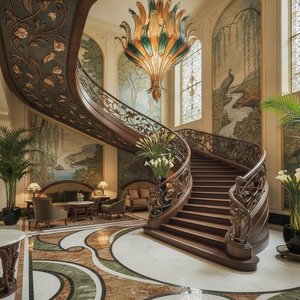
Art Nouveau Guide: Integrating Elegant Curves and Organic Design into Luxury Hotel Interiors
Master Art Nouveau integration for luxury hotel interiors. Discover expert strategies for utilizing organic curves, whiplash lines, and botanical motifs to create sophisticated, high-end hospitality spaces with scalable, professional art procurement solutions.
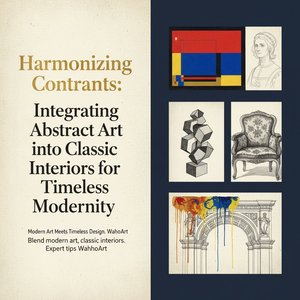
Harmonisk Kontrast: Att Integrera Samtida Konst i Klassiska Interiörer för Tidlös Modernitet
Skapa en tidlös och personlig interiör! Upptäck hur du harmoniskt integrerar samtida konst i klassiska rum med expertråd från OriginalUniqueArt. Kvalitetskonst för ditt hem.

The Elegance of Art Nouveau: Embracing Nature's Fluid Beauty and the Belle Époque Spirit
Discover the enchanting world of Art Nouveau. Explore the organic beauty, flowing lines, and Belle Époque elegance that defined an era of unparalleled craftsmanship and natural inspiration.
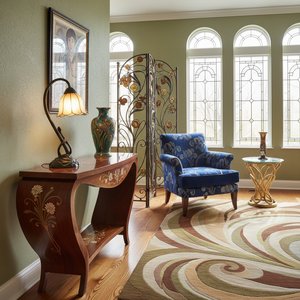
Art Nouveau: Topp 10 mästerverk som definierade en epok – Konsttryck & Inredning
Utforska Art Nouveau-rörelsens 10 mest ikoniska mästerverk! Lär känna Alphonse Mucha, Gustav Klimt & andra nyckelartister. Vackra konsttryck och inspiration för din inredning – upptäck tidlösa symbolik och organiska former på OriginalUniqueArt.com.
Harmonisera Historia och Nyans: En Guide till Att Matcha Konststilar med Inredningsarkitektur för Balanserad Design
Harmonisera ditt hem med konst! Expertguide till att matcha konststilar med inredningsarkitektur för en balanserad och personlig design. Upptäck tips & inspiration.

