
 Visa i rummet
 Skicka
 Dela
Dela
 Detaljer
 Studentguide för konstverk

 Ladda ner
 Liknande objekt
 Röntgen
 Bildspel
 Besökstatistik
Venice


 Läs mer
Handgjord oljereproduktion
Handmålad olja på duk i din valda storlek och ram, tillverkad efter beställning av våra konstnärer. ( Byt till tryckta exemplar Byt till digital bildförsäljning)




P118B Skr10

P118H Skr10

P118W Skr10

P438Z Skr10

P508JH Skr12

P508YH Skr12

P805H Skr10

P805Z Skr10

P919BZ Skr10

P919G Skr10

P919XJ Skr10

P959ZH Skr10

P968JZ Skr12

W106C Skr8

W218G Skr10

W218JH Skr8

W218Y Skr10

W307PJ Skr10

W316G Skr10

W316PJ Skr8

W316Y Skr10

W398PJ Skr8

W4111J Skr10

W500HY Skr15

W500JH Skr15

W692G Skr12

W849H Skr8

W940BG Skr15

W953PJ Skr8




Välj bland våra förinställda storlekar som motsvarar konstverkets ursprungliga proportioner.

Du kan ange egna mått för att passa en specifik ram eller yta. Om den valda storleken inte matchar originalbildens proportioner kommer vi antingen att beskära konstverket eller utöka målningen med ytterligare handmålade element. En digital skiss skickas till dig för godkännande innan produktionen påbörjas.
Observera att förhandsvisningen på skärmen inte återspeglar den faktiska beskärningen eller utökningen. Endast skissen visar den slutgiltiga kompositionen korrekt.
Även om anpassade storlekar är möjliga, rekommenderar vi att du väljer en dimension från den fördefinierade listan för att bevara originalproportionerna.
Efter beställning kommer OriginalUniqueArt.com team att mejla kunden för instruktioner och tillhandahålla en skissförhandsvisning
Leverans över hela världen () på 3–4 veckor istället för standard 5 veckor. (13 oktober). Inga kompromisser med kvaliteten.

Fri expressfrakt över hela världen

Högkvalitativ linnecanvas

Fullständig fraktförsäkring

Garantier för återbetalning av tullavgifter

Garantier för exakt färgåtergivning

100 dagars returrätt vid fabrikationsfel

100% pengarna tillbaka-garanti

Mängdrabatt erbjuds
 Glasalternativet är endast tillgängligt i storlekar under 110 cm.

Venice
Tryckteknik
Reproduktionsstorlek
-


Totalpris
Skr 2909
A Dreamscape of Venice: Gustave Moreau’s Enigmatic Vision
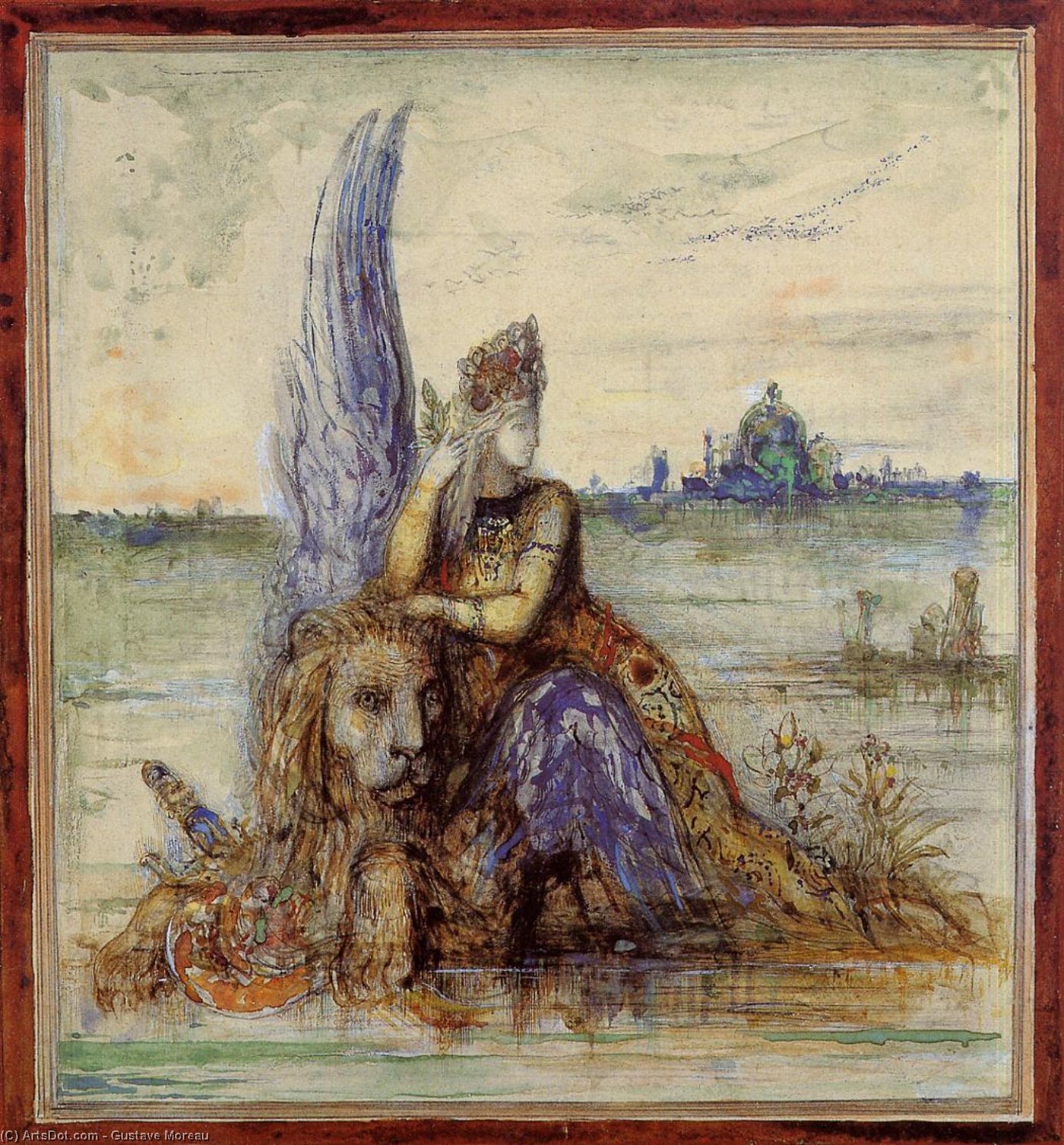
Gustave Moreau's "Venice," painted in 1885, isn’t merely a depiction of a city; it’s an immersion into a realm of myth and emotion. This watercolor, now residing within the hallowed halls of the Musée Gustave Moreau in Paris, embodies the core tenets of Symbolism – a movement that sought to express inner psychological states rather than simply mirroring external reality. Moreau, a master of layering symbolism upon traditional subjects, transforms Venice into an evocative stage for his personal mythology, inviting viewers on a journey through dream and memory.
The painting immediately captivates with its hazy, almost otherworldly atmosphere. The muted palette—dominated by blues, greens, and ochres—creates a sense of distance and timelessness. Moreau’s technique is deliberately loose and fluid, characteristic of watercolor, allowing the colors to bleed into one another and suggesting movement within the water. He employs a broken brushstroke, building up layers of translucent washes that imbue the scene with an ethereal quality. The cityscape itself isn't sharply defined; instead, it appears as a shimmering reflection in the water, further contributing to the dreamlike atmosphere.
The Regal Figure and Symbolic Weight
At the heart of the composition sits a woman seated regally upon the back of a lion – an arresting image that immediately draws the eye. This isn’t a literal representation; it's a carefully constructed symbol. The lion, a potent emblem of strength, power, and royalty throughout history, anchors the figure and elevates her status. Her crown, subtly rendered but undeniably present, reinforces this sense of nobility and perhaps even divinity. Moreau frequently employed female figures from mythology and religious narratives as archetypes in his work, imbuing them with symbolic weight and psychological depth. This woman, positioned within a watery realm, suggests a connection to both the earthly and the spiritual – a figure caught between worlds.
The presence of other individuals adds layers of intrigue to the scene. A solitary figure stands on the left, seemingly observing the tableau, while two others are clustered on the right, their faces obscured by shadow. These figures aren’t merely background elements; they represent potential observers, perhaps even participants in this unfolding dreamscape. The bird perched at the top-left corner adds a touch of lightness and freedom, hinting at transcendence or spiritual aspiration.
A Window into Moreau's World
Understanding Gustave Moreau requires delving into his personal life and artistic philosophy. Born in Paris in 1826, he was deeply influenced by his father’s architectural background, fostering a keen eye for detail and composition. Moreau’s early training at the École des Beaux-Arts provided him with technical skills, but it was his friendship with Théodore Chassériau that truly ignited his Symbolist sensibilities. He rejected the prevailing Realism of the time, instead seeking to express inner emotions and spiritual truths through evocative imagery. His work often explored themes of mythology, religion, and the human psyche, frequently featuring female figures as powerful symbols.
Moreau’s legacy extends beyond this single painting. He was a dedicated teacher, nurturing the talents of artists like Henri Matisse and Georges Rouault, shaping an entire generation of Symbolist painters. His dedication to his craft culminated in the establishment of the Musée Gustave Moreau in 1903, ensuring that his artistic vision would be preserved for posterity. “Venice,” therefore, isn’t just a beautiful artwork; it's a testament to Moreau’s enduring influence and his profound exploration of the human spirit.
Capturing the Essence: A Reproduction for Your Space
OriginalUniqueArt offers meticulously crafted hand-painted reproductions of Gustave Moreau’s “Venice,” allowing you to bring this captivating dreamscape into your home or office. Our skilled artisans replicate Moreau's delicate watercolor technique and evocative color palette with exceptional precision, ensuring that every detail is faithfully reproduced. Whether you are an art enthusiast, a collector seeking to expand your collection, or simply someone looking for a unique piece of decorative art, our reproduction captures the essence of this iconic work – its mystery, beauty, and profound symbolic depth.
Consider how “Venice” can transform your space. Its ethereal quality will create a sense of tranquility and contemplation, while the rich symbolism invites viewers to engage with the painting on a deeper level. A OriginalUniqueArt reproduction is more than just an image; it’s a portal into Moreau's world – a world where myth, nature, and urban life converge in a timeless tableau.
Frågor och svar
Var kan jag köpa en handmålad reproduktion av "Venice" av Gustave Moreau?
"Venice" finns tillgänglig som en handmålad oljereproduktion på linneväv. Beställningen kan göras på denna sida, med valmöjlighet mellan olika storlekar.
Vilken typ av färger används i "Venice"?
Färgerna i "Venice" utgör en Neutrals palett. Denna klassificering beskriver de dominerande färggrupperna.
Vilket medium är "Venice" av Gustave Moreau utförd i?
Gustave Moreau använde tekniken Watercolor för "Venice". Tekniken definierar det ursprungliga verkets materiella karaktär.
Varför är upphovsrättsläget för "Venice" som det är?
"Venice" av Gustave Moreau är allmän egendom – upphovsrätten har löpt ut. Upphovsrätten beräknas från konstnärens dödsår, och Gustave Moreau avled 1898.
Är "Venice" typisk för vad Gustave Moreau vanligtvis skapade?
"Venice" skildrar mythology, symbolism, venice, lion, woman, water, cityscape, royalty, medan Gustave Moreaus dokumenterade teman är mythological symbolism, dreamlike visions, religious allegory, classical motifs, urban decay, romantic longing, personal mythology, inner world. En jämförelse mellan dessa visar hur verket förhåller sig till konstnärens vanliga motiv.
Vilken ton lutar "Venice" åt?
Den dominerande nyansen i "Venice" av Gustave Moreau är Ochre to Sepia. Nyansen utgör den underliggande tonen i färgpaletten.
Vad föreställer "Venice" av Gustave Moreau?
Teman som återfinns i "Venice" av Gustave Moreau inkluderar mythology, symbolism, venice, lion, woman, water, cityscape, royalty. Tillsammans sammanfattar de verkets motiv.
Var kan jag köpa ett tryck av "Venice" av Gustave Moreau?
"Venice" finns tillgänglig som ett konsttryck på bomullscanvas eller arkivbeständigt canvaspapper. Beställningar görs på denna sida i den storlek du önskar.
Om konstnären
A Dream Weaver of Symbolism: The Life and Art of Gustave Moreau
Gustave Moreau, en namn synonymt med den eteriska skönheten och de gåtfulla djupen av symbolistisk målning, steg fram ur 1800-talets Paris som en unik konstnärlig röst. Född 1826 i en borgerskapfamilj – hans far arkitekt och archivarie – var Moreaus tidiga liv genomsyrade av intellektuell nyfikenhet och estetisk känslighet. Redan i unga år visade han en anmärkningsvärd talang för teckning, fostrad genom traditionell akademisk utbildning vid École des Beaux-Arts under figurer som François-Édouard Picot. Men Moreaus konstnärliga väg skulle avvika skarpt från de rådande realistiska och impressionistiska strömningarna av sin tid. Han var inte intresserad av att fånga flyktiga ögonblick eller objektiv verklighet; istället sökte han att låsa upp de dolda rikena av myt, religion och den mänskliga psykén genom ett djupt personligt och symboliskt visuellt språk. Hans resa var en av inåtvänd utforskning, översättande subjektiva känslor och andliga längtan till duken med en besatt uppmärksamhet på detaljer och en livlig, ofta överflödig palett.The Forge of Imagination: Influences and Artistic Development
Moreaus konstnärliga utveckling föddes inte i ett vakuum. Medan han avvisade de dominerande trenderna i sin tid, drog han inspiration från olika källor. Den dramatiska användningen av färg och exotiska motiv som fanns i Eugène Delacroix’s verk resonerade djupt med honom, vilket antände en passion för berättarperspektiv fyllt av emotionell intensitet. Han beundrade också renässansmästare som Michelangelo och Leonardo da Vinci, beundrade deras behärskning av komposition, anatomi och psykologisk insikt. Men Moreau kopierade inte bara dessa konstnärer; han syntetiserade deras inflytande till något helt nytt. Hans resor till Italien på 1850-talet visade sig vara avgörande, vilket fördjupade honom i antikens och renässanskonstens konst, vilket gav en rikedom av motiv och stilistiska ledtrådar som skulle befolka hans framtida verk. Han kopierade noggrant gamla målningar, inte som en övning i replikering, utan som ett sätt att absorbera deras tekniker och låsa upp deras hemligheter. Denna dedikation till hantverk, kombinerat med hans växande intresse för mytologi och litteratur, lade grunden för hans unika konstnärliga vision.A World of Symbols: Themes and Techniques
Moreaus målningar är inte bara illustrationer av myter eller bibliska berättelser; de är komplexa allegorier som bjuder in till eftertanke och tolkning. Han grävde i berättelser som Salomes, Orpheus, Jupiter och Semele och otaliga andra, inte för att berätta dem bokstavligt talat, utan för att utforska deras underliggande psykologiska och andliga sanningar. Hans dukar är fyllda med symboliskt motiv – ormar som representerar lockelse, juveler som signalerar jordiska önskningar och figurer som uttrycker abstrakta koncept som sorg, förlust eller upplärning. Han skapade skickligt en drömlik atmosfär genom invecklad detaljrikedom, rika texturer och ofta ett kuslig samspel mellan ljus och skugga. Moreaus teknik kännetecknades av besatt lagerfärgning, vilket skapade ytor som skimrar med iriserande färger och väcker en känsla av övernaturlig skönhet. Hans användning av bladguld förstärkte detta effektfullt och lånade hans verk en bysantinsk kvalitet som understryker deras andliga dimension. Han var inte intresserad av att fånga realistiska texturer eller perspektiv; istället prioriterade han den uttrycksfulla kraften hos färg och form för att förmedla stämning och mening.Notable Works and Historical Significance
Moreau’s oeuvre is vast and varied, encompassing over 8,000 paintings, watercolors, and drawings. His most celebrated works include *Salome Dancing before Herod* (1876), a mesmerizing depiction of the biblical tale that showcases his opulent style and fascination with mythological narratives; *Jupiter and Semele*, a dramatic portrayal of Greek mythology emphasizing composition and color; and numerous interpretations of Orpheus, each imbued with personal symbolism. Moreau’s work exerted a significant influence on subsequent generations of artists, particularly during the Symbolist movement. He encouraged his students to embrace imagination, symbolism, and individual expression, urging them to break free from conventional artistic norms. Although initially met with mixed reactions, he became a central figure in the Symbolist movement, shaping its aesthetic direction and inspiring countless artists. Gustave Moreau’s Musée Gustave Moreau, housed within his former studio and home in Paris, stands as a testament to his enduring legacy—a sanctuary where visitors can immerse themselves in the captivating world of this extraordinary artist. His paintings continue to resonate with audiences today, offering glimpses into the hidden depths of the human soul and reminding us of the power of art to transcend the boundaries of reality.Influences on Later Artists
Moreau’s impact extended far beyond his own lifetime. He is considered a key influence on artists such as Henri Matisse and Georges Rouault, who admired his use of color, symbolism, and evocative imagery. His emphasis on psychological depth and emotional expression paved the way for later movements in modern art, demonstrating the lasting relevance of his artistic vision.
Gustave Moreau
1826 - 1898 , Frankrike
Snabbfakta
- Artistic Movement Or Style: Symbolism
- Artists Or Movements Influenced By This Artist:
- Matisse
- Rouault
- Artists Who Influenced This Artist:
- Delacroix
- Michelangelo
- Leonardo
- Date Of Birth: 6 april 1826
- Date Of Death: 18 april 1898
- Full Name: Gustave Moreau
- Nationality: Fransk
- Notable Artworks:
- Salome
- Jupiter
- Orpheus
- Apparition
- Desdemona
- Place Of Birth: Paris, Frankrike
Relaterade artiklar

Ephemeral Visions: Exploring the Artistic Legacy & Nuances of Watercolor Painting
Explore the captivating world of watercolor painting! Discover its rich history, essential techniques, influential artists & collecting tips from art experts. A comprehensive guide for enthusiasts.

Gustav Klimts 25 Mästerverk: En Konstresa för Hemmet & Själens Frid
Utforska Gustav Klimts 25 mest ikoniska målningar! Fördjupa dig i symbolik, Art Nouveau och den gyllene fasen. Hitta inspiration för din heminredning & köp museumkvalitativa reproduktioner på OriginalUniqueArt.com.

10 Akvarellmästerverk som Förändrade Konsthistorien | OriginalUniqueArt
Utforska 10 legendariska akvarellmålningar av Turner, Monet & Sargent som revolutionerade konsten. Lär känna historien bakom varje mästerverk och hitta inspiration till din inredning. Köp reproduktioner på OriginalUniqueArt.com!

Ephemeral Visions: Exploring the History & Emotional Resonance of Watercolor Painting
Explore the captivating history of watercolor painting, from ancient techniques to modern masters like Kandinsky & Blake. Discover essential artists, collecting tips & the emotional power of this luminous medium. Expert insights for art enthusiasts.

Ephemeral Visions: Exploring the Artistic Legacy & Contemporary Practice of Watercolor Painting
Explore the captivating world of watercolor painting! Discover its rich history, essential techniques, influential artists & collecting tips. A comprehensive guide for art enthusiasts from OriginalUniqueArt.


