Förhandsvisa
 Skicka
 Dela
Dela
 Visa detaljer

 Ladda ner
 Liknande objekt
 Röntgen
 Bildspel
 Statistik
La sorgente.


 Visa mer
Giclée / Konsttryck
Giclée- eller canvasprint av museumskvalitet med snabb produktion och flexibla ytbehandlingsalternativ. ( Beställ handmålad reproduktion Byt till digital bild)




P118B $10

P118H $10

P118W $10

P438Z $10

P508JH $12

P508YH $12

P805H $10

P805Z $10

P919BZ $10

P919G $10

P919XJ $10

P959ZH $10

P968JZ $12

W106C $8

W218G $10

W218JH $8

W218Y $10

W307PJ $10

W316G $10

W316PJ $8

W316Y $10

W398PJ $8

W4111J $10

W500HY $15

W500JH $15

W692G $12

W849H $8

W940BG $15

W953PJ $8




Välj bland våra förinställda storlekar som motsvarar konstverkets ursprungliga proportioner.

Du kan ange egna mått för att passa en specifik ram eller yta. Om det valda måttet inte överensstämmer med originalbildens proportioner kommer vi antingen att beskära konstverket eller utöka bilden med en speglad eller enfärgad kant. En digital mockup skickas för ditt godkännande innan produktionen påbörjas.
Vänligen notera att förhandsvisningen på skärmen inte återspeglar den faktiska beskärningen eller utökningen. Endast mockuppen visar den slutgiltiga kompositionen korrekt.
Även om anpassade storlekar är möjliga, rekommenderar vi att du väljer ett mått från den fördefinierade listan för att bevara de ursprungliga proportionerna.
Leverans över hela världen () på 2 veckor istället för standard 4/5 veckor. (17 september)

Fri expressfrakt över hela världen

Högkvalitativ linnecanvas

Fullständig fraktförsäkring

Garantier för återbetalning av tullavgifter

Garantier för exakt färgåtergivning

100 dagars returrätt (endast vid defekter)

100% pengarna tillbaka-garanti

Mängdrabatt erbjuds
 Glasalternativet är endast tillgängligt i storlekar under 110 cm.

La sorgente.
Giclée / Konsttryck
Storlek på reproduktion
-


Slutgiltigt pris
$ 80
A Vision of Raw Reality: The Essence of La Source
In the annals of art history, few moments are as transformative as the emergence of Gustave Courbet’s La Source. Completed in 1862, this masterpiece stands as a defiant manifesto against the polished, idealized aesthetics of the French Academy. At first glance, the viewer is met with a scene of profound intimacy and natural splendor: a nude woman, bathed in the soft, dappling light of a limestone cave, emerges from the cool shadows near a cascading waterfall. Unlike the mythological nymphs of his contemporaries, who often felt distant and ethereal, Courbet’s figure possesses a tangible, fleshy presence. She is not a goddess from an ancient myth, but a creature of the earth, her skin reflecting the damp, textured reality of the Franche-Comté landscape. This is realism in its most visceral form—a celebration of the physical world that invites the observer to feel the humidity of the cave and the coolness of the spring.Technique and the Mastery of Light
The brilliance of La Source lies in Courbet’s revolutionary approach to texture and light, a technique that would later pave the way for the Impressionist movement. Eschewing the smooth, invisible brushwork favored by academic painters, Courbet utilized a more robust, tactile application of oil paint. He painstakingly rendered the rugged surfaces of the surrounding rocks and the delicate, translucent quality of the water, creating a sensory experience that transcends the two-dimensional canvas. The interplay of light is particularly masterful; sunlight filters through the canopy of trees and the mouth of the cave, creating a rhythmic pattern of highlights and deep shadows across the woman’s form and the mossy stones. This meticulous attention to the fleeting effects of atmosphere lends the painting an organic vitality, making the landscape feel as though it is breathing alongside the subject.A Symbol of Artistic Rebellion
Beyond its aesthetic beauty, La Source carries a heavy weight of historical significance. During an era when the Salon demanded grand historical narratives and polished perfection, Courbet chose to elevate the mundane and the local. By focusing on the landscapes of his native region and the unadorned human form, he challenged the very definition of what was "worthy" of high art. The painting serves as a bridge between the Romanticism of the early 19th century and the burgeoning Realism that sought to document the truth of everyday life. For the modern collector or interior designer, this piece offers more than just visual elegance; it provides a conversation piece rooted in the spirit of iconoclasm. To hang a reproduction of La Source is to invite a sense of grounded, authentic beauty into a space—a reminder of the power found in looking at the world with unblinking, honest eyes.Konstnärsbiografi
A Rebel’s Brush: The Life and Legacy of Gustave Courbet
Jean Désiré Gustave Courbet, born in Ornans, France, on June 10, 1819, stands as a monumental figure in the history of art – a defiant iconoclast who irrevocably altered the trajectory of nineteenth-century painting. More than simply capturing visual impressions; his artistic journey embodies a profound engagement with social realities and an unwavering conviction that art should reflect the world without embellishment. His formative years were marked by a familial upbringing that fostered artistic ambition, nurtured by his mother’s encouragement – a crucial element in shaping him into the revolutionary artist he would become. Formal training commenced at the École des Beaux-Arts in Paris in 1839, yet Courbet swiftly recognized the limitations of academic dogma and Romantic idealism, rejecting them as antithetical to his artistic vision. While acknowledging debts to artists like Eugène Delacroix and Théodore Géricault – figures who championed dramatic emotion and historical narrative – Courbet forged a singular path, prioritizing observation and truthful representation above all else.The Birth of Realism: Challenging Artistic Conventions
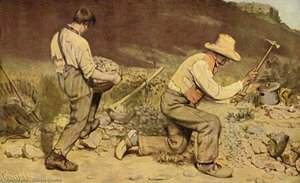
Courbet’s artistic trajectory was defined by an uncompromising rejection of prevailing aesthetic standards. He eschewed mythological tales and heroic portrayals; his gaze remained firmly fixed on the everyday lives of ordinary individuals – particularly laborers and rural communities – a deliberate decision that would propel him to the forefront of Realism. This commitment wasn't merely stylistic; it represented a radical assertion about the inherent dignity and importance of subjects often dismissed by artistic circles of the time. Early canvases explored landscapes and portraits, yet he soon transitioned towards depicting scenes of working-class existence on an unprecedented scale – typically reserved for monumental historical paintings. Critics initially scorned his approach, accustomed to idealized depictions that smoothed over social disparities. Yet Courbet persisted in his conviction that art should bear witness to reality, unflinchingly confronting uncomfortable truths. The masterpiece *The Stone Breakers*, completed in 1849 but tragically destroyed during World War II, exemplifies this ethos – a stark portrayal of two laborers engaged in arduous toil, their faces obscured by exhaustion and grime. This painting served as a powerful rebuke to the prevailing artistic preoccupation with grandeur and beauty, insisting instead on portraying the human condition with uncompromising honesty.Influences and Artistic Development
Courbet’s artistic sensibilities were undeniably shaped by encounters with earlier masters, notably Caravaggio for his masterful use of chiaroscuro – dramatic contrasts between light and dark – which conveyed emotional intensity and psychological depth. However, Courbet transcended mere imitation, forging a distinctive style characterized by thick impasto brushstrokes that emphasized the materiality of pigment and canvas. He deliberately rejected academic conventions, prioritizing direct observation over imaginative embellishment—a stance that resonated deeply with fellow artists who sought to liberate painting from restrictive formulas. His unwavering dedication to portraying the world as he perceived it fueled his artistic evolution, culminating in groundbreaking works like *A Burial at Ornans* (1850), which provoked considerable controversy due to its monumental scale and unflinching realism. This canvas challenged prevailing notions of acceptable subject matter for art, demonstrating that beauty could reside in the commonplace—a conviction that profoundly impacted subsequent generations of artists.Major Achievements and Legacy
Courbet’s artistic accomplishments extended beyond stylistic innovation; he actively engaged with pressing social issues of his era, advocating for artistic freedom and challenging institutional hierarchies. His participation in the Salon des Refusés in 1863 – an audacious defiance of official censorship—solidified his reputation as a rebellious artist committed to upholding artistic integrity. He continued to explore diverse themes throughout his career, from landscapes imbued with subtle tonal nuances to portraits capturing psychological complexity. Courbet’s influence on Impressionism and Post-Impressionism is undeniable; he liberated painters from the constraints of academic tradition, encouraging them to experiment with new techniques and perspectives—a legacy that continues to inspire artists today. Gustave Courbet died in Paris on December 31, 1877, leaving behind a vast oeuvre that stands as a testament to his unwavering conviction that art should serve as a conduit for truth and social awareness – an enduring contribution to the history of modern art.
Gustave Courbet
1819 - 1877 , Frankrike
Kortfakta
- Artistic Movement Or Style: Realism
- Artists Or Movements Influenced By This Artist:
- Impressionism
- Post-Impressionism
- Artists Who Influenced This Artist:
- Delacroix
- Géricault
- Caravaggio
- Date Of Birth: 10 juni 1819
- Date Of Death: 31 december 1877
- Full Name: Gustave Courbet
- Nationality: Französisk
- Notable Artworks:
- Slottet Chillon
- Porträtt av en ung flicka från Salins
- A Burial at Ornans
- Place Of Birth: Orléans, Frankrike
Relaterade artiklar

Evocations of Place: A Historical Journey Through Landscape Art
Explore the rich history of landscape art with OriginalUniqueArt. Discover renowned artists, movements like Impressionism & Romanticism, and expert guidance for collecting timeless pieces. Find your perfect serene escape today!

Topp 10 Impressionistiska Mästerverk – Landskap som Förändrade Konsten | OriginalUniqueArt.se
Upptäck de 10 mest ikoniska impressionistiska landskapsmålningarna av Monet, Renoir & Van Gogh. Lär känna historien bakom mästerverken och hitta inspiration för din inredning på OriginalUniqueArt.se – museumkvalitet hem till dig!

Evocations of Place: A Historical Journey Through Landscape Art
Explore the rich history of landscape art with OriginalUniqueArt. Discover renowned artists, movements like Impressionism & tonalism, and expert guidance for collecting timeless pieces. Find your perfect serene escape today!
Gustav Klimts 25 Mästerverk: En Konstresa för Hemmet & Själens Frid
Utforska Gustav Klimts 25 mest ikoniska målningar! Fördjupa dig i symbolik, Art Nouveau och den gyllene fasen. Hitta inspiration för din heminredning & köp museumkvalitativa reproduktioner på OriginalUniqueArt.com.

Paul Cézannes 25 Mästerverk: En Konsthistorisk Resa för Hemmet
Utforska Paul Cézannes 25 mest ikoniska målningar! Fördjupa dig i impressionismens värld, från Mont Sainte-Victoire till stillsben. Hitta inspiration & museumkvalitativa konsttryck på OriginalUniqueArt.com.