Förhandsvisa
 Skicka
 Dela
Dela
 Visa detaljer
 Guide
Guide

 Ladda ner
 Liknande objekt
 Röntgen
 Bildspel
 Q&A
Q&A Statistik
Going Fishing

- 89.0 x 116.0 cm


 Visa mer
Giclée / Konsttryck
Giclée- eller canvasprint av museumskvalitet med snabb produktion och flexibla ytbehandlingsalternativ. ( Beställ handmålad reproduktion Byt till digital bild)




P118B Skr10

P118H Skr10

P118W Skr10

P438Z Skr10

P508JH Skr12

P508YH Skr12

P805H Skr10

P805Z Skr10

P919BZ Skr10

P919G Skr10

P919XJ Skr10

P959ZH Skr10

P968JZ Skr12

W106C Skr8

W218G Skr10

W218JH Skr8

W218Y Skr10

W307PJ Skr10

W316G Skr10

W316PJ Skr8

W316Y Skr10

W398PJ Skr8

W4111J Skr10

W500HY Skr15

W500JH Skr15

W692G Skr12

W849H Skr8

W940BG Skr15

W953PJ Skr8




Välj bland våra förinställda storlekar som motsvarar konstverkets ursprungliga proportioner.

Ange den bredd och höjd du behöver för att passa din ram eller vägg. Ett tryck kan endast beskäras, aldrig göras större än originalbilden, vilket innebär att ett format med en annan proportion leder till att en del av bilden går förlorad. Vi skickar en digital mockup för godkännande innan vi påbörjar tryckningen. Bilden som visas på denna sida visar inte den faktiska beskärningen — det är endast mockuppen som gör det.
Leverans över hela världen () på 2 veckor istället för standard 4/5 veckor. (31 oktober)

Fri expressfrakt över hela världen

Högkvalitativ linnecanvas

Fullständig fraktförsäkring

Garantier för återbetalning av tullavgifter

Garantier för exakt färgåtergivning

100 dagars returrätt (endast vid fel)

100% pengarna tillbaka-garanti

Mängdrabatt erbjuds
 Glasalternativet är endast tillgängligt i storlekar under 110 cm.

Going Fishing
Giclée / Konsttryck
Storlek på reproduktion
-


Slutgiltigt pris
Skr 803
A Moment of Tranquility: Gustave Courbet’s “Going Fishing”
Gustave Courbet's "Going Fishing," painted in 1865, isn’t merely a depiction of men casting lines; it’s a profound meditation on the relationship between humanity and nature, rendered with the uncompromising honesty that defined the Realist movement. Measuring 89 x 116 cm, this oil-on-canvas masterpiece transports us to a quiet coastal scene, capturing an ordinary moment imbued with a remarkable sense of serenity and observation. Courbet, a revolutionary figure in 19th-century art, deliberately rejected the romanticized ideals prevalent at the time, choosing instead to portray the world as he saw it – unvarnished, authentic, and deeply rooted in the everyday experiences of his subjects.
The painting unfolds with a deliberate simplicity. A small group of fishermen occupies the foreground, their figures scattered across the beach and rocky shoreline. Their attire—practical and unassuming—suggests a life connected to the rhythms of the sea. A dog, positioned near the right side of the canvas, adds a touch of domesticity to this otherwise rugged landscape. The composition is anchored by the expansive sky, rendered in muted blues and greys that evoke a sense of overcast weather – a subtle detail that contributes significantly to the painting’s overall mood. The water itself is depicted with a restrained palette, reflecting the subdued light and hinting at the vastness beyond.
Realism's Uncompromising Vision
Courbet’s commitment to Realism extended far beyond simply depicting what he saw; it involved a rejection of artistic conventions and a desire to portray subjects truthfully. “Going Fishing” exemplifies this approach through its meticulous attention to detail, particularly in the rendering of the textures – the rough surface of the rocks, the weathered clothing of the fishermen, and the subtle ripples on the water’s surface. The brushstrokes are visible, adding a sense of immediacy and spontaneity to the scene, as if Courbet were capturing this moment directly before his eyes. This deliberate lack of idealization was revolutionary for its time, challenging the established norms of academic painting which prioritized beauty and grandeur over realistic representation.
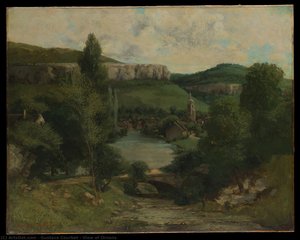
Interestingly, “Going Fishing” resonates with other works by Courbet from the same period, such as "The Ornans Paper Mill" and "Locks on the Loue," all of which share a similar focus on depicting ordinary working-class life. These paintings demonstrate Courbet’s fascination with the lives of common people and his desire to elevate their experiences within the realm of art. The painting's setting, along the northern coast of France – a region where Courbet spent considerable time observing the sea and its inhabitants – undoubtedly informed this subject matter and contributed to the painting’s authentic atmosphere.
Symbolism and Emotional Resonance
Beyond its straightforward depiction of fishing activity, “Going Fishing” carries a subtle symbolic weight. The act of fishing itself can be interpreted as a metaphor for human endeavor—a patient pursuit of sustenance and connection with nature. The quietness of the scene suggests a moment of respite from the demands of daily life, inviting viewers to contemplate the simple pleasures of existence. Courbet’s masterful use of light and shadow further enhances this emotional impact, creating a sense of depth and atmosphere that draws us into the painting's world.
The painting’s enduring appeal lies in its ability to evoke a feeling of tranquility and connection with nature—qualities that remain profoundly relevant today. It serves as a powerful reminder of the beauty and significance of everyday moments, captured with Courbet’s characteristic honesty and skill. For those seeking a high-quality reproduction of this iconic artwork, OriginalUniqueArt offers meticulously crafted hand-painted reproductions that faithfully capture the essence of Courbet's vision.
Technical Details & Reproduction Quality
The painting is executed in oil on canvas, utilizing a technique that allows for rich color saturation and nuanced tonal variations. The textured surface reflects Courbet’s deliberate brushwork, adding depth and visual interest to the scene. OriginalUniqueArt's hand-painted reproductions meticulously recreate these details, employing traditional oil painting techniques and archival-quality pigments to ensure lasting beauty and authenticity. Each reproduction is a testament to the artist’s original vision, capturing not only the subject matter but also the spirit and atmosphere of “Going Fishing.”
To explore more works by Gustave Courbet or to commission your own hand-painted reproduction, please visit OriginalUniqueArt’s Gustave Courbet page. You can also delve deeper into the artist's life and legacy at the Musée Courbet in Oran, France.
Frågor och svar
Vilken luminans har "Going Fishing" av Gustave Courbet?
"Going Fishing" av Gustave Courbet har en luminans på Bright Balance. Luminans beskriver hur mycket ljus färgerna tycks reflektera.
Vilken fas av Gustave Courbets konstnärliga utveckling representerar "Going Fishing"?
Inom Gustave Courbets karriär tillhör "Going Fishing" perioden Mature Realism. Denna fas underlättar jämförelser med konstnärens övriga verk.
Var i hemmet passar en reproduktion av "Going Fishing" bra?
Det rekommenderade utrymmet för "Going Fishing" av Gustave Courbet är ett Living Room. Förslaget kan naturligtvis anpassas efter din inredning.
Konstnärsbiografi
A Rebel’s Brush: The Life and Legacy of Gustave Courbet
Jean Désiré Gustave Courbet, born in Ornans, France, on June 10, 1819, stands as a monumental figure in the history of art – a defiant iconoclast who irrevocably altered the trajectory of nineteenth-century painting. More than simply capturing visual impressions; his artistic journey embodies a profound engagement with social realities and an unwavering conviction that art should reflect the world without embellishment. His formative years were marked by a familial upbringing that fostered artistic ambition, nurtured by his mother’s encouragement – a crucial element in shaping him into the revolutionary artist he would become. Formal training commenced at the École des Beaux-Arts in Paris in 1839, yet Courbet swiftly recognized the limitations of academic dogma and Romantic idealism, rejecting them as antithetical to his artistic vision. While acknowledging debts to artists like Eugène Delacroix and Théodore Géricault – figures who championed dramatic emotion and historical narrative – Courbet forged a singular path, prioritizing observation and truthful representation above all else.The Birth of Realism: Challenging Artistic Conventions
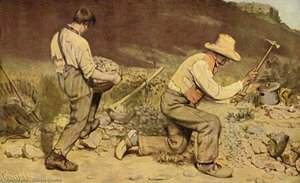
Courbet’s artistic trajectory was defined by an uncompromising rejection of prevailing aesthetic standards. He eschewed mythological tales and heroic portrayals; his gaze remained firmly fixed on the everyday lives of ordinary individuals – particularly laborers and rural communities – a deliberate decision that would propel him to the forefront of Realism. This commitment wasn't merely stylistic; it represented a radical assertion about the inherent dignity and importance of subjects often dismissed by artistic circles of the time. Early canvases explored landscapes and portraits, yet he soon transitioned towards depicting scenes of working-class existence on an unprecedented scale – typically reserved for monumental historical paintings. Critics initially scorned his approach, accustomed to idealized depictions that smoothed over social disparities. Yet Courbet persisted in his conviction that art should bear witness to reality, unflinchingly confronting uncomfortable truths. The masterpiece *The Stone Breakers*, completed in 1849 but tragically destroyed during World War II, exemplifies this ethos – a stark portrayal of two laborers engaged in arduous toil, their faces obscured by exhaustion and grime. This painting served as a powerful rebuke to the prevailing artistic preoccupation with grandeur and beauty, insisting instead on portraying the human condition with uncompromising honesty.Influences and Artistic Development
Courbet’s artistic sensibilities were undeniably shaped by encounters with earlier masters, notably Caravaggio for his masterful use of chiaroscuro – dramatic contrasts between light and dark – which conveyed emotional intensity and psychological depth. However, Courbet transcended mere imitation, forging a distinctive style characterized by thick impasto brushstrokes that emphasized the materiality of pigment and canvas. He deliberately rejected academic conventions, prioritizing direct observation over imaginative embellishment—a stance that resonated deeply with fellow artists who sought to liberate painting from restrictive formulas. His unwavering dedication to portraying the world as he perceived it fueled his artistic evolution, culminating in groundbreaking works like *A Burial at Ornans* (1850), which provoked considerable controversy due to its monumental scale and unflinching realism. This canvas challenged prevailing notions of acceptable subject matter for art, demonstrating that beauty could reside in the commonplace—a conviction that profoundly impacted subsequent generations of artists.Major Achievements and Legacy
Courbet’s artistic accomplishments extended beyond stylistic innovation; he actively engaged with pressing social issues of his era, advocating for artistic freedom and challenging institutional hierarchies. His participation in the Salon des Refusés in 1863 – an audacious defiance of official censorship—solidified his reputation as a rebellious artist committed to upholding artistic integrity. He continued to explore diverse themes throughout his career, from landscapes imbued with subtle tonal nuances to portraits capturing psychological complexity. Courbet’s influence on Impressionism and Post-Impressionism is undeniable; he liberated painters from the constraints of academic tradition, encouraging them to experiment with new techniques and perspectives—a legacy that continues to inspire artists today. Gustave Courbet died in Paris on December 31, 1877, leaving behind a vast oeuvre that stands as a testament to his unwavering conviction that art should serve as a conduit for truth and social awareness – an enduring contribution to the history of modern art.
Gustave Courbet
1819 - 1877 , Frankrike
Kortfakta
- Artistic Movement Or Style: Realism
- Artists Or Movements Influenced By This Artist:
- Impressionism
- Post-Impressionism
- Artists Who Influenced This Artist:
- Delacroix
- Géricault
- Caravaggio
- Date Of Birth: 10 juni 1819
- Date Of Death: 31 december 1877
- Full Name: Gustave Courbet
- Nationality: Französisk
- Notable Artworks:
- Slottet Chillon
- Porträtt av en ung flicka från Salins
- A Burial at Ornans
- Place Of Birth: Orléans, Frankrike
Relaterade artiklar

Romantic Realism's Finest: 10 Masterpieces for Your Home | OriginalUniqueArt
Explore 10 defining masterpieces of Romantic Realism! Discover Courbet, Millet & Daumier's powerful paintings—capturing emotion and social realities. Find museum-quality reproductions for your home at OriginalUniqueArt.com.

Romantiska landskap: Topp 10 mästerverk som definierade en epok – OriginalUniqueArt.se
Utforska de 10 mest ikoniska mästerverken inom romantisk landskapsmålning! Lär känna Caspar David Friedrich, Turner & andra. Hitta inspiration och köp museumkvalitativa konsttryck på OriginalUniqueArt.com.

Evocations of Place: A Historical Journey Through Landscape Art
Explore the rich history of landscape art with OriginalUniqueArt. Discover renowned artists, movements like Impressionism & Romanticism, and expert guidance for collecting timeless pieces. Find your perfect serene escape today!
Realismens Mästerverk: Topp 10 Verk som Definierade Epoken – OriginalUniqueArt.com
Utforska realismens 10 mästerverk! Lär känna Courbet, Millet & Daumier – och deras banbrytande konst. Upptäck historien bakom ikoniska målningar och hitta inspiration för ditt hem på OriginalUniqueArt.com. Köp högkvalitativa konsttryck online!

Evoking Nature's Sublime: A Comprehensive Exploration of 19th-Century Landscape Painting
Explore the captivating world of 19th-century landscape painting! Discover renowned artists like Friedrich & Monet, key movements, and find the perfect artwork to bring nature's serenity into your home. Expert insights at OriginalUniqueArt.