

 Visa i rummet
 Skicka
 Dela
Dela
 Detaljer
 Studentguide för konstverk

 Ladda ner
 Liknande objekt
 Röntgen
 Bildspel
 Besökstatistik
Reclining Nude
 Graphite
- Art Nouveau
 1913
1913- Modern
 37.0 x 56.0 cm
 Albertina
 Läs mer
Giclée / Konsttryck
Giclée- eller canvasprint av museumskvalitet med snabb produktion och flexibla ytbehandlingsalternativ. ( Köp handmålat konstverk Byt till digital bildförsäljning)




P118B Skr10

P118H Skr10

P118W Skr10

P438Z Skr10

P508JH Skr12

P508YH Skr12

P805H Skr10

P805Z Skr10

P919BZ Skr10

P919G Skr10

P919XJ Skr10

P959ZH Skr10

P968JZ Skr12

W106C Skr8

W218G Skr10

W218JH Skr8

W218Y Skr10

W307PJ Skr10

W316G Skr10

W316PJ Skr8

W316Y Skr10

W398PJ Skr8

W4111J Skr10

W500HY Skr15

W500JH Skr15

W692G Skr12

W849H Skr8

W940BG Skr15

W953PJ Skr8




Välj bland våra förinställda storlekar som motsvarar konstverkets ursprungliga proportioner.

Ange den bredd och höjd du behöver, för att passa din ram eller din vägg. Ett tryck kan endast beskäras, aldrig göras större än bilden, vilket innebär att ett format med en annan formform leder till att en del av bilden går förlorad. Vi skickar en digital mockup för godkännande innan vi trycker något. Bilden som visas på denna sida visar inte den faktiska beskärningen — det är endast mockuppen som gör det.
Leverans över hela världen () på 2 veckor istället för standard 4/5 veckor. (24 oktober)

Fri expressfrakt över hela världen

Högkvalitativ linnecanvas

Fullständig fraktförsäkring

Garantier för återbetalning av tullavgifter

Garantier för exakt färgåtergivning

100 dagars returrätt vid fabrikationsfel

100% pengarna tillbaka-garanti

Mängdrabatt erbjuds
 Glasalternativet är endast tillgängligt i storlekar under 110 cm.

Reclining Nude
Giclée / Konsttryck
Reproduktionsstorlek
-


Totalpris
Skr 793
A Vision of Tranquility: The Ethereal Grace of Klimt’s Reclining Nude
In the quiet intersection of human vulnerability and decorative splendor lies Gustav Klimt’s "Reclining Nude." Created around 1912–1913, this masterpiece serves as a profound window into the soul of the Austrian Secession movement. At first glance, the viewer is met with a scene of profound stillness; a woman rests in a state of serene repose, her form captured in a moment of effortless grace. Yet, beneath this surface of tranquility lies a complex tapestry of emotion and artistry. The subject, draped in a way that suggests both intimacy and distance, invites the observer into a private sanctuary of thought and sensation. It is not merely a study of the female form, but an exploration of the boundary between the physical world and the spiritual realm.
The technique employed by Klimt in this work reflects his revolutionary departure from the rigid constraints of academic realism. Moving away from the heavy, literal depictions favored by the old guard, Klimt embraced a style that prioritized decorative abstraction and tactile richness. Through the masterful use of graphite and subtle color accents, he creates a sense of depth that feels both flat and infinitely layered. The way light seems to graze the curves of the figure suggests a luminous quality, reminiscent of the Byzantine mosaics that so deeply moved him. This interplay of delicate line work and textured suggestion allows the artwork to breathe, making it a centerpiece that commands attention through subtlety rather than sheer force.
Symbolism and the Spirit of the Vienna Secession
To understand "Reclining Nude," one must understand the rebellious spirit of the Vienna Secession. As a founding member of this avant-garde group, Klimt sought to liberate art from the suffocating traditions of the Austro-Hungarian Empire. This piece embodies that liberation, utilizing organic shapes and flowing lines to evoke the primal rhythms of nature and instinct. The reclining figure becomes a symbol of the subconscious—a space where the boundaries of the self dissolve into the surrounding atmosphere. There is an inherent tension in the work between the tangible weight of the body and the ephemeral, dreamlike quality of the composition, mirroring the era's fascination with psychoanalysis and the hidden depths of the human psyche.
For the discerning collector or interior designer, this artwork offers more than just aesthetic beauty; it provides a narrative anchor for a sophisticated space. The piece possesses a unique ability to harmonize with diverse environments, from the minimalist elegance of a modern gallery-style loft to the opulent textures of a classical study. Its muted yet rich palette and commanding presence make it an ideal choice for those looking to infuse their interiors with a sense of historical depth and emotional resonance. Owning a high-quality reproduction of this work is an invitation to live alongside a piece of history—a constant reminder of the enduring power of beauty, introspection, and the transformative strength of the artistic spirit.
Frågor och svar
Vilket tryckformat rekommenderas för "Reclining Nude" av Gustav Klimt?
Storlek Small, Landscape-orientering: detta är den rekommenderade tryckinställningen för "Reclining Nude" av Gustav Klimt.
Hur intensiva är färgerna i "Reclining Nude" av Gustav Klimt?
"Reclining Nude" av Gustav Klimt uppvisar en Vivid färgintensitet.
Vilket användningsområde rekommenderas för "Reclining Nude" av Gustav Klimt?
En reproduktion av "Reclining Nude" av Gustav Klimt rekommenderas för Relaxation. Detta förslag grundar sig på verkets motiv, stämning och färger.
Om konstnären
Gustav Klimts tidiga liv och konstnärliga rötter
Gustav Klimt, född den 14 juli 1862 i Baumgarten nära Wien, växte upp i en familj präglad av både konstnärlig ådra och ekonomiska svårigheter. Hans far, Ernst Klimt, var guldsmed – ett yrke som subtilt men djupt skulle påverka den unge Gustavs estetiska känslighet. Fascinationen för bladguld, de minutiösa detaljerna, den rena överflödet kom att prägla hans konstnärskap. Familjens ekonomiska situation innebar frekventa flyttar inom Wien, en rastlös uppväxt som kanske bidrog till Klimts skarpa observationsförmåga och känslighet för mänskliga erfarenheter. Redan som barn visade han anmärkningsvärda teckningstalanger, vårdade av faderns yrke och en medfödd begåvning som snabbt blev uppenbar. År 1876 antogs han till Wiens Kunstgewerbeschule (Skolan för tillämpad konst) där han inledde formell utbildning i arkitektonisk målning under Ferdinand Laufberger. Detta gav honom en solid teknisk grund, men utsatte honom också för de rådande akademiska stilarna – stilar som Klimt så småningom skulle utmana och överträffa. Det var här han också ingick ett viktigt konstnärligt partnerskap med sin bror Ernst och Franz von Matsch, ett samarbete som säkrade tidiga uppdrag för dekorativa väggmålningar och tak, vilket lade grunden för hans framtida framgångar.Genombrottet och Wiener Secession
Under 1890-talet blev Klimt alltmer desillusionerad av det konservativa konstnärsetablissemanget i Wien. Han längtade efter större kreativ frihet, ett utrymme där innovation kunde blomstra utan traditionens begränsningar. Denna önskan kulminerade i bildandet av Wiener Secession 1897, en avgörande händelse i österrikisk konsthistoria. Klimt valdes till dess förste ordförande och blev rörelsens frontfigur, som strävade efter att bryta med de rigida akademiska normerna och omfamna nya konstnärliga strömningar som svepte över Europa – jugend, symbolism och japansk estetik. Secessionens egen utställningsbyggnad, designad av Joseph Maria Olbrich, blev en symbol för denna revolt, ett tempel tillägnat modern konst. Klimts verk var centrala för Secessions ethos, och förkroppsligade dess avvisande av konventionell estetik och dess omfamnande av dekorativa element, djärva färger och symbolisk imagery. Hans målningar började utforska teman som kärlek, död och sexualitet med en aldrig tidigare skådad öppenhet, vilket utmanade samhällsnormer och väckte både beundran och upprördhet.Den gyllene perioden och konstnärlig mognad
Runt år 1900 inträdde Klimt i vad som nu kallas hans "gyllene period", en tid präglad av den överdådiga användningen av bladguld, inspirerad av bysantinska mosaiker och medeltida illuminerade manuskript. Denna teknik förvandlade hans målningar till skimrande, overkliga visioner, genomsyrade av en känsla av andlig djup och sensuell lockelse. Kyssen (1907-1908), kanske hans mest ikoniska verk, exemplifierar denna stil – ett par låsta i en omfamning, höljda i en gyllene aura, deras kroppar prydda med intrikata mönster. Denna period såg också Klimt producera en serie fantastiska porträtt, inklusive *Porträtt av Adele Bloch-Bauer I* (1907), som visade hans förmåga att fånga inte bara fysisk likhet utan också sina modellers psykologiska komplexitet. Han suddade alltmer ut gränserna mellan målning och ornamentik, integrerade dekorativa element i sina kompositioner för att skapa en harmonisk fusion av form och innehåll. Påverkan från japansk konst – japonismen – var särskilt tydlig i hans plattare perspektiv, betoning på linjer och användning av dekorativa mönster.Kontroverser, influenser och ett bestående arv
Klimts karriär var inte utan kontroverser. År 1900 fick han ett prestigefullt uppdrag att måla takmålningar för den stora salen i Wiens universitet, som representerade Filosofi, Jurisprudence och Teologi. Dessa verk – särskilt *Filosofi* – ansågs provokativa och till och med pornografiska av konservativa kritiker, vilket ledde till offentlig upprördhet och slutligen fick Klimt att vägra ytterligare offentliga uppdrag. Denna händelse markerade en vändpunkt i hans karriär, som drev honom mot mer privata beställningar och gav honom större konstnärlig frihet. Under hela sitt liv påverkades Klimt av ett mångsidigt utbud av artister och stilar – från Hans Makarts historiska målningar till den dekorativa konsten i Byzantium och Japan. Han hämtade också inspiration från symbolismen, utforskande teman som mytologi, allegori och det undermedvetna. Gustav Klimt fortsatte att måla flitigt fram till sin död den 6 februari 1918 av en stroke under spanska sjukan. Hans senare verk utforskade mer abstrakta former och landskap, vilket visade pågående konstnärlig utveckling. Han erkänns nu som en av de viktigaste figurerna i österrikisk konsthistoria, en ledande företrädare för Wiener Secession och en bestående symbol för jugendens elegans. Hans målningar uppnår höga priser på auktion, och hans inflytande fortsätter att resonera i samtida konst och design.Nyckelkaraktäristika & Konstnärlig stil
- Symbolism: Klimts verk är djupt symboliskt och utforskar ofta teman som kärlek, död, sexualitet och den mänskliga existensen.
- Jugend: Han var en ledande figur i jugendrörelsen, präglad av dess organiska linjer, dekorativa mönster och betoning på skönhet.
- Den gyllene perioden: Hans användning av bladguld skapade skimrande, överdådiga ytor som blev hans signaturstil.
- Dekorativa element: Klimt integrerade dekorativa element i sina kompositioner och suddade ut gränserna mellan målning och ornamentik.
- Den kvinnliga formen: Den kvinnliga kroppen var ett centralt motiv i hans verk, ofta avbildad med sensualitet och psykologiskt djup.

Gustav Klimt
1862 - 1918 , Österrike
Snabbfakta
- Artistic Movement Or Style: Symbolism, Art Nouveau
- Artists Or Movements Influenced By This Artist: ['Egon Schiele']
- Artists Who Influenced This Artist:
- Hans Makart
- Japansk konst
- Date Of Birth: 14 juli 1862
- Date Of Death: 6 februari 1918
- Full Name: Gustav Klimt
- Nationality: Österrikisk
- Notable Artworks:
- The Kiss
- Adele Bloch-Bauer I
- Place Of Birth: Wien, Österrike
Relaterade artiklar
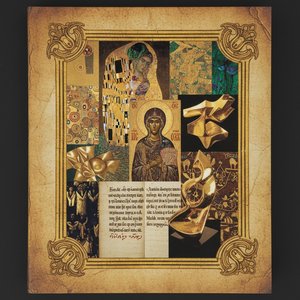
The Allure of Gold in Art History: Symbolism, Technique & Cultural Significance
Explore the rich history of gold in art! Discover symbolism, techniques & cultural significance from ancient civilizations to Klimt's masterpieces. Expert insights for collectors at OriginalUniqueArt.

Guldålderns Mästverk: Topp 10 målningar som strålar av bladguld – OriginalUniqueArt.se
Upptäck 10 ikoniska målningar som strålar av bladguld! Fördjupa dig i renässansens och bysantinska konstens guldålder. Lär känna Klimt, religiösa motiv & mer. Köp museumkvalitativa reproduktioner på OriginalUniqueArt.com – för en lyxig heminredning.
Art Nouveau: Topp 10 mästerverk som definierade en epok – Konsttryck & Inredning
Utforska Art Nouveau-rörelsens 10 mest ikoniska mästerverk! Lär känna Alphonse Mucha, Gustav Klimt & andra nyckelartister. Vackra konsttryck och inspiration för din inredning – upptäck tidlösa symbolik och organiska former på OriginalUniqueArt.com.

The Vienna Secession: A Golden Revolution of Modernism and the Legacy of Gustav Klimt
Explore the profound impact of the Vienna Secession movement. Discover how visionaries like Gustav Klimt revolutionized modern art through symbolism, gold leaf, and the concept of Gesamtkunstwerk in this expert-led historical guide.

Gustav Klimts 25 Mästerverk: En Konstresa för Hemmet & Själens Frid
Utforska Gustav Klimts 25 mest ikoniska målningar! Fördjupa dig i symbolik, Art Nouveau och den gyllene fasen. Hitta inspiration för din heminredning & köp museumkvalitativa reproduktioner på OriginalUniqueArt.com.


