

 Visa i rummet
 Skicka
 Dela
Dela
 Detaljer
 Studentguide för konstverk

 Ladda ner
 Liknande objekt
 Röntgen
 Bildspel
 Besökstatistik
Susanna and the Elders
 Acrylic On Canvas
- WallArt
- Baroque Painting
 133.0 x 181.0 cm
 Palazzo della Pilotta
 Läs mer
Handgjord oljereproduktion
Handmålad olja på duk i din valda storlek och ram, tillverkad efter beställning av våra konstnärer. ( Byt till tryckta exemplar Byt till digital bildförsäljning)




P118B Skr10

P118H Skr10

P118W Skr10

P438Z Skr10

P508JH Skr12

P508YH Skr12

P805H Skr10

P805Z Skr10

P919BZ Skr10

P919G Skr10

P919XJ Skr10

P959ZH Skr10

P968JZ Skr12

W106C Skr8

W218G Skr10

W218JH Skr8

W218Y Skr10

W307PJ Skr10

W316G Skr10

W316PJ Skr8

W316Y Skr10

W398PJ Skr8

W4111J Skr10

W500HY Skr15

W500JH Skr15

W692G Skr12

W849H Skr8

W940BG Skr15

W953PJ Skr8




Välj bland våra förinställda storlekar som motsvarar konstverkets ursprungliga proportioner.

Du kan ange egna mått för att passa en specifik ram eller yta. Om den valda storleken inte matchar originalbildens proportioner kommer vi antingen att beskära konstverket eller utöka målningen med ytterligare handmålade element. En digital skiss skickas till dig för godkännande innan produktionen påbörjas.
Observera att förhandsvisningen på skärmen inte återspeglar den faktiska beskärningen eller utökningen. Endast skissen visar den slutgiltiga kompositionen korrekt.
Även om anpassade storlekar är möjliga, rekommenderar vi att du väljer en dimension från den fördefinierade listan för att bevara originalproportionerna.
Efter beställning kommer OriginalUniqueArt.com team att mejla kunden för instruktioner och tillhandahålla en skissförhandsvisning
Leverans över hela världen () på 3–4 veckor istället för standard 5 veckor. (7 oktober). Inga kompromisser med kvaliteten.

Fri expressfrakt över hela världen

Högkvalitativ linnecanvas

Fullständig fraktförsäkring

Garantier för återbetalning av tullavgifter

Garantier för exakt färgåtergivning

100 dagars returrätt vid fabrikationsfel

100% pengarna tillbaka-garanti

Mängdrabatt erbjuds
 Glasalternativet är endast tillgängligt i storlekar under 110 cm.

Susanna and the Elders
Tryckteknik
Reproduktionsstorlek
-


Totalpris
Skr 2877
The Dramatic Narrative of Susanna and the Elders
Guercino’s “Susanna and the Elders,” painted around 1650, isn't merely a biblical scene; it’s a visceral exploration of virtue under duress, a masterful demonstration of Baroque drama, and a testament to the artist’s profound understanding of human psychology. The painting depicts a pivotal moment from the Book of Daniel – Susanna, a young woman renowned for her innocence and beauty, is falsely accused by two lecherous elders who have been captivated by her modest bathing habits. The composition immediately plunges the viewer into a world of heightened emotion: Susanna, rendered in a luminous white gown, sits poised on a simple stone ledge, her gaze directed heavenward with an expression of serene dignity and quiet apprehension. The stark contrast between her purity and the shadowed figures looming above her creates an immediate tension, hinting at the impending threat to her reputation and life.
- The Story’s Roots: The narrative itself is a potent allegory – Susanna represents chastity and virtue, while the elders embody lust and deceit. The story's enduring appeal lies in its exploration of moral temptation and the vulnerability of innocence against manipulative forces.
- Baroque Drama: Guercino was a master of dramatic lighting and composition, techniques central to the Baroque style. Notice how he uses chiaroscuro – the sharp contrast between light and dark – to sculpt Susanna’s form and emphasize her isolation within the scene. The deep shadows enveloping the elders heighten their sinister presence, while the soft glow illuminating Susanna underscores her virtue.
A Study in Technique: Guercino's Distinctive Style
Guercino’s artistic approach is immediately recognizable – a blend of meticulous detail and expressive dynamism. He was known for his incredibly detailed drawings, which informed his painting style, resulting in figures with remarkably realistic musculature and drapery. Observe the intricate folds of Susanna's gown, rendered with painstaking precision, as well as the subtle textures of the stone ledge beneath her. The artist’s use of color is equally noteworthy; he employs a palette dominated by muted earth tones – ochres, browns, and grays – punctuated by flashes of white for Susanna’s dress and the vibrant reds of the elders' robes. This restrained palette amplifies the emotional impact of the scene, creating a sense of solemnity and gravity.
Key Characteristics:- Detailed Draftsmanship: Guercino was renowned for his preparatory drawings, which demonstrate an extraordinary command of line and form.
- Chiaroscuro Mastery: His skillful manipulation of light and shadow creates a dramatic and emotionally charged atmosphere.
- Expressive Figures: The figures are not merely representations but embodiments of their emotions – Susanna’s serenity, the elders' lustful intent.
Symbolism and Interpretation
Beyond the straightforward narrative, “Susanna and the Elders” is rich in symbolic meaning. The setting itself—a simple stone ledge overlooking a tranquil pool—suggests vulnerability and exposure. The presence of the two elders, shrouded in shadow, represents the forces of temptation that threaten to corrupt innocence. Notably, the scene draws upon the Apocrypha – biblical texts not included in the Hebrew Bible – adding layers of complexity to its interpretation. The inclusion of the skull, a memento mori (reminder of death), subtly underscores the precariousness of Susanna’s situation and the ultimate triumph of virtue over mortality. The phrase “Et in Arcadia ego” (“Also in Paradise I am”) reinforces this theme, reminding us that even in idyllic settings, death is ever-present.
A Timeless Masterpiece: Guercino's Enduring Legacy
“Susanna and the Elders” remains a profoundly moving work of art, captivating viewers with its dramatic intensity, technical brilliance, and enduring moral themes. Guercino’s ability to convey complex emotions through carefully rendered figures and evocative lighting is truly remarkable. Reproductions of this painting continue to inspire admiration for its artistic merit and its poignant exploration of human nature. It stands as a powerful testament to the artist's skill and his profound understanding of the human condition, ensuring its place as a cornerstone of Baroque art.
Frågor och svar
Är "Susanna and the Elders" av Il Guercino ett välkänt konstverk?
"Susanna and the Elders" av Il Guercino har en Recognized popularitetsnivå. Denna klassificering återspeglar hur väl känt verket är.
Vilken konstnär tillskrivs "Susanna and the Elders"?
Konstnären bakom "Susanna and the Elders" är Il Guercino. Verket är katalogiserat under Il Guercinos namn.
Vilken är den rekommenderade tryckstorleken för "Susanna and the Elders" av Il Guercino?
Rekommenderad tryckstorlek för "Susanna and the Elders" är Large. Andra storlekar finns tillgängliga med samma proportioner.
Vilket rum rekommenderas för "Susanna and the Elders" av Il Guercino?
"Susanna and the Elders" av Il Guercino rekommenderas för ett Living Room. Detta förslag baseras på verkets motiv, färger och stämning.
Var kan jag köpa en handmålad reproduktion av "Susanna and the Elders" av Il Guercino?
Du kan beställa en handmålad reproduktion av "Susanna and the Elders" av Il Guercino direkt på denna sida: en handmålad oljereproduktion på linneväv, tillverkad efter beställning.
Förvaras "Susanna and the Elders" i skaparens hemland?
Ja – konstverket förvaras i konstnärens hemland. Konstnären föddes i Italien; originalverket finns i Italien.
Finns "Susanna and the Elders" tillgänglig som ett konsttryck?
För att beställa ett tryck av "Susanna and the Elders" av Il Guercino, gör helt enkelt din beställning på denna sida: ett konsttryck på bomullscanvas eller arkivbeständigt canvaspapper.
Om konstnären
A Life Illuminated by Shadow: The World of Guercino
Giovanni Francesco Barbieri, känd världen över som Il Guercino – “skrynklingen” – var ett namn född ur en fysisk egenskap men bestämt att representera en konstnärlig vision som dramatiskt förändrade barockmåleriet. Han föddes 1591 i Cento, en liten stad belägen mellan Ferrara och Bologna, och hans resa började inte inom de heligaste salarna av formella akademier, utan genom självupptäckt och tidig lärlingskap med Ludovico Carracci. Detta formativa skede lade grunden för en stil som skulle bli synonym med intensiv emotionellitet, dramatisk chiaroscuro och en djupgående engagemang för både realism och idealism. Till skillnad från många av sina samtida som sökte klassisk perfektion, pulserade Guercinos konst med en rå, mänsklig energi, speglande den turbulenta andliga klimaten i 1600-talets Italien. Hans tidiga liv präglades av en naturlig talang som snabbt överträffade konventionell träning; han kopierade inte bara stilar utan skapade sin egen väg, en upplyst av en inneboende förståelse för ljus och skugga.From Caravaggism to Classical Grace: A Shifting Palette
Guercinos konstnärliga utveckling var inte en linjär progression, utan snarare en fascinerande dialog mellan olika inflytanden och stilistiska utforskningar. Hans initiala verk var djupt skyldiga Caravaggios revolutionerande naturalism, omfamnade skarpa kontraster och en grubbelfrådig realism som chockade och fängslade publiken. Målningar som *Amnon och Tamar* exemplifierar denna tidiga period – en hjärtskärande skildring av en biblisk berättelse målad med skoningslös ärlighet och psykologisk djup. Men Guercino var inte nöjd med att stanna inom Caravaggismens omloppsbana. En avgörande förändring inträffade i hans stil under 1630-talet, driven av både konstnärligt nyfikenhet och de krav som ställdes av upplysta patrons. Han började mjukna sin palett, flytta bort från den hårda tenebrismen mot ett mer ljust och balanserat tillvägagångssätt. Denna övergång var inte bara en stilistisk knep; den återspeglade en djupare engagemang för klassiska ideal och en önskan att skapa verk som inte bara var visuellt imponerande utan också estetiskt raffinerade. Under denna period började han utforska större rumsliga djup och en mer harmonisk komposition, vilket framgår av mästerverk som *The Return of the Prodigal Son*. Han studerade även klassiska skulpturer och arkitektur, vilket påverkade hans kompositionsförmåga.Biblical Narratives and Emotional Resonance
Genom hela sin karriär vände Guercino sig konsekvent till bibliska berättelser för inspiration. Men han illustrerade dessa historier inte bara; han fyllde dem med en djupgående känsla av mänsklig dramatik och emotionell resonans. Hans figurer är inte idealiserade helgon utan bräckliga individer som kämpar med tro, tvivel, ånger och försoning. *The Vocation of Saint Aloysius Gonzaga* är ett utmärkt exempel – en kraftfull skildring av religiös uppvaknande målad med betagande skicklighet och känslighet. Guercinos förmåga att fånga sina subjects inre liv skiljde sig från många av hans samtida. Han förstod att sann pietet inte handlade om yttre uttryck av andakt utan om de interna striderna och offren som definierade ett liv tillägnat tron. Denna psykologiska djup, kombinerad med hans mästarliga användning av ljus och skugga, skapade målningar som var både visuellt slående och emotionellt engagerande. Han tvekade inte att porträttera svåra eller obehagliga ögonblick, trodde att dessa var nödvändiga för att förstå de mänskliga tillståndens komplexitet.A Lasting Legacy: Influence and Rediscovery
Guercinos inflytande sträckte sig långt bortom hans livstid. Hans dramatiska användning av ljus och skugga, i kombination med hans förmåga att väcka starka känslor, inspirerade generationer av konstnärer över Europa. Även om hans rykte vissnade något under 1700-talet och 1800-talet återupptäcktes hans verk tack vare den uthålliga ansträngningen från konsthistoriker Sir Denis Mahon. Mahons noggranna forskning och passionerade förespråkande hjälpte till att återställa Guercino till sin rätta plats bland barockens mästare. Idag hyllas hans målningar i prestigefyllda museer över hela världen – från Pinacoteca Nazionale i Ferrara till National Gallery of Art i Washington D.C. – som ett testamente till hans bestående konstnärliga geni.- Museer och samlingar: Guercinos verk pryder salarna i institutioner som Pinacoteca Nazionale (Ferrara), Palazzo Brignole-Sale (Genoa) och Galleria Spada (Rom).
- Chiaroscuro Master: Hans dramatiska användning av ljus och skugga är en definierande egenskap hos hans stil.
- Biblisk berättare: Han gav bibliska berättelser liv med otrolig emotionell djup och psykologisk insikt.
The Influence of Caravaggio and the Carracci
Guercino’s early work was profoundly influenced by both Caravaggio and the Carracci family, particularly Annibale Carracci. Caravaggio's dramatic use of light and shadow, known as tenebrism, provided a foundation for Guercino's own chiaroscuro style. However, he moved beyond simple imitation, incorporating elements of classical composition and anatomy from the Carracci’s work. The influence of Ludovico Carracci is particularly evident in his early works, such as *The Return of the Prodigal Son*, where he employs a balanced composition and realistic depiction of figures. Guercino admired the Carracci's ability to capture human emotion and their use of color, but he also developed his own unique style that combined these influences with his own artistic vision. He was particularly interested in capturing the psychological state of his subjects, often depicting them in moments of intense emotion or contemplation.A Painter of Emotion and Light
Guercino’s art is characterized by its emotional intensity and dramatic use of light and shadow. He was a master of chiaroscuro, creating paintings that are both visually stunning and emotionally evocative. His figures are often rendered with great detail and realism, but they are also imbued with a sense of drama and movement. Guercino's work reflects the turbulent spiritual climate of 17th-century Italy, and his paintings capture the anxieties, hopes, and fears of that era. He was known for his ability to create works that were both beautiful and unsettling, challenging viewers to confront difficult questions about faith, morality, and the human condition. His later works are characterized by a softer palette and a more balanced composition, reflecting his growing interest in classical ideals.
Il Guercino
1591 - 1666 , Italien
Snabbfakta
- Artistic Movement Or Style: Barock
- Artists Or Movements Influenced By This Artist: ['Barockmålning']
- Artists Who Influenced This Artist: ['Carracci']
- Date Of Birth: 8 feb 1591
- Date Of Death: 22 dec 1666
- Full Name: Giovanni Francesco Barbieri
- Nationality: Italiensk
- Notable Artworks:
- Annunciation
- Return Prodigal
- Place Of Birth: Cento, Italien
Relaterade artiklar

The Visceral Stage: Exploring Dramatic Narratives & Emotional Intensity in Baroque Art
Explore the dramatic world of Baroque art! Discover iconic masters like Caravaggio & Rembrandt, their techniques, and the movement's lasting impact. Expert insights for collectors & enthusiasts at OriginalUniqueArt.

Barockens Mästerverk: Topp 10 konstverk som definierade en epok – OriginalUniqueArt.se
Upptäck barockens 10 största mästerverk! Caravaggio, Rembrandt, Bernini och fler. Lär känna historien bakom ikoniska målningar & skulpturer. Köp reproduktioner av hög kvalitet på OriginalUniqueArt.com – för en lyxig heminredning.
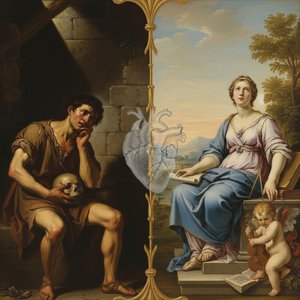
Guercino: A Baroque Master Between Caravaggism & Classicism – Exploring Innovation & Emotional Depth
Explore the captivating world of Guercino, a Baroque master bridging Caravaggism & Classicism. Discover his dramatic chiaroscuro, emotional depth, and lasting influence on art history with OriginalUniqueArt.

The Dramatic Flourish: Exploring the Baroque Movement's Enduring Legacy in Art History
Explore the dramatic world of Baroque art! Discover iconic artists like Caravaggio & Rubens, defining techniques, and its lasting impact on art history. Expert insights for collectors & enthusiasts at OriginalUniqueArt.

Barockens dramatik: Att föra prakt och känsla in i samtida interiörer
Upptäck barockens dramatik och lyx! Lär dig hur du integrerar denna klassiska stil i ditt hem med våra experttips och inspirerande exempel. Skapa en palatskänsla idag!