

 Visa i rummet
 Skicka
 Dela
Dela
 Detaljer

 Ladda ner
 Liknande objekt
 Röntgen
 Bildspel
 Besökstatistik
St Peter and the angel
 Acrylic On Canvas
- WallArt
- Baroque Painting
 1650
1650 30.0 x 21.0 cm
 Art Gallery of South Australia
 Läs mer
Giclée / Konsttryck
Giclée- eller canvasprint av museumskvalitet med snabb produktion och flexibla ytbehandlingsalternativ. ( Köp handmålat konstverk Byt till digital bildförsäljning)




P118B $10

P118H $10

P118W $10

P438Z $10

P508JH $12

P508YH $12

P805H $10

P805Z $10

P919BZ $10

P919G $10

P919XJ $10

P959ZH $10

P968JZ $12

W106C $8

W218G $10

W218JH $8

W218Y $10

W307PJ $10

W316G $10

W316PJ $8

W316Y $10

W398PJ $8

W4111J $10

W500HY $15

W500JH $15

W692G $12

W849H $8

W940BG $15

W953PJ $8




Välj bland våra förinställda storlekar som motsvarar konstverkets ursprungliga proportioner.

Du kan ange egna mått för att passa en specifik ram eller yta. Om det valda måttet inte överensstämmer med originalbildens proportioner kommer vi antingen att beskära konstverket eller utöka bilden med en speglad eller enfärgad kant. En digital mockup skickas för ditt godkännande innan produktionen påbörjas.
Vänligen notera att förhandsvisningen på skärmen inte återspeglar den faktiska beskärningen eller utökningen. Endast mockuppen visar den slutgiltiga kompositionen korrekt.
Även om anpassade storlekar är möjliga, rekommenderar vi att du väljer ett mått från den fördefinierade listan för att bevara de ursprungliga proportionerna.
Leverans över hela världen () på 2 veckor istället för standard 4/5 veckor. (19 september)

Fri expressfrakt över hela världen

Högkvalitativ linnecanvas

Fullständig fraktförsäkring

Garantier för återbetalning av tullavgifter

Garantier för exakt färgåtergivning

100 dagars returrätt vid fabrikationsfel

100% pengarna tillbaka-garanti

Mängdrabatt erbjuds
 Glasalternativet är endast tillgängligt i storlekar under 110 cm.

St Peter and the angel
Giclée / Konsttryck
Reproduktionsstorlek
-


Totalpris
$ 80
St Peter and the Angel: A Vision of Divine Comfort
Guercino’s “St Peter and the Angel” is not merely a depiction of biblical figures; it's an intensely felt moment of solace, rendered with a raw emotionalism that distinguishes the artist from his more polished contemporaries. Painted in 1650, this work, measuring a modest 30 x 21 cm, embodies the turbulent spirit of Baroque Italy – a world grappling with religious fervor and social upheaval, yet simultaneously yearning for moments of grace and spiritual connection. The scene unfolds within a dimly lit chamber, suggesting an intimate setting where Peter, depicted in repose on a simple bed, receives comfort from an angel hovering above him. This isn’t the idealized serenity often found in religious art; instead, there's a palpable vulnerability in Peter’s posture, his arms outstretched as if seeking reassurance. The angel, rendered with a gentle, almost melancholic expression, offers not just support but a profound sense of understanding – a silent acknowledgment of earthly burdens.
Guercino’s distinctive style is immediately apparent. He eschews the smooth, polished surfaces favored by many of his time, opting instead for a deliberately rough and expressive application of paint. Notice the visible brushstrokes, particularly in the drapery and the angel's wings, which seem to ripple with movement. This technique, combined with his masterful use of chiaroscuro – the dramatic contrast between light and shadow – creates an atmosphere of heightened emotion and psychological depth. The muted palette, dominated by browns, ochres, and deep blues, further contributes to the painting’s somber yet comforting mood. The artist's background in drawing is evident in the meticulous detail with which he renders Peter’s face and hands, conveying a sense of humanity rarely found in grand religious narratives.
A Study in Symbolism and Spiritual Narrative
Beyond its immediate depiction, “St Peter and the Angel” is rich in symbolic meaning. The bed itself represents vulnerability and surrender – Peter, a figure known for his earthly failings (his denial of Christ), is presented as open to divine grace. The angel’s presence signifies God's unwavering compassion and forgiveness. The positioning of the figures—Peter lying down, the angel standing above—highlights the dynamic between humility and authority, suggesting that true strength lies in acknowledging one’s need for guidance. The overall composition draws heavily on biblical themes of repentance and redemption, but Guercino imbues them with a profoundly personal and relatable quality.
Interestingly, the painting's historical context adds another layer of interpretation. The mid-17th century was a period of intense religious debate in Italy, marked by the Counter-Reformation and the rise of the Catholic Church’s efforts to combat Protestantism. In this environment, art served as a powerful tool for conveying religious messages. Guercino's work, with its emphasis on emotional sincerity and human vulnerability, aligns perfectly with the Church’s desire to reconnect with the faithful through relatable imagery. The scene resonates with the idea of divine mercy—a key tenet of Catholic theology during this era.
The Artist and His Legacy
Giovanni Francesco Barbieri, known as Il Guercino (the squint), was a complex and often misunderstood artist. Born in Cento in 1591, his early life was marked by unconventional training—he largely taught himself, developing a strikingly individual style that defied the conventions of the Bolognese school. His work is characterized by its dramatic intensity, expressive brushwork, and profound psychological insight. Guercino’s career spanned several decades, during which he produced a vast body of paintings, drawings, and etchings. He was particularly renowned for his depictions of biblical scenes and portraits, often infused with a sense of urgency and emotional turmoil.
Despite facing periods of financial hardship and professional setbacks, Guercino remained committed to his artistic vision until his death in 1666. His legacy is one of innovation and emotional depth—he pushed the boundaries of Baroque painting, creating works that continue to captivate viewers with their raw honesty and profound spiritual resonance. Reproductions of “St Peter and the Angel” offer a remarkable opportunity to experience this powerful artwork firsthand, allowing us to appreciate the genius of Guercino’s vision and his enduring contribution to the history of art.
Further Research & Reproduction Details
- Useful Links:
- St Peter's Basilica, Vatican City
- St Peter’s College, Oxford
- St Peter's House, Stromness
Additional Research: The painting is available as a high-quality hand-painted reproduction by OriginalUniqueArt.com, capturing the artist’s signature style and emotional intensity. Explore our collection for a stunning addition to your home or office – a timeless reminder of faith, compassion, and the enduring power of human connection.
Om konstnären
A Life Illuminated by Shadow: The World of Guercino
Giovanni Francesco Barbieri, känd världen över som Il Guercino – “skrynklingen” – var ett namn född ur en fysisk egenskap men bestämt att representera en konstnärlig vision som dramatiskt förändrade barockmåleriet. Han föddes 1591 i Cento, en liten stad belägen mellan Ferrara och Bologna, och hans resa började inte inom de heligaste salarna av formella akademier, utan genom självupptäckt och tidig lärlingskap med Ludovico Carracci. Detta formativa skede lade grunden för en stil som skulle bli synonym med intensiv emotionellitet, dramatisk chiaroscuro och en djupgående engagemang för både realism och idealism. Till skillnad från många av sina samtida som sökte klassisk perfektion, pulserade Guercinos konst med en rå, mänsklig energi, speglande den turbulenta andliga klimaten i 1600-talets Italien. Hans tidiga liv präglades av en naturlig talang som snabbt överträffade konventionell träning; han kopierade inte bara stilar utan skapade sin egen väg, en upplyst av en inneboende förståelse för ljus och skugga.From Caravaggism to Classical Grace: A Shifting Palette
Guercinos konstnärliga utveckling var inte en linjär progression, utan snarare en fascinerande dialog mellan olika inflytanden och stilistiska utforskningar. Hans initiala verk var djupt skyldiga Caravaggios revolutionerande naturalism, omfamnade skarpa kontraster och en grubbelfrådig realism som chockade och fängslade publiken. Målningar som *Amnon och Tamar* exemplifierar denna tidiga period – en hjärtskärande skildring av en biblisk berättelse målad med skoningslös ärlighet och psykologisk djup. Men Guercino var inte nöjd med att stanna inom Caravaggismens omloppsbana. En avgörande förändring inträffade i hans stil under 1630-talet, driven av både konstnärligt nyfikenhet och de krav som ställdes av upplysta patrons. Han började mjukna sin palett, flytta bort från den hårda tenebrismen mot ett mer ljust och balanserat tillvägagångssätt. Denna övergång var inte bara en stilistisk knep; den återspeglade en djupare engagemang för klassiska ideal och en önskan att skapa verk som inte bara var visuellt imponerande utan också estetiskt raffinerade. Under denna period började han utforska större rumsliga djup och en mer harmonisk komposition, vilket framgår av mästerverk som *The Return of the Prodigal Son*. Han studerade även klassiska skulpturer och arkitektur, vilket påverkade hans kompositionsförmåga.Biblical Narratives and Emotional Resonance
Genom hela sin karriär vände Guercino sig konsekvent till bibliska berättelser för inspiration. Men han illustrerade dessa historier inte bara; han fyllde dem med en djupgående känsla av mänsklig dramatik och emotionell resonans. Hans figurer är inte idealiserade helgon utan bräckliga individer som kämpar med tro, tvivel, ånger och försoning. *The Vocation of Saint Aloysius Gonzaga* är ett utmärkt exempel – en kraftfull skildring av religiös uppvaknande målad med betagande skicklighet och känslighet. Guercinos förmåga att fånga sina subjects inre liv skiljde sig från många av hans samtida. Han förstod att sann pietet inte handlade om yttre uttryck av andakt utan om de interna striderna och offren som definierade ett liv tillägnat tron. Denna psykologiska djup, kombinerad med hans mästarliga användning av ljus och skugga, skapade målningar som var både visuellt slående och emotionellt engagerande. Han tvekade inte att porträttera svåra eller obehagliga ögonblick, trodde att dessa var nödvändiga för att förstå de mänskliga tillståndens komplexitet.A Lasting Legacy: Influence and Rediscovery
Guercinos inflytande sträckte sig långt bortom hans livstid. Hans dramatiska användning av ljus och skugga, i kombination med hans förmåga att väcka starka känslor, inspirerade generationer av konstnärer över Europa. Även om hans rykte vissnade något under 1700-talet och 1800-talet återupptäcktes hans verk tack vare den uthålliga ansträngningen från konsthistoriker Sir Denis Mahon. Mahons noggranna forskning och passionerade förespråkande hjälpte till att återställa Guercino till sin rätta plats bland barockens mästare. Idag hyllas hans målningar i prestigefyllda museer över hela världen – från Pinacoteca Nazionale i Ferrara till National Gallery of Art i Washington D.C. – som ett testamente till hans bestående konstnärliga geni.- Museer och samlingar: Guercinos verk pryder salarna i institutioner som Pinacoteca Nazionale (Ferrara), Palazzo Brignole-Sale (Genoa) och Galleria Spada (Rom).
- Chiaroscuro Master: Hans dramatiska användning av ljus och skugga är en definierande egenskap hos hans stil.
- Biblisk berättare: Han gav bibliska berättelser liv med otrolig emotionell djup och psykologisk insikt.
The Influence of Caravaggio and the Carracci
Guercino’s early work was profoundly influenced by both Caravaggio and the Carracci family, particularly Annibale Carracci. Caravaggio's dramatic use of light and shadow, known as tenebrism, provided a foundation for Guercino's own chiaroscuro style. However, he moved beyond simple imitation, incorporating elements of classical composition and anatomy from the Carracci’s work. The influence of Ludovico Carracci is particularly evident in his early works, such as *The Return of the Prodigal Son*, where he employs a balanced composition and realistic depiction of figures. Guercino admired the Carracci's ability to capture human emotion and their use of color, but he also developed his own unique style that combined these influences with his own artistic vision. He was particularly interested in capturing the psychological state of his subjects, often depicting them in moments of intense emotion or contemplation.A Painter of Emotion and Light
Guercino’s art is characterized by its emotional intensity and dramatic use of light and shadow. He was a master of chiaroscuro, creating paintings that are both visually stunning and emotionally evocative. His figures are often rendered with great detail and realism, but they are also imbued with a sense of drama and movement. Guercino's work reflects the turbulent spiritual climate of 17th-century Italy, and his paintings capture the anxieties, hopes, and fears of that era. He was known for his ability to create works that were both beautiful and unsettling, challenging viewers to confront difficult questions about faith, morality, and the human condition. His later works are characterized by a softer palette and a more balanced composition, reflecting his growing interest in classical ideals.
Il Guercino
1591 - 1666 , Italien
Snabbfakta
- Artistic Movement Or Style: Barock
- Artists Or Movements Influenced By This Artist: ['Barockmålning']
- Artists Who Influenced This Artist: ['Carracci']
- Date Of Birth: 8 feb 1591
- Date Of Death: 22 dec 1666
- Full Name: Giovanni Francesco Barbieri
- Nationality: Italiensk
- Notable Artworks:
- Annunciation
- Return Prodigal
- Place Of Birth: Cento, Italien
Relaterade artiklar

The Dramatic Flourish: Exploring the Baroque Movement's Enduring Legacy in Art History
Explore the dramatic world of Baroque art! Discover iconic artists like Caravaggio & Rubens, defining techniques, and its lasting impact on art history. Expert insights for collectors & enthusiasts at OriginalUniqueArt.

Barockens Mästerverk: Topp 10 konstverk som definierade en epok – OriginalUniqueArt.se
Upptäck barockens 10 största mästerverk! Caravaggio, Rembrandt, Bernini och fler. Lär känna historien bakom ikoniska målningar & skulpturer. Köp reproduktioner av hög kvalitet på OriginalUniqueArt.com – för en lyxig heminredning.

Celestial Messengers: A Comprehensive Exploration of Angelic Representation in Art History
Explore the captivating history of angels in art! Discover symbolism, iconic Renaissance masterpieces & renowned artists. Expert insights for art lovers & collectors at OriginalUniqueArt.

Celestial Messengers: Angels in Painting – A Historical & Artistic Exploration
Explore the captivating history of angels in painting! Discover symbolism, iconic Renaissance & Byzantine masterpieces, and renowned artists. Expert insights for art lovers & collectors at OriginalUniqueArt.
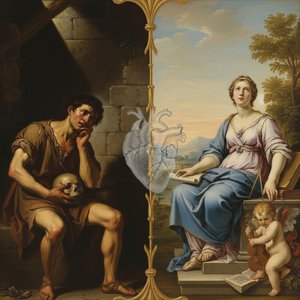
Guercino: A Baroque Master Between Caravaggism & Classicism – Exploring Innovation & Emotional Depth
Explore the captivating world of Guercino, a Baroque master bridging Caravaggism & Classicism. Discover his dramatic chiaroscuro, emotional depth, and lasting influence on art history with OriginalUniqueArt.