Förhandsvisa
 Skicka
 Dela
Dela
 Visa detaljer

 Ladda ner
 Liknande objekt
 Röntgen
 Bildspel
 Statistik
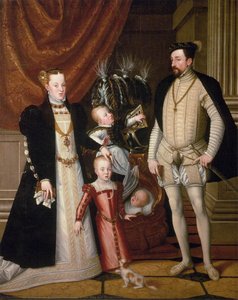
Self-Portrait
 Acrylic On Canvas
- WallArt
- Baroque
 1571
1571 231.0 x 157.0 cm
 Prag National Gallery
 Visa mer
Giclée / Konsttryck
Giclée- eller canvasprint av museumskvalitet med snabb produktion och flexibla ytbehandlingsalternativ. ( Beställ handmålad reproduktion Byt till digital bild)




P118B $10

P118H $10

P118W $10

P438Z $10

P508JH $12

P508YH $12

P805H $10

P805Z $10

P919BZ $10

P919G $10

P919XJ $10

P959ZH $10

P968JZ $12

W106C $8

W218G $10

W218JH $8

W218Y $10

W307PJ $10

W316G $10

W316PJ $8

W316Y $10

W398PJ $8

W4111J $10

W500HY $15

W500JH $15

W692G $12

W849H $8

W940BG $15

W953PJ $8




Välj bland våra förinställda storlekar som motsvarar konstverkets ursprungliga proportioner.

Du kan ange egna mått för att passa en specifik ram eller yta. Om det valda måttet inte överensstämmer med originalbildens proportioner kommer vi antingen att beskära konstverket eller utöka bilden med en speglad eller enfärgad kant. En digital mockup skickas för ditt godkännande innan produktionen påbörjas.
Vänligen notera att förhandsvisningen på skärmen inte återspeglar den faktiska beskärningen eller utökningen. Endast mockuppen visar den slutgiltiga kompositionen korrekt.
Även om anpassade storlekar är möjliga, rekommenderar vi att du väljer ett mått från den fördefinierade listan för att bevara de ursprungliga proportionerna.
Leverans över hela världen () på 2 veckor istället för standard 4/5 veckor. (14 september)

Fri expressfrakt över hela världen

Högkvalitativ linnecanvas

Fullständig fraktförsäkring

Garantier för återbetalning av tullavgifter

Garantier för exakt färgåtergivning

100 dagars returrätt (endast vid defekter)

100% pengarna tillbaka-garanti

Mängdrabatt erbjuds
 Glasalternativet är endast tillgängligt i storlekar under 110 cm.

Self-Portrait
Giclée / Konsttryck
Storlek på reproduktion
-


Slutgiltigt pris
$ 80
Delving into the Artist's Style
Giuseppe Arcimboldo was a master of his craft, known for his unique and imaginative compositions. His works often featured fantastical creatures and still-life arrangements, blending reality and fantasy in a way that was both intriguing and thought-provoking. The Self-Portrait is a testament to his skill as a portrait artist, capturing the subtleties of human expression with remarkable accuracy. Key Features of the Painting- The subject's beard extends down past his chest, adding an air of dignity and wisdom to the overall composition.
- The white hat and robe worn by the subject convey a sense of formality and sophistication.
- The artist's use of pen as a medium allows for exquisite detail and texture, drawing the viewer's eye into the painting.
The Self-Portrait by Giuseppe Arcimboldo is not only a remarkable piece of Renaissance art but also a window into the artist's personality and creative genius. As a masterpiece of portraiture, it continues to captivate audiences with its intricate details and profound expression, making it a must-see for anyone interested in the works of this incomparable artist. For more information on Giulio Parigi, another notable figure in Italian art, visit Giulio Parigi.
Konstnärsbiografi
A World Reimagined: The Enigmatic Art of Giuseppe Arcimboldo
Giuseppe Arcimboldo, a name that conjures images both whimsical and profoundly strange, remains one of the most singular figures in Renaissance art. Born in Milan in 1527, his career unfolded against the backdrop of a Europe steeped in intellectual ferment, religious upheaval, and an insatiable curiosity about the natural world. While initially recognized for more conventional works – frescoes adorning cathedrals and portraits adhering to established courtly standards – Arcimboldo’s enduring legacy rests upon a series of composite heads constructed entirely from meticulously arranged objects: fruits, vegetables, flowers, books, even musical instruments. These weren't mere playful exercises in visual trickery; they were complex allegories, imbued with symbolism that resonated deeply within the Renaissance worldview and continue to fascinate audiences today. His father, Biagio Arcimboldo, was an artist himself, providing young Giuseppe with early artistic training and likely influencing his initial foray into design work for stained glass windows and frescoes at Milan Cathedral beginning around 1549. This foundational experience honed his technical skill and eye for detail—qualities that would become hallmarks of his later, more unconventional creations.Early Life and Artistic Training
Giuseppe Arcimboldo’s formative years were marked by exposure to the artistic traditions of Milanese Mannerism – a style characterized by elongated figures, distorted perspectives, and an emphasis on decorative ornamentation. His father, Biagio Arcimboldo, was a respected craftsman and designer, specializing in stained glass windows and architectural embellishments, transmitting invaluable knowledge about pigment preparation, glazing techniques, and sculptural modeling to his son. This early training instilled in Giuseppe a meticulous attention to detail and a profound understanding of visual illusion—skills that would prove crucial to the development of his groundbreaking artistic style. Beyond formal instruction, Arcimboldo’s father fostered an appreciation for humanist scholarship and philosophical inquiry, shaping his intellectual outlook and encouraging him to contemplate the relationship between art and knowledge.Courtly Commissions and The Habsburg Influence
A pivotal moment in Arcimboldo's artistic trajectory arrived in 1562 when he was appointed court portraitist to Ferdinand I at the Habsburg court in Vienna. This appointment ushered in a period of prolific creativity and collaboration with successive Habsburg rulers – Maximilian II and Rudolf II – who recognized Arcimboldo’s exceptional talent and commissioned him for ambitious projects encompassing costume design, festival decorations, and the curation of imperial collections. The Habsburg court represented an epicenter of artistic innovation and intellectual discourse during the Renaissance, attracting artists from across Europe and fostering a climate conducive to experimentation. Arcimboldo skillfully navigated this complex environment, adapting his style to suit the tastes of his patrons while simultaneously pushing boundaries and challenging conventions. Rudolf II’s fascination with alchemy and esoteric sciences profoundly influenced Arcimboldo's artistic vision, prompting him to explore unconventional materials and techniques—a characteristic that distinguishes his oeuvre from more traditional portraiture.The Birth of Composite Heads: A Revolutionary Technique
Arcimboldo’s signature achievement – the creation of composite heads – emerged not as a spontaneous whim but as a gradual evolution rooted in Renaissance artistic traditions. Artists like Andrea Mantegna had previously employed *trompe l'oeil* effects to deceive the eye and create illusions of depth, blurring the distinction between reality and representation. Arcimboldo skillfully synthesized these techniques with his mastery of sculptural modeling and decorative ornamentation, transforming ordinary objects – fruits, vegetables, flowers, books, musical instruments – into astonishingly realistic portraits. This innovative approach demanded an unparalleled level of technical skill and artistic imagination—a testament to Arcimboldo’s genius as a visual artist. The resulting images are not merely aesthetically pleasing; they serve as powerful allegories conveying complex ideas about identity, status, and the human condition.Legacy and Influence: Surrealism's Unexpected Patron
Despite his considerable success during his lifetime, Arcimboldo’s artistic reputation waned in the decades following his death in 1593—largely due to neglect by art historians who initially dismissed his work as mere eccentricity. However, a resurgence of interest in Arcimboldo’s oeuvre occurred in the 20th century, fueled by the burgeoning Surrealist movement. Artists like Salvador Dalí recognized in Arcimboldo a kindred spirit – a visionary who dared to challenge conventional perceptions and explore the subconscious through unexpected juxtapositions of imagery. Dalí famously declared Arcimboldo “the father of Surrealism,” acknowledging his pioneering use of symbolism and illusion as precursors to the movement’s aesthetic principles. Arcimboldo's influence extended beyond Surrealism, inspiring artists across diverse disciplines—from printmaking to sculpture—to embrace unconventional materials and techniques and to reimagine the boundaries of artistic representation. Today, Giuseppe Arcimboldo is celebrated as a pivotal figure in art history – a precursor to Surrealism whose enduring vision continues to captivate audiences worldwide. His paintings are housed in prestigious museums such as the Kunsthistorisches Museum in Vienna and the Louvre in Paris—ensuring that his singular contribution to Renaissance art will endure for centuries to come.
Giuseppe Arcimboldo
1527 - 1593 , Italien
Kortfakta
- Artistic Movement Or Style: Mannerism, Surrealism
- Artists Or Movements Influenced By This Artist: ['Salvador Dalí']
- Artists Who Influenced This Artist: ['Leonardoskolan']
- Date Of Birth: 5 april 1527
- Date Of Death: 11 juli 1593
- Full Name: Giuseppe Arcimboldo
- Nationality: Italienare
- Notable Artworks:
- De fyra årstiderna
- Vertumnus
- The Librarian
- Place Of Birth: Milan, Italien
Relaterade artiklar
Renoirs Mästverk: Topp 25 Konstverk för Hemmet & Själens Frid
Utforska Renoirs 25 mest älskade konstverk! Fördjupa dig i impressionismens värld, från balettscener till romantiska porträtt. Hitta inspiration & museumkvalitativa reproduktioner på OriginalUniqueArt.com.
Jacopo Tintorettos 25 Mästerverk: Drama, Ljus och Renässansens Storhet – Konst för Ditt Hem
Utforska Jacopo Tintorettos 25 mest ikoniska målningar – en resa genom venetiansk renässans och dramatiskt ljusspel. Upptäck historierna bakom mästerverken och finn inspiration till din inredning med konsttryck av högsta kvalitet på OriginalUniqueArt.com.

Galleria degli Uffizi: Topp 25 Mästerverk – Renässansens Skönhet för Ditt Hem
Upptäck de 25 mest ikoniska mästerverken på Galleria degli Uffizi i Florens! Fördjupa dig i renässanskonst av Botticelli, Leonardo da Vinci & Michelangelo. Köp museumkvalitativa konsttryck och inred ditt hem med tidlös skönhet – utforska samlingen online hos OriginalUniqueArt.com.
Hermitages 25 Mästerverk: Konsthistoriens Höjdpunkter för Ditt Hem
Upptäck Hermitagemuseets 25 mest ikoniska konstverk! Fördjupa dig i Rembrandts barock, Da Vincis renässans och Vermeers mästerliga ljus. Hitta inspiration & lyxiga reproduktioner för ditt hem på OriginalUniqueArt.com.
Albrecht Dürers 25 Mästerverk: En Konsthistorisk Resa för Hemmet
Utforska Albrecht Dürers 25 mest ikoniska verk – från gravyrer till måleri. Lär känna renässanskonstens mästare och hans tidlösa symbolik. Hitta inspiration för ditt hem med museumkvalitativa konsttryck på OriginalUniqueArt.com