Meny
Text size

() ·

A painting made for you, by hand

Nature studies (9)

Handgjord oljereproduktion

Handmålad olja på duk i din valda storlek och ram, tillverkad efter beställning av våra konstnärer. ( Byt till tryck Byt till digital bild)

Beskrivning av samlarobjekt

Explore 10 defining Mannerism masterpieces – from Pontormo to El Greco. Discover the stories behind these Renaissance paintings, their unique style & symbolism. Find museum-quality art reproductions at OriginalUniqueArt.com and elevate your home decor.

Konstnärens biografi

Giuseppe Arcimboldo (1527-1593) var en italiensk konstnär känd för sina fantasifulla porträtt gjorda av frukt, grönsaker och andra objekt. Hans unika stil, som ofta beskrivs som surrealistisk, har inspirerat konstnärer genom tiderna.

from ·

Chapter 1

How large should it be?

Slide to change the size; the picture on the left shows the frame at its real width. The proportions of the original are kept.

Standardstorlek
skräddarsydd
CM
INCH

Välj bland våra förinställda storlekar som motsvarar konstverkets ursprungliga proportioner.

bredd
höjd

Ange den bredd och höjd du behöver för att passa din ram eller din vägg. Eftersom detta är handmålat kan konstnären, vid ett annat format, måla lite mer runt bilden eller beskära den något – det är du som väljer. Vi skickar en digital mockup för godkännande innan målningen påbörjas. Bilden som visas på denna sida representerar inte det slutgiltiga resultatet — det är endast mockuppen som visar det.

Chapter 2

How should it arrive?

Choose the edges of the stretched canvas

Choose your frame

Corner sample of the WhiteWrap canvas edge finish, stretched on massivt trä bars
White Skr1
Corner sample of the BlurSideWrap canvas edge finish, stretched on massivt trä bars
Blurside Skr1
Corner sample of the ExtendedWrap canvas edge finish, stretched on massivt trä bars
Extended Skr1
Corner sample of the P118B picture frame: formgjuten polystyren, 5 cm wide and 3 cm thick
P118B Skr10
Corner sample of the P118H picture frame: formgjuten polystyren, 5 cm wide and 3 cm thick
P118H Skr10
Corner sample of the P118W picture frame: formgjuten polystyren, 5 cm wide and 3 cm thick
P118W Skr10
Corner sample of the P438Z picture frame: formgjuten polystyren, 5.5 cm wide and 3.5 cm thick
P438Z Skr10
Corner sample of the P508JH picture frame: formgjuten polystyren, 7 cm wide and 3.5 cm thick
P508JH Skr12
Corner sample of the P508YH picture frame: formgjuten polystyren, 7 cm wide and 3.5 cm thick
P508YH Skr12
Corner sample of the P805H picture frame: formgjuten polystyren, 5 cm wide and 3.5 cm thick
P805H Skr10
Corner sample of the P805Z picture frame: formgjuten polystyren, 5 cm wide and 3.5 cm thick
P805Z Skr10
Corner sample of the P919BZ picture frame: formgjuten polystyren, 7 cm wide and 3.5 cm thick
P919BZ Skr10
Corner sample of the P919G picture frame: formgjuten polystyren, 7 cm wide and 3.5 cm thick
P919G Skr10
Corner sample of the P919XJ picture frame: formgjuten polystyren, 7 cm wide and 3.5 cm thick
P919XJ Skr10
Corner sample of the P959ZH picture frame: formgjuten polystyren, 5 cm wide and 3 cm thick
P959ZH Skr10
Corner sample of the P968JZ picture frame: formgjuten polystyren, 6 cm wide and 4 cm thick
P968JZ Skr12
Corner sample of the W106C picture frame: massivt trä, 5 cm wide and 3 cm thick
W106C Skr8
Corner sample of the W218G picture frame: massivt trä, 5 cm wide and 3 cm thick
W218G Skr10
Corner sample of the W218JH picture frame: massivt trä, 5 cm wide and 3 cm thick
W218JH Skr8
Corner sample of the W218Y picture frame: massivt trä, 5 cm wide and 3 cm thick
W218Y Skr10
Corner sample of the W307PJ picture frame: massivt trä, 6 cm wide and 3 cm thick
W307PJ Skr10
Corner sample of the W316G picture frame: massivt trä, 6 cm wide and 3 cm thick
W316G Skr10
Corner sample of the W316PJ picture frame: massivt trä, 6 cm wide and 3 cm thick
W316PJ Skr8
Corner sample of the W316Y picture frame: massivt trä, 6 cm wide and 3 cm thick
W316Y Skr10
Corner sample of the W398PJ picture frame: massivt trä, 5 cm wide and 3 cm thick
W398PJ Skr8
Corner sample of the W4111J picture frame: massivt trä, 6.5 cm wide and 3.5 cm thick
W4111J Skr10
Corner sample of the W500HY picture frame: massivt trä, 7 cm wide and 5 cm thick
W500HY Skr15
Corner sample of the W500JH picture frame: massivt trä, 7 cm wide and 5 cm thick
W500JH Skr15
Corner sample of the W692G picture frame: massivt trä, 8 cm wide and 4 cm thick
W692G Skr12
Corner sample of the W849H picture frame: massivt trä, 5 cm wide and 3 cm thick
W849H Skr8
Corner sample of the W940BG picture frame: massivt trä, 7.5 cm wide and 4.5 cm thick
W940BG Skr15
Corner sample of the W953PJ picture frame: massivt trä, 6 cm wide and 3.5 cm thick
W953PJ Skr8
Corner sample of the H24-GOLD picture frame: snidad trä med gesso, 10 cm wide and 6 cm thick
H24-GOLD Skr30
Corner sample of the H24-SILVER picture frame: snidad trä med gesso, 10 cm wide and 6 cm thick
H24-SILVER Skr30
Corner sample of the H36-GOLD picture frame: snidad trä med gesso, 15 cm wide and 6.5 cm thick
H36-GOLD Skr45
Corner sample of the H36-SILVER picture frame: snidad trä med gesso, 15 cm wide and 6.5 cm thick
H36-SILVER Skr45
Förhandsvisning av ram
Inramad

Moulding: . Overall size with the frame: .

Chapter 3

Who paints it, and should anything change?

Examples of what can be changed: Replace face with customer photo; Add pet (e.g., replace cat with dog); Include hidden message in background; Change background landscape or elements.

After order, OriginalUniqueArt.com team will email client for instructions and provide a mockup preview

Leverans över hela världen () på 3–4 veckor istället för standard 5 veckor. (31 oktober). Inga kompromisser med kvaliteten.

Chapter 4

The finishing touches

A nameplate, as in a museum?

Detaljer för graverad bronsplatta

This elegant plaque features the artist's name and the title of the artwork, finely engraved for a timeless presentation.

It is made from bronze with a refined, elegant finish. The text is precisely laser-engraved for a sharp and permanent result. Measuring 9x2 cm, the plaque is compact yet easy to read. It's built to be durable and scratch-resistant, offering a professional, museum-quality look. Mounting is simple thanks to the included adhesive backing.

Detaljer för transparent akrylplatta

The plaque includes essential engraved details such as the artist's name, the title of the artwork, the date it was created, the type of media used-like oil on canvas or watercolor-a brief description of the piece, and a QR code that links to the complete artwork information.

It is crafted from clear acrylic, offering a sleek, modern appearance. The text is UV-engraved in black to ensure strong visual contrast. With a size of 10x15 cm, it ensures optimal readability. It comes equipped with two metal hooks for secure wall mounting. The plaque is designed to be weather-resistant, making it suitable for various environments, and it includes interactive features that work seamlessly with smartphone scanning.

Detaljer för svart akrylplatta

This elegant plaque includes engraved information such as the artist's name, the title of the artwork, the date it was created, the type of media used (like oil on canvas or watercolor), a short description of the artwork, and a QR code for quick access to more information.

The plaque itself is made from refined black acrylic with a premium finish. The text is laser-engraved in white for high contrast and readability. Its size is 10x15 cm, designed to be easy to read. It comes with two metal hooks for professional mounting. The design is sleek and fits any interior style. It is also weather-resistant and durable, with built-in digital integration for mobile compatibility.

A protective varnish?

When do you need it?

Chapter 5

Your painting, as you ordered it

Nature studies (9)

Reproduktionsmetod

Storlek på reproduktion

-

Elitkonstnär av högsta klass

Mer detaljrikedom, finess och extra produktionstid

-

Inramning av reproduktion

-

-

För konstverk eller reproduktioner som är större än 105 cm (cirka 41 tum) på någon sida, levereras ramen som ett isärplockat kit. Denna metod säkerställer en trygg leverans och förhindrar skador under transport.

Professionell montering krävs – detta är inte en produkt för självmontering.
Kitet måste monteras och duken spännas av en erfaren professionell inramare med hjälp av trälim (ingår ej), en spänntång för duk och klämmor för att hålla sargen rak medan limmet torkar. Felaktig montering eller ojämn spänning av duken kan orsaka permanenta skador på konstverket och täcks inte av vår garanti.

  • Alla massiva träribbor ingår, exakt tillkapade efter mått.

  • Monteras med de medföljande skruvarna, samt trälim för hörnfogarna, vilket inte ingår och måste anskaffas av din ramverkare.

  • Professionella verktyg krävs och ingår ej: en dukspännare och klämmor för att hålla listerna raka medan limmet torkar.

Viktigt:
Hörnjunctionerna kräver trälim, listerna måste hållas på plats med tvingar tills limmet har torkat helt, och för att spänna duken på den monterade ramen krävs en spänntång för duk. Inget av detta ingår i kitet. Vänligen kontakta en erfaren professionell rammakare innan du beställer denna storlek.

Namnskylt

-

-

Skyddande fernissa

Glansig fernissa (förstärker färgerna, skyddar mot ljus och fukt)

-

Anpassa mitt konstverk

Exempel på vad som kan ändras: Byt ut ansiktet mot ett foto från kunden; Lägg till ett husdjur (t.ex. byt ut en katt mot en hund); Inkludera ett dolt meddelande i bakgrunden; Ändra bakgrundens landskap eller detaljer.

-

Expressleverans

Leverans över hela världen () inom 3–4 veckor istället för standardiserade 5 veckor. (31 oktober). Inga kompromisser med kvaliteten.

-

Expressleverans

Leverans över hela världen () inom 5 veckor. (7 november).

Ingår

Slutgiltigt pris

Skr 3014

Totalt pris Skr 3014

Glasalternativet är endast tillgängligt i storlekar under 110 cm.

Included with every order

  • Fri expressfrakt över hela världen
  • Högkvalitativ linnecanvas
  • Fullständig fraktförsäkring
  • Garantier för återbetalning av tullavgifter
  • Garantier för exakt färgåtergivning
  • 100 dagars returrätt (endast vid fel)
  • 100% pengarna tillbaka-garanti
  • Mängdrabatt erbjuds

A Renaissance Vision of Harmony

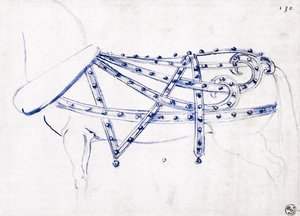
In the delicate dance of light and shadow captured within Nature studies (9), we encounter the profound genius of Giuseppe Arcimboldo, an artist who dared to reimagine the very fabric of reality. Created in 1575, this exquisite watercolor serves as a window into a period where the boundaries between the natural world and human perception were being vibrantly renegotiated. At first glance, the viewer is drawn to the striking realism of a bird perched with quiet grace upon what appears to be a human hand. The meticulous rendering of each feather—cascading in subtle gradations of black, deep brown, and ivory—speaks to a mastery of the medium that transcends mere observation, inviting us into a moment of stillness and intense focus.

The technique employed here is nothing short of masterful. Arcimboldo utilizes the luminous, translucent qualities of watercolor to achieve a depth that belies the medium's delicate nature. Through the careful application of thin, layered washes, he breathes life into the subject, creating a tactile sensation where one can almost feel the softness of the plumage and the warmth of the skin. This approach allows for a subtle tonal variation that captures the fleeting essence of light, a hallmark of the late Renaissance style that seeks to find the divine within the minute details of the earthly realm.

Symbolism and the Intellectual Landscape

Beyond its surface beauty, this work is steeped in the intellectual fervor of the High Renaissance. During this era, the study of nature was not merely a scientific endeavor but a philosophical one, deeply intertwined with Neo-Platonic ideals. The interaction between the avian subject and the human element symbolizes the profound connection between humanity and the natural order. In Arcimbulated's world, every organic form carries a weight of meaning; here, the bird represents the fleeting nature of life and the beauty of the wild, while the human presence acts as the observant, contemplating soul.

For the discerning collector or interior designer, this piece offers more than just visual splendor; it provides a narrative depth that can anchor a room with intellectual prestige. The composition’s ability to balance realism with a sense of wonder makes it an ideal centerpiece for spaces designed for reflection and conversation. It is a work that rewards repeated viewing, revealing new textures and subtle complexities each time the eye wanders across its surface.

An Enduring Legacy for Modern Spaces

To possess a reproduction of such a significant historical artifact is to bring a piece of the Habsburg Court's splendor into the contemporary home. Nature studies (9) embodies an era of discovery and the harmonious integration of disparate elements—a theme that remains strikingly relevant in our modern, interconnected world. The artwork’s neutral background and focused subject matter allow it to integrate seamlessly into various high-end decor styles, from classical European aesthetics to more minimalist, modern galleries.

Whether placed in a sunlit study or a sophisticated living area, this painting serves as an emotional anchor, evoking a sense of peace, curiosity, and timelessness. It is an invitation to slow down, to observe the intricate beauty of the world around us, and to appreciate the enduring legacy of an artist who saw the extraordinary within the ordinary.

Frågor och svar

Vilken konststil och vilken epok kan "Nature studies (9)" av Giuseppe Arcimboldo placeras i?

"Nature studies (9)" tillhör den Baroque rörelsen och dess skapare verkade under Renässansen-eran.

Var kan jag hitta en guide till "Nature studies (9)"?

Sidan Faktablad för elever för "Nature studies (9)" av Giuseppe Arcimboldo erbjuder ett utskrivbart faktablad på två sidor: konstverket med sin identitetstabell, en tidslinje som placerar det i konstnärens livstid, andra verk av konstnären, den mätta färgpaletten samt färdiga citatmallar i fyra olika stilar.

Var kan jag hitta konstverk som liknar "Nature studies (9)" av Giuseppe Arcimboldo?

Sidan Liknande verk för "Nature studies (9)" av Giuseppe Arcimboldo visar liknande konstverk.

More about this painting

Förhandsvisa Förhandsgranska i AR Byt till tryck Byt till digital bild Skicka
Visa detaljer Guide Lägg till i favoriter Ladda ner Liknande objekt Röntgen Bildspel Q&A Statistik

In numbers

  • 1575the year it was painted
  • 29frames to choose from
  • standard sizes, in its own proportions
  • 5weeks to paint and deliver it
Giuseppe Arcimboldo

Giuseppe Arcimboldo

1527 - 1593, Italien

Quick facts about Giuseppe Arcimboldo

  • Artistic Movement Or Style: Mannerism, Surrealism
  • Artists Or Movements Influenced By This Artist: ['Salvador Dalí']
  • Artists Who Influenced This Artist: ['Leonardoskolan']
  • Date Of Birth: 5 april 1527
  • Date Of Death: 11 juli 1593
  • Full Name: Giuseppe Arcimboldo
  • Nationality: Italienare
  • Notable Artworks:
    • De fyra årstiderna
    • Vertumnus
    • The Librarian
  • Place Of Birth: Milan, Italien

Konstnärsbiografi

A World Reimagined: The Enigmatic Art of Giuseppe Arcimboldo

Giuseppe Arcimboldo, a name that conjures images both whimsical and profoundly strange, remains one of the most singular figures in Renaissance art. Born in Milan in 1527, his career unfolded against the backdrop of a Europe steeped in intellectual ferment, religious upheaval, and an insatiable curiosity about the natural world. While initially recognized for more conventional works – frescoes adorning cathedrals and portraits adhering to established courtly standards – Arcimboldo’s enduring legacy rests upon a series of composite heads constructed entirely from meticulously arranged objects: fruits, vegetables, flowers, books, even musical instruments. These weren't mere playful exercises in visual trickery; they were complex allegories, imbued with symbolism that resonated deeply within the Renaissance worldview and continue to fascinate audiences today. His father, Biagio Arcimboldo, was an artist himself, providing young Giuseppe with early artistic training and likely influencing his initial foray into design work for stained glass windows and frescoes at Milan Cathedral beginning around 1549. This foundational experience honed his technical skill and eye for detail—qualities that would become hallmarks of his later, more unconventional creations.

Early Life and Artistic Training

Giuseppe Arcimboldo’s formative years were marked by exposure to the artistic traditions of Milanese Mannerism – a style characterized by elongated figures, distorted perspectives, and an emphasis on decorative ornamentation. His father, Biagio Arcimboldo, was a respected craftsman and designer, specializing in stained glass windows and architectural embellishments, transmitting invaluable knowledge about pigment preparation, glazing techniques, and sculptural modeling to his son. This early training instilled in Giuseppe a meticulous attention to detail and a profound understanding of visual illusion—skills that would prove crucial to the development of his groundbreaking artistic style. Beyond formal instruction, Arcimboldo’s father fostered an appreciation for humanist scholarship and philosophical inquiry, shaping his intellectual outlook and encouraging him to contemplate the relationship between art and knowledge.

Courtly Commissions and The Habsburg Influence

A pivotal moment in Arcimboldo's artistic trajectory arrived in 1562 when he was appointed court portraitist to Ferdinand I at the Habsburg court in Vienna. This appointment ushered in a period of prolific creativity and collaboration with successive Habsburg rulers – Maximilian II and Rudolf II – who recognized Arcimboldo’s exceptional talent and commissioned him for ambitious projects encompassing costume design, festival decorations, and the curation of imperial collections. The Habsburg court represented an epicenter of artistic innovation and intellectual discourse during the Renaissance, attracting artists from across Europe and fostering a climate conducive to experimentation. Arcimboldo skillfully navigated this complex environment, adapting his style to suit the tastes of his patrons while simultaneously pushing boundaries and challenging conventions. Rudolf II’s fascination with alchemy and esoteric sciences profoundly influenced Arcimboldo's artistic vision, prompting him to explore unconventional materials and techniques—a characteristic that distinguishes his oeuvre from more traditional portraiture.

The Birth of Composite Heads: A Revolutionary Technique

Arcimboldo’s signature achievement – the creation of composite heads – emerged not as a spontaneous whim but as a gradual evolution rooted in Renaissance artistic traditions. Artists like Andrea Mantegna had previously employed *trompe l'oeil* effects to deceive the eye and create illusions of depth, blurring the distinction between reality and representation. Arcimboldo skillfully synthesized these techniques with his mastery of sculptural modeling and decorative ornamentation, transforming ordinary objects – fruits, vegetables, flowers, books, musical instruments – into astonishingly realistic portraits. This innovative approach demanded an unparalleled level of technical skill and artistic imagination—a testament to Arcimboldo’s genius as a visual artist. The resulting images are not merely aesthetically pleasing; they serve as powerful allegories conveying complex ideas about identity, status, and the human condition.

Legacy and Influence: Surrealism's Unexpected Patron

Despite his considerable success during his lifetime, Arcimboldo’s artistic reputation waned in the decades following his death in 1593—largely due to neglect by art historians who initially dismissed his work as mere eccentricity. However, a resurgence of interest in Arcimboldo’s oeuvre occurred in the 20th century, fueled by the burgeoning Surrealist movement. Artists like Salvador Dalí recognized in Arcimboldo a kindred spirit – a visionary who dared to challenge conventional perceptions and explore the subconscious through unexpected juxtapositions of imagery. Dalí famously declared Arcimboldo “the father of Surrealism,” acknowledging his pioneering use of symbolism and illusion as precursors to the movement’s aesthetic principles. Arcimboldo's influence extended beyond Surrealism, inspiring artists across diverse disciplines—from printmaking to sculpture—to embrace unconventional materials and techniques and to reimagine the boundaries of artistic representation. Today, Giuseppe Arcimboldo is celebrated as a pivotal figure in art history – a precursor to Surrealism whose enduring vision continues to captivate audiences worldwide. His paintings are housed in prestigious museums such as the Kunsthistorisches Museum in Vienna and the Louvre in Paris—ensuring that his singular contribution to Renaissance art will endure for centuries to come.

Kortfakta

  • Notable elements or techniques: Composite heads; Object assemblage
  • Medium: Watercolor
  • Influences: Italian Renaissance
  • Year: 1575
  • Artistic style: Symbolic realism

Konstquiz

Det finns endast ett korrekt svar på varje fråga.

Fråga 1:
What is the primary subject matter of Giuseppe Arcimboldo's "Nature Studies (9)"?
Fråga 2:
In what historical period was Arcimboldo's "Nature Studies (9)" created?
Fråga 3:
What artistic technique is predominantly employed in this watercolor painting?
Fråga 4:
Where can viewers find Arcimboldo's "Nature Studies (9)"?
Fråga 5:
What symbolic significance does the inclusion of fruits and vegetables within Arcimboldo's composite head convey?