Visa i rummet
 Skicka
 Dela
Dela
 Detaljer
 Studentguide för konstverk

 Ladda ner
 Liknande objekt
 Röntgen
 Bildspel
 Besökstatistik
Luft
 Olja på duk
- Väggkonst
- Mannerist Style
 1566
1566- Tidigmodern tid
 74.0 x 56.0 cm
 Läs mer
Giclée / Konsttryck
Giclée- eller canvasprint av museumskvalitet med snabb produktion och flexibla ytbehandlingsalternativ. ( Köp handmålat konstverk Byt till digital bildförsäljning)




P118B Skr10

P118H Skr10

P118W Skr10

P438Z Skr10

P508JH Skr12

P508YH Skr12

P805H Skr10

P805Z Skr10

P919BZ Skr10

P919G Skr10

P919XJ Skr10

P959ZH Skr10

P968JZ Skr12

W106C Skr8

W218G Skr10

W218JH Skr8

W218Y Skr10

W307PJ Skr10

W316G Skr10

W316PJ Skr8

W316Y Skr10

W398PJ Skr8

W4111J Skr10

W500HY Skr15

W500JH Skr15

W692G Skr12

W849H Skr8

W940BG Skr15

W953PJ Skr8




Välj bland våra förinställda storlekar som motsvarar konstverkets ursprungliga proportioner.

Ange den bredd och höjd du behöver, för att passa din ram eller din vägg. Ett tryck kan endast beskäras, aldrig göras större än bilden, vilket innebär att ett format med en annan formform leder till att en del av bilden går förlorad. Vi skickar en digital mockup för godkännande innan vi trycker något. Bilden som visas på denna sida visar inte den faktiska beskärningen — det är endast mockuppen som gör det.
Leverans över hela världen () på 2 veckor istället för standard 4/5 veckor. (20 oktober)

Fri expressfrakt över hela världen

Högkvalitativ linnecanvas

Fullständig fraktförsäkring

Garantier för återbetalning av tullavgifter

Garantier för exakt färgåtergivning

100 dagars returrätt vid fabrikationsfel

100% pengarna tillbaka-garanti

Mängdrabatt erbjuds
 Glasalternativet är endast tillgängligt i storlekar under 110 cm.

Luft
Giclée / Konsttryck
Reproduktionsstorlek
-


Totalpris
Skr 787
Air – En Visionär Komposition av Natur och Form
Giuseppe Arcimboldo är en konstnär vars namn väcker bilder både bisarra och djupgående originella, och han förblir en av de mest självständiga figurerna inom renässanskonsten. Född 1527 i Milano, utvecklades hans karriär mot bakgrund av ett Europa präglat av intellektuellt skifte, religiös omvälvning och ett okuvligt nyfikenhet inför den naturliga världen. Medan han initialt erkännts för mer konventionella verk – fresker som dekorerade katedraler och porträtt som följde etablerade hofstandarder – Arcimboldos bestående arv ligger på en serie kompositöron konstruerade helt av noggrant arrangerade föremål: frukt, grönsaker, blommor, till och med musikinstrument. Dessa var inte bara lekfulla övningar i visuellt spratt – utan komplexa allegorier, fyllda med symbolik som resonerade djupt inom renässansens världsbild och fortsätter att fascinera publiken idag. Hans far, Biagio Arcimboldo, var själv konstnär och gav ungdomen en grund för kreativitet och teknisk skicklighet.Konststil och Teknik – Ett Fördjupat Ögonblick i Tid
Arcimboldo målade sina verk med ett extraordinärt fokus på detalj och samtidigt ett djärvt konceptuellt perspektiv. Han blandade noggrant observation med fantasifull uppfinningsrikedom, vilket är något som känns igen i den minutiösa återgivningen av varje fjädre och näbb samt i användningen av teknik där han lyckades skapa struktur och djup genom subtila nyansskillnader mellan varma bruna, guldfärger och olika pigment. Detta inkluderar särskilt användningen av olja på duk vilket möjliggjorde honom att skapa komplexa texturer och skapa ett visuellt intryck som överträffade många andra konstnärer från sin tid. Arcimboldo använde sig av tekniker som var mycket populära inom Mannerismen, där målartekniken fokuserade på att skapa illusioner av djup och realism genom användning av ljus och skugga samt genom komplexa perspektivtekniker. Detta är särskilt tydligt i ”Air”, där Arcimboldo använder sig av ett tekniskt briljant sätt att skapa en känsla av atmosfär och rörelse som få andra konstnärer lyckades åstadkomma.Historisk Kontext och Hofliv – Ett Spegelbild av Epokens Tankar
Arcimboldo blomstrade fram som hofkonstnär för Habsburgska imperiet under Ferdinand I, Maximilian II och Rudolf II. Hans verk var inte bara dekorativa utan också intellektuellt stimulerande och syftade till att stimulera och utmana den sofistikerade smaken hos den kejserliga hovet. ”Air”, tillsammans med hans andra elementära representationer (Jord, vatten, eld), tjänade sannolikt som allegoriska uttalanden som återspeglar renässansens humanistiska tankar och en fascination för den naturliga världen. Detta reflekterar också den tiden intresse för gåtor, symbolik och dold betydelse vilket är något som Arcimboldo förstod och förmådde förmedla till sina samtida genom sitt konstverk. Han var en pionjär inom sitt område och hans verk inspirerade många andra konstnärer att utforska nya kreativa vägar.Dekoder Symboliken – En Resa Till Djupare Meningar
Symboliken i ”Air” är rik på betydelse och erbjuder ett fascinerande perspektiv på Arcimboldos filosofi kring konst och natur. Fjädrarna har länge representerat frihet, själ och andlighet vilket är något som Arcimboldo förstod och förmådde förmedla till sina samtida genom sitt konstverk. Hans användning av fågelbilder för att skapa ett porträtt är ett exempel på detta komplexa språk där varje detalj har en betydelse bortom det ytliga. Den framträdande pavonen, tillsammans med andra fåglar i kompositionen, symboliserar majestät och prakt – egenskaper som Arcimboldo ville förmedla till sina kunder och publiken genom sitt konstverk. Detta är något som känns igen även idag när man studerar Arcimboldos verk och försöker förstå dess djupare meningar och estetiska kvaliteter. Verkets komplexa struktur och användning av ljus och skugga bidrar ytterligare till detta emotionella intryck vilket gör det till ett mästerverk inom både konsthistoria och psykologi.Frågor och svar
Var i Giuseppe Arcimboldos karriär placeras "Luft", med tanke på dess datum?
"Luft", skapat år 1566, tillhör den Mature Style av Giuseppe Arcimboldos karriär.
Var kan jag köpa en handmålad reproduktion av "Luft" av Giuseppe Arcimboldo?
Du kan beställa en handmålad reproduktion av "Luft" av Giuseppe Arcimboldo direkt på dess Handmålad reproduktion-sida: en handmålad oljereproduktion på linneväv, tillverkad efter beställning.
Använder "Luft" av Giuseppe Arcimboldo starka kontraster eller mjuka harmonier?
Färganalysen av "Luft" av Giuseppe Arcimboldo uppvisar en Mild kontrast och en Stark färgenhet harmoni.
Om konstnären
A World Reimagined: The Enigmatic Art of Giuseppe Arcimboldo
Giuseppe Arcimboldo, a name that conjures images both whimsical and profoundly strange, remains one of the most singular figures in Renaissance art. Born in Milan in 1527, his career unfolded against the backdrop of a Europe steeped in intellectual ferment, religious upheaval, and an insatiable curiosity about the natural world. While initially recognized for more conventional works – frescoes adorning cathedrals and portraits adhering to established courtly standards – Arcimboldo’s enduring legacy rests upon a series of composite heads constructed entirely from meticulously arranged objects: fruits, vegetables, flowers, books, even musical instruments. These weren't mere playful exercises in visual trickery; they were complex allegories, imbued with symbolism that resonated deeply within the Renaissance worldview and continue to fascinate audiences today. His father, Biagio Arcimboldo, was an artist himself, providing young Giuseppe with early artistic training and likely influencing his initial foray into design work for stained glass windows and frescoes at Milan Cathedral beginning around 1549. This foundational experience honed his technical skill and eye for detail—qualities that would become hallmarks of his later, more unconventional creations.Early Life and Artistic Training
Giuseppe Arcimboldo’s formative years were marked by exposure to the artistic traditions of Milanese Mannerism – a style characterized by elongated figures, distorted perspectives, and an emphasis on decorative ornamentation. His father, Biagio Arcimboldo, was a respected craftsman and designer, specializing in stained glass windows and architectural embellishments, transmitting invaluable knowledge about pigment preparation, glazing techniques, and sculptural modeling to his son. This early training instilled in Giuseppe a meticulous attention to detail and a profound understanding of visual illusion—skills that would prove crucial to the development of his groundbreaking artistic style. Beyond formal instruction, Arcimboldo’s father fostered an appreciation for humanist scholarship and philosophical inquiry, shaping his intellectual outlook and encouraging him to contemplate the relationship between art and knowledge.Courtly Commissions and The Habsburg Influence
A pivotal moment in Arcimboldo's artistic trajectory arrived in 1562 when he was appointed court portraitist to Ferdinand I at the Habsburg court in Vienna. This appointment ushered in a period of prolific creativity and collaboration with successive Habsburg rulers – Maximilian II and Rudolf II – who recognized Arcimboldo’s exceptional talent and commissioned him for ambitious projects encompassing costume design, festival decorations, and the curation of imperial collections. The Habsburg court represented an epicenter of artistic innovation and intellectual discourse during the Renaissance, attracting artists from across Europe and fostering a climate conducive to experimentation. Arcimboldo skillfully navigated this complex environment, adapting his style to suit the tastes of his patrons while simultaneously pushing boundaries and challenging conventions. Rudolf II’s fascination with alchemy and esoteric sciences profoundly influenced Arcimboldo's artistic vision, prompting him to explore unconventional materials and techniques—a characteristic that distinguishes his oeuvre from more traditional portraiture.The Birth of Composite Heads: A Revolutionary Technique
Arcimboldo’s signature achievement – the creation of composite heads – emerged not as a spontaneous whim but as a gradual evolution rooted in Renaissance artistic traditions. Artists like Andrea Mantegna had previously employed *trompe l'oeil* effects to deceive the eye and create illusions of depth, blurring the distinction between reality and representation. Arcimboldo skillfully synthesized these techniques with his mastery of sculptural modeling and decorative ornamentation, transforming ordinary objects – fruits, vegetables, flowers, books, musical instruments – into astonishingly realistic portraits. This innovative approach demanded an unparalleled level of technical skill and artistic imagination—a testament to Arcimboldo’s genius as a visual artist. The resulting images are not merely aesthetically pleasing; they serve as powerful allegories conveying complex ideas about identity, status, and the human condition.Legacy and Influence: Surrealism's Unexpected Patron
Despite his considerable success during his lifetime, Arcimboldo’s artistic reputation waned in the decades following his death in 1593—largely due to neglect by art historians who initially dismissed his work as mere eccentricity. However, a resurgence of interest in Arcimboldo’s oeuvre occurred in the 20th century, fueled by the burgeoning Surrealist movement. Artists like Salvador Dalí recognized in Arcimboldo a kindred spirit – a visionary who dared to challenge conventional perceptions and explore the subconscious through unexpected juxtapositions of imagery. Dalí famously declared Arcimboldo “the father of Surrealism,” acknowledging his pioneering use of symbolism and illusion as precursors to the movement’s aesthetic principles. Arcimboldo's influence extended beyond Surrealism, inspiring artists across diverse disciplines—from printmaking to sculpture—to embrace unconventional materials and techniques and to reimagine the boundaries of artistic representation. Today, Giuseppe Arcimboldo is celebrated as a pivotal figure in art history – a precursor to Surrealism whose enduring vision continues to captivate audiences worldwide. His paintings are housed in prestigious museums such as the Kunsthistorisches Museum in Vienna and the Louvre in Paris—ensuring that his singular contribution to Renaissance art will endure for centuries to come.
Giuseppe Arcimboldo
1527 - 1593 , Italien
Snabbfakta
- Artistic Movement Or Style: Mannerism, Surrealism
- Artists Or Movements Influenced By This Artist: ['Salvador Dalí']
- Artists Who Influenced This Artist: ['Leonardoskolan']
- Date Of Birth: 5 april 1527
- Date Of Death: 11 juli 1593
- Full Name: Giuseppe Arcimboldo
- Nationality: Italienare
- Notable Artworks:
- De fyra årstiderna
- Vertumnus
- The Librarian
- Place Of Birth: Milan, Italien
Relaterade artiklar

Kandinskys 25 Mästerverk: En Färgstark Resa i Abstrakt Konst | OriginalUniqueArt
Utforska Wassily Kandinskys 25 mest ikoniska verk – från expressionism till abstrakt konst. Lär känna historien bakom mästerverken och hitta inspiration för din heminredning med OriginalUniqueArt.com. Upptäck hela samlingen online!

John Gould: A Life Immersed in Avian Illustration – Biodiversity, Scientific Precision, and Artistic Legacy
Explore the life & legacy of John Gould, pioneering ornithologist & artist. Discover his stunning bird illustrations, the impact of chromolithography, and investment opportunities for collectors. Learn more now!
The Eloquence of Arrangement: Compositional Strategies in Western Art from the Renaissance to Modernism
Explore the evolution of compositional strategies in Western art! Discover how masters like Raphael & Zurbaran used perspective, proportion, and dynamic arrangement to create timeless masterpieces. Enhance your art appreciation today!
Feathered Visions: A Historical & Artistic Exploration of Birds in Painting
Explore the rich history of birds in painting! Discover symbolism, artistic movements & master artists like Audubon. High-quality reproductions available at OriginalUniqueArt.
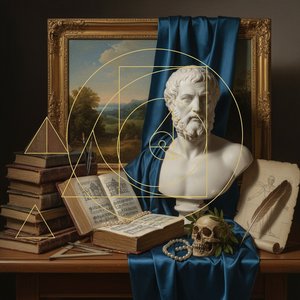
The Eloquence of Arrangement: Exploring Compositional Strategies in Western Art
Explore the evolution of compositional strategies in Western art from the Renaissance to Modernism. Discover how masters like Raphael & Zurbaran used perspective, proportion, and dynamic arrangement to create timeless masterpieces. Enhance your art appreciation today!