

 Förhandsvisa
 Skicka
 Dela
Dela
 Visa detaljer

 Ladda ner
 Liknande objekt
 Röntgen
 Bildspel
Piazza San Marco
 Oil On Canvas
- WallArt
- Baroque
 1730
1730 68.0 x 112.0 cm
 Metropolitan Museum of Art
 Visa mer
Handgjord oljereproduktion
Handmålad olja på duk i din valda storlek och ram, tillverkad efter beställning av våra konstnärer. ( Beställ tryck Köp högupplöst bild)




P118B $10

P118H $10

P118W $10

P438Z $10

P508JH $12

P508YH $12

P805H $10

P805Z $10

P919BZ $10

P919G $10

P919XJ $10

P959ZH $10

P968JZ $12

W106C $8

W218G $10

W218JH $8

W218Y $10

W307PJ $10

W316G $10

W316PJ $8

W316Y $10

W398PJ $8

W4111J $10

W500HY $15

W500JH $15

W692G $12

W849H $8

W940BG $15

W953PJ $8




Välj bland våra förinställda storlekar som motsvarar konstverkets ursprungliga proportioner.

Du kan ange egna mått för att passa en specifik ram eller yta. Om den valda storleken inte matchar originalbildens proportioner kommer vi antingen att beskära konstverket eller utöka målningen med ytterligare handmålade element. En digital skiss skickas till dig för godkännande innan produktionen påbörjas.
Observera att förhandsvisningen på skärmen inte återspeglar den faktiska beskärningen eller utökningen. Endast skissen visar den slutgiltiga kompositionen korrekt.
Även om anpassade storlekar är möjliga, rekommenderar vi att du väljer en dimension från den fördefinierade listan för att bevara originalproportionerna.
Efter beställning kommer OriginalUniqueArt.com team att mejla kunden för instruktioner och tillhandahålla en skissförhandsvisning
Leverans över hela världen () på 3–4 veckor istället för standard 5 veckor. (22 augusti). Inga kompromisser med kvaliteten.

Fri expressfrakt över hela världen

Högkvalitativ linnecanvas

Fullständig fraktförsäkring

Garantier för återbetalning av tullavgifter

Garantier för exakt färgåtergivning

60 dagars returrätt (endast vid fabrikationsfel)

100% pengarna tillbaka-garanti

Mängdrabatt erbjuds
 Glasalternativet är endast tillgängligt i storlekar under 110 cm.

Piazza San Marco
Reproduktionsmedium
Storlek på reproduktion
-


Slutgiltigt pris
$ 475
Beskrivning av konstverket
Piazza San Marco: A Venetian Masterpiece
The Piazza San Marco in Venice stands as an enduring testament to artistic vision and cultural grandeur—a fact eloquently captured by Giovanni Antonio Canaletto’s monumental oil painting, completed in 1730. More than just a depiction of a public space, this artwork embodies the spirit of Baroque realism, skillfully blending meticulous observation with idealized beauty to transport viewers back to the vibrant heart of Renaissance Venice.- Subject Matter: Canaletto’s canvas pulsates with life—a panorama of St Mark's Square teeming with citizens, merchants, and clergy. Dominating the scene are the iconic St Mark’s Basilica and the Campanile, rendered in breathtaking detail against a backdrop of azure sky and shimmering water reflecting the midday sun.
- Style & Technique: Canaletto adhered to the Baroque tradition's commitment to realism while subtly elevating its aesthetic qualities. Employing linear perspective—a technique pioneered by Filippo Brunelleschi—he draws the eye inward, creating a profound sense of depth and spatial illusion. The artist’s masterful brushwork contributes to textured surfaces that convey both solidity and luminosity.
- Historical Context: Created during Canaletto's prolific period in England, this painting reflects the fascination with Venetian culture prevalent among European elites. It served as a visual chronicle of Venice’s position as a leading commercial power and artistic center—a legacy that continues to inspire admiration today.
Color Palette & Composition
The artist's color palette is deliberately restrained, prioritizing muted earth tones—ochres, browns, and creams—to establish a harmonious tonal foundation. However, splashes of gold adorn the Basilica’s dome, symbolizing divine splendor and reinforcing its spiritual significance. Furthermore, subtle variations in hue capture the atmospheric effects of an overcast day, enhancing the painting's emotional resonance. The symmetrical composition underscores the Piazza’s formal elegance and reinforces its role as a locus of civic pride.Symbolism & Artistic Innovation
Beyond its visual splendor, Canaletto’s work carries symbolic weight—representing Venice’s wealth, power, and cultural heritage. Notably, his pioneering use of atmospheric perspective anticipates Impressionist principles, demonstrating an uncanny ability to convey mood and emotion through nuanced tonal gradations. The artist's meticulous attention to detail—capturing the textures of fabrics, architectural ornamentation, and human faces—elevates Canaletto’s oeuvre beyond mere topographical representation.Emotional Impact & Legacy
Viewing Canaletto’s Piazza San Marco is akin to stepping back in time—experiencing a moment frozen in Venetian history. The painting's luminous quality evokes feelings of serenity and grandeur, transporting the viewer into the bustling heart of one of Europe’s most celebrated cities. Canaletto’s enduring influence on subsequent generations of artists testifies to his mastery of technique and his profound understanding of how art can communicate emotion—a legacy that continues to captivate audiences worldwide.Konstnärsbiografi
Giovanni Antonio Canal: The Master of Venetian Light
Giovanni Antonio Canal, universally known as Canaletto, was born in Venice on October 18, 1697, into a family deeply rooted in the world of visual arts. His father, Bernardo Canal, was a skilled painter specializing in theatrical scene settings – a profession that instilled in young Giovanni an early appreciation for composition, perspective, and the art of capturing fleeting moments. Artemisia Barbieri, his mother, further nurtured his artistic sensibilities, providing him with a foundation in technique and observation. Canaletto’s formative years were thus spent immersed in the vibrant atmosphere of Venetian artistry, laying the groundwork for his future success as one of the most celebrated veduta painters of the 18th century.
His early training wasn't solely within the family workshop; Canaletto sought experience beyond Venice. In 1718, he embarked on a significant journey to Rome, where he found employment assisting his father in creating backdrops for two operas staged by Alessandro Scarlatti. This period proved invaluable, exposing him to the grandeur of Roman architecture and the theatrical demands of stage design – experiences that profoundly shaped his artistic vision and honed his ability to render complex spatial relationships with remarkable accuracy.
The Rise of a Venetian Master
Upon returning to Venice in 1720, Canaletto swiftly established himself as a respected artist. Initially, he focused on producing commissioned works for wealthy patrons – portraits, interiors, and decorative panels that showcased his burgeoning talent. However, it was his fascination with the city itself—its intricate canals, bustling markets, and magnificent palaces—that truly ignited his artistic passion. He began to specialize in *vedute*, Italian term for "views," meticulously documenting Venice’s urban landscape with an unprecedented level of detail and realism.
Canaletto's approach was revolutionary. Unlike earlier artists who often idealized their subjects, Canaletto sought to capture the city as it truly existed—warts and all. He employed a systematic method, beginning with extensive preparatory drawings that captured every nuance of perspective, light, and shadow. These detailed sketches served as the foundation for his finished paintings, ensuring remarkable accuracy and a palpable sense of authenticity. He was also known to use a camera obscura – a device that projected an image of the outside world onto a surface – to aid in achieving precise topographical details, though he always prioritized compositional design above all else.
Collaborations and Artistic Influence
Canaletto’s career flourished through collaborations with other talented artists. Notably, his nephew, Bernardo Bellotto, became an accomplished landscape painter in his own right, often working alongside Canaletto and adopting a similar style. Their partnership produced numerous stunning views of Venice, showcasing the evolving cityscape and reflecting the artistic sensibilities of both men. The rivalry between them was also notable; they competed for commissions and sought to establish their individual reputations within the Venetian art world.
Canaletto’s influence extended far beyond Venice. In 1746, he traveled to England, invited by wealthy collectors eager to acquire his unique style. His paintings of London—including views of Buckingham Palace, St. Paul's Cathedral, and the Tower of London—became immensely popular, establishing him as a leading figure in European art. The British merchant Joseph “Consul” Smith played a pivotal role in this success, recognizing Canaletto’s talent and securing royal patronage for his work. King George III acquired a significant collection of Canaletto's paintings, further elevating the artist’s status and ensuring his works were widely exhibited throughout England.
Legacy and Enduring Appeal
Canaletto died in Venice on April 19, 1768, leaving behind a remarkable body of work that continues to captivate audiences today. His paintings offer an invaluable glimpse into the vibrant life of 18th-century Venice—a city teeming with commerce, culture, and artistic innovation. His meticulous attention to detail, masterful use of light and shadow, and unwavering commitment to realism have earned him a place among the greatest veduta painters in history.
Canaletto’s legacy is reflected in the numerous museums that house his works—including the National Gallery in London, where his paintings are celebrated for their beauty and historical significance. His influence can also be seen in the work of countless artists who followed in his footsteps, solidifying his position as a true master of Venetian art.
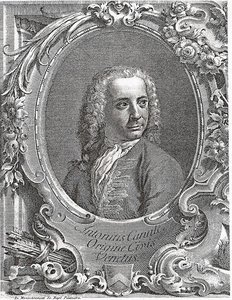
Canaletto
1697 - 1768 , Italien
Kortfakta
- Artistic Movement Or Style: Vedute Venedig
- Artists Or Movements Influenced By This Artist: ['Giovanni Paolo Pannini']
- Artists Who Influenced This Artist: ['Bernardo Canal']
- Date Of Birth: 18 okt 1697
- Date Of Death: 19 apr 1768
- Full Name: Giovanni Antonio Canal
- Nationality: Italiensk
- Notable Artworks:
- Stenläggarens verkstad
- Regatta på Grand Canal
- Eton College
- Place Of Birth: Venedig, Italien
Relaterade artiklar

Giovanni Antonio Canal (Canaletto): A Venetian Master of Light, Space & Societal Observation
Explore the life & art of Giovanni Antonio Canal (Canaletto), a Venetian master renowned for his breathtaking cityscapes. Discover his techniques, legacy, and captivating depictions of 18th-century Venice & London.

Jacopo Tintorettos 25 Mästerverk: Drama, Ljus och Renässansens Storhet – Konst för Ditt Hem
Utforska Jacopo Tintorettos 25 mest ikoniska målningar – en resa genom venetiansk renässans och dramatiskt ljusspel. Upptäck historierna bakom mästerverken och finn inspiration till din inredning med konsttryck av högsta kvalitet på OriginalUniqueArt.com.

Pietro Longhi's Venetian Scenes: A Study of Rococo Society & Domestic Life
Explore the captivating world of Pietro Longhi's Venetian scenes! Discover insightful analysis of his Rococo masterpieces & social commentary on 18th-century life. Learn about this 'Venetian Hogarth' and his lasting artistic legacy.

Michelangelo Morlaiter: Venetian Landscapes & the Pursuit of Atmospheric Realism
Explore the captivating landscapes of Michelangelo Morlaiter, a key figure in 18th-century Venetian painting. Discover his mastery of atmospheric perspective and lasting influence on Italian art history. Learn more at OriginalUniqueArt.

Francesco Guardi: Venetian Light, Atmospheric Perspective & the Rococo to Neoclassical Transition
Explore the captivating world of Francesco Guardi, master of Venetian light and atmosphere. Discover his transition from Rococo to Neoclassicism, influence on Impressionism & investment potential with OriginalUniqueArt.



