
 Skicka
 Dela
Dela
 Visa detaljer
 Guide
Guide

 Ladda ner
 Liknande objekt
 Bildspel
 Q&A
Q&A Statistik
Camera obscura


 Visa mer
Giclée / Konsttryck
Giclée- eller canvasprint av museumskvalitet med snabb produktion och flexibla ytbehandlingsalternativ. ( Beställ handmålad reproduktion Byt till digital bild)




































Välj bland våra förinställda storlekar som motsvarar konstverkets ursprungliga proportioner.

Ange den bredd och höjd du behöver för att passa din ram eller vägg. Ett tryck kan endast beskäras, aldrig göras större än originalbilden, vilket innebär att ett format med en annan proportion leder till att en del av bilden går förlorad. Vi skickar en digital mockup för godkännande innan vi påbörjar tryckningen. Bilden som visas på denna sida visar inte den faktiska beskärningen — det är endast mockuppen som gör det.
Leverans över hela världen () på 2 veckor istället för standard 4/5 veckor. (2 november)

Fri expressfrakt över hela världen

Högkvalitativ linnecanvas

Fullständig fraktförsäkring

Garantier för återbetalning av tullavgifter

Garantier för exakt färgåtergivning

100 dagars returrätt (endast vid fel)

100% pengarna tillbaka-garanti

Mängdrabatt erbjuds
 Glasalternativet är endast tillgängligt i storlekar under 110 cm.

Camera obscura
Giclée / Konsttryck
Storlek på reproduktion
-


Slutgiltigt pris
Skr 803
Canaletto's Intimate Glimpse: The Camera Obscura
Giovanni Antonio Canal, better known as Canaletto, was a master of observation, a chronicler of Venice and its surrounding landscapes with an unparalleled eye for detail. This remarkable painting, depicting a camera obscura – a device he himself possessed and meticulously documented – offers a rare and intimate window into the artist’s creative process and the burgeoning science of optics in the early 18th century. The image, currently housed within the Museo Correr in Venice, isn't merely a representation of a scientific instrument; it’s a testament to Canaletto’s intellectual curiosity and his pioneering approach to landscape painting.
- The Mechanics of Vision: The camera obscura, essentially a darkened room with a pinhole lens, projected an inverted image of the outside world onto its walls. Canaletto's depiction captures this phenomenon precisely – a wooden box constructed with a glass front, meticulously arranged to capture and display this ethereal projection.
- A Tool for Observation: Canaletto utilized the camera obscura not just as a scientific curiosity but as an invaluable tool for his artistic practice. It allowed him to study light, shadow, perspective, and composition before committing them to canvas, resulting in the remarkably accurate and detailed renderings that define his style.
- Historical Context: Created around 1700, this painting reflects a period of intense scientific inquiry into optics and visual perception. The camera obscura was gaining popularity among artists and scientists alike, offering a new method for understanding and replicating the natural world.
Canaletto’s Topographical Style & Artistic Technique
Canaletto's artistic style is immediately recognizable – characterized by its meticulous detail, precise perspective, and atmospheric clarity. This particular depiction of the camera obscura exemplifies his mastery of topographical painting, a genre he essentially invented. The artist employed a technique of layering thin glazes of oil paint, building up color gradually to achieve remarkable luminosity and depth. Note the subtle gradations in tone, particularly within the wooden construction of the device itself, demonstrating Canaletto’s painstaking attention to texture and form. The inverted projection is rendered with astonishing accuracy, showcasing his keen observational skills and his ability to translate three-dimensional reality onto a two-dimensional surface.
- Oil on Panel: The artwork is executed in oil paint on a wooden panel, a common medium for Canaletto’s work during this period.
- Layered Glazes: The use of numerous thin layers of translucent paint creates a rich and luminous effect, characteristic of Canaletto's style.
- Precise Perspective: The meticulous rendering of perspective demonstrates Canaletto’s mastery of linear perspective, a key element in creating the illusion of depth and realism.
Symbolism & Emotional Resonance
Beyond its technical brilliance, the painting carries symbolic weight. It represents not just a scientific instrument but also the artist's relentless pursuit of knowledge and his desire to capture the beauty and complexity of the world around him. The camera obscura itself can be interpreted as a metaphor for artistic creation – a device that transforms an external reality into an internal representation. The image evokes a sense of quiet contemplation, inviting viewers to consider the fundamental principles of vision and the creative process. Canaletto’s work consistently conveys a feeling of serene order and intellectual curiosity, reflecting his deep connection to Venice and its rich cultural heritage.
A Legacy of Observation
This reproduction offers an exceptional opportunity to own a piece of art history – a tangible link to one of the most celebrated topographical painters of all time. Whether you are an art collector seeking to expand your collection, an interior designer looking for a unique and historically significant artwork to adorn your space, or simply someone captivated by Canaletto’s genius, this painting provides a profound connection to the artist's world and his remarkable ability to capture the essence of Venice.
Frågor och svar
Vad rekommenderas för användning av "Camera obscura" av Canaletto?
Det rekommenderade användningsområdet för "Camera obscura" av Canaletto är Accent. Den kan även användas till andra ändamål.
Tillåter upphovsrätten för "Camera obscura" av Canaletto reproduktioner?
Originalverket "Camera obscura" finns på Museo Correr och verket är allmän egendom – upphovsrätten har löpt ut.
Vem har skapat "Camera obscura" och i vilken stil är den utförd?
Bakom "Camera obscura" står Canaletto och Baroque topographical painting-rörelsen.
Konstnärsbiografi
Giovanni Antonio Canal: The Master of Venetian Light
Giovanni Antonio Canal, universally known as Canaletto, was born in Venice on October 18, 1697, into a family deeply rooted in the world of visual arts. His father, Bernardo Canal, was a skilled painter specializing in theatrical scene settings – a profession that instilled in young Giovanni an early appreciation for composition, perspective, and the art of capturing fleeting moments. Artemisia Barbieri, his mother, further nurtured his artistic sensibilities, providing him with a foundation in technique and observation. Canaletto’s formative years were thus spent immersed in the vibrant atmosphere of Venetian artistry, laying the groundwork for his future success as one of the most celebrated veduta painters of the 18th century.
His early training wasn't solely within the family workshop; Canaletto sought experience beyond Venice. In 1718, he embarked on a significant journey to Rome, where he found employment assisting his father in creating backdrops for two operas staged by Alessandro Scarlatti. This period proved invaluable, exposing him to the grandeur of Roman architecture and the theatrical demands of stage design – experiences that profoundly shaped his artistic vision and honed his ability to render complex spatial relationships with remarkable accuracy.
The Rise of a Venetian Master
Upon returning to Venice in 1720, Canaletto swiftly established himself as a respected artist. Initially, he focused on producing commissioned works for wealthy patrons – portraits, interiors, and decorative panels that showcased his burgeoning talent. However, it was his fascination with the city itself—its intricate canals, bustling markets, and magnificent palaces—that truly ignited his artistic passion. He began to specialize in *vedute*, Italian term for "views," meticulously documenting Venice’s urban landscape with an unprecedented level of detail and realism.
Canaletto's approach was revolutionary. Unlike earlier artists who often idealized their subjects, Canaletto sought to capture the city as it truly existed—warts and all. He employed a systematic method, beginning with extensive preparatory drawings that captured every nuance of perspective, light, and shadow. These detailed sketches served as the foundation for his finished paintings, ensuring remarkable accuracy and a palpable sense of authenticity. He was also known to use a camera obscura – a device that projected an image of the outside world onto a surface – to aid in achieving precise topographical details, though he always prioritized compositional design above all else.
Collaborations and Artistic Influence
Canaletto’s career flourished through collaborations with other talented artists. Notably, his nephew, Bernardo Bellotto, became an accomplished landscape painter in his own right, often working alongside Canaletto and adopting a similar style. Their partnership produced numerous stunning views of Venice, showcasing the evolving cityscape and reflecting the artistic sensibilities of both men. The rivalry between them was also notable; they competed for commissions and sought to establish their individual reputations within the Venetian art world.
Canaletto’s influence extended far beyond Venice. In 1746, he traveled to England, invited by wealthy collectors eager to acquire his unique style. His paintings of London—including views of Buckingham Palace, St. Paul's Cathedral, and the Tower of London—became immensely popular, establishing him as a leading figure in European art. The British merchant Joseph “Consul” Smith played a pivotal role in this success, recognizing Canaletto’s talent and securing royal patronage for his work. King George III acquired a significant collection of Canaletto's paintings, further elevating the artist’s status and ensuring his works were widely exhibited throughout England.
Legacy and Enduring Appeal
Canaletto died in Venice on April 19, 1768, leaving behind a remarkable body of work that continues to captivate audiences today. His paintings offer an invaluable glimpse into the vibrant life of 18th-century Venice—a city teeming with commerce, culture, and artistic innovation. His meticulous attention to detail, masterful use of light and shadow, and unwavering commitment to realism have earned him a place among the greatest veduta painters in history.
Canaletto’s legacy is reflected in the numerous museums that house his works—including the National Gallery in London, where his paintings are celebrated for their beauty and historical significance. His influence can also be seen in the work of countless artists who followed in his footsteps, solidifying his position as a true master of Venetian art.
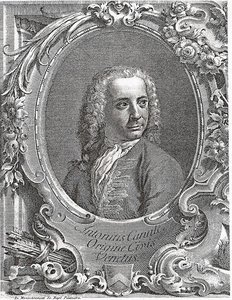
Canaletto
1697 - 1768 , Italien
Kortfakta
- Artistic Movement Or Style: Vedute Venedig
- Artists Or Movements Influenced By This Artist: ['Giovanni Paolo Pannini']
- Artists Who Influenced This Artist: ['Bernardo Canal']
- Date Of Birth: 18 okt 1697
- Date Of Death: 19 apr 1768
- Full Name: Giovanni Antonio Canal
- Nationality: Italiensk
- Notable Artworks:
- Stenläggarens verkstad
- Regatta på Grand Canal
- Eton College
- Place Of Birth: Venedig, Italien
Relaterade artiklar

Pietro Longhi's Venetian Scenes: A Study of Rococo Society & Domestic Life
Explore the captivating world of Pietro Longhi's Venetian scenes! Discover insightful analysis of his Rococo masterpieces & social commentary on 18th-century life. Learn about this 'Venetian Hogarth' and his lasting artistic legacy.

Barockens dramatik: Att föra prakt och känsla in i samtida interiörer
Upptäck barockens dramatik och lyx! Lär dig hur du integrerar denna klassiska stil i ditt hem med våra experttips och inspirerande exempel. Skapa en palatskänsla idag!

The Dramatic Flourish: Exploring the Baroque Movement's Enduring Legacy in Art History
Explore the dramatic world of Baroque art! Discover iconic artists like Caravaggio & Rubens, defining techniques, and its lasting impact on art history. Expert insights for collectors & enthusiasts at OriginalUniqueArt.

Jacopo Tintorettos 25 Mästerverk: Drama, Ljus och Renässansens Storhet – Konst för Ditt Hem
Utforska Jacopo Tintorettos 25 mest ikoniska målningar – en resa genom venetiansk renässans och dramatiskt ljusspel. Upptäck historierna bakom mästerverken och finn inspiration till din inredning med konsttryck av högsta kvalitet på OriginalUniqueArt.com.

Giovanni Antonio Canal (Canaletto): A Venetian Master of Light, Space & Societal Observation
Explore the life & art of Giovanni Antonio Canal (Canaletto), a Venetian master renowned for his breathtaking cityscapes. Discover his techniques, legacy, and captivating depictions of 18th-century Venice & London.


