

 Visa i rummet
 Skicka
 Dela
Dela
 Detaljer
 Guide
Guide

 Ladda ner
 Liknande objekt
 Röntgen
 Bildspel
 Besökstatistik
Camera obscura


 Läs mer
Köp en högupplöst, förbättrad digital bild med betydligt högre kvalitet än förhandsvisningen online.
Varje fil är noggrant förberedd av våra interna specialister med hjälp av avancerade verktyg och professionell manuell retuschering. Vi säkerställer att varje bild har exceptionell skärpa, exakt färgåtergivning och fina detaljer.
Den slutgiltiga filen levereras via e-post inom 72 timmar, optimerad för omedelbar användning i professionella sammanhang, redaktionellt bruk och tryckmiljöer. Detta är samma kvalitet som med förtroende används av ledande designstudior, förlag och gallerier.
Digital bild
Ladda ner en högupplöst fil för personlig visning, utskrift och kreativa projekt. ( Byt till tryckta exemplar Köp handmålat konstverk)
Ingår i varje beställning av digital bild
Professionell digital leverans, garanterad
När du väljer OriginalUniqueArt.com får du inte bara en bild – du får ett professionellt förädlat digitalt konstverk, skapat med precision och med en garanterad tillfredsställelse. Här är allt som ingår i din beställning, automatiskt:

Snabb leverans via e-post
Din högupplösta digitala bild skickas till dig via e-post inom 72 timmar efter beställning – redo för omedelbar användning.

AI-förbättrad digital fil
Ditt konstverk optimeras professionellt med hjälp av avancerade AI-verktyg och manuell redigering, vilket garanterar maximal detaljrikedom, skärpa och färgnoggrannhet.

Gratis livstidsåterutskick
Har du råkat radera eller tappa bort din fil? Ingen oro – vi skickar den kostnadsfritt till dig när som helst.

Inga importavgifter – någonsin
Njut av ditt konstverk omedelbart utan tull, importavgifter eller leveranskostnader – digitala nedladdningar är alltid skattefria.

Garanterad färgåtergivning
Vi säkerställer att din digitala bild återger de ursprungliga färgerna så exakt som möjligt med hjälp av professionella verktyg och färghantering.

100 dagars nöjdhetsgaranti
Om du inte är nöjd med din digitala bild kommer vi att revidera den eller återbetala 100% inom 100 dagar – utan frågor.

100% pengarna-tillbaka-garanti
Inte nöjd? Få full återbetalning inom 100 dagar efter att du mottagit din digitala fil – utan frågor.

Rabatt vid storköp
Köp 3 bilder, spara 10% – Köp 5, spara 15% – Köp 10+, spara 20%. Perfekt för kreativa projekt, gallerier och byråer.
A Sculptural Echo of Light and Vision
Canaletto’s “Camera Obscura,” a meticulously crafted wooden device dating back to around 1700, isn't merely a reproduction; it’s a tangible embodiment of the revolutionary vision that shaped his artistic practice. This intimate sculpture, presented against a stark black backdrop, immediately draws the eye, inviting us into a world where light and shadow dance in harmonious collaboration. The piece speaks volumes about Canaletto’s innovative approach to capturing reality – an approach deeply rooted in observation and a fascination with the mechanics of vision itself. The geometric precision of the boxy structure, constructed from carefully joined wooden panels, suggests both the artist's meticulousness and a profound understanding of spatial relationships. It’s not simply a representation of a camera obscura; it *is* the camera obscura, distilled into its essential form.
- Material & Construction: The use of wood – likely stained or varnished to preserve its beauty – speaks to Canaletto's appreciation for tactile quality and enduring craftsmanship. The intricate joinery hints at a deliberate process, reflecting the artist’s careful attention to detail.
- Form & Composition: The vertical orientation emphasizes the height and solidity of the device, creating a sense of direct engagement with the viewer. Lines dominate – sharp, clean lines defining the boxy structure, contrasting with the subtle texture of the wood grain.
- Symbolic Weight: The camera obscura itself represents a pivotal moment in art history—a precursor to photography and a testament to Canaletto’s pioneering spirit. It embodies the pursuit of accurate representation, challenging traditional methods and opening new avenues for artistic expression.
Unlocking the Secrets of Early Photography
Canaletto's fascination with the camera obscura wasn't simply an aesthetic curiosity; it was a deeply practical investigation into how light and shadow create images. The inscription on the device – “A Camera Obscura” – provides a crucial clue, revealing that this object belonged to the Venetian master himself. This discovery dramatically shifts our understanding of Canaletto’s process: he didn't just paint what he saw; he actively *observed* how light transformed his surroundings into visual forms. Research suggests that Canaletto utilized the camera obscura as a tool for sketching, meticulously documenting architectural details and urban landscapes with unprecedented accuracy. The device allowed him to capture perspective and spatial relationships with remarkable precision – a skill that profoundly influenced his later paintings.
Historical Context:The invention of the camera obscura in the 16th century marked a watershed moment in art history. Initially used as a scientific instrument for astronomical observation, it quickly gained popularity among artists seeking to improve their draftsmanship and understand perspective. Canaletto’s embrace of this technology demonstrates his commitment to innovation and his desire to push the boundaries of artistic representation.
A Window into Venice: The Artist's Process
The “Camera Obscura” offers a rare glimpse into Canaletto’s working methods. It’s believed that he used this device not just for sketching, but also as a means of studying light and shadow—analyzing how they interacted with buildings and streets to create the illusion of depth and volume. The resulting drawings were then translated into his celebrated paintings, imbuing them with an extraordinary sense of realism and atmospheric detail. The meticulousness evident in the camera obscura’s construction mirrors the painstaking care Canaletto invested in every brushstroke of his finished works. It's a testament to his dedication to capturing not just appearances, but also the very essence of Venice.
Recreating a Masterpiece: A Reproduction for Today
Reproducing Canaletto’s “Camera Obscura” is more than simply creating a copy; it’s about preserving a vital piece of art history and celebrating the ingenuity of one of Venice's greatest artists. The resulting reproduction captures not only the physical form of the device but also its symbolic significance—a reminder of the enduring power of observation, innovation, and the pursuit of accurate representation. This meticulously crafted replica serves as a tangible link to the 18th century, inviting viewers to contemplate the origins of photography and appreciate Canaletto’s pioneering legacy.
Konstnärsbiografi
Giovanni Antonio Canal: The Master of Venetian Light
Giovanni Antonio Canal, universally known as Canaletto, was born in Venice on October 18, 1697, into a family deeply rooted in the world of visual arts. His father, Bernardo Canal, was a skilled painter specializing in theatrical scene settings – a profession that instilled in young Giovanni an early appreciation for composition, perspective, and the art of capturing fleeting moments. Artemisia Barbieri, his mother, further nurtured his artistic sensibilities, providing him with a foundation in technique and observation. Canaletto’s formative years were thus spent immersed in the vibrant atmosphere of Venetian artistry, laying the groundwork for his future success as one of the most celebrated veduta painters of the 18th century.
His early training wasn't solely within the family workshop; Canaletto sought experience beyond Venice. In 1718, he embarked on a significant journey to Rome, where he found employment assisting his father in creating backdrops for two operas staged by Alessandro Scarlatti. This period proved invaluable, exposing him to the grandeur of Roman architecture and the theatrical demands of stage design – experiences that profoundly shaped his artistic vision and honed his ability to render complex spatial relationships with remarkable accuracy.
The Rise of a Venetian Master
Upon returning to Venice in 1720, Canaletto swiftly established himself as a respected artist. Initially, he focused on producing commissioned works for wealthy patrons – portraits, interiors, and decorative panels that showcased his burgeoning talent. However, it was his fascination with the city itself—its intricate canals, bustling markets, and magnificent palaces—that truly ignited his artistic passion. He began to specialize in *vedute*, Italian term for "views," meticulously documenting Venice’s urban landscape with an unprecedented level of detail and realism.
Canaletto's approach was revolutionary. Unlike earlier artists who often idealized their subjects, Canaletto sought to capture the city as it truly existed—warts and all. He employed a systematic method, beginning with extensive preparatory drawings that captured every nuance of perspective, light, and shadow. These detailed sketches served as the foundation for his finished paintings, ensuring remarkable accuracy and a palpable sense of authenticity. He was also known to use a camera obscura – a device that projected an image of the outside world onto a surface – to aid in achieving precise topographical details, though he always prioritized compositional design above all else.
Collaborations and Artistic Influence
Canaletto’s career flourished through collaborations with other talented artists. Notably, his nephew, Bernardo Bellotto, became an accomplished landscape painter in his own right, often working alongside Canaletto and adopting a similar style. Their partnership produced numerous stunning views of Venice, showcasing the evolving cityscape and reflecting the artistic sensibilities of both men. The rivalry between them was also notable; they competed for commissions and sought to establish their individual reputations within the Venetian art world.
Canaletto’s influence extended far beyond Venice. In 1746, he traveled to England, invited by wealthy collectors eager to acquire his unique style. His paintings of London—including views of Buckingham Palace, St. Paul's Cathedral, and the Tower of London—became immensely popular, establishing him as a leading figure in European art. The British merchant Joseph “Consul” Smith played a pivotal role in this success, recognizing Canaletto’s talent and securing royal patronage for his work. King George III acquired a significant collection of Canaletto's paintings, further elevating the artist’s status and ensuring his works were widely exhibited throughout England.
Legacy and Enduring Appeal
Canaletto died in Venice on April 19, 1768, leaving behind a remarkable body of work that continues to captivate audiences today. His paintings offer an invaluable glimpse into the vibrant life of 18th-century Venice—a city teeming with commerce, culture, and artistic innovation. His meticulous attention to detail, masterful use of light and shadow, and unwavering commitment to realism have earned him a place among the greatest veduta painters in history.
Canaletto’s legacy is reflected in the numerous museums that house his works—including the National Gallery in London, where his paintings are celebrated for their beauty and historical significance. His influence can also be seen in the work of countless artists who followed in his footsteps, solidifying his position as a true master of Venetian art.
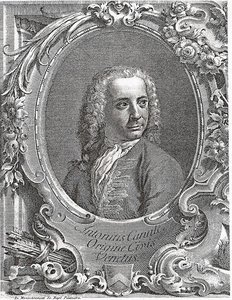
Canaletto
1697 - 1768 , Italien
Kortfattad info
- Artistic Movement Or Style: Vedute Venedig
- Artists Or Movements Influenced By This Artist: ['Giovanni Paolo Pannini']
- Artists Who Influenced This Artist: ['Bernardo Canal']
- Date Of Birth: 18 okt 1697
- Date Of Death: 19 apr 1768
- Full Name: Giovanni Antonio Canal
- Nationality: Italiensk
- Notable Artworks:
- Stenläggarens verkstad
- Regatta på Grand Canal
- Eton College
- Place Of Birth: Venedig, Italien