
 Förhandsvisa
 Skicka
 Dela
Dela
 Visa detaljer
 Guide
Guide

 Ladda ner
 Liknande objekt
 Röntgen
 Bildspel
 Frågor och svar
 Statistik
Camera obscura

- 22.0 x 38.0 cm


 Visa mer
Giclée / Konsttryck
Giclée- eller canvasprint av museumskvalitet med snabb produktion och flexibla ytbehandlingsalternativ. ( Beställ handmålad reproduktion Byt till digital bild)




P118B Skr10

P118H Skr10

P118W Skr10

P438Z Skr10

P508JH Skr12

P508YH Skr12

P805H Skr10

P805Z Skr10

P919BZ Skr10

P919G Skr10

P919XJ Skr10

P959ZH Skr10

P968JZ Skr12

W106C Skr8

W218G Skr10

W218JH Skr8

W218Y Skr10

W307PJ Skr10

W316G Skr10

W316PJ Skr8

W316Y Skr10

W398PJ Skr8

W4111J Skr10

W500HY Skr15

W500JH Skr15

W692G Skr12

W849H Skr8

W940BG Skr15

W953PJ Skr8




Välj bland våra förinställda storlekar som motsvarar konstverkets ursprungliga proportioner.

Ange den bredd och höjd du behöver för att passa din ram eller vägg. Ett tryck kan endast beskäras, aldrig göras större än originalbilden, vilket innebär att ett format med en annan proportion leder till att en del av bilden går förlorad. Vi skickar en digital mockup för godkännande innan vi påbörjar tryckningen. Bilden som visas på denna sida visar inte den faktiska beskärningen — det är endast mockuppen som gör det.
Leverans över hela världen () på 2 veckor istället för standard 4/5 veckor. (4 november)

Fri expressfrakt över hela världen

Högkvalitativ linnecanvas

Fullständig fraktförsäkring

Garantier för återbetalning av tullavgifter

Garantier för exakt färgåtergivning

100 dagars returrätt (endast vid fel)

100% pengarna tillbaka-garanti

Mängdrabatt erbjuds
 Glasalternativet är endast tillgängligt i storlekar under 110 cm.

Camera obscura
Giclée / Konsttryck
Storlek på reproduktion
-


Slutgiltigt pris
Skr 810
Canaletto’s Camera Obscura: A Window Into Venetian Vision
The artist Giovanni Antonio Canaletto, commonly known as Canaletto (1697 – 1768), stands as one of the most celebrated figures in eighteenth-century Venetian painting. His meticulous depictions of Venice—the canals shimmering under sunlight, the palaces adorned with opulent decoration—captivate viewers even today. But beyond their aesthetic beauty lies a fascinating secret: Canaletto’s unparalleled accuracy stems from a technique that predates photography – the camera obscura. This ingenious device, essentially a darkened room equipped with a pinhole aperture and a mirror, allowed him to capture the essence of his surroundings with remarkable precision, shaping not only his artistic output but also influencing the broader understanding of perspective and visual representation.- The Device Itself: Canaletto’s camera obscura wasn't merely a tool; it was a conceptual breakthrough. Constructed from wood and glass, it functioned by projecting an inverted image of the outside world onto a surface within—typically tracing paper or canvas—positioned opposite to the pinhole. This method ensured that the artist could faithfully reproduce architectural details and atmospheric effects without resorting to laborious sketching techniques.
- A Reflection of Scientific Curiosity: Canaletto’s embrace of the camera obscura reflects the burgeoning scientific interest in optics during his lifetime. Astronomers and mathematicians alike were experimenting with similar instruments, attempting to unravel the mysteries of light and vision. Canaletto's use of this technique wasn't simply artistic expediency; it represented a conscious engagement with contemporary intellectual debates about how we perceive reality.
- Venetian Landscape Painting: The camera obscura profoundly impacted Canaletto’s style. By allowing him to observe the scene from multiple viewpoints simultaneously, he achieved a level of realism previously unattainable. His paintings—particularly those capturing the grandeur of St Mark's Square and the Doge’s Palace—are characterized by subtle gradations of color, masterful shading, and an astonishingly accurate depiction of architectural proportions.
- Symbolism Beyond Technique: Canaletto’s camera obscura technique wasn’t just about achieving visual accuracy; it also conveyed a deeper symbolic message. The darkened room represented introspection and contemplation—a deliberate distancing from the immediate sensory experience to gain access to a more profound understanding of the world around him. This approach mirrored the philosophical currents of the Enlightenment, emphasizing reason and observation as pathways to knowledge.
- Legacy in Photography: Canaletto’s pioneering use of the camera obscura foreshadowed the invention of photography centuries later. By demonstrating that it was possible to capture an image without direct contact with the subject matter—a feat previously considered impossible—he fundamentally altered our conception of artistic representation and paved the way for a new era of visual art.
Notable Works Featuring Camera Obscura Technique
Canaletto’s mastery of perspective is evident in several iconic paintings, including “The Stonemason’s Yard” (c. 1725), where he meticulously rendered the textures and colors of the building materials with astonishing detail. Similarly, his depiction of St Mark's Square—particularly the Doge’s Palace—captures the shimmering light reflecting off the facades and windows, achieved through careful observation and skillful blending of pigments. These paintings stand as testament to Canaletto’s unwavering commitment to capturing the beauty and complexity of Venice with unparalleled accuracy – a feat made possible by his ingenious use of the camera obscura.Exploring Canaletto's Influence on Later Artists
Canaletto’s innovative approach to landscape painting resonated deeply with artists who followed him, notably Francesco Guardi and Michele Marieschi. These painters adopted similar techniques—primarily employing atmospheric perspective and meticulous detail—to convey the grandeur of Venetian vistas. Canaletto’s legacy extends beyond his own artistic achievements; he established a precedent for realistic representation that continues to inspire artists today, demonstrating that observation and careful technique can unlock profound insights into capturing the essence of visual experience.Reproductions & Inspiration
High-quality reproductions of Canaletto's paintings offer an exceptional opportunity to appreciate his artistic genius and immerse oneself in the atmosphere of eighteenth-century Venice. Consider framing a print alongside a photograph taken from one of Canaletto’s original viewpoints—a powerful gesture that honors both the artist’s pioneering technique and the enduring beauty of Venetian landscapes. Let Canaletto's Camera Obscura serve as a reminder that true artistic vision requires not only skill but also an unwavering dedication to observing and interpreting the world around us.Frågor och svar
Hur intensiva är färgerna i "Camera obscura" av Canaletto?
"Camera obscura" av Canaletto har en Monochromatic färgintensitet.
Vilken är den dominerande nyansen i "Camera obscura" av Canaletto?
En Amber to Saffron nyans går igenom "Camera obscura" av Canaletto.
Under vilket år och inom vilken stil skapades "Camera obscura"?
"Camera obscura" av Canaletto är daterat till 1700 och tillhör Impressionism.
Konstnärsbiografi
Giovanni Antonio Canal: The Master of Venetian Light
Giovanni Antonio Canal, universally known as Canaletto, was born in Venice on October 18, 1697, into a family deeply rooted in the world of visual arts. His father, Bernardo Canal, was a skilled painter specializing in theatrical scene settings – a profession that instilled in young Giovanni an early appreciation for composition, perspective, and the art of capturing fleeting moments. Artemisia Barbieri, his mother, further nurtured his artistic sensibilities, providing him with a foundation in technique and observation. Canaletto’s formative years were thus spent immersed in the vibrant atmosphere of Venetian artistry, laying the groundwork for his future success as one of the most celebrated veduta painters of the 18th century.
His early training wasn't solely within the family workshop; Canaletto sought experience beyond Venice. In 1718, he embarked on a significant journey to Rome, where he found employment assisting his father in creating backdrops for two operas staged by Alessandro Scarlatti. This period proved invaluable, exposing him to the grandeur of Roman architecture and the theatrical demands of stage design – experiences that profoundly shaped his artistic vision and honed his ability to render complex spatial relationships with remarkable accuracy.
The Rise of a Venetian Master
Upon returning to Venice in 1720, Canaletto swiftly established himself as a respected artist. Initially, he focused on producing commissioned works for wealthy patrons – portraits, interiors, and decorative panels that showcased his burgeoning talent. However, it was his fascination with the city itself—its intricate canals, bustling markets, and magnificent palaces—that truly ignited his artistic passion. He began to specialize in *vedute*, Italian term for "views," meticulously documenting Venice’s urban landscape with an unprecedented level of detail and realism.
Canaletto's approach was revolutionary. Unlike earlier artists who often idealized their subjects, Canaletto sought to capture the city as it truly existed—warts and all. He employed a systematic method, beginning with extensive preparatory drawings that captured every nuance of perspective, light, and shadow. These detailed sketches served as the foundation for his finished paintings, ensuring remarkable accuracy and a palpable sense of authenticity. He was also known to use a camera obscura – a device that projected an image of the outside world onto a surface – to aid in achieving precise topographical details, though he always prioritized compositional design above all else.
Collaborations and Artistic Influence
Canaletto’s career flourished through collaborations with other talented artists. Notably, his nephew, Bernardo Bellotto, became an accomplished landscape painter in his own right, often working alongside Canaletto and adopting a similar style. Their partnership produced numerous stunning views of Venice, showcasing the evolving cityscape and reflecting the artistic sensibilities of both men. The rivalry between them was also notable; they competed for commissions and sought to establish their individual reputations within the Venetian art world.
Canaletto’s influence extended far beyond Venice. In 1746, he traveled to England, invited by wealthy collectors eager to acquire his unique style. His paintings of London—including views of Buckingham Palace, St. Paul's Cathedral, and the Tower of London—became immensely popular, establishing him as a leading figure in European art. The British merchant Joseph “Consul” Smith played a pivotal role in this success, recognizing Canaletto’s talent and securing royal patronage for his work. King George III acquired a significant collection of Canaletto's paintings, further elevating the artist’s status and ensuring his works were widely exhibited throughout England.
Legacy and Enduring Appeal
Canaletto died in Venice on April 19, 1768, leaving behind a remarkable body of work that continues to captivate audiences today. His paintings offer an invaluable glimpse into the vibrant life of 18th-century Venice—a city teeming with commerce, culture, and artistic innovation. His meticulous attention to detail, masterful use of light and shadow, and unwavering commitment to realism have earned him a place among the greatest veduta painters in history.
Canaletto’s legacy is reflected in the numerous museums that house his works—including the National Gallery in London, where his paintings are celebrated for their beauty and historical significance. His influence can also be seen in the work of countless artists who followed in his footsteps, solidifying his position as a true master of Venetian art.
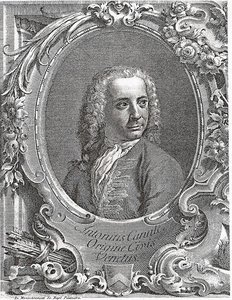
Canaletto
1697 - 1768 , Italien
Kortfakta
- Artistic Movement Or Style: Vedute Venedig
- Artists Or Movements Influenced By This Artist: ['Giovanni Paolo Pannini']
- Artists Who Influenced This Artist: ['Bernardo Canal']
- Date Of Birth: 18 okt 1697
- Date Of Death: 19 apr 1768
- Full Name: Giovanni Antonio Canal
- Nationality: Italiensk
- Notable Artworks:
- Stenläggarens verkstad
- Regatta på Grand Canal
- Eton College
- Place Of Birth: Venedig, Italien
Relaterade artiklar

Giovanni Antonio Canal (Canaletto): A Venetian Master of Light, Space & Societal Observation
Explore the life & art of Giovanni Antonio Canal (Canaletto), a Venetian master renowned for his breathtaking cityscapes. Discover his techniques, legacy, and captivating depictions of 18th-century Venice & London.

The Enduring Power of Painting: A Historical & Contemporary Exploration of Form and Emotion
Explore the rich history & enduring techniques of oil painting with OriginalUniqueArt. Discover masterpieces, learn about art collecting, and find authentic handmade reproductions crafted by skilled artists.

The Enduring Legacy of Oil on Canvas: Technique, History & Aesthetic Impact
Explore the rich history & techniques of oil painting – from Renaissance masters to Impressionism. Discover pigments, layering methods, and why this timeless medium endures. Expert insights for artists & art enthusiasts.

Barockens dramatik: Att föra prakt och känsla in i samtida interiörer
Upptäck barockens dramatik och lyx! Lär dig hur du integrerar denna klassiska stil i ditt hem med våra experttips och inspirerande exempel. Skapa en palatskänsla idag!

The Dramatic Flourish: Exploring the Baroque Movement's Enduring Legacy in Art History
Explore the dramatic world of Baroque art! Discover iconic artists like Caravaggio & Rubens, defining techniques, and its lasting impact on art history. Expert insights for collectors & enthusiasts at OriginalUniqueArt.


