

 Förhandsvisa
 Skicka
 Dela
Dela
 Visa detaljer
 Guide
Guide

 Ladda ner
 Liknande objekt
 Röntgen
 Bildspel
 Q&A
Q&A Statistik
Mount Tamalpais from San Rafael


 Visa mer
Giclée / Konsttryck
Giclée- eller canvasprint av museumskvalitet med snabb produktion och flexibla ytbehandlingsalternativ. ( Beställ handmålad reproduktion Byt till digital bild)




































Välj bland våra förinställda storlekar som motsvarar konstverkets ursprungliga proportioner.

Ange den bredd och höjd du behöver för att passa din ram eller vägg. Ett tryck kan endast beskäras, aldrig göras större än originalbilden, vilket innebär att ett format med en annan proportion leder till att en del av bilden går förlorad. Vi skickar en digital mockup för godkännande innan vi påbörjar tryckningen. Bilden som visas på denna sida visar inte den faktiska beskärningen — det är endast mockuppen som gör det.
Leverans över hela världen () på 2 veckor istället för standard 4/5 veckor. (31 oktober)

Fri expressfrakt över hela världen

Högkvalitativ linnecanvas

Fullständig fraktförsäkring

Garantier för återbetalning av tullavgifter

Garantier för exakt färgåtergivning

100 dagars returrätt (endast vid fel)

100% pengarna tillbaka-garanti

Mängdrabatt erbjuds
 Glasalternativet är endast tillgängligt i storlekar under 110 cm.

Mount Tamalpais from San Rafael
Giclée / Konsttryck
Storlek på reproduktion
-


Slutgiltigt pris
Skr 804
A Majestic Vista: "Mount Tamalpais from San Rafael" by Gilbert Munger
Step into a world of serene grandeur with Gilbert Munger’s captivating landscape, “Mount Tamalpais from San Rafael.” Painted in 1870, this oil on canvas masterpiece transports viewers to the heart of the American West, offering a glimpse of its unspoiled beauty and evoking a profound sense of tranquility. The painting depicts Mount Tamalpais rising majestically against a hazy sky, showcasing Munger’s skill in capturing both the romantic allure and topographical accuracy that defined his artistic style. This work is more than just a scenic view; it's a window into a pivotal moment in American history when the West was being explored and celebrated.Romantic Realism & Atmospheric Perspective
Munger’s approach to landscape painting firmly places him within the Romantic tradition, yet with a keen eye for detail that borders on realism. He masterfully employs atmospheric perspective – a technique where distant objects appear fainter and bluer due to the scattering of light in the atmosphere – to create an incredible sense of depth. Notice how the layers of valleys and forested slopes recede into the distance, drawing your gaze towards the imposing mountain peak. The loose, expressive brushstrokes contribute significantly to the painting’s overall mood, conveying a feeling of vastness and solitude. The soft, diffused lighting, reminiscent of early morning or late afternoon, further enhances the scene's peaceful atmosphere. Key elements include:- Oil on Canvas: Demonstrating Munger's preference for rich color and texture.
- Atmospheric Perspective: Creating a convincing illusion of depth and distance.
- Loose Brushwork: Contributing to the painting’s expressive quality.
Historical Context & The American West
Painted during a period of rapid westward expansion in the United States, “Mount Tamalpais from San Rafael” served as an important visual document for audiences back east. Gilbert Munger's landscapes helped introduce the newly opened West to the American public, showcasing its dramatic scenery and inspiring a sense of adventure and exploration. His work coincided with a growing appreciation for wilderness and the sublime power of nature, reflecting broader cultural shifts in 19th-century America. As someone who began his career producing engravings for scientific reports, Munger brought a unique blend of artistic skill and observational accuracy to his landscapes.Symbolism & Emotional Resonance
Beyond its aesthetic appeal, the painting carries symbolic weight. Mountains have long been associated with strength, resilience, and spiritual aspiration. Mount Tamalpais itself, a prominent landmark in California, represents a connection to the land and perhaps even a sense of the divine. The muted color palette – dominated by greens, browns, and blues – evokes feelings of peace, contemplation, and awe. The overall emotional impact is one of quiet grandeur; an invitation to pause, reflect, and appreciate the enduring beauty of the natural world. This piece offers a timeless escape, ideal for bringing a touch of serenity and artistic sophistication to any space.Frågor och svar
Hur harmonierar färgerna i "Mount Tamalpais from San Rafael" med varandra?
"Mount Tamalpais from San Rafael" av Gilbert Munger uppvisar en Strong Color Unity färgharmoni.
Vilken är den dominerande nyansen i "Mount Tamalpais from San Rafael" av Gilbert Munger?
En Golden Yellow Range nyans går igenom "Mount Tamalpais from San Rafael" av Gilbert Munger.
Hur kan jag få en digital fil av "Mount Tamalpais from San Rafael" av Gilbert Munger?
För att få en digital fil av "Mount Tamalpais from San Rafael" av Gilbert Munger, beställ en högupplöst digital bildnedladdning på dess Digital bild i hög upplösning-sida.
Konstnärsbiografi
Early Life and Artistic Training
Gilbert Davis Munger (April 14, 1837 – January 27, 1903) emerged from Connecticut’s Madison County as a child captivated by artistic pursuits. Born to Sherman and Lucretia Benton Munger—the last of five children—his family recognized his innate talent and fostered it through an apprenticeship with William H. Dougal, senior engraver at the Smithsonian Institution at just thirteen years old. This formative experience instilled in him not only technical proficiency but also a profound appreciation for meticulous observation—skills that would define his artistic vision throughout his life. Notably, Munger’s distant cousin was George Munger, another artist who explored similar themes of landscape and scientific inquiry. Early influences included the luminism championed by John Ruskin and the pioneering painters of the Hudson River School, whose emphasis on atmospheric light and tonal gradation profoundly shaped Munger's artistic sensibilities. His family—Sherman Munger, a farmer— instilled in Gilbert a love for nature and craftsmanship. Lucretia Benton Munger supported Gilbert’s artistic ambitions with unwavering encouragement. William H. Dougal provided invaluable training in engraving and fostered an appreciation for detailed rendering. He was particularly drawn to the Hudson River School's approach to landscape painting, mirroring Ruskin’s belief that art should elevate human consciousness through careful observation and tonal harmony.Engraving Commissions and Scientific Observation
Munger’s initial professional endeavors centered on engraving, primarily for government reports documenting geological expeditions led by Clarence King. These commissions demanded precision and accuracy—skills honed during his apprenticeship—and exposed him to the burgeoning field of geology. He meticulously reproduced illustrations of animals, plants, and rock formations, reflecting the scientific fervor of the era and demonstrating a commitment to representing nature with unwavering fidelity. His work for the Smithsonian Institution showcased his engraving skills and deepened his understanding of scientific concepts. Collaborations with Clarence King’s Geologic Survey fostered an appreciation for geological observation and artistic representation. He was instrumental in documenting the landscapes of Utah and California, capturing their unique geological formations with remarkable detail.Service in the Civil War and Artistic Development
During the tumultuous years of the Civil War, Munger served as a military engineer assisting in the defense of Washington D.C., demonstrating courage and dedication alongside his fellow soldiers. The challenges posed by the war spurred artistic innovation and refined his observational skills. He honed his technique through sketching outdoors amidst the battlefield—a practice that would inform his later landscape paintings.Western Landscapes and Recognition
Gilbert Munger’s most celebrated achievements lie in his breathtaking landscapes of the American West—particularly those created during Clarence King's Fortieth Parallel Survey. Collaborating closely with photographer Timothy H. O’Sullivan, he captured iconic vistas such as Yosemite Valley and Donner Pass, meticulously documenting geological formations and conveying their sublime beauty. Ten chromolithographs produced from his survey paintings gained widespread acclaim and established him as one of the foremost landscape painters of his generation. His work continues to inspire awe and admiration for its evocative depictions of American wilderness—a lasting contribution to the history of American art.
Gilbert Munger
1837 - 1903 , USA
Kortfakta
- Artistic Movement Or Style: Hudson River School
- Artists Or Movements Influenced By This Artist: ['Albert Bierstadt']
- Artists Who Influenced This Artist:
- John Ruskin
- William H. Dougal
- Date Of Birth: April 14, 1837
- Date Of Death: January 27, 1903
- Full Name: Gilbert Davis Munger
- Nationality: Amerikaner
- Notable Artworks:
- Niagara Horseshoe Falls with Rainbow
- Niagara Falls
- Place Of Birth: Madison, Connecticut
Relaterade artiklar
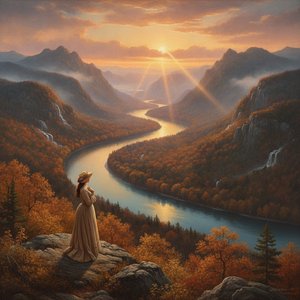
Capturing the Soul of Nature: A Journey Through the Sublime Majesty of American Romanticism
Explore the breathtaking beauty of American Romanticism. Discover how Hudson River School masters captured the sublime spirit of the wilderness through luminous oil landscapes and emotional depth. A journey into the soul of nature for the true art enthusiast.

Benjamin West: Transatlantic Ambition & Shaping American Art
Explore the life & legacy of Benjamin West, pioneering American artist and Royal Academy president. Discover his Neoclassical masterpieces, transatlantic influence, and lasting impact on art history. Learn more at OriginalUniqueArt.

Grant Wood & American Regionalism: Identity, Myth & the Rural Landscape
Explore the world of Grant Wood & American Regionalism with OriginalUniqueArt. Discover the symbolism behind 'American Gothic', recurring themes, and the movement's lasting impact on art history. High-quality reproductions available.

Evocations of Place: A Historical Journey Through Landscape Art
Explore the rich history of landscape art with OriginalUniqueArt. Discover renowned artists, movements like Impressionism & Romanticism, and expert guidance for collecting timeless pieces. Find your perfect serene escape today!

Albert Bierstadt: Luminosity, Landscape & the American Ideal
Explore the breathtaking landscapes of Albert Bierstadt, master of the American West & a leading figure in the Hudson River School. Discover his luminous style and iconic paintings – a timeless investment for art lovers.