

 Visa i rummet
 Skicka
 Dela
Dela
 Detaljer
 Studentguide för konstverk

 Ladda ner
 Liknande objekt
 Röntgen
 Bildspel
 Besökstatistik
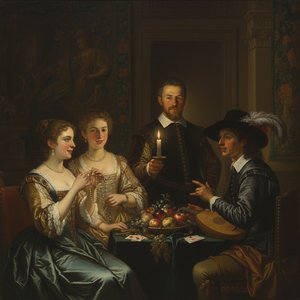
The Merry Fiddler
 Oil On Canvas
- WallArt
- Baroque Dramatic Portrait
 1623
1623- Early Modern
 108.0 x 89.0 cm
 Rijksmuseum
 Läs mer
Handgjord oljereproduktion
Handmålad olja på duk i din valda storlek och ram, tillverkad efter beställning av våra konstnärer. ( Byt till tryckta exemplar Byt till digital bildförsäljning)




P118B Skr10

P118H Skr10

P118W Skr10

P438Z Skr10

P508JH Skr12

P508YH Skr12

P805H Skr10

P805Z Skr10

P919BZ Skr10

P919G Skr10

P919XJ Skr10

P959ZH Skr10

P968JZ Skr12

W106C Skr8

W218G Skr10

W218JH Skr8

W218Y Skr10

W307PJ Skr10

W316G Skr10

W316PJ Skr8

W316Y Skr10

W398PJ Skr8

W4111J Skr10

W500HY Skr15

W500JH Skr15

W692G Skr12

W849H Skr8

W940BG Skr15

W953PJ Skr8




Välj bland våra förinställda storlekar som motsvarar konstverkets ursprungliga proportioner.

Du kan ange egna mått för att passa en specifik ram eller yta. Om den valda storleken inte matchar originalbildens proportioner kommer vi antingen att beskära konstverket eller utöka målningen med ytterligare handmålade element. En digital skiss skickas till dig för godkännande innan produktionen påbörjas.
Observera att förhandsvisningen på skärmen inte återspeglar den faktiska beskärningen eller utökningen. Endast skissen visar den slutgiltiga kompositionen korrekt.
Även om anpassade storlekar är möjliga, rekommenderar vi att du väljer en dimension från den fördefinierade listan för att bevara originalproportionerna.
Efter beställning kommer OriginalUniqueArt.com team att mejla kunden för instruktioner och tillhandahålla en skissförhandsvisning
Leverans över hela världen () på 3–4 veckor istället för standard 5 veckor. (12 oktober). Inga kompromisser med kvaliteten.

Fri expressfrakt över hela världen

Högkvalitativ linnecanvas

Fullständig fraktförsäkring

Garantier för återbetalning av tullavgifter

Garantier för exakt färgåtergivning

100 dagars returrätt vid fabrikationsfel

100% pengarna tillbaka-garanti

Mängdrabatt erbjuds
 Glasalternativet är endast tillgängligt i storlekar under 110 cm.

The Merry Fiddler
Tryckteknik
Reproduktionsstorlek
-


Totalpris
Skr 2910
A Symphony of Light and Shadow
In the heart of the Dutch Golden Age, few artists captured the ephemeral magic of a single moment as profoundly as Gerard van Honthorst. His masterpiece, The Merry Fiddler, serves as a breathtaking window into a world of nocturnal joy and theatrical intensity. Created in 1623, this work is far more than a mere portrait of a musician; it is a masterclass in the dramatic interplay of light and darkness. As the viewer approaches the canvas, they are immediately enveloped by the artist's signature use of tenebrism—a technique heavily influenced by Caravaggio that allows deep, velvety shadows to emerge from the periphery, only to be pierced by sudden, radiant pools of illumination. This deliberate manipulation of light does not simply reveal the subject; it sculptively defines him, pulling the violinist from the gloom and thrusting his exuberant energy into the viewer's space.
The composition centers on a man lost in the passion of his craft, his face alight with a genuine, infectious smile that suggests the music is as much a spiritual release as it is entertainment. Dressed in opulent attire that whispers of Italian sophistication, the musician wears a blue garment accented by shimmering gold trim, a detail that catches the light and adds a layer of tactile luxury to the scene. Flanking him are two observers, their attentive expressions acting as emotional anchors that guide our own gaze toward the center of the musical performance. This arrangement creates a sense of intimacy, making the spectator feel less like an outsider looking in and more like a silent guest seated at the very table where the melody unfolds.
The Legacy of the Utrecht Caravaggisti
To understand the depth of The Merry Fiddler, one must look to the transformative journey Honthorst undertook during his time in Rome. As a prominent member of the Utrecht Caravaggisti, Honthorst absorbed the raw, visceral energy of the Italian Baroque and brought it back to the Netherlands, where he earned the evocative nickname Gherardo delle Notti—Gerard of the Nights. This title reflects his unparalleled ability to depict scenes lit by candlelight or hidden flames, creating an atmosphere that feels both secretive and profoundly human. In this painting, the light source is unseen yet palpable, casting a warm, flickering glow that breathes life into the textures of fabric, skin, and wood.
For the discerning collector or interior designer, this artwork offers much more than historical significance; it provides a powerful emotional anchor for any curated space. The painting’s ability to command attention through contrast makes it an ideal centerpiece for rooms designed for contemplation or sophisticated entertaining. Whether placed in a library filled with classical literature or a modern lounge seeking a touch of Old World grandeur, the piece brings with it a sense of narrative tension and timeless elegance. It is a celebration of life's fleeting, joyful moments, captured forever through the masterful brushstrokes of a man who knew exactly how to make the darkness sing.
Frågor och svar
Hur balanserar "The Merry Fiddler" ljus och mörker?
De registrerade värdena för "The Merry Fiddler" av Gerard van Honthorst är: deep_shadow i ljusstyrka, Dark i luminans.
Vad föreställer "The Merry Fiddler" av Gerard van Honthorst?
Teman som återfinns i "The Merry Fiddler" av Gerard van Honthorst inkluderar violin player, musical performance, dutch baroque, light shadow contrast, portraiture, elegant outfit, renaissance influence. Tillsammans sammanfattar de verkets motiv.
Kan bilden av "The Merry Fiddler" av Gerard van Honthorst återges fritt?
Upphovsrättslig status för "The Merry Fiddler" av Gerard van Honthorst: verket är allmän egendom – upphovsrätten har löpt ut. Detta avgör om reproduktioner av bilden får framställas fritt.
Hur gammal var Gerard van Honthorst när "The Merry Fiddler" skapades år 1623?
Gerard van Honthorst var 33 år gammal när hen skapade "The Merry Fiddler" år 1623. Åldern är beräknad utifrån konstnärens födelseår, 1590.
I vilken rörelse och i vilken epok kan "The Merry Fiddler" av Gerard van Honthorst placeras?
"The Merry Fiddler" tillhör den Baroque Dramatic Portrait rörelsen, och dess skapare verkade under Tidig modern tid-eran.
Vilka är de faktiska måtten på "The Merry Fiddler" av Gerard van Honthorst?
"The Merry Fiddler" mäter 108 x 89 cm i sin originalform. Originalmåtten är en bra referens när du väljer storlek på en reproduktion.
Tillhör "The Merry Fiddler" av Gerard van Honthorst de mest eftertraktade verken inom Baroque Dramatic Portrait?
"The Merry Fiddler" är noterad som Recognized bland Baroque Dramatic Portrait-verken i katalogen.
Vilket museum har originalet till "The Merry Fiddler"?
"The Merry Fiddler" av Gerard van Honthorst visas på Rijksmuseum, Amsterdam, Netherlands. Museilistan avser originalverket, inte reproduktioner.
Om konstnären
A Master of Light and Shadow: The Life and Art of Gerard van Honthorst
Gerard van Honthorst emerged from Utrecht in 1592, a pivotal figure poised to illuminate the Dutch Golden Age with his dramatic artistry. Initially guided by his father, a decorative painter, young Gerard’s talent blossomed under the tutelage of Abraham Bloemaert, establishing a solid foundation in draftsmanship and composition. However, it was a transformative journey to Rome that irrevocably altered the course of his artistic development. There, amidst the fervent energy of the Italian Baroque, he encountered the groundbreaking work of Caravaggio – an encounter that would define his signature style and earn him the evocative nickname “Gherardo delle Notti,” or Gerard of the Nights. The dramatic use of *tenebrism*, a technique employing stark contrasts between light and dark, became Honthorst’s hallmark, imbuing his canvases with a palpable sense of drama and emotional intensity. He wasn't merely imitating Caravaggio; he was translating the Italian master’s innovations into a distinctly Dutch sensibility, focusing on intimate scenes illuminated by artificial light sources – candles, lamps, and fires – creating an atmosphere both realistic and deeply theatrical. This mastery over light wasn’t simply technical skill; it was a means of revealing character, of drawing the viewer into the emotional core of each scene. Honthorst's early works in Rome showcased this talent brilliantly, capturing the bustling streets and shadowy interiors with remarkable realism and psychological insight.Early Life and Artistic Training
Gerard van Honthorst was born in Utrecht, the son of a decorative painter, and received his initial artistic training from his father. This foundation provided him with a strong grounding in draftsmanship and composition – essential skills for any aspiring artist. However, it was Abraham Bloemaert, a respected master painter in Utrecht, who truly nurtured Honthorst’s talent, guiding him through the intricacies of perspective, color theory, and anatomical accuracy. Bloemaert's influence shaped Honthorst’s early style, characterized by a meticulous attention to detail and a classical sensibility. Yet, it was the decision to travel to Italy around 1616 that proved to be the catalyst for his artistic transformation. This journey marked a pivotal moment in his career, exposing him to the revolutionary techniques of the Italian Baroque and setting him on a path toward developing his unique style. The vibrant colors, dramatic lighting, and emotionally charged scenes of Caravaggio’s paintings profoundly impacted Honthorst's approach to art.The Roman Period: Influence and Innovation
Honthorst’s time in Rome was marked by considerable success and patronage. He quickly established himself as a talented painter, attracting the attention of wealthy collectors and influential figures within the city’s artistic circles. Notably, he found favor amongst Vincenzo Giustiniani, for whom he created the powerful “Christ Before the High Priest,” a work that exemplifies his masterful command of light and shadow. This painting, now residing in London’s National Gallery, showcases not only his technical skill but also his ability to convey profound psychological depth within his figures. Honthorst's exposure to Caravaggio’s radical style—particularly his use of *chiaroscuro*—was transformative. He didn’t simply copy Caravaggio; he adapted and refined the Italian master’s innovations, imbuing them with a distinctly Dutch sensibility. His paintings often featured intimate scenes illuminated by candlelight or lamplight, creating an atmosphere of both realism and theatrical drama. This period saw Honthorst develop his signature style—a blend of classical restraint and Baroque dynamism—that would define his career.Return to the Netherlands and Royal Commissions
Upon returning to Utrecht around 1620, Honthorst quickly established himself as a leading portrait painter in the Dutch Republic. His ability to capture not just physical likeness but also the character and social standing of his sitters made him highly sought after by wealthy merchants, nobles, and even royalty. He became president of the Guild of St. Luke in Utrecht in 1623, a testament to his growing influence within the artistic community. This period saw a flourishing of commissions, allowing Honthorst to refine his style and establish a distinctive voice within Dutch painting. He also undertook significant projects for the court, including elaborate ceiling paintings depicting allegorical scenes—a skill that demonstrated both his technical prowess and his understanding of symbolism. His willingness to collaborate with other artists, such as Rembrandt van Rijn, further solidified his position as a leading figure in the Dutch art world.Legacy and Artistic Significance
Gerard van Honthorst’s influence resonated far beyond his lifetime. He was a key figure in the *Utrecht Caravaggisti* movement – a group of Dutch painters who embraced Caravaggio's dramatic realism and *tenebrism*. Alongside artists like Hendrick ter Brugghen and Dirck van Baburen, he helped to establish a distinctly Dutch interpretation of Italian Baroque style. His emphasis on genre scenes illuminated by artificial light, his masterful portraits, and his ability to convey emotional depth through skillful use of chiaroscuro left an indelible mark on the development of Dutch Golden Age painting. Even his brother, Willem van Honthorst, followed in his footsteps, though often with works initially misattributed to Gerard due to stylistic similarities. His paintings continue to captivate audiences today, offering a glimpse into the dramatic and emotionally charged world he created. He cemented his place as a pivotal figure in art history, demonstrating how artistic influences can be both transformative and uniquely adapted to a new cultural context.
Gerard van Honthorst
1590 - 1656 , Nederländerna
Snabbfakta
- Artistic Movement Or Style: Barock, Caravaggism
- Artists Or Movements Influenced By This Artist: ['Utrechts Caravaggisti']
- Artists Who Influenced This Artist: ['Caravaggio']
- Date Of Birth: 1590
- Date Of Death: 1656
- Full Name: Gerard van Honthorst
- Nationality: Nederländsk
- Notable Artworks:
- Kristus för Hövdingen
- Födelsen i Florens
- Place Of Birth: Utrecht, Nederländerna
Relaterade artiklar

Nederländsk Guldålder: Topp 10 mästerverk som definierade epoken – konst & heminredning
Utforska de 10 ikoniska mästerverken från den nederländska guldåldern! Lär känna Rembrandt, Vermeer och Hals – deras teknik & berättelser. Hitta konsttryck och inspiration för din heminredning på OriginalUniqueArt.com. Upptäck hela samlingen online!

Golden Light & Dutch Skies: The Timeless Magic of Dutch Golden Age Landscapes
Discover the breathtaking beauty of Dutch Golden Age landscapes. Explore the mastery of light, chiaroscuro, and 17th-century realism through an expert art history lens, celebrating the enduring legacy of the Dutch Masters for discerning collectors and art lovers.
Gerard van Honthorst: Illuminating the Dutch Golden Age with Caravaggism & Courtly Grace
Explore the captivating world of Gerard van Honthorst, a Dutch Golden Age master renowned for his dramatic chiaroscuro & courtly portraits. Discover his life, art, and lasting influence on Baroque painting.

Golden Age Reflections: Dutch Baroque Painting & Cultural Innovation
Explore the Dutch Golden Age of painting! Discover key artists like Vermeer & ter Borch, their innovative techniques, and the rich cultural context behind these Baroque masterpieces. Learn about collecting & appreciating this iconic art period.

Nederländsk Barock: Topp 10 Mästerverk som Definierade Epoken – Konst & Inredning
Upptäck de 10 ikoniska mästerverken som definierade nederländsk barock! Lär känna Rembrandt, Vermeer och andra stora konstnärer. Hitta inspiration & museumkvalitativa reproduktioner på OriginalUniqueArt.com – för ditt hem eller din samling.
