

 Visa i rummet
 Skicka
 Dela
Dela
 Detaljer
 Studentguide för konstverk

 Ladda ner
 Liknande objekt
 Röntgen
 Bildspel
 Besökstatistik
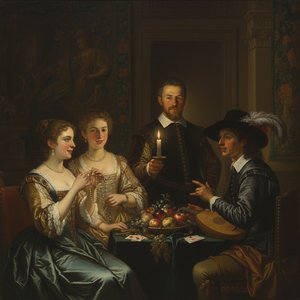
Merry Company


 Läs mer
Giclée / Konsttryck
Giclée- eller canvasprint av museumskvalitet med snabb produktion och flexibla ytbehandlingsalternativ. ( Köp handmålat konstverk Byt till digital bildförsäljning)




P118B Skr10

P118H Skr10

P118W Skr10

P438Z Skr10

P508JH Skr12

P508YH Skr12

P805H Skr10

P805Z Skr10

P919BZ Skr10

P919G Skr10

P919XJ Skr10

P959ZH Skr10

P968JZ Skr12

W106C Skr8

W218G Skr10

W218JH Skr8

W218Y Skr10

W307PJ Skr10

W316G Skr10

W316PJ Skr8

W316Y Skr10

W398PJ Skr8

W4111J Skr10

W500HY Skr15

W500JH Skr15

W692G Skr12

W849H Skr8

W940BG Skr15

W953PJ Skr8




Välj bland våra förinställda storlekar som motsvarar konstverkets ursprungliga proportioner.

Ange den bredd och höjd du behöver, för att passa din ram eller din vägg. Ett tryck kan endast beskäras, aldrig göras större än bilden, vilket innebär att ett format med en annan formform leder till att en del av bilden går förlorad. Vi skickar en digital mockup för godkännande innan vi trycker något. Bilden som visas på denna sida visar inte den faktiska beskärningen — det är endast mockuppen som gör det.
Leverans över hela världen () på 2 veckor istället för standard 4/5 veckor. (21 oktober)

Fri expressfrakt över hela världen

Högkvalitativ linnecanvas

Fullständig fraktförsäkring

Garantier för återbetalning av tullavgifter

Garantier för exakt färgåtergivning

100 dagars returrätt vid fabrikationsfel

100% pengarna tillbaka-garanti

Mängdrabatt erbjuds
 Glasalternativet är endast tillgängligt i storlekar under 110 cm.

Merry Company
Giclée / Konsttryck
Reproduktionsstorlek
-


Totalpris
Skr 787
A Dance in Shadow: The Luminous Drama of Honthorst’s Merry Company
In the quiet, amber-hued corners of the Dutch Golden Age, few works capture the pulse of human connection as viscerally as Gerard van Honthorst’s “Merry Company.” Completed in 1622, this masterpiece is far more than a mere snapshot of a tavern gathering; it is a carefully orchestrated tableau of light, social intimacy, and the subtle, flickering drama inherent in life's fleeting moments. As one gazes upon the canvas, the viewer is immediately pulled into a world where the boundaries between celebration and melancholy blur, held together by the artist’s unparalleled command over chiaroscuro.
The scene unfolds within a richly appointed space, perhaps a well-established tavern, where a group of figures is gathered around a table laden with the remnants of a feast. Wine goblets catch the light, and platters of delicacies sit amidst the conversation, suggesting a recent bout of revelry. At the heart of this composition lies a profound tension; while the title suggests merriment, there is an underlying sense of urgency and perhaps even a touch of sorrow. The figures—an elderly woman, a bearded man, and younger companions—are caught in a moment of intense emotional exchange, their faces illuminated by a theatrical, directional light that seems to emerge from an unseen source, casting deep, velvety shadows that swallow the periphery of the room.
The Mastery of the Night: Technique and Tenebrism
To understand the brilliance of “Merry Company,” one must recognize the influence of the Italian master Caravaggio upon Honthorst. During his formative years in Rome, Honthorst embraced tenebrism, a technique characterized by the bold juxtaposition of intense light against impenetrable darkness. This earned him the evocative nickname “Gherardo delle Notti”—Gerard of the Nights. In this painting, the technique is used not merely for aesthetic flair but to sculpt the very air around the subjects. The light does not simply illuminate; it carves forms out of the gloom, creating a palpable sense of three-dimensional space through masterful foreshortening and delicate glazing.
The artist’s meticulous attention to texture invites a tactile experience for the viewer. One can almost feel the weight of the heavy drapery, the cool smoothness of the pewter goblets, and the warmth of the skin under the candlelight. Through painstaking brushwork, Honthorst achieves a level of realism that transcends mere representation, turning a genre scene into a psychological study. The pyramidal structure of the composition, with figures positioned to draw the eye upward and inward, ensures that the viewer’s gaze wanders through the layers of light and shadow, discovering new details in every corner of this nocturnal feast.
A Timeless Inspiration for the Modern Collector
For the discerning collector or interior designer, a reproduction of “Merry Company” offers much more than a decorative element; it provides a focal point of profound character. The painting’s ability to command attention through its dramatic contrasts makes it an ideal centerpiece for spaces that value depth, history, and atmosphere. Whether placed in a contemporary gallery-style room or a classic study, the work brings with it an aura of sophisticated mystery and the enduring elegance of the Baroque era.
Owning a piece that echoes Honthorst’s vision is an invitation to contemplate the beauty found in the shadows. It serves as a reminder of the Dutch Golden Age's fascination with capturing the ephemeral—the way light hits a glass, the way a face falls into thought, and the way a shared moment can feel both monumental and fleeting. This artwork is not just a window into the 17th century; it is a timeless exploration of the human spirit, rendered in the most magnificent light.
Frågor och svar
Hur välkänd är "Merry Company" av Gerard van Honthorst?
"Merry Company" av Gerard van Honthorst har en Iconic popularitetsnivå. Denna klassificering återspeglar hur väl känt verket är.
Kan jag beställa en oljereproduktion av "Merry Company"?
Handmålade kopior av "Merry Company" av Gerard van Honthorst säljs på denna webbplats: en handmålad oljereproduktion på linneväv, beställbara via dess Handmålad reproduktion-sida.
Finns det en AR-förhandsvisning för "Merry Company"?
"Merry Company" av Gerard van Honthorst kan förhandsvisas på din egen vägg via konstverkets AR-förhandsvisning-sida med hjälp av förstärkt verklighet (AR) på en kompatibel enhet.
Om konstnären
A Master of Light and Shadow: The Life and Art of Gerard van Honthorst
Gerard van Honthorst emerged from Utrecht in 1592, a pivotal figure poised to illuminate the Dutch Golden Age with his dramatic artistry. Initially guided by his father, a decorative painter, young Gerard’s talent blossomed under the tutelage of Abraham Bloemaert, establishing a solid foundation in draftsmanship and composition. However, it was a transformative journey to Rome that irrevocably altered the course of his artistic development. There, amidst the fervent energy of the Italian Baroque, he encountered the groundbreaking work of Caravaggio – an encounter that would define his signature style and earn him the evocative nickname “Gherardo delle Notti,” or Gerard of the Nights. The dramatic use of *tenebrism*, a technique employing stark contrasts between light and dark, became Honthorst’s hallmark, imbuing his canvases with a palpable sense of drama and emotional intensity. He wasn't merely imitating Caravaggio; he was translating the Italian master’s innovations into a distinctly Dutch sensibility, focusing on intimate scenes illuminated by artificial light sources – candles, lamps, and fires – creating an atmosphere both realistic and deeply theatrical. This mastery over light wasn’t simply technical skill; it was a means of revealing character, of drawing the viewer into the emotional core of each scene. Honthorst's early works in Rome showcased this talent brilliantly, capturing the bustling streets and shadowy interiors with remarkable realism and psychological insight.Early Life and Artistic Training
Gerard van Honthorst was born in Utrecht, the son of a decorative painter, and received his initial artistic training from his father. This foundation provided him with a strong grounding in draftsmanship and composition – essential skills for any aspiring artist. However, it was Abraham Bloemaert, a respected master painter in Utrecht, who truly nurtured Honthorst’s talent, guiding him through the intricacies of perspective, color theory, and anatomical accuracy. Bloemaert's influence shaped Honthorst’s early style, characterized by a meticulous attention to detail and a classical sensibility. Yet, it was the decision to travel to Italy around 1616 that proved to be the catalyst for his artistic transformation. This journey marked a pivotal moment in his career, exposing him to the revolutionary techniques of the Italian Baroque and setting him on a path toward developing his unique style. The vibrant colors, dramatic lighting, and emotionally charged scenes of Caravaggio’s paintings profoundly impacted Honthorst's approach to art.The Roman Period: Influence and Innovation
Honthorst’s time in Rome was marked by considerable success and patronage. He quickly established himself as a talented painter, attracting the attention of wealthy collectors and influential figures within the city’s artistic circles. Notably, he found favor amongst Vincenzo Giustiniani, for whom he created the powerful “Christ Before the High Priest,” a work that exemplifies his masterful command of light and shadow. This painting, now residing in London’s National Gallery, showcases not only his technical skill but also his ability to convey profound psychological depth within his figures. Honthorst's exposure to Caravaggio’s radical style—particularly his use of *chiaroscuro*—was transformative. He didn’t simply copy Caravaggio; he adapted and refined the Italian master’s innovations, imbuing them with a distinctly Dutch sensibility. His paintings often featured intimate scenes illuminated by candlelight or lamplight, creating an atmosphere of both realism and theatrical drama. This period saw Honthorst develop his signature style—a blend of classical restraint and Baroque dynamism—that would define his career.Return to the Netherlands and Royal Commissions
Upon returning to Utrecht around 1620, Honthorst quickly established himself as a leading portrait painter in the Dutch Republic. His ability to capture not just physical likeness but also the character and social standing of his sitters made him highly sought after by wealthy merchants, nobles, and even royalty. He became president of the Guild of St. Luke in Utrecht in 1623, a testament to his growing influence within the artistic community. This period saw a flourishing of commissions, allowing Honthorst to refine his style and establish a distinctive voice within Dutch painting. He also undertook significant projects for the court, including elaborate ceiling paintings depicting allegorical scenes—a skill that demonstrated both his technical prowess and his understanding of symbolism. His willingness to collaborate with other artists, such as Rembrandt van Rijn, further solidified his position as a leading figure in the Dutch art world.Legacy and Artistic Significance
Gerard van Honthorst’s influence resonated far beyond his lifetime. He was a key figure in the *Utrecht Caravaggisti* movement – a group of Dutch painters who embraced Caravaggio's dramatic realism and *tenebrism*. Alongside artists like Hendrick ter Brugghen and Dirck van Baburen, he helped to establish a distinctly Dutch interpretation of Italian Baroque style. His emphasis on genre scenes illuminated by artificial light, his masterful portraits, and his ability to convey emotional depth through skillful use of chiaroscuro left an indelible mark on the development of Dutch Golden Age painting. Even his brother, Willem van Honthorst, followed in his footsteps, though often with works initially misattributed to Gerard due to stylistic similarities. His paintings continue to captivate audiences today, offering a glimpse into the dramatic and emotionally charged world he created. He cemented his place as a pivotal figure in art history, demonstrating how artistic influences can be both transformative and uniquely adapted to a new cultural context.
Gerard van Honthorst
1590 - 1656 , Nederländerna
Snabbfakta
- Artistic Movement Or Style: Barock, Caravaggism
- Artists Or Movements Influenced By This Artist: ['Utrechts Caravaggisti']
- Artists Who Influenced This Artist: ['Caravaggio']
- Date Of Birth: 1590
- Date Of Death: 1656
- Full Name: Gerard van Honthorst
- Nationality: Nederländsk
- Notable Artworks:
- Kristus för Hövdingen
- Födelsen i Florens
- Place Of Birth: Utrecht, Nederländerna
Relaterade artiklar

Nederländsk Guldålder: Topp 10 mästerverk som definierade epoken – konst & heminredning
Utforska de 10 ikoniska mästerverken från den nederländska guldåldern! Lär känna Rembrandt, Vermeer och Hals – deras teknik & berättelser. Hitta konsttryck och inspiration för din heminredning på OriginalUniqueArt.com. Upptäck hela samlingen online!

Nederländsk Barock: Topp 10 Mästerverk som Definierade Epoken – Konst & Inredning
Upptäck de 10 ikoniska mästerverken som definierade nederländsk barock! Lär känna Rembrandt, Vermeer och andra stora konstnärer. Hitta inspiration & museumkvalitativa reproduktioner på OriginalUniqueArt.com – för ditt hem eller din samling.

Golden Age Reflections: Dutch Baroque Painting & Cultural Innovation
Explore the Dutch Golden Age of painting! Discover key artists like Vermeer & ter Borch, their innovative techniques, and the rich cultural context behind these Baroque masterpieces. Learn about collecting & appreciating this iconic art period.
Gerard van Honthorst: Illuminating the Dutch Golden Age with Caravaggism & Courtly Grace
Explore the captivating world of Gerard van Honthorst, a Dutch Golden Age master renowned for his dramatic chiaroscuro & courtly portraits. Discover his life, art, and lasting influence on Baroque painting.

Golden Light & Dutch Skies: The Timeless Magic of Dutch Golden Age Landscapes
Discover the breathtaking beauty of Dutch Golden Age landscapes. Explore the mastery of light, chiaroscuro, and 17th-century realism through an expert art history lens, celebrating the enduring legacy of the Dutch Masters for discerning collectors and art lovers.
