
 Förhandsvisa
 Skicka
 Dela
Dela
 Visa detaljer
 Guide
Guide

 Ladda ner
 Liknande objekt
 Röntgen
 Bildspel
 Frågor och svar
 Statistik
Rest during the Flight to Egypt

- 60.0 x 39.0 cm


 Visa mer
Giclée / Konsttryck
Giclée- eller canvasprint av museumskvalitet med snabb produktion och flexibla ytbehandlingsalternativ. ( Beställ handmålad reproduktion Byt till digital bild)




P118B Skr10

P118H Skr10

P118W Skr10

P438Z Skr10

P508JH Skr12

P508YH Skr12

P805H Skr10

P805Z Skr10

P919BZ Skr10

P919G Skr10

P919XJ Skr10

P959ZH Skr10

P968JZ Skr12

W106C Skr8

W218G Skr10

W218JH Skr8

W218Y Skr10

W307PJ Skr10

W316G Skr10

W316PJ Skr8

W316Y Skr10

W398PJ Skr8

W4111J Skr10

W500HY Skr15

W500JH Skr15

W692G Skr12

W849H Skr8

W940BG Skr15

W953PJ Skr8




Välj bland våra förinställda storlekar som motsvarar konstverkets ursprungliga proportioner.

Ange den bredd och höjd du behöver för att passa din ram eller vägg. Ett tryck kan endast beskäras, aldrig göras större än originalbilden, vilket innebär att ett format med en annan proportion leder till att en del av bilden går förlorad. Vi skickar en digital mockup för godkännande innan vi påbörjar tryckningen. Bilden som visas på denna sida visar inte den faktiska beskärningen — det är endast mockuppen som gör det.
Leverans över hela världen () på 2 veckor istället för standard 4/5 veckor. (5 november)

Fri expressfrakt över hela världen

Högkvalitativ linnecanvas

Fullständig fraktförsäkring

Garantier för återbetalning av tullavgifter

Garantier för exakt färgåtergivning

100 dagars returrätt (endast vid fel)

100% pengarna tillbaka-garanti

Mängdrabatt erbjuds
 Glasalternativet är endast tillgängligt i storlekar under 110 cm.

Rest during the Flight to Egypt
Giclée / Konsttryck
Storlek på reproduktion
-


Slutgiltigt pris
Skr 811
Gerard David’s ‘Rest during the Flight to Egypt’: A Flemish Masterpiece of Domestic Devotion
This exquisite hand-painted reproduction captures Gerard David's masterful depiction of a pivotal moment within the biblical narrative – the “Rest during the Flight to Egypt.” Executed in 1515, this work transcends mere religious illustration; it’s a profound meditation on family, faith, and the quiet dignity of everyday life. Measuring 60 x 39 cm, the scale invites intimate contemplation, drawing the viewer into the heart of this serene scene.
A Window into Renaissance Flemish Art
Gerard David, born in Oude Woerden around 1460, stands as a towering figure within the rich tapestry of early Netherlandish painting. His career, spanning nearly six decades until his death in 1523, was marked by an unparalleled ability to imbue religious subjects with a startlingly human realism – a hallmark of the Flemish Renaissance. David’s artistic success is evidenced by his induction as a free master into the Corporation of Imagemakers and Saddlers in Bruges in 1484, solidifying his position within the city's vibrant art community.
Subject Matter and Composition
The painting portrays Mary, cradling the infant Jesus, receiving nourishment. The scene unfolds with a palpable sense of tranquility, underscored by the presence of several figures surrounding them – a young boy offering assistance, a man standing behind Mary, and another figure on the right side of the composition. A horse is strategically placed near the center, adding to the dynamic yet peaceful arrangement. David’s meticulous attention to detail is evident in every aspect, from the folds of Mary's garments to the expressions of the figures. The background features a stylized landscape with trees and a distant mountain, providing depth and context to the narrative.
Symbolism and Technique
David’s technique exemplifies the meticulous realism characteristic of Flemish painting. He employed oil paints on panel, allowing for subtle gradations of color and light – a masterful demonstration of “Flemish Light.” The use of sfumato, a blurring effect achieved through delicate layering of paint, softens edges and creates an ethereal quality, particularly noticeable in Mary’s face and the baby Jesus. Symbolically, the scene represents not just the physical journey but also the spiritual nourishment provided by Mary's maternal love. The inclusion of multiple figures highlights the importance of community support within the Christian faith. The horse, a common symbol of royalty and power, subtly underscores the divine nature of the figures depicted.
Emotional Impact and Collector’s Value
‘Rest during the Flight to Egypt’ resonates with viewers through its quiet dignity and profound sense of peace. It's a timeless depiction of maternal devotion and faith, qualities that continue to inspire admiration centuries later. This hand-painted reproduction offers an exceptional opportunity to own a piece of art history – a testament to Gerard David’s genius and the enduring power of Renaissance Flemish painting. Its size makes it ideal for a variety of interior design settings, from formal studies to intimate living rooms.
Frågor och svar
Hur mycket ljus verkar färgerna i "Rest during the Flight to Egypt" reflektera?
Färgerna i "Rest during the Flight to Egypt" har en Dark luminans.
Vilka är de faktiska måtten på "Rest during the Flight to Egypt" av Gerard David?
Originalet av "Rest during the Flight to Egypt" av Gerard David mäter 60 x 39 cm.
Vilket rum föreslås för visning av "Rest during the Flight to Egypt", med tanke på dess färgpalett?
Med tanke på dess Earthy färger rekommenderas "Rest during the Flight to Egypt" för ett Living Room.
Konstnärsbiografi
A Master of Flemish Light: The Enigmatic World of Gerard David
Gerard David, a name that resonates with the brilliance of early Netherlandish painting, remains an artist shrouded in intriguing mystery. Born around 1460 in Oudewater, Netherlands, his life story is pieced together from fragmented archival records and the eloquent testimony of his art. Unlike some contemporaries whose lives are richly documented, David’s personal narrative is sparse, allowing his paintings to speak volumes where biographical details fall silent. What is known suggests a remarkably successful career, likely managing workshops in both Antwerp and Bruges – centers of artistic innovation during the Renaissance. His reputation experienced an ebb in the 17th century, only to be gloriously resurrected by 19th-century art historians who recognized his unique contributions to the Northern Renaissance. He was inducted as a free master into the Corporation of Imagemakers and Saddlers in Bruges in 1484, marking a pivotal moment in his ascent. His later involvement with the Antwerp guild in 1515 further solidifies his standing within the artistic community.Formative Influences and Artistic Development
David’s artistic journey began under influences that shaped the very foundation of his style. Early works reveal a clear debt to painters like Jacob Janszoon, Dieric Bouts, and Geertgen tot Sint Jans – masters who instilled in him a meticulous attention to detail and a sensitivity to religious narrative. It is believed he spent time in Haarlem absorbing these lessons before relocating to Bruges, a vibrant hub of artistic exchange attracting talent from across Europe. Here, David encountered the masterpieces of Jan van Eyck, Rogier van der Weyden, and Hans Memling, absorbing their techniques while forging his own distinct path. He didn’t merely imitate; he synthesized these influences into something uniquely his own – a style characterized by luminous color, serene compositions, and an increasingly sophisticated understanding of landscape. His early paintings demonstrate this evolution, moving from the doll-like figures reminiscent of Haarlem traditions towards more sculptural forms grounded in their environment. This transition is visible in works like *Christ Nailed to the Cross*, where the influence of Bouts’ spatial construction blends with David’s emerging coloristic sensibility.Innovation in Landscape and Religious Narrative
Gerard David’s artistic signature lies in his innovative approach to both landscape and religious subject matter. He wasn't simply depicting backgrounds; he was creating immersive environments that enhanced the emotional resonance of his scenes. His landscapes are not merely decorative, but integral components of the narrative, often imbued with symbolic meaning. This fascination with natural settings – dense forests, rolling hills, expansive skies – set him apart from many of his contemporaries and foreshadowed the development of landscape painting as an independent genre. Consider *View in a Forest*, outer wing of a triptych; it’s not simply a backdrop but a world unto itself, rendered with meticulous detail and atmospheric perspective. Within his religious works, David demonstrated a remarkable ability to convey both profound spirituality and human emotion. Paintings like *The Marriage of St. Catherine* exemplify this skill. The scene is rendered with exquisite detail, yet it's the subtle expressions on the figures’ faces – their piety, contemplation, or gentle joy – that truly captivate the viewer. He possessed a gift for imbuing his sacred subjects with a sense of quiet dignity and relatable humanity. The *Triptych of the Madonna Enthroned and Saints* in Genoa showcases this mastery, presenting a harmonious composition filled with vibrant color and delicate detail. His *Virgin Among the Virgins*, donated to the Carmelite nuns of Sion at Bruges, is another testament to his skill, featuring a self-portrait within the painting itself – a rare and intimate gesture from an artist of his time.Major Achievements and Notable Works
David’s career spanned several decades, during which he produced a remarkable body of work that reflects his evolving style and artistic vision. His most celebrated achievements include:- The Judgment of Cambyses (two panels): This monumental altarpiece, housed in the Groeningemuseum in Bruges, showcases David’s mastery of color, composition, and dramatic storytelling.
- The Triptych of the Madonna Enthroned and Saints: A complex and richly decorated triptych that exemplifies David's skill in creating layered narratives and integrating multiple figures within a single space.
- The Virgin Among Virgins: A highly personal work, featuring a self-portrait alongside depictions of the Virgin Mary and other saints, offering a rare glimpse into the artist’s own life and beliefs.
- The Annunciation: A serene and elegant depiction of the angel Gabriel announcing to Mary that she will conceive Jesus, demonstrating David's refined style and attention to detail.
Legacy and Enduring Influence
Though his fame waned for a period after his death in 1523, Gerard David’s influence on subsequent generations of artists is undeniable. His innovative use of color, his masterful handling of light and shadow, and his pioneering approach to landscape all left an indelible mark on the development of Flemish painting. He paved the way for artists who would further explore the expressive potential of natural settings, such as Jacob Patinir and Jacob van Ruisdael.- A Bridge Between Traditions: David successfully bridged the gap between the late medieval tradition and the emerging Renaissance style.
- Influence on Landscape Painting: His detailed and atmospheric landscapes foreshadowed the development of landscape as a distinct genre.
- Masterful Colorist: He was renowned for his vibrant palette and skillful use of color to create emotional impact.
Exploring Further
- OriginalUniqueArt.com: Discover an extensive collection of Gerard David’s paintings, including *The Adoration of the Magi*.
- View in a Forest: Explore this stunning Northern Renaissance landscape painting.
- The Early Netherlandish Art Movement: Delve deeper into the artistic context of David’s work.

Gerard David
1450 - 1523 , Nederländerna
Kortfakta
- Artistic Movement Or Style: Tidig flamsk målning
- Artists Or Movements Influenced By This Artist:
- Jan van Eyck
- Rogier van der Weyden
- Artists Who Influenced This Artist:
- Jacob Janszoon
- Dieric Bouts
- Geertgen tot Sint Jans
- Date Of Birth: c. 1460
- Date Of Death: 1523
- Full Name: Gerard David
- Nationality: Nederländsk
- Notable Artworks:
- Bröllop av Katarina
- Madonnatriptyk
- Jungfruframvänt
- Place Of Birth: Oudewater, Nederl.
Relaterade artiklar
Sacred Narratives Embodied: A Comprehensive Exploration of Religious Iconography in Art History
Explore the rich history of religious iconography in art! Discover symbolism, movements & masterpieces from Byzantine to Renaissance periods. Expert insights for collectors and enthusiasts at OriginalUniqueArt.
David Teniers II: Master of Flemish Genre & Social Commentary
Explore the captivating world of David Teniers II, a leading Flemish Baroque painter renowned for his lively genre scenes & insightful social commentary. Discover his masterpieces and legacy with OriginalUniqueArt.
Sacred Narratives on Canvas: Exploring Religious Painting Through History
Explore the rich history of religious painting with OriginalUniqueArt.com! Discover iconic artworks, symbolism & techniques from antiquity to the Renaissance. Enhance your art appreciation today.
David Teniers the Younger: Genre Painting & Social Commentary in Baroque Flanders
Explore the captivating world of David Teniers the Younger, a leading Flemish Baroque painter. Discover his genre scenes, social commentary, and lasting influence on 17th-century art. Learn about his life, techniques & legacy.
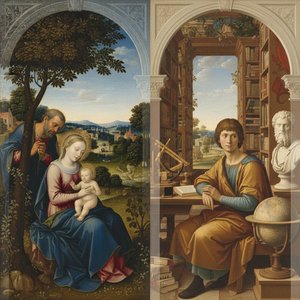
Gerard David: Bridging Late Medieval Tradition with Early Renaissance Humanism
Explore the captivating world of Gerard David, a pivotal figure bridging late medieval artistry with the Early Renaissance. Discover his innovative techniques, religious masterpieces, and enduring legacy – a must-read for discerning art collectors.


