

 Visa i rummet
 Skicka
 Dela
Dela
 Detaljer
 Studentguide för konstverk

 Ladda ner
 Liknande objekt
 Röntgen
 Bildspel
 Besökstatistik
Katherine Rosen


 Läs mer
Giclée / Konsttryck
Giclée- eller canvasprint av museumskvalitet med snabb produktion och flexibla ytbehandlingsalternativ. ( Köp handmålat konstverk Byt till digital bildförsäljning)




P118B Skr10

P118H Skr10

P118W Skr10

P438Z Skr10

P508JH Skr12

P508YH Skr12

P805H Skr10

P805Z Skr10

P919BZ Skr10

P919G Skr10

P919XJ Skr10

P959ZH Skr10

P968JZ Skr12

W106C Skr8

W218G Skr10

W218JH Skr8

W218Y Skr10

W307PJ Skr10

W316G Skr10

W316PJ Skr8

W316Y Skr10

W398PJ Skr8

W4111J Skr10

W500HY Skr15

W500JH Skr15

W692G Skr12

W849H Skr8

W940BG Skr15

W953PJ Skr8




Välj bland våra förinställda storlekar som motsvarar konstverkets ursprungliga proportioner.

Ange den bredd och höjd du behöver, för att passa din ram eller din vägg. Ett tryck kan endast beskäras, aldrig göras större än bilden, vilket innebär att ett format med en annan formform leder till att en del av bilden går förlorad. Vi skickar en digital mockup för godkännande innan vi trycker något. Bilden som visas på denna sida visar inte den faktiska beskärningen — det är endast mockuppen som gör det.
Leverans över hela världen () på 2 veckor istället för standard 4/5 veckor. (24 oktober)

Fri expressfrakt över hela världen

Högkvalitativ linnecanvas

Fullständig fraktförsäkring

Garantier för återbetalning av tullavgifter

Garantier för exakt färgåtergivning

100 dagars returrätt vid fabrikationsfel

100% pengarna tillbaka-garanti

Mängdrabatt erbjuds
 Glasalternativet är endast tillgängligt i storlekar under 110 cm.

Katherine Rosen
Giclée / Konsttryck
Reproduktionsstorlek
-


Totalpris
Skr 793
A Moment Frozen in Time: George Bellows’ “Katherine Rosen”
George Wesley Bellows' 1921 painting, "Katherine Rosen," residing within the hallowed halls of the Yale University Art Gallery, isn’t merely a portrait; it’s a carefully constructed tableau of domesticity and quiet contemplation. More than just a likeness, Bellows masterfully captures a fleeting moment – a woman seated in repose, enveloped by the familiar comforts of her home. The painting immediately draws the eye to its central subject, Katherine Rosen herself, presented with an understated elegance that belies the dynamism often associated with Bellows’ work. Her posture is relaxed yet dignified, her hands folded gently in her lap, suggesting a sense of inner peace and self-possession.
Bellows' signature style—a potent blend of realism and expressive brushwork—is vividly apparent here. The muted palette – dominated by soft browns, creams, and subtle greens – creates an atmosphere of intimacy and warmth. His bold, visible strokes aren’t employed for dramatic effect but rather to build texture and form with remarkable precision. Notice how the light catches on the upholstery of the couch, the delicate folds of the drapery, and even the subtle sheen of the potted plant—each element rendered with a tactile quality that invites the viewer to almost reach out and touch it. This deliberate attention to detail speaks volumes about Bellows’ commitment to portraying the world as he truly saw it: rich in texture and imbued with life.
The Ashcan School and Urban Realism
To fully appreciate “Katherine Rosen,” one must understand its place within the broader context of American art during the early 20th century. Bellows was a pivotal figure in the Ashcan School, a movement that rejected the idealized subjects and polished techniques of academic painting in favor of depicting everyday life—often with unflinching honesty. Unlike many artists of the time who focused on grand historical narratives or mythological themes, the Ashcan School turned its gaze inward, documenting the gritty realities of urban America: crowded tenements, bustling street scenes, and the lives of ordinary people.
“Katherine Rosen” embodies this spirit of realism. The setting—a comfortable yet modestly furnished room—is a far cry from the opulent interiors typically depicted in portraiture. The inclusion of the couch, potted plant, and vases isn’t simply decorative; it speaks to the woman's life, her surroundings, and perhaps even her aspirations. Bellows wasn’t interested in presenting an idealized image of beauty or wealth; he was interested in capturing a genuine moment of human experience.
Symbolism and Emotional Resonance
Beyond its realistic depiction, “Katherine Rosen” is laden with subtle symbolism. The woman's seated posture suggests contemplation and perhaps even melancholy. Her hands folded in her lap are a gesture of quiet reflection—a pause amidst the relentless pace of modern life. The surrounding objects – the couch, plant, and vases – can be interpreted as symbols of domesticity, comfort, and connection to nature. The clock on the wall subtly reminds us of the passage of time, adding another layer of complexity to the scene.
Bellows’ masterful use of light and shadow further enhances the painting's emotional impact. The soft, diffused light creates a sense of intimacy and warmth, while the subtle shadows add depth and dimension to the composition. The overall effect is one of quiet beauty—a poignant reminder of the simple pleasures of everyday life. It’s a portrait that invites us to slow down, observe, and appreciate the beauty in the ordinary.
A Legacy of American Art
“Katherine Rosen” stands as a testament to George Bellows' remarkable talent and his profound understanding of the human condition. His ability to capture not just physical likeness but also emotional depth and psychological nuance is what makes this painting so enduringly captivating. Alongside works like “Little Girl in White (Queenie Burnett)” and “The Rope,” "Katherine Rosen" exemplifies Bellows’ commitment to portraying American life with honesty, empathy, and a keen eye for detail. Reproductions of this iconic work offer a remarkable opportunity to bring the spirit of the Ashcan School into any space, reminding us of the power of art to illuminate our shared human experience.
Frågor och svar
Vilket format och vilken orientering rekommenderas för tryck av "Katherine Rosen"?
Ett tryck av "Katherine Rosen" av George Wesley Bellows rekommenderas i storleken Medium med Portrait orientering.
Var placerar sig "Katherine Rosen" bland George Wesley Bellowss återkommande motiv?
"Katherine Rosen" skildrar portrait, interior, woman, couch, vase, harmony, balance, medan George Wesley Bellowss dokumenterade teman är ashcan school realism, urban life, american modernity, social commentary, boxing scenes, dynamic energy, portraiture, intimate observation. En jämförelse mellan dessa visar hur verket förhåller sig till konstnärens vanliga motiv.
Är "Katherine Rosen" av George Wesley Bellows fri från upphovsrätt?
Upphovsrättslig status för "Katherine Rosen" av George Wesley Bellows: verket är allmän egendom – upphovsrätten har löpt ut. Detta avgör om reproduktioner av bilden får framställas fritt.
Om konstnären
A Bold Vision of American Life: The World of George Bellows
George Wesley Bellows, ett namn synonymt med den tidiga 20-talets amerikanska energi och modernitet, etablerade sig som en nyckelperson i realistisk målning. Född i Columbus, Ohio, den 12 eller 19 augusti 1882, är hans resa från idyllisk atlet till konstnärlig berömmelse ett bevis på passionens och hängivelsens kraft. Ända sedan han var barn visade George en naturlig talang för teckning, fyllde han anteckningsböcker med skisser som antydde den observerande blicken och den växande färdigheten inom honom. Hans barndom var inte bara präglad av konst; han utmärkte sig inom sport, både baseball och basket vid Ohio State University – en dualitet som djupt skulle påverka hans konstnärliga perspektiv, och införa en känsla av dynamisk rörelse och fysisk närvaro i hans verk. Denna idrottsliga bakgrund gav honom inte bara disciplin utan också en uppskattning för den mänskliga formen i aktion, ett tema som skulle bli centralt för hans mest berömda målningar. Han lämnade universitetet strax innan han avslutade studierna, driven av en oemotståndlig dragkraft till New York City och löftet om konstnärlig träning.Formande en Väg: Ashcan School och Utöver
När Bellows anlände till New York 1904 fick han snabbt Robert Henri, en ledande figur i Ashcan School, som mentor. Denna grupp av konstnärer – inklusive John Sloan, William Glackens och George Luks – valde medvetet att vända sig bort från akademiska konventioner och istället föreställa sig de grova verkligheterna i stadslivet: trånga överväganden, livliga gator och den vardagliga kampen för arbetarklassens amerikaner. Bellows omfamnade denna anda helhjärtat, och återspeglade till en början Henri’s lösa penseldrag och engagemang för social realism. Men han var inte nöjd med bara att kopiera sin lärares stil; han hade ett mål att forma sin egen distinkta konstnärliga röst. Han etablerade ett studio med den likasinnade konstnären Edward Keefe 1906, vilket markerade början på en produktiv period av experiment och utveckling. Hans tidiga verk, som visades under 1908, möttes av blandad kritik – vissa kritiker ansåg dem för råa, medan andra erkände deras vågande mod och innovativa anda. Bellows’s ämnematerial var ofta kontroversiellt för sin tid, utmanade rådande uppfattningar om vad som betraktades som "acceptabel" konst. Han tvekade inte att föreställa sig de mindre glamorösa aspekterna av stadslivet, och fångade scener av fattigdom, arbete och fritid med skoningslös ärlighet.Arenans Liv: Boxning och Stads Spektakel
Medan Bellows’s oeuvre omfattade en mängd olika ämnen – porträtt, landskap, skogar – är han kanske mest känd för sina kraftfulla representationer av boxningsmatcher. Dessa var inte bara idrottsevenemang för honom; de var mikrokosmer av mänsklig dramatik, som uttryckte teman om kamp, motståndskraft och de instinkter som driver tävling. Han besökte rökiga boxningsklubbar, studerade noggrant fighters’ rörelser, deras blickar och den råa energin i publiken. Målningar som *Both Members of This Club* (1909) och *Stag at Sharkey’s* (1909) är utmärkta exempel på hans förmåga att fånga denna atmosfär, med hjälp av dramatiskt ljus, dynamiska kompositioner och en känsla av spänning. Boxningsscenerna var inte bara om sporten i sig; de var metaforer för livets strider, som återspeglade den rådande sociala darwinismen i det amerikanska samhället vid den tiden. Utöver boxning fann Bellows också inspiration i andra stadspektakler – parader, cirkusar och trånga gator – alla möjligheter att utforska teman om rörelse, energi och den kollektiva upplevelsen.Utvecklande Stil och Arv
När Bellows mognade som konstnär utvecklades hans stil subtilt men betydelsefullt. Medan han bibehöll sitt engagemang för realism, började han att vända sig bort från de lösa penseldragen i sina tidiga år och antog en mer stilisering stil präglad av mjuka kurvor, monumentala former och en ökad känsla av dramatik. Denna förändring är tydlig i senare verk som *Dempsey and Firpo* (1924), ett monumentalt målning som fångar det klimatiska ögonblicket av en legendarisk boxningsmatch med betraktansvärd intensitet. Han experimenterade också med litografi, och producerade en serie slående tryck som visade hans behärskning av linje och ton. Trots att han uppnådde betydande framgång under sin livstid – inklusive val till National Academy of Design 1913 – förblev Bellows engagerad i att utmana konstnärliga gränser och utmana konventionella normer. Hans plötsliga död 1925 vid 42 års ålder avbröt en lovande karriär, men hans arv lever kvar som en av Amerikas viktigaste realistiska målare. *Han lämnade efter sig ett verk som fortfarande resonerar hos publiken idag*, och erbjuder en kraftfull och skoningslös porträtt av det amerikanska livet i de tidiga 1900-talet – en värld fylld av energi, konflikt och den bestående andan hos mänskligheten. Hans inflytande kan ses i efterföljande generationer av konstnärer som sökte fånga dynamiken och komplexiteten i det moderna stadslandskapet.Viktiga Verk & Erkännanden
- *Both Members of This Club* (1909) – Ett banbrytande verk som fångar atmosfären i en boxningsklubb.
- *Stag at Sharkey’s* (1909) – En annan ikonisk representation av en boxningsmatch, känd för sin dramatiska belysning och komposition.
- *Men of the Docks* (1912) – Ett kraftfullt porträtt av arbetarklassens människor, som visar Bellows’s skicklighet i att fånga fysik och textur.
- *The Germans Arrive* (1918) – En serie litografier som föreställer de fasor som begåtts under första världskriget, vilket visar hans engagemang för sociala och politiska frågor.
- *Dempsey and Firpo* (1924) – Ett monumentalt målning som fångar det klimatiska ögonblicket av en legendarisk boxningsmatch, som visar Bellows’s utvecklade stil och behärskning av komposition.
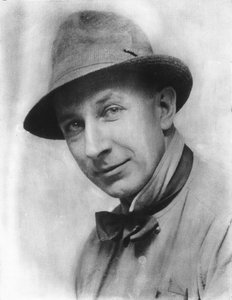
George Wesley Bellows
1882 - 1925 , USA
Snabbfakta
- Artistic Movement Or Style: Ashcan School, Realism
- Artists Or Movements Influenced By This Artist: ["Henri's gruppen"]
- Artists Who Influenced This Artist: ['Robert Henri']
- Date Of Birth: 1882-08-19
- Date Of Death: 1925-01-18
- Full Name: George Wesley Bellows
- Nationality: Amerikansk
- Notable Artworks:
- Both Members
- Stag Sharkey’s
- Men Docks
- Place Of Birth: Columbus, USA
Relaterade artiklar
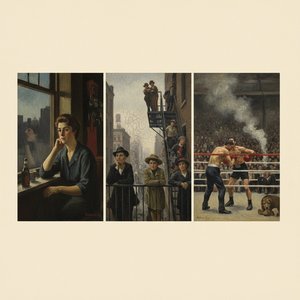
American Realism: Social Commentary & Artistic Representation in Early 20th-Century Painting
Explore the powerful social commentary & artistic representation of American Realism. Discover key artists like Bellows & Sloan, and understand the movement's lasting impact on 20th-century art history.

Grant Wood & American Regionalism: Identity, Myth & the Rural Landscape
Explore the world of Grant Wood & American Regionalism with OriginalUniqueArt. Discover the symbolism behind 'American Gothic', recurring themes, and the movement's lasting impact on art history. High-quality reproductions available.

The Unvarnished Truth: A Cultural Journey Through the Soul of American Realism
Explore the profound beauty of American Realism. From the Ashcan School's urban grit to intimate portraits, discover how artists captured the authentic soul of a nation through unvarnished truth and masterful observation.

Amerikansk realism: Topp 10 mästerverk som definierade en rörelse – konsttryck hos OriginalUniqueArt
Utforska de 10 mästerverk som definierade amerikansk realism! Lär känna Winslow Homer, Edward Hopper & andra ikoniska konstnärer. Högkvalitativa konsttryck och inredningsinspiration hos OriginalUniqueArt.com – upptäck tidlösa tavlor online.
American Realism: Capturing the Raw Soul of a Nation Through the Lens of Art History
Explore the profound depth of American Realism. From the gritty Ashcan School to poignant social landscapes, discover how masters captured the raw soul of a nation through evocative oil paintings and timeless art history.
