
 Förhandsvisa
 Skicka
 Dela
Dela
 Visa detaljer
 Guide
Guide

 Ladda ner
 Liknande objekt
 Röntgen
 Bildspel
 Statistik
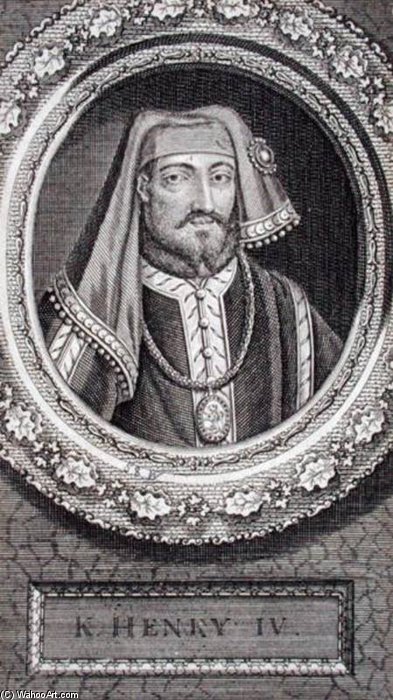
Henry Iv )

 Visa mer
Köp en högupplöst, förbättrad digital bild med betydligt högre kvalitet än förhandsvisningen online.
Varje fil är noggrant förberedd av våra interna specialister med hjälp av avancerade verktyg och professionell manuell retuschering. Vi säkerställer att varje bild har exceptionell skärpa, exakt färgåtergivning och fina detaljer.
Den slutgiltiga filen levereras via e-post inom 72 timmar, optimerad för omedelbar användning i professionella sammanhang, redaktionellt bruk och tryckmiljöer. Detta är samma kvalitet som med förtroende används av ledande designstudior, förlag och gallerier.
Digital bild
Ladda ner en högupplöst fil för personlig visning, utskrift och kreativa projekt. ( Byt till tryck Beställ handmålad reproduktion)
Ingår i varje beställning av digital bild
Professionell digital leverans, garanterad
När du väljer OriginalUniqueArt.com får du inte bara en bild – du får ett professionellt förädlat digitalt konstverk, skapat med precision och med en garanterad tillfredsställelse. Här är allt som ingår i din beställning, automatiskt:

Snabb leverans via e-post
Din högupplösta digitala bild skickas till dig via e-post inom 72 timmar efter beställning – redo för omedelbar användning.

AI-förbättrad digital fil
Ditt konstverk optimeras professionellt med hjälp av avancerade AI-verktyg och manuell redigering, vilket garanterar maximal detaljrikedom, skärpa och färgnoggrannhet.

Fri livstidsåterleverans
Har du råkat radera eller tappa bort din fil? Ingen oro – vi skickar den kostnadsfritt till dig när som helst.

Inga importavgifter – någonsin
Njut av ditt konstverk omedelbart utan tull, importavgifter eller leveranskostnader – digitala nedladdningar är alltid skattefria.

Garanterad färgåtergivning
Vi säkerställer att din digitala bild återger de ursprungliga färgerna så exakt som möjligt med hjälp av professionella verktyg och färghantering.

100 dagars nöjdhetsgaranti
Om du inte är nöjd med din digitala bild kommer vi att revidera den eller återbetala 100% inom 100 dagar – utan frågor.

100% pengarna-tillbaka-garanti
Inte nöjd? Få full återbetalning inom 100 dagar efter att du mottagit din digitala fil – utan frågor.

Rabatt vid storköp
Köp 3 bilder, spara 10% – Köp 5, spara 15% – Köp 10+, spara 20%. Perfekt för kreativa projekt, gallerier och byråer.
Konstnärsbiografi
George Vertue: The Chronicler of British Art
George Vertue (1684 – 1756) stands as a singular figure in the annals of English engraving and antiquarian scholarship, an artist whose meticulous observations and painstaking reproductions cemented his place as a pivotal contributor to the burgeoning aesthetic sensibilities of the Enlightenment. More than merely a craftsman adept at transferring images from canvas to plate, Vertue was a historian, a collector, and a fervent advocate for preserving Britain’s artistic heritage—a role that profoundly shaped our understanding of the era's visual culture. Born in London amidst the Catholic fervor of his family, Vertue’s early life instilled within him a deep appreciation for detail and accuracy – qualities that would become hallmarks of his artistic practice and intellectual pursuits. His apprenticeship under Michael Vandergucht, a German engraver whose fortunes swiftly declined, provided invaluable experience in mastering the technical skills required to produce exceptional prints. However, it was his association with Godfrey Kneller’s Academy of Painting—where he collaborated closely with Thomas Gibson—that truly nurtured his artistic vision and fostered connections within London's intellectual elite. Gibson’s influence extended beyond mere instruction; Vertue absorbed Gibson’s stylistic sensibilities, particularly his masterful handling of chiaroscuro and his ability to convey psychological depth in portraiture. This careful attention to light and shadow would become a defining characteristic of Vertue’s engravings, mirroring the dramatic compositions favored by Gibson himself. Vertue’s passion for antiquarian research transcended his professional duties as an engraver. Driven by a desire to document the artistic achievements of Britain's past—particularly those predating the Elizabethan Renaissance—he embarked on a systematic endeavor to compile comprehensive notebooks filled with sketches, drawings, and detailed descriptions of artworks. These notebooks constitute an unparalleled resource for historians studying British art during Vertue’s lifetime, offering invaluable insights into stylistic trends, patronage networks, and artistic tastes. His membership in the Rose and Crown Club alongside luminaries like William Hogarth and Peter Tillmans underscores his position at the forefront of London's artistic discourse. Furthermore, expeditions undertaken with figures such as Edward Harley and Lord Coleraine yielded remarkable visual records of sites across England—a testament to Vertue’s dedication to firsthand observation and scholarly investigation. He meticulously documented architectural details, sculptural fragments, and painted masterpieces, ensuring their preservation for future generations. Vertue's contribution to British art history reached its zenith through his involvement in *Vetusta Monumenta*, a monumental project aimed at reconstructing Britain's artistic past. He undertook the daunting task of engraving numerous illustrations from classical texts and medieval manuscripts, ensuring their faithful reproduction for posterity. This ambitious undertaking demanded exceptional technical skill and unwavering commitment—qualities Vertue possessed in abundance. The resulting prints served as invaluable visual aids for scholars studying antiquity and medieval art, establishing *Vetusta Monumenta* as a landmark achievement in the dissemination of knowledge about Britain’s artistic heritage. Following the death of Earl Harley, Vertue benefited from the patronage of Duchess Portland and Frederick, Prince of Wales—the latter commissioning portraits after Van Dyck and recognizing Vertue’s exceptional talent as an engraver. Notably, a portrait of Vertue himself was painted by Gibson in 1715, and his widow generously donated it to the Society of Antiquaries – demonstrating Vertue's enduring legacy within the artistic community. His engraving of Gibson’s portrait stands as a poignant reminder of their collaborative relationship and Gibson’s admiration for Vertue’s artistic prowess. George Vertue’s legacy extends far beyond his technical achievements; he is remembered primarily as a champion of British art history, whose meticulous notebooks continue to inspire scholars today. He played an instrumental role in shaping the aesthetic sensibilities of his time—particularly through his association with Horace Walpole and *Anecdotes of Painting*, establishing himself as one of the foremost figures in documenting and disseminating knowledge about Britain’s artistic heritage. His work remains a cornerstone of understanding the visual culture of the eighteenth century, securing his place among the most influential artists and historians of the era.
George Vertue
1684 - 1756 , Storbritannien
Kort om konstnären
- Artistic Movement Or Style: Porträttgravyr
- Artists Or Movements Influenced By This Artist: ['Horace Walpole']
- Artists Who Influenced This Artist:
- Michael Vandergucht
- Thomas Gibson
- Date Of Birth: 1684
- Date Of Death: 1756
- Full Name: George Vertue
- Nationality: Engelska
- Notable Artworks:
- William Croft Engraving
- Ben Jonson Engraving
- Kungliga Anne Engraving
- Place Of Birth: London, United Kingdom