

 Förhandsvisa
 Skicka
 Dela
Dela
 Visa detaljer
 Guide
Guide

 Ladda ner
 Liknande objekt
 Röntgen
 Bildspel
 Statistik
Horse Devoured by a Lion
 Oil On Canvas
- WallArt
- Romanticism
 1763
1763- Early Modern
 3.0 x 69.0 cm
 Tate Britain
 Visa mer
Handgjord oljereproduktion
Handmålad olja på duk i din valda storlek och ram, tillverkad efter beställning av våra konstnärer. ( Byt till tryck Byt till digital bild)




P118B Skr10

P118H Skr10

P118W Skr10

P438Z Skr10

P508JH Skr12

P508YH Skr12

P805H Skr10

P805Z Skr10

P919BZ Skr10

P919G Skr10

P919XJ Skr10

P959ZH Skr10

P968JZ Skr12

W106C Skr8

W218G Skr10

W218JH Skr8

W218Y Skr10

W307PJ Skr10

W316G Skr10

W316PJ Skr8

W316Y Skr10

W398PJ Skr8

W4111J Skr10

W500HY Skr15

W500JH Skr15

W692G Skr12

W849H Skr8

W940BG Skr15

W953PJ Skr8




Välj bland våra förinställda storlekar som motsvarar konstverkets ursprungliga proportioner.

Ange den bredd och höjd du behöver för att passa din ram eller din vägg. Eftersom detta är handmålat kan konstnären, vid ett annat format, måla lite mer runt bilden eller beskära den något – det är du som väljer. Vi skickar en digital mockup för godkännande innan målningen påbörjas. Bilden som visas på denna sida representerar inte det slutgiltiga resultatet — det är endast mockuppen som visar det.
Efter beställning kommer OriginalUniqueArt.com team att mejla kunden för instruktioner och tillhandahålla en skissförhandsvisning
Leverans över hela världen () på 3–4 veckor istället för standard 5 veckor. (26 oktober). Inga kompromisser med kvaliteten.

Fri expressfrakt över hela världen

Högkvalitativ linnecanvas

Fullständig fraktförsäkring

Garantier för återbetalning av tullavgifter

Garantier för exakt färgåtergivning

100 dagars returrätt (endast vid fel)

100% pengarna tillbaka-garanti

Mängdrabatt erbjuds
 Glasalternativet är endast tillgängligt i storlekar under 110 cm.

Horse Devoured by a Lion
Reproduktionsmetod
Storlek på reproduktion
-


Slutgiltigt pris
Skr 2978
The Primal Drama of Survival
To stand before George Stubbs's "Horse Devoured by a Lion" is to be thrust into the very heart of a visceral, untamed struggle. Completed in 1763, this masterpiece transcends mere animal portraiture, capturing a moment of raw, breathtaking violence that freezes time itself. The scene is one of profound tension: a horse, caught in its final, agonizing breaths, is relentlessly overtaken by the predatory force of a lion. There is no escape within this frame, only the inevitable triumph of brute strength over vulnerability. Stubbs does not merely observe this encounter; he orchestrates it, using the rugged, rocky landscape of Creswell Crags to mirror the chaotic and unforgiving nature of the conflict unfolding in the center of the canvas.
The emotional weight of the piece lies in its ability to evoke a sense of the sublime—that specific Romantic era fascination with beauty intertwined with terror. As the viewer, one feels an instinctive pull toward the central struggle, drawn by the sheer energy radiating from the lion’s powerful jaws and the horse's desperate, yielding form. It is a painting that demands attention, making it a commanding focal point for any collection or a sophisticated statement piece in a curated interior designed to provoke thought and conversation.
Mastery of Anatomy and Light
Stubbs’s technical brilliance is rooted in his unique background as an anatomist. His years spent studying dissection under the surgeon Charles Atkinson allowed him to render musculature with a startling, scientific precision that few of his contemporaries could match. In this work, every sinew of the struggling horse and every ripple of the lion's powerful frame is articulated with breathtaking verisimilitude. This anatomical accuracy does not strip the painting of its soul; rather, it grounds the drama in a terrifying reality, making the violence feel palpably real.
The artist employs a dramatic use of light and shadow, reminiscent of the chiaroscuro techniques found in classical masters, to heighten the narrative tension. Strong contrasts illuminate the textures of the scene—the coarse, thick fur of the predator, the smooth, sweating skin of the prey, and the jagged, unforgiving surfaces of the surrounding rocks. The color palette is a sophisticated arrangement of earthy tones, where deep browns, golds, and blacks create a brooding atmosphere, punctuated by highlights that guide the eye through the composition's dynamic movement. For the discerning collector, the depth of texture achieved in this oil on canvas offers a rich, tactile experience that remains captivating even in high-quality reproduction.
A Timeless Allegory of Power
Beyond its surface-level spectacle, "Horse Devoured by a Lion" serves as a profound allegory. While inspired by classical motifs Stubbs encountered during his travels to Rome, the painting speaks to universal themes of mortality and the cyclical nature of life and death. The lion represents an unstoppable, primordial force, while the horse embodies innocence and the fragility of existence when confronted with the overwhelming power of nature. It is a meditation on the loss of control and the inevitable confrontation between strength and weakness.
For interior designers and art enthusiasts alike, this work offers more than just aesthetic beauty; it provides a narrative depth that can transform a space. Whether placed in a grand library or a contemporary gallery setting, the painting’s ability to evoke feelings of awe, horror, and reverence makes it an enduring icon of the Romantic movement. It remains a testament to Stubbs's ability to translate biological reality into a profound exploration of the human condition, making it a timeless acquisition for those who appreciate art that challenges the spirit.
Frågor och svar
Kan jag förhandsgranska "Horse Devoured by a Lion" av George Stubbs innan jag beställer?
En förhandsvisning av "Horse Devoured by a Lion" av George Stubbs finns tillgänglig på konstverkets Förhandsvisning-sida.
Var kan jag köpa ett tryck av "Horse Devoured by a Lion" av George Stubbs?
Ett tryck av "Horse Devoured by a Lion" av George Stubbs kan beställas direkt på dess Konsttryck i hög kvalitet-sida: ett konsttryck på bomullscanvas eller arkivbeständigt canvaspapper.
Var kan jag hitta statistik för "Horse Devoured by a Lion" av George Stubbs?
Sidan Besöksstatistik för "Horse Devoured by a Lion" av George Stubbs presenterar statistik över publika besök: månatliga besök för detta konstverk, en jämförelse med konstnärens mest sedda verk samt varifrån besökarna kommer.
Konstnärsbiografi
Early Life and Artistic Beginnings
George Stubbs, född den 25 augusti 1724 i Liverpool, var en engelsk målare vars namn idag är synonymt med skickligheten att fånga hästens essens. Hans barndom präglades av ett ganska sparsamt register över hans aktiviteter fram till han fyllde 35 år, och den mesta informationen kommer från Ozias Humphrys minnesbilder, baserade på samtal med Stubbs själv under 1794. Hans konstnärliga resa började vid 15 års ålder, då han först arbetade som lärjunge för sin far, en skomakare eller läderarbetare. Han sökte sedan råd från Hamlet Winstanley, en målare och graverare från Lancashire, och fick en kort tid av honom som elev. Denna korta period gav honom tillgång till samlingen på Knowsley Hall. Stubbs’s fascination för anatomi ledde honom till York i 1744, där han studerade under kirurgen Charles Atkinson vid York County Hospital. En av hans tidigaste bevarade verk är en uppsättning illustrationer för John Burtons lärobok om kvinnlig förlossning, publicerad 1751.Artistic Development and Notable Works
Stubbs’s passion för anatomi drev honom till York i 1744, där han studerade under kirurgen Charles Atkinson vid York County Hospital. Ett av hans tidigaste bevarade verk är en uppsättning illustrationer för John Burtons lärobok om kvinnlig förlossning, publicerad 1751. I 1756 hyrde Stubbs ett gårdshus i Lincolnshire och tillbringade 18 månader med att dissekera hästar, assisterad av sin sambo, Mary Spencer. Detta ledde till publiceringen av *Hästens anatomi* (1766), med originalritningar som nu finns på Royal Academy. Stubbs’s verk blev snart erkända av framstående aristokratiska mecenater, inklusive den 3:e hertigen av Richmond, som beställde tre stora målningar år 1759. Detta markerade början på hans framgångsrika karriär, med verk producerade för flera hertigar och grevar, vilket slutligen ledde till köpet av ett hus i Marylebone, London. Stubbs’s mest kända verk, *Whistlejacket*, en målning av en prande häst beställd av den 2:a markisen av Rockingham, finns nu på National Gallery i London. Denna och två andra målningar för Rockingham bröt konventionen genom att ha platta bakgrunder. *Whistlejacket*, en thoroughbred-häst som ställer sig på sina bakben, visar Stubbs’s exceptionella skicklighet att fånga hästens essens. Han målade också en serie av målningar om en lejonattack mot en häst, vilket är tidiga exempel på den romantiska rörelsen och hans inflytande på 1700-talets konst.Influence and Artistic Style
Stubbs’s stil var unik och banbrykande. Han studerade noggrant anatomi och muskeluppbyggnad, vilket gav hans hästbilder en otrolig realism och dynamik. Hans målningar är inte bara tekniskt imponerande utan också fulla av känsla och rörelse. Han var influerad av antikens konst, särskilt grekiska och romerska skulpturer, och försökte fånga den idealiska hästens elegans och kraft. Stubbs’s experimenterande med färger och teknik var också innovativt, och han använde sig ofta av en ljus och luftig palett för att skapa en känsla av rymd och djup. Han var även pionjär inom användningen av enamelmålning på keramik, vilket ytterligare bidrog till hans unika stil.Legacy and Lasting Impact
Stubbs’s arv är stort och bestående. Hans hästbilder betraktas idag som några av de mest ikoniska i konsthistorien, och hans verk har inspirerat generationer av konstnärer. *Whistlejacket* är inte bara en mästerlig målning utan också ett symboliskt verk som representerar den romantiska rörelsens fascination för naturen och det vilda. Stubbs’s arbete fortsätter att studeras och beundras av konstintresserade världen över, och hans inflytande på konsten kan fortfarande kännas idag. Hans bidrag till vår förståelse av hästens anatomi och dess skönhet är oöverträffat.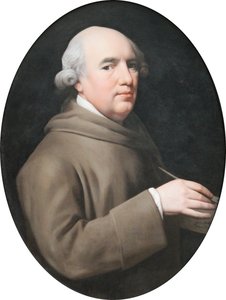
George Stubbs
1724 - 1806 , Storbritannien
Kortfakta
- Artistic Movement Or Style: Romantism, Hästkonst
- Artists Or Movements Influenced By This Artist: ['Joshua Reynolds']
- Artists Who Influenced This Artist: ['Hamlet Winstanley']
- Date Of Birth: 25 aug 1724
- Date Of Death: 10 jul 1806
- Full Name: George Stubbs
- Nationality: Brittisk
- Notable Artworks:
- Whistlejacket
- Löna och häst
- Löwe attackerar häst
- Place Of Birth: Liverpool, Storbritannien
Relaterade artiklar
The Noble Steed: A Historical and Artistic Exploration of Horses in Fine Art
Explore the rich history of horses in fine art! From ancient depictions to Renaissance masterpieces & beyond, discover iconic artworks and artists. Learn about symbolism, techniques, and find museum-quality reproductions at OriginalUniqueArt.
George Stubbs: Anatomical Precision & Romantic Vision in 18th-Century British Art
Explore the captivating world of George Stubbs, the 18th-century master renowned for his anatomical precision & Romantic animal paintings. Discover his legacy and investment potential.

Georges Braques 25 Mästerverk: En Konsthistorisk Resa för Hemmet
Utforska Georges Braques 25 mest ikoniska verk – en resa genom kubismens värld och fransk modern konst. Lär känna historien bakom mästerverken, tekniken & färglärorna. Köp högkvalitativa konsttryck på OriginalUniqueArt.com.
The Noble Steed on Canvas: A Historical & Artistic Exploration of Horse Painting Across Cultures
Explore the rich history of horse painting! Discover masterpieces from Stubbs to Munnings & learn about symbolism, techniques & artists. Find museum-quality reproductions at OriginalUniqueArt.

Georges Seurat: Topp 25 mästerverk – Impressionismens ljus och vetenskap i din konstsamling
Utforska Georges Seurats 25 mest ikoniska verk! Fördjupa dig i impressionismens ljus, pointillismens teknik och fransk konsthistoria. Hitta inspiration & museumkvalitativa konsttryck för ditt hem på OriginalUniqueArt.com.


