

 Visa i rummet
 Skicka
 Dela
Dela
 Detaljer
 Studentguide för konstverk

 Ladda ner
 Liknande objekt
 Röntgen
 Bildspel
 Besökstatistik
Dead Cock
 Acrylic On Canvas
- WallArt
- Baroque
 57.0 x 40.0 cm
 Pradomuseet
 Läs mer
Handgjord oljereproduktion
Handmålad olja på duk i din valda storlek och ram, tillverkad efter beställning av våra konstnärer. ( Byt till tryckta exemplar Byt till digital bildförsäljning)




P118B Skr10

P118H Skr10

P118W Skr10

P438Z Skr10

P508JH Skr12

P508YH Skr12

P805H Skr10

P805Z Skr10

P919BZ Skr10

P919G Skr10

P919XJ Skr10

P959ZH Skr10

P968JZ Skr12

W106C Skr8

W218G Skr10

W218JH Skr8

W218Y Skr10

W307PJ Skr10

W316G Skr10

W316PJ Skr8

W316Y Skr10

W398PJ Skr8

W4111J Skr10

W500HY Skr15

W500JH Skr15

W692G Skr12

W849H Skr8

W940BG Skr15

W953PJ Skr8




Välj bland våra förinställda storlekar som motsvarar konstverkets ursprungliga proportioner.

Ange den bredd och höjd du behöver för att passa din ram eller din vägg. Eftersom detta är handmålat kan konstnären vid en annan form måla lite mer runt bilden eller beskära den något – du väljer själv. Vi skickar en digital mockup för godkännande innan målningen påbörjas. Bilden som visas på denna sida representerar inte det slutgiltiga resultatet — det är endast mockuppen som visar det.
Efter beställning kommer OriginalUniqueArt.com team att mejla kunden för instruktioner och tillhandahålla en skissförhandsvisning
Leverans över hela världen () på 3–4 veckor istället för standard 5 veckor. (23 oktober). Inga kompromisser med kvaliteten.

Fri expressfrakt över hela världen

Högkvalitativ linnecanvas

Fullständig fraktförsäkring

Garantier för återbetalning av tullavgifter

Garantier för exakt färgåtergivning

100 dagars returrätt vid fabrikationsfel

100% pengarna tillbaka-garanti

Mängdrabatt erbjuds
 Glasalternativet är endast tillgängligt i storlekar under 110 cm.

Dead Cock
Tryckteknik
Reproduktionsstorlek
-


Totalpris
Skr 2975
A Silent Testament: Gabriel Metsu’s “Dead Cock”
Gabriel Metsu's "Dead Cock," painted circa 1659-1660, is not merely a still life; it’s a profoundly unsettling meditation on mortality, vulnerability, and the fleeting nature of beauty. This small panel, measuring just 57 x 40 cm, housed within the Museo del Prado in Madrid, commands attention with its stark simplicity and unnerving realism. It depicts a recently deceased rooster, meticulously rendered with an almost clinical precision – feathers ruffled, skin subtly flushed, and feet delicately positioned on a simple wooden hook. Yet, it’s precisely this meticulous detail that elevates the painting beyond a straightforward depiction of death; Metsu forces us to confront the raw, unvarnished truth of decay.
Metsu's artistic trajectory is notoriously complex, defying easy categorization. He was a “highly eclectic artist,” as art historian Arnold Houbraken noted, moving seamlessly between history paintings, portraits, and genre scenes – often blending influences from various masters like Rembrandt and Jan Steen. This versatility is particularly evident in "Dead Cock," which draws upon elements of both Dutch Baroque realism and the more emotionally charged style of Flemish artists. The composition itself is deceptively straightforward: a single subject dominating the frame, bathed in a muted, almost somber light that emphasizes its vulnerability. The dark background serves to heighten the rooster’s presence, creating a dramatic contrast that underscores its stillness.
The Symbolism of Mortality and Loss
The symbolism embedded within “Dead Cock” is layered and open to interpretation. The rooster itself – traditionally associated with masculinity, vitality, and heraldry – becomes an emblem of loss and the inevitable decline of life. Its recent demise is palpable; the subtle discoloration of its skin hints at the swiftness of death, while the carefully arranged feathers suggest a deliberate attempt to preserve some semblance of dignity in the face of oblivion. The hook, a simple, utilitarian object, serves as a stark reminder of the rooster’s fate – suspended between life and death, a poignant symbol of suspension itself.
Furthermore, the painting's context within Metsu’s oeuvre—his penchant for depicting solitary women engaged in domestic activities—adds another layer of meaning. The rooster’s vulnerability mirrors the fragility of human existence, echoing themes often explored in his genre scenes. It’s a quiet lament on the transient beauty of life and the inevitability of decay, rendered with an almost unnerving stillness.
Technique and Artistic Nuances
Metsu's technical skill is undeniable. He masterfully employs chiaroscuro – the dramatic contrast between light and shadow – to sculpt the form of the rooster, creating a sense of three-dimensionality that belies its small scale. The meticulous rendering of feathers, with their individual textures and subtle variations in color, demonstrates an extraordinary level of detail and observation. The use of oil paint allows for a rich, luminous quality, capturing the delicate sheen of skin and the subtle reflections on the rooster’s plumage.
Notably, Metsu's work was often characterized by a deliberate lack of overt sentimentality. He avoided dramatic gestures or exaggerated expressions, instead opting for a quiet, understated realism that invites contemplation. This restraint is particularly evident in “Dead Cock,” where the painting’s power lies not in its emotional intensity but in its ability to evoke a profound sense of melancholy and reflection.
A Reproduction Worth Cherishing
OriginalUniqueArt offers meticulously hand-painted reproductions of Gabriel Metsu's "Dead Cock," capturing the essence of this haunting masterpiece. Each reproduction is created by skilled artists using archival-quality materials, ensuring that the colors and details faithfully replicate those of the original painting. Whether displayed in a formal gallery setting or incorporated into a personal collection, this reproduction provides a tangible connection to one of the most enigmatic figures of the Dutch Golden Age – a silent testament to the beauty and fragility of life.
Frågor och svar
Hur beskrivs färgpaletten i "Dead Cock" av Gabriel Metsu?
"Dead Cock" av Gabriel Metsu använder en Earthy färgpalett. Paletten sammanfattar verkets övergripande färgkaraktär.
Vilken känsla förmedlar Baroque-verket "Dead Cock"?
Inom Baroque-rörelsen är "Dead Cock" nedtecknad med en Melancholic ton.
Vilket material har "Dead Cock" använts med, och i vilken stil är det utfört?
"Dead Cock" av Gabriel Metsu förenar tekniken Acrylic On Canvas med stilen Baroque. Teknik och epok beskriver verkets utförande och stilistiska uttryck.
Om konstnären
Gabriel Metsu: En Skymning från Det Dutcha Gyllene Ålders Själ
Gabriel Metsu, en gestalt som ofta förblir i skuggorna av sina mer framträdande kollegor, var en sann innovatör inom det dutchka gyllene ålders konst. Född 1629 i Leiden, Nederländerna, representerade Metsu en unik och komplex stil – en eklektisk blandning av traditionella och moderna element som gjorde honom till en fascinerande figur i sin tid. Hans liv var inte präglat av stora monumentala verk utan snarare av en djupgående utforskning av vardagslivet, ett intresse som genomsyrade hans konst och gav den en sällsynt intimitet. Metsu växte upp i en familj där konsten hade rötter – hans far, Jacques Metsue, var en mångsidig hantverkare och målare med anor från Hainaut, vilket förmodligen bidrog till Gabriel’s tidiga intresse för olika konstnärliga tekniker. Denna kulturella bakgrund, kombinerat med den Leiden-inspirerade atmosfären, formade hans konstnärliga syn.En Konstnär i Kontrast: Stil och Teknik
Metsu var känd för sin brist på en fast stilistisk identitet. Han behärskade en rad olika genrer – historiafoton, stillivspainteringar, porträtt och genrebilder – men undvek att helt identifiera sig med någon specifik trend. Detta gjorde honom till en ”högt eklektisk konstnär”, som ofta beskrivs. Hans verk kännetecknas av en subtil realism, en noggrannhet i detaljerna och en förmåga att fånga ögonblick av vardagslivet på ett sätt som är både gripande och intimt. Trots att endast 14 av hans anslagsvis 133 verk är daterade, vittnar de om en konstnärlig utveckling som var lika fascinerande som den var svårfångad. En stark influens från Rembrandt van Rijn är tydligt synlig i Metsu’s tidiga arbete, särskilt i hans användning av ljus och färg – Rembrandts dramatiska kontraster och skuggor speglas i Metsu’s verk. Efter sin flytt till Amsterdam 1655 förändrades hans stil markant, med en ökad fokus på inre miljöer och genrescener som fångade den vardagliga verkligheten i staden. Hans roll som mentor för målarna Michiel van Musscher och Joost van Geel understryker hans engagemang för den konstnärliga gemenskapen i Leiden.Porträtt av Ett Liv: Teman och Symbolik
Metsu’s konst var ofta fylld med teman som speglade de sociala och kulturella normerna i sin tid. Han skildrade frekvent unga kvinnor, marknadsplatser och äldre personer – motiv som ofta innehöll symboliska element. Ett exempel är ”Poultry Seller” (Kycklingsäljaren), där detaljerna i utseendet och miljön bär på en djupare mening. Metsu var en skicklig användare av emblem, alltså bilder som representerar moraliska eller filosofiska principer. Hans verk är inte bara representationer av verkligheten utan också komplexa budskap om livets förgänglighet, skönhet och moral. Porträttet ”Portrait of the Hinlopen Family” (Porträtt över familjen Hinlopen) är ett utmärkt exempel på hans förmåga att blanda genre- och porträttmålning till en harmonisk helhet.Metsu’s Arv: Museer och Utställningar
Gabriel Metsu’s verk finns idag representerade i flera prestigefyllda museer, inklusive Rijksmuseum i Amsterdam. Hans konst fortsätter att fascinera besökare och forskare med sin subtila skönhet och komplexa symbolik. För de som vill utforska hans arbete ytterligare kan man besöka National Gallery of Art i Washington D.C., där en omfattande samling av hans verk finns tillgängliga för visning. Genom att studera Metsu’s konst får vi en djupare inblick i det dutchka gyllene ålders mångfald och dess konstnärliga innovationer. Hans bidrag till den europeiska konsten är fortfarande relevant idag, och hans verk fortsätter att inspirera och beröra oss med sin sällsynta förmåga att fånga ögonblick av mänskligt liv.Referenser

Gabriel Metsu
1629 - 1667 , Nederland
Snabbfakta
- Artistic Movement Or Style: Dutch Golden Age painting
- Artists Who Influenced This Artist:
- Rembrandt van Rijn
- Johannes Vermeer
- Date Of Birth: 1629
- Date Of Death: 1667
- Full Name: Gabriel Metsu
- Nationality: Dutch
- Notable Artworks:
- The Sick Child
- Poultry Seller
- Portrait of the Hinlopen Family
- Place Of Birth: Leiden, Netherlands
Relaterade artiklar

Dante Gabriel Rossettis 25 Mästerverk: Konst, Symbolik & Heminredning
Utforska Dante Gabriel Rossettis 25 mest ikoniska konstverk! Upptäck prerafaeliternas symbolik, romantisk konst och tidlösa berättelser bakom mästerverken. Köp museumkvalitativa tryck & inred med vacker väggkonst på OriginalUniqueArt.com.

Nederländsk Guldålder: Topp 10 mästerverk som definierade epoken – konst & heminredning
Utforska de 10 ikoniska mästerverken från den nederländska guldåldern! Lär känna Rembrandt, Vermeer och Hals – deras teknik & berättelser. Hitta konsttryck och inspiration för din heminredning på OriginalUniqueArt.com. Upptäck hela samlingen online!

Gabriel Metsu: Illuminating Dutch Daily Life with Exquisite Detail
Explore the captivating world of Gabriel Metsu, a leading Dutch Golden Age painter. Discover his exquisite genre scenes, masterful realism, and insightful social commentary. Learn about key works & his lasting legacy.
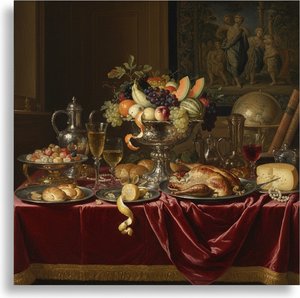
Abraham Hendricksz van Beyeren: Pioneering Dutch Still Life & the Banquet Tradition
Explore the captivating world of Dutch Golden Age still life with Abraham van Beyeren. Discover his innovative techniques, symbolic banquet scenes & lasting influence on art history. Learn about collecting these masterpieces.

Golden Light & Dutch Skies: The Timeless Magic of Dutch Golden Age Landscapes
Discover the breathtaking beauty of Dutch Golden Age landscapes. Explore the mastery of light, chiaroscuro, and 17th-century realism through an expert art history lens, celebrating the enduring legacy of the Dutch Masters for discerning collectors and art lovers.


