

 Visa i rummet
 Skicka
 Dela
Dela
 Detaljer
 Studentguide för konstverk

 Ladda ner
 Liknande objekt
 Röntgen
 Bildspel
 Besökstatistik
Williamstown Landscape


 Läs mer
Handgjord oljereproduktion
Handmålad olja på duk i din valda storlek och ram, tillverkad efter beställning av våra konstnärer. ( Byt till tryckta exemplar Byt till digital bildförsäljning)




P118B Skr10

P118H Skr10

P118W Skr10

P438Z Skr10

P508JH Skr12

P508YH Skr12

P805H Skr10

P805Z Skr10

P919BZ Skr10

P919G Skr10

P919XJ Skr10

P959ZH Skr10

P968JZ Skr12

W106C Skr8

W218G Skr10

W218JH Skr8

W218Y Skr10

W307PJ Skr10

W316G Skr10

W316PJ Skr8

W316Y Skr10

W398PJ Skr8

W4111J Skr10

W500HY Skr15

W500JH Skr15

W692G Skr12

W849H Skr8

W940BG Skr15

W953PJ Skr8




Välj bland våra förinställda storlekar som motsvarar konstverkets ursprungliga proportioner.

Ange den bredd och höjd du behöver för att passa din ram eller din vägg. Eftersom detta är handmålat kan konstnären vid en annan form måla lite mer runt bilden eller beskära den något – du väljer själv. Vi skickar en digital mockup för godkännande innan målningen påbörjas. Bilden som visas på denna sida representerar inte det slutgiltiga resultatet — det är endast mockuppen som visar det.
Efter beställning kommer OriginalUniqueArt.com team att mejla kunden för instruktioner och tillhandahålla en skissförhandsvisning
Leverans över hela världen () på 3–4 veckor istället för standard 5 veckor. (24 oktober). Inga kompromisser med kvaliteten.

Fri expressfrakt över hela världen

Högkvalitativ linnecanvas

Fullständig fraktförsäkring

Garantier för återbetalning av tullavgifter

Garantier för exakt färgåtergivning

100 dagars returrätt vid fabrikationsfel

100% pengarna tillbaka-garanti

Mängdrabatt erbjuds
 Glasalternativet är endast tillgängligt i storlekar under 110 cm.

Williamstown Landscape
Tryckteknik
Reproduktionsstorlek
-


Totalpris
Skr 2975
A Serene Glimpse into Australian Life
To gaze upon Williamstown Landscape is to step directly into a moment suspended in time—a quintessential portrait of early 20th-century Australian leisure. Frederick McCubbin, the master chronicler of the continent's burgeoning identity, has gifted us a scene steeped in pastoral tranquility. The composition immediately draws the eye across the expansive body of water, where a graceful pier extends like an invitation into the shimmering expanse. This is not merely a depiction of a waterfront; it is an evocation of peace, capturing the gentle rhythm of life played out between land and tide.
Mastery in Light and Brushwork
McCubbin’s technique here is nothing short of masterful. His handling of oil on canvas allows the light to breathe across the scene. Observe how the sand meets the water's edge, a delicate transition rendered with palpable texture. The brushstrokes themselves seem imbued with the very quality of sunlight filtering through the air. While the subject matter—the beach, the pier, the scattered figures enjoying the day—is idyllic, it is McCubbin’s ability to capture the atmospheric quality that elevates this work beyond mere documentation. The inclusion of two boats adds depth and narrative potential, suggesting journeys undertaken or moments paused in contemplation.
Historical Echoes of a Changing Landscape
Painted in 1910, Williamstown Landscape sits at a fascinating juncture in Australian history. It reflects a period of burgeoning settlement and the establishment of leisure as an art form itself. McCubbin was deeply invested in portraying the unique character of the Australian environment, moving beyond mere topographical record to capture the spirit of its inhabitants. For the modern collector or designer, owning a reproduction allows one to connect with this tangible piece of national heritage, bringing the romance and enduring spirit of early 20th-century Melbourne life into contemporary spaces.
Symbolism of Place and Passage
The pier itself serves as a powerful symbolic element. It represents connection—the link between the solid ground and the vast unknown of the water, mirroring perhaps the human journey itself. The people scattered across the beach are engaged in quiet communion with their surroundings, suggesting themes of community, repose, and the enduring appeal of nature's embrace. This sense of calm is palpable; it whispers of slow mornings, shared moments, and the restorative power of a picturesque setting.
Bringing Tranquility Home
For those seeking art that soothes the modern eye, Williamstown Landscape offers profound emotional resonance. Whether displayed in a formal drawing-room or a sunlit coastal retreat, its soft palette and harmonious composition act as an instant balm. Reproducing this work allows one to curate not just a wall hanging, but a mood—a permanent echo of McCubbin’s vision of Australian serenity.
Frågor och svar
Kan jag se "Williamstown Landscape" av Frederick McCubbin i olika ljus?
Röntgen-sidan för "Williamstown Landscape" av Frederick McCubbin är en interaktiv visare som låter dig bläddra genom elva optiska lager av konstverkets bild, inklusive en vy i röntgenstil.
Vilket format har "Williamstown Landscape"?
"Williamstown Landscape" av Frederick McCubbin har ett Landscape-format. Formatet beskriver kompositionens proportioner.
Vem har skapat "Williamstown Landscape" och i vilken stil är den utförd?
Frederick McCubbin skapade "Williamstown Landscape" inom Australian Impressionism-rörelsen.
Om konstnären
A Life Rooted in the Australian Landscape
Frederick McCubbin, born in Melbourne on February 25th, 1855, stands as a cornerstone of Australian art, inextricably linked to the nation’s evolving identity and its unique visual language. His journey from humble beginnings – the son of bakers who instilled in him a strong work ethic – to becoming a pivotal figure in the Heidelberg School is a testament to his dedication and artistic vision. McCubbin's early life was marked by diverse experiences, working as a solicitor’s clerk and assisting in the family bakery before fully embracing his calling as a painter. These formative years, though seemingly disparate, imbued him with a deep understanding of everyday Australian life, a theme that would resonate profoundly throughout his oeuvre. He received foundational training at the National Gallery of Victoria's School of Design, studying under esteemed artists like Eugene von Guerard and George Folingsby, honing his skills in landscape painting while absorbing the prevailing artistic currents of the time. A crucial turning point arrived with his enduring friendship with Tom Roberts, a bond that would shape the course of Australian art history.Early Years and Artistic Foundations
McCubbin’s upbringing in Melbourne profoundly influenced his artistic sensibilities. Growing up amidst the bustling city and the quiet countryside instilled in him an appreciation for both urban dynamism and rural tranquility – themes that would permeate his paintings throughout his career. He began sketching at a young age, capturing scenes of Melbourne's streets and buildings with meticulous detail, demonstrating an early talent for observation and representation. His formal education included studies at William Willmett’s West Melbourne Common School and St Paul’s School, Swanston Street, where he developed a disciplined approach to artistic training. Crucially, his enrollment in the National Gallery of Victoria Art School under Eugene von Guerard and George Folingsby provided him with invaluable instruction in traditional landscape painting techniques—a foundation that would serve as inspiration for decades to come. The influence of Folingsby’s academic style is particularly evident in McCubbin's early works, characterized by careful composition and precise rendering.The Heidelberg School: Defining a National Aesthetic
A pivotal moment arrived with his collaboration with Tom Roberts, initiating a lifelong artistic partnership that would redefine Australian art. Together they established the Box Hill Artists’ Camp in 1885—a bold experiment in *plein air* painting—drawing inspiration from Impressionist masters like Jules Bastien-Lepage and Millet. This collective – soon joined by Arthur Streeton and Charles Conder – sought to capture the essence of Australian life and landscapes with unprecedented immediacy and authenticity, rejecting the rigid conventions of European academic art. They ventured into the bushland surrounding Melbourne, embracing the raw beauty and harsh realities of the Australian environment—a deliberate rejection of idealized representations favored in Europe at the time. McCubbin’s contributions during this period were instrumental in establishing a distinctly Australian aesthetic. Paintings like *Down on His Luck* (1889) and *On the Wallaby Track* (1896) exemplify this approach, depicting scenes of rural life with remarkable detail and capturing the subtle nuances of light and color—a stylistic hallmark of the Heidelberg School movement. The group’s aim was to portray Australia as it truly was: a land of both grandeur and hardship, inhabited by ordinary people grappling with daily challenges.Major Achievements and Artistic Legacy
McCubbin's artistic output spanned several decades, culminating in monumental history paintings that cemented his reputation as one of Australia’s most significant artists. *The Pioneer* (1904), depicting a lone shepherd tending to his flock amidst the vast Australian bush—a subject deeply rooted in folklore and national mythology—became an iconic image of Australian identity. Inspired by Turner's atmospheric landscapes, McCubbin embraced a looser brushstroke technique and explored tonal variations to convey mood and emotion—a stylistic shift that foreshadowed developments in European art at the time. His final paintings, produced in the years leading up to Federation, demonstrated a remarkable artistic maturity and continued engagement with themes of Australian life and landscape. Critics recognized his ability to capture the spirit of the bushland, portraying it not merely as scenery but as a reflection of human experience—a testament to McCubbin’s profound understanding of both art and culture. Frederick McCubbin's legacy continues to inspire artists today, ensuring that his vision of Australia—as a land of beauty, resilience, and enduring tradition—remains vividly present in the Australian artistic canon.
Frederick McCubbin
1855 - 1917 , Australien
Snabbfakta
- Artistic Movement Or Style: Heidelberg School
- Artists Who Influenced This Artist:
- Eugene von Guerard
- George Folingsby
- Date Of Birth: Feb 25, 1855
- Date Of Death: Dec 20, 1917
- Full Name: Frederick McCubbin
- Nationality: Australian
- Notable Artworks:
- On the Wallaby Track
- Down on His Luck
- The Pioneer
- Place Of Birth: Melbourne, Australia
Relaterade artiklar
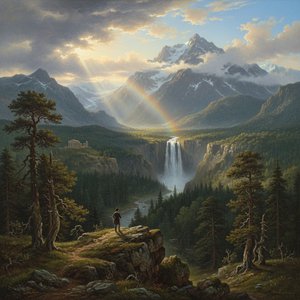
Evoking Nature's Sublime: A Comprehensive Exploration of 19th-Century Landscape Painting
Explore the captivating world of 19th-century landscape painting! Discover renowned artists like Friedrich & Monet, key movements, and find the perfect artwork to bring nature's serenity into your home. Expert insights at OriginalUniqueArt.

William James Müller: Navigating Victorian Sentiment & Realism in British Landscape Painting
Explore the captivating landscapes of William James Müller, the leading artist of the Bristol School. Discover his Victorian masterpieces, Egyptian travels & Lycian sketches – a journey through 19th-century art and technique.

Evocations of Place: A Historical Journey Through Landscape Art
Explore the rich history of landscape art with OriginalUniqueArt. Discover renowned artists, movements like Impressionism & Romanticism, and expert guidance for collecting timeless pieces. Find your perfect serene escape today!

Evocations of Place: A Historical Journey Through Landscape Art
Explore the rich history of landscape art with OriginalUniqueArt. Discover renowned artists, movements like Impressionism & tonalism, and expert guidance for collecting timeless pieces. Find your perfect serene escape today!

Romantiska landskap: Topp 10 mästerverk som definierade en epok – OriginalUniqueArt.se
Utforska de 10 mest ikoniska mästerverken inom romantisk landskapsmålning! Lär känna Caspar David Friedrich, Turner & andra. Hitta inspiration och köp museumkvalitativa konsttryck på OriginalUniqueArt.com.
