

 Visa i rummet
 Skicka
 Dela
Dela
 Detaljer
 Studentguide för konstverk

 Ladda ner
 Liknande objekt
 Röntgen
 Bildspel
 Besökstatistik
Count Jenison-Walworth
 Oil On Canvas
- WallArt
- Neoclassicism
 1837
1837- 19th Century
 131.0 x 98.0 cm
 Neue Pinakothek
 Läs mer
Giclée / Konsttryck
Giclée- eller canvasprint av museumskvalitet med snabb produktion och flexibla ytbehandlingsalternativ. ( Köp handmålat konstverk Byt till digital bildförsäljning)




P118B Skr10

P118H Skr10

P118W Skr10

P438Z Skr10

P508JH Skr12

P508YH Skr12

P805H Skr10

P805Z Skr10

P919BZ Skr10

P919G Skr10

P919XJ Skr10

P959ZH Skr10

P968JZ Skr12

W106C Skr8

W218G Skr10

W218JH Skr8

W218Y Skr10

W307PJ Skr10

W316G Skr10

W316PJ Skr8

W316Y Skr10

W398PJ Skr8

W4111J Skr10

W500HY Skr15

W500JH Skr15

W692G Skr12

W849H Skr8

W940BG Skr15

W953PJ Skr8




Välj bland våra förinställda storlekar som motsvarar konstverkets ursprungliga proportioner.

Ange den bredd och höjd du behöver, för att passa din ram eller din vägg. Ett tryck kan endast beskäras, aldrig göras större än bilden, vilket innebär att ett format med en annan formform leder till att en del av bilden går förlorad. Vi skickar en digital mockup för godkännande innan vi trycker något. Bilden som visas på denna sida visar inte den faktiska beskärningen — det är endast mockuppen som gör det.
Leverans över hela världen () på 2 veckor istället för standard 4/5 veckor. (23 oktober)

Fri expressfrakt över hela världen

Högkvalitativ linnecanvas

Fullständig fraktförsäkring

Garantier för återbetalning av tullavgifter

Garantier för exakt färgåtergivning

100 dagars returrätt vid fabrikationsfel

100% pengarna tillbaka-garanti

Mängdrabatt erbjuds
 Glasalternativet är endast tillgängligt i storlekar under 110 cm.

Count Jenison-Walworth
Giclée / Konsttryck
Reproduktionsstorlek
-


Totalpris
Skr 793
The Aura of Aristocracy: A Glimpse into 19th-Century Grandeur
To stand before Franz Xaver Winterhalter's portrait of Count Jenison-Walworth is to step directly across the threshold of mid-nineteenth-century European high society. This painting is far more than a mere likeness; it is a meticulously constructed tableau of status, wealth, and profound dignity. The subject himself commands attention, positioned with an inherent gravitas that speaks volumes about his station in life. Winterhalter, the master chronicler of royalty and aristocracy, captures not just the man, but the very weight of expectation that accompanied such titles during an era obsessed with visible markers of success. Observe the composition: the slight lean against a stately column anchors him within a believable, yet idealized, architectural space, lending depth and permanence to the scene.
Mastery in Shadow and Silk: Technique and Texture
The technical brilliance displayed here is breathtaking. Winterhalter employed an oil medium with a dedication to detail that borders on the obsessive. Notice how the light, seemingly originating from an unseen source above and to the left, sculpts the contours of his face, highlighting the thoughtful set of his jaw and the richness of his gaze. This masterful use of chiaroscuro allows the dark palette—the deep blacks, rich browns, and muted reds—to achieve a profound sense of dimensionality. Contrast this darkness with the startling purity of the white collar, which acts as a visual breath point for the eye. Furthermore, the textural interplay is exquisite: the smooth, almost liquid quality of the fine coat fabric plays against the palpable plushness suggested by the fur lining, while the background wall offers a subtle, atmospheric recession into warmer tones.
Symbolism of Status and Introspection
The symbolism woven throughout this portrait speaks to the cultural values of its time. The formal attire, particularly the heavy cloak, is an overt declaration of affluence and established lineage. Yet, despite the outward display of power, the subject’s expression suggests a deeper current—a thoughtful introspection beneath the veneer of public duty. This duality is what gives the piece its enduring emotional resonance. It invites the modern viewer to question the nature of status itself: Is it defined by the finery, or by the quiet depth suggested in the eyes? The somber mood evoked by the dark tones lends an air of timeless mystery, making the portrait feel both historical and deeply personal.
A Legacy for the Modern Collector
For those who appreciate the confluence of history, portraiture, and unparalleled craftsmanship, this work remains a pinnacle. Owning or displaying a high-quality reproduction of Count Jenison-Walworth is to curate an atmosphere of cultivated elegance within any space. It serves not merely as decoration, but as a conversation piece—a tangible link to the grand salons and powerful figures of the nineteenth century. The meticulous rendering ensures that even in reproduction, the viewer feels the weight of Winterhalter’s skilled hand, allowing the drama, the dignity, and the sheer artistry of this portrait to permeate your environment.
Frågor och svar
Kan bilden av "Count Jenison-Walworth" av Franz Xaver Winterhalter återges fritt?
Upphovsrättslig status för "Count Jenison-Walworth" av Franz Xaver Winterhalter: verket är allmän egendom – upphovsrätten har löpt ut. Detta avgör om reproduktioner av bilden får framställas fritt.
Hur kan jag köpa ett tryck av "Count Jenison-Walworth" av Franz Xaver Winterhalter?
För att beställa ett tryck av "Count Jenison-Walworth" av Franz Xaver Winterhalter, gå helt enkelt till dess sida för Konsttryck i hög kvalitet: ett konsttryck på bomullscanvas eller arkivbeständigt canvaspapper.
Vad förklarar upphovsrättssituationen för "Count Jenison-Walworth" av Franz Xaver Winterhalter?
"Count Jenison-Walworth" av Franz Xaver Winterhalter är allmän egendom – upphovsrätten har löpt ut. Upphovsrätten beräknas från konstnärens dödsår, och Franz Xaver Winterhalter avled 1873.
Om konstnären
A Painter of Kings and Queens: The Life and Art of Franz Xaver Winterhalter
Born in the secluded Black Forest village of Menzenschwand in 1805, Franz Xaver Winterhalter ascended from humble beginnings to become one of Europe’s most sought-after portraitists. His story is not merely that of an artist achieving technical mastery, but of a man who captured an era – the age of burgeoning Romanticism giving way to Victorian propriety and imperial grandeur. The son of a farmer and resin producer, Winterhalter's early life was steeped in the rhythms of rural Germany, yet his artistic inclinations quickly set him apart. A strong family bond, particularly with his painter brother Hermann, nurtured his creative spirit, while formal training at a Benedictine monastery and later under Karl Ludwig Schüler in Freiburg provided foundational skills in drawing and engraving. This initial grounding proved crucial as he transitioned to Munich, securing support from Baron von Eichtal and eventually studying at the Academy of Arts, though finding its academic rigidity somewhat stifling. It was Joseph Karl Stieler, a master of fashionable portraiture, who truly guided his development during these formative years, instilling in him an understanding of how to present subjects with elegance and appeal.From Karlsruhe to Parisian Heights: Establishing a Royal Reputation
Winterhalter’s breakthrough arrived in 1828 when he became drawing master to Sophie Margravine of Baden at Karlsruhe. This appointment wasn't simply a job; it was an entry point into the intricate world of European royalty. His talent for capturing likeness and imbuing his subjects with an air of elegance quickly gained recognition, leading to commissions from Grand Duke Leopold of Baden and his wife. However, it was Paris that truly cemented Winterhalter’s fame. Arriving in the French capital in the 1830s, he skillfully navigated the artistic landscape, exhibiting genre scenes like *Il dolce Farniente* and *Il Decameron*, which showcased his academic training while hinting at a burgeoning Romantic sensibility. These works garnered critical attention, but it was his portraits that truly captivated the aristocracy. He became a favorite of King Louis-Philippe, executing over thirty commissions for the royal family and establishing himself as the go-to portraitist for those seeking to project an image of power, refinement, and dynastic legitimacy. His ability to blend realism with flattery – to present his sitters at their most idealized while remaining recognizably themselves – proved irresistible. He understood that a portrait was more than just a likeness; it was a carefully constructed statement about the subject’s status and influence.The Victorian Embrace: A Painter of Imperial Majesty
Winterhalter’s reputation extended beyond France, reaching the British Isles and capturing the attention of Queen Victoria. In 1841, he was summoned to England, initiating a prolific relationship that would see him create over one hundred portraits for the Royal Collection. These weren't merely official commissions; they were intimate glimpses into the lives of the royal family, often commissioned as personal gifts. His portrait of Queen Victoria in 1843, a small and exquisitely detailed work, exemplifies his ability to capture not just physical likeness but also a sense of personality and emotion. The painting, gifted by Victoria to Prince Albert, depicts the young queen with a vulnerable intimacy that belies her regal status. This success solidified Winterhalter’s position as *the* portraitist of European royalty, sought after by Empress Eugénie in France, Empress Elisabeth of Austria, and countless other noble figures. He became a master of dynastic image-making, shaping how these powerful families presented themselves to the world. His meticulous attention to detail – from the folds of velvet gowns to the sparkle of jewels – created an aura of wealth, power, and timeless elegance.Style and Legacy: Beyond Likeness
While often criticized by artistic circles for prioritizing flattery over innovation, Winterhalter’s work holds a significant place in art history. His style is characterized by its meticulous detail, luminous color palette, and ability to capture the textures of fabrics and jewels with breathtaking realism. He skillfully blended Romantic sensibilities with Neoclassical precision, creating portraits that were both visually stunning and psychologically insightful. His paintings weren’t simply representations; they were carefully constructed narratives about power, status, and identity. He was a master of light and shadow, using subtle gradations to create a sense of depth and volume. His ability to render the sheen of silk and satin was particularly remarkable, contributing significantly to the luxurious feel of his portraits. Though he wasn't a revolutionary in the same vein as Delacroix or Courbet, his influence was pervasive. He established a standard for royal portraiture that endured for decades, and his works provide invaluable historical documentation of 19th-century European society. His legacy lies not just in the beauty of his paintings but also in their ability to transport us back to an era of opulent courts, intricate diplomacy, and unwavering social hierarchies.A Lasting Impression
Franz Xaver Winterhalter died in Frankfurt in 1873, leaving behind a vast body of work that continues to be celebrated for its technical brilliance and historical significance. His paintings can be found in prominent museums and royal collections around the world, including the National Portrait Gallery in London, the Musée d’Orsay in Paris, and Buckingham Palace.- His ability to capture the essence of his sitters, combined with his mastery of technique, ensured his place as a leading portraitist of his time.
- He remains an important figure for understanding the visual culture of 19th-century Europe and the role of art in shaping perceptions of power and status.
- His works offer a captivating glimpse into the lives of royalty and aristocracy, providing invaluable insights into their world.
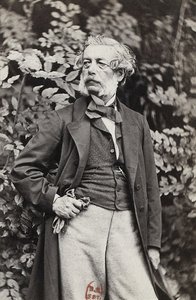
Franz Xaver Winterhalter
1805 - 1873 , Tyskland
Snabbfakta
- Artistic Movement Or Style: Porträttmålare
- Artists Or Movements Influenced By This Artist: ['Romantik']
- Artists Who Influenced This Artist: ['Stieler']
- Date Of Birth: 20 apr 1805
- Date Of Death: 8 jul 1873
- Full Name: Franz Xaver Winterhalter
- Nationality: Tysk
- Notable Artworks:
- Eugenie
- Florinda
- Place Of Birth: Menzschenwand, Tyskland
Relaterade artiklar

The Enduring Power of Painting: A Historical & Contemporary Exploration of Form and Emotion
Explore the rich history & enduring techniques of oil painting with OriginalUniqueArt. Discover masterpieces, learn about art collecting, and find authentic handmade reproductions crafted by skilled artists.

The Timeless Charm of Oil on Board: Reimagining Texture and Light through the Impressionist Lens
Discover the profound intimacy of oil on panel. Explore how Impressionist masters used rigid supports to capture light, texture, and impasto depth through exquisite, handmade oil reproductions for discerning collectors.

The Enduring Legacy of Oil on Canvas: Technique, History & Aesthetic Impact
Explore the rich history & techniques of oil painting – from Renaissance masters to Impressionism. Discover pigments, layering methods, and why this timeless medium endures. Expert insights for artists & art enthusiasts.

Olja på duk: En tidlös teknik – Historik, process och konstnärliga möjligheter
Utforska oljemålningskonsten! Lär dig om flamländsk teknik, materialval och historisk utveckling. Expertguider för både nybörjare och erfarna konstnärer – bevara dina målningar med bästa praxis.

Franz Xaver Winterhalter: Court Painter, Academician & Embodiment of Mid-19th Century Portraiture
Explore the life & art of Franz Xaver Winterhalter, the celebrated court painter of the 19th century. Discover his exquisite portraits of royalty and aristocracy – a symbol of prestige and refined taste.

