

 Visa i rummet
 Skicka
 Dela
Dela
 Detaljer
 Studentguide för konstverk

 Ladda ner
 Liknande objekt
 Röntgen
 Bildspel
 Besökstatistik
Fighting Centaurs


 Läs mer
Giclée / Konsttryck
Giclée- eller canvasprint av museumskvalitet med snabb produktion och flexibla ytbehandlingsalternativ. ( Köp handmålat konstverk Byt till digital bildförsäljning)




































Välj bland våra förinställda storlekar som motsvarar konstverkets ursprungliga proportioner.

Du kan ange egna mått för att passa en specifik ram eller yta. Om det valda måttet inte överensstämmer med originalbildens proportioner kommer vi antingen att beskära konstverket eller utöka bilden med en speglad eller enfärgad kant. En digital mockup skickas för ditt godkännande innan produktionen påbörjas.
Vänligen notera att förhandsvisningen på skärmen inte återspeglar den faktiska beskärningen eller utökningen. Endast mockuppen visar den slutgiltiga kompositionen korrekt.
Även om anpassade storlekar är möjliga, rekommenderar vi att du väljer ett mått från den fördefinierade listan för att bevara de ursprungliga proportionerna.
Leverans över hela världen () på 2 veckor istället för standard 4/5 veckor. (26 september)

Fri expressfrakt över hela världen

Högkvalitativ linnecanvas

Fullständig fraktförsäkring

Garantier för återbetalning av tullavgifter

Garantier för exakt färgåtergivning

100 dagars returrätt vid fabrikationsfel

100% pengarna tillbaka-garanti

Mängdrabatt erbjuds
 Glasalternativet är endast tillgängligt i storlekar under 110 cm.

Fighting Centaurs
Giclée / Konsttryck
Reproduktionsstorlek
-


Totalpris
$ 80
Fighting Centaurs: A Symbolist Masterpiece by Franz von Stuck
Franz Von Stuck's "Fighting Centaurs," created in 1894, stands as a powerful example of Symbolism and Mythology within the late 19th-century art world. Housed at the Stadelsches Kunstinstitut in Frankfurt, Germany, this oil on canvas artwork depicts a fierce battle between two centaurs, showcasing Stuck's exceptional ability to convey intense emotion and dramatic tension through his artistic skill.
Composition and Artistic Technique
The painting’s composition is dynamic and deliberately unbalanced, immediately drawing the viewer into the heart of the conflict. The centaurs are positioned in a circular motion, creating a palpable sense of energy and struggle. Stuck masterfully employs chiaroscuro – the dramatic use of light and shadow – to accentuate the musculature of the figures and heighten the overall emotional impact. His technique blends elements of Realism with fantastical imagery, grounding the mythological subject matter in a tangible physicality. The brushstrokes are loose yet deliberate, contributing to the raw energy and visceral nature of the scene. The use of oil paints on canvas allows for rich textures and subtle gradations of color, further enhancing the painting's depth and complexity.
Symbolism and Interpretation
Beyond its immediate depiction of a battle, "Fighting Centaurs" is laden with symbolic meaning. The centaur itself – a creature embodying both human intellect (the torso) and animal instinct (the horse body) – represents the eternal struggle between reason and primal urges. The violent clash between these two figures can be interpreted as an allegory for internal conflicts, societal tensions, or even the broader battle between opposing forces in the universe. The dark, earthy tones used throughout the painting contribute to a brooding atmosphere, suggesting themes of chaos, power, and perhaps the darker aspects of human nature. Key Features contributing to this symbolism include:
- The dynamic composition emphasizing conflict
- The use of chiaroscuro for dramatic effect
- Intricate textures highlighting physicality
Historical Context and Artistic Influences
Created during the Symbolist movement, "Fighting Centaurs" reflects a broader artistic trend away from purely representational art towards exploring subjective emotions, spiritual themes, and mythological narratives. Stuck was significantly influenced by classical sculpture and Renaissance masters, evident in his attention to anatomical detail and dramatic poses. His work also aligns with the fin de siècle aesthetic—a period characterized by decadence, introspection, and a fascination with the darker aspects of human experience. Stuck's co-founding of the Munich Secession further demonstrates his commitment to artistic innovation and challenging conventional norms.
Emotional Impact and Legacy
"Fighting Centaurs" evokes a powerful emotional response in viewers. The raw energy, intense struggle, and underlying symbolism create a sense of unease and fascination. The painting’s enduring appeal lies in its ability to tap into universal themes of conflict, power, and the human condition. It remains a significant work within Franz von Stuck's oeuvre and a compelling example of Symbolist art, continuing to inspire artists and captivate audiences today.
Om konstnären
A Life Steeped in Myth and Symbol
Franz Ritter von Stuck, a name inextricably linked to the evocative power of German Symbolism, emerged from the verdant landscapes of Bavaria in 1863 – a young man destined for a life far removed from his family’s humble roots as millers. Initially, fate seemed to have charted a course for him as a forester, following in the footsteps of his father. However, an undeniable artistic inclination ignited within him, a burning passion that irrevocably altered his trajectory and propelled him towards Munich, the heart of Bavaria's burgeoning art scene. This early, fervent dedication led him first to the School of Applied Arts in 1878, followed by formal training at the prestigious Academy of Fine Arts from 1882-1884, where he became utterly captivated by Arnold Böcklin’s hauntingly beautiful mythological scenes – a formative influence that would profoundly shape his artistic vision and inform his unique approach to storytelling. Stuck wasn't merely an artist; he was a cultural phenomenon, a “Prince of Art” as he came to be known during his lifetime, skillfully bridging the gap between the established traditions of 19th-century academic art and the exciting, nascent currents of modernism.The Rise of a Symbolist Master
Stuck’s ascent to prominence was remarkably swift and dramatic. His breakthrough arrived in 1889 with *The Guardian of Paradise*, an arresting painting exhibited at the Munich Glass Palace. The artwork immediately captivated critics and audiences alike, earning him a gold medal and establishing him as a major force within the German art world. It wasn’t simply a display of technical prowess; *The Guardian of Paradise* announced a new artistic voice – one that masterfully blended the precision and formality of classical tradition with mythological subject matter and an underlying current of Symbolist mystery, creating a visual language both familiar and profoundly unsettling. He quickly became a central figure in challenging the conservative norms of the time, co-founding the Munich Secession in 1892 alongside like-minded artists who were determined to break free from the constraints of academic art and champion innovative artistic expression. This act of artistic rebellion coincided with his exploration into sculpture, culminating in *Athlete* (1892), a striking bronze figure that demonstrated his remarkable versatility as an artist – showcasing not only technical skill but also a keen understanding of form and movement. However, it was *The Sin* (1893) that truly cemented his reputation as a master of Symbolist painting, captivating audiences with its dramatic intensity, psychological depth, and the palpable sense of moral ambiguity at its core. This period marked the full flowering of Stuck’s unique style – a potent combination of sensuality, classical form, and symbolic resonance, setting him apart from his contemporaries.Themes and Influences: A World of Desire and Myth
The artistic universe of Franz von Stuck is richly layered with recurring motifs that reveal his profound engagement with timeless themes. Mythology served as a constant source of inspiration, drawing upon the narratives of ancient Greece, Rome, and the Bible – stories he reimagined through a distinctly personal lens, imbuing them with his own unique sensibilities and emotional intensity. These weren’t mere retellings; they were explorations of the human condition filtered through the prism of these enduring myths. Equally prominent was his fascination with sensuality and the *femme fatale*, powerfully embodied in his numerous depictions of Salome – a figure representing desire, danger, and moral ambiguity. These paintings weren't simply about physical beauty; they delved into the psychological complexities of female power and its potential for both allure and destruction. Underlying all this was a deep reverence for classical art, evident in his meticulous technique, anatomical accuracy, and compositional rigor. Beyond Arnold Böcklin, Stuck acknowledged influences from the Pre-Raphaelites and Gustave Moreau, but he wasn’t merely an imitator; he synthesized these diverse influences into something uniquely his own, profoundly impacting subsequent generations of artists. His work often felt like a dreamscape, blending reality with fantasy, inviting viewers to contemplate the hidden depths of the human psyche.Major Works and Enduring Significance
Throughout his career, Franz von Stuck produced a vast and varied body of work that continues to fascinate and inspire. Some of his most celebrated pieces include:- The Spring (1886): A vibrant depiction showcasing his early mastery of color and composition, capturing the exuberance of nature with bold brushstrokes and luminous hues.
- Dissonance (1893): An unsettling portrayal embodying emotional turmoil through a woman playing the violin – a poignant exploration of inner conflict and artistic expression.
- Salome (various versions): Perhaps his most iconic work, depicting the biblical story with striking sensuality and psychological depth, exploring themes of desire, betrayal, and the consequences of unchecked ambition.
- Athlete (1892): A powerful bronze sculpture demonstrating his skill in three-dimensional form – a dynamic representation of human strength and athleticism.
- Lucifer (1890): A dramatic depiction of the fallen angel, embodying both power and despair, showcasing Stuck’s ability to convey intense emotion through visual imagery.
Legacy and Influence
Beyond his artistic achievements, Franz von Stuck left a lasting legacy as a teacher and a cultural icon. In 1895, he took on another crucial role – that of instructor at the Munich Academy, where he mentored a generation of young artists, fostering their individual talents and encouraging them to explore new creative horizons. Among those who benefited from his guidance were luminaries such as Paul Klee, Hans Purrmann, and Josef Albers, demonstrating the breadth of his influence. His dedication to art was further recognized in 1905 when he was ennobled, becoming “Ritter von Stuck” – a testament to his growing prestige and contribution to German culture. He continued to receive accolades throughout Europe during the remainder of his life, solidifying his position as one of the leading artists of his time. His Villa Stuck in Munich, now a museum, stands as a lasting monument to his life and work, offering invaluable insights into his artistic vision and the cultural milieu of late 19th and early 20th-century Germany.
Franz von Stuck
1863 - 1928 , Tyskland
Snabbfakta
- Artistic Movement Or Style: Symbolism, Art Nouveau
- Artists Or Movements Influenced By This Artist:
- Klee
- Secession
- Artists Who Influenced This Artist:
- Böcklin
- Pre-Raphaeliter
- Date Of Birth: 23 feb 1863
- Date Of Death: 30 aug 1928
- Full Name: Franz Ritter von Stuck
- Nationality: Tysk
- Notable Artworks:
- The Guardian
- Salome
- The Sin
- Place Of Birth: Tettenweis, Tyskland
Relaterade artiklar
Eugen von Blaas: Capturing Alpine Life & Sentiment in 19th-Century Austrian Painting
Discover the captivating world of Eugen von Blaas! Explore his exquisite 19th-century paintings capturing Venetian life & Alpine beauty. Learn about his Academic Classicism style and find museum-quality reproductions at OriginalUniqueArt.
Hans von Aachen: Mannerism's Courtly Visionary & Imperial Portraiture
Explore the captivating world of Hans von Aachen, a leading Mannerist painter renowned for his exquisite imperial portraits & mythological scenes. Discover his legacy and influence on 16th-century European art.
Echoes of Olympus: Mythological Narratives in Western Art Through the Ages
Explore the captivating history of mythological narratives in Western art! From ancient Greece to modern masterpieces, discover iconic artworks & symbolism. Expert analysis and high-quality reproductions at OriginalUniqueArt.
Timeless Legends: A Curated Guide to the Eternal Allure of Mythological Masterpieces
Embark on a sophisticated journey through the eternal allure of mythological art. Discover how master painters breathe life into ancient legends, from Greek deities to Baroque masterpieces, and learn to curate these timeless narratives within your own exquisite art collection.
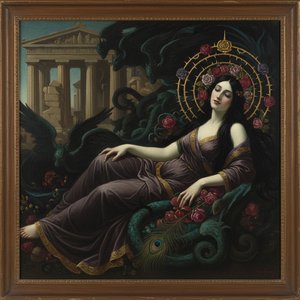
Franz von Stuck: Symbolism, Decadence & the Pursuit of Ideal Beauty
Explore the captivating world of Franz von Stuck, a leading Symbolist painter. Discover his mythological masterpieces, decadent themes, & investment potential. Expert analysis for discerning collectors.