

 Förhandsvisa
 Skicka
 Dela
Dela
 Visa detaljer
 Guide
Guide

 Ladda ner
 Liknande objekt
 Röntgen
 Bildspel
 Statistik
Boy Blowing Bubbles
 Acrylic On Canvas
- WallArt
- Dutch Golden Age
 1663
1663 184.0 x 257.0 cm
 Kunstpalast
 Visa mer
Köp en högupplöst, förbättrad digital bild med betydligt högre kvalitet än förhandsvisningen online.
Varje fil är noggrant förberedd av våra interna specialister med hjälp av avancerade verktyg och professionell manuell retuschering. Vi säkerställer att varje bild har exceptionell skärpa, exakt färgåtergivning och fina detaljer.
Den slutgiltiga filen levereras via e-post inom 72 timmar, optimerad för omedelbar användning i professionella sammanhang, redaktionellt bruk och tryckmiljöer. Detta är samma kvalitet som med förtroende används av ledande designstudior, förlag och gallerier.
Digital bild
Ladda ner en högupplöst fil för personlig visning, utskrift och kreativa projekt. ( Byt till tryck Beställ handmålad reproduktion)
Ingår i varje beställning av digital bild
Professionell digital leverans, garanterad
När du väljer OriginalUniqueArt.com får du inte bara en bild – du får ett professionellt förädlat digitalt konstverk, skapat med precision och med en garanterad tillfredsställelse. Här är allt som ingår i din beställning, automatiskt:

Snabb leverans via e-post
Din högupplösta digitala bild skickas till dig via e-post inom 72 timmar efter beställning – redo för omedelbar användning.

AI-förbättrad digital fil
Ditt konstverk optimeras professionellt med hjälp av avancerade AI-verktyg och manuell redigering, vilket garanterar maximal detaljrikedom, skärpa och färgnoggrannhet.

Fri livstidsåterleverans
Har du råkat radera eller tappa bort din fil? Ingen oro – vi skickar den kostnadsfritt till dig när som helst.

Inga importavgifter – någonsin
Njut av ditt konstverk omedelbart utan tull, importavgifter eller leveranskostnader – digitala nedladdningar är alltid skattefria.

Garanterad färgåtergivning
Vi säkerställer att din digitala bild återger de ursprungliga färgerna så exakt som möjligt med hjälp av professionella verktyg och färghantering.

100 dagars nöjdhetsgaranti
Om du inte är nöjd med din digitala bild kommer vi att revidera den eller återbetala 100% inom 100 dagar – utan frågor.

100% pengarna-tillbaka-garanti
Inte nöjd? Få full återbetalning inom 100 dagar efter att du mottagit din digitala fil – utan frågor.

Rabatt vid storköp
Köp 3 bilder, spara 10% – Köp 5, spara 15% – Köp 10+, spara 20%. Perfekt för kreativa projekt, gallerier och byråer.
A Moment Frozen in Time: Frans van Mieris’ ‘Boy Blowing Bubbles’
Frans van Mieris' “Boy Blowing Bubbles,” painted in 1663, isn’t merely a portrait; it’s a carefully constructed tableau of Dutch Golden Age life, brimming with subtle symbolism and an exquisite attention to detail that defines the artist’s signature style. Housed within the Mauritshuis in The Hague, this captivating scene invites us into a world where innocence dances alongside contemplation, and the ephemeral beauty of childhood is juxtaposed against deeper philosophical questions about mortality and the passage of time.
The ‘Fijnschilder’ Technique: A Masterclass in Illusion
Van Mieris was a leading figure in the “fijnschilder” movement, a group of Dutch painters known for their meticulous realism and mastery of illusionistic techniques. He achieved this through painstaking layering of glazes – incredibly thin washes of paint applied over dry layers – creating an astonishingly lifelike surface that seems to shimmer with depth and texture. Observe the delicate rendering of the boy’s skin, the subtle folds in his clothing, and the way the light catches on the bubbles themselves. Van Mieris didn't simply depict; he constructed a convincing illusion of reality, employing techniques borrowed from both painting and drawing – a testament to his rigorous training under Gerrit Dou.
Symbolism Woven into the Scene: A Tapestry of Meaning
The composition is rich with layered symbolism, reflecting the intellectual currents of 17th-century Holland. The boy, seemingly lost in a simple pleasure – blowing bubbles – represents fleeting joy and innocence. However, the artist subtly introduces an undercurrent of melancholy. The woman behind him, dressed in luxurious fabrics, holds a baby, suggesting motherhood and domesticity, yet her gaze is distant, hinting at the burdens of responsibility. The dog, a symbol of loyalty, stands attentively beside her, perhaps representing steadfastness amidst uncertainty. Even the objects within the room – the vases overflowing with flowers, the clock measuring the relentless march of time, and the window offering a glimpse to an unseen world – contribute to this complex web of meaning.
Contextualizing the Image: The ‘Paragone’ and the Illusion of Space
“Boy Blowing Bubbles” exists within the broader context of the “paragone,” a heated debate in 17th-century Europe concerning the relative merits of painting versus sculpture. Van Mieris, through his masterful manipulation of perspective and texture, powerfully demonstrated painting’s ability to create convincing illusions of space and depth – a skill that directly challenged the perceived superiority of three-dimensional sculpture. The window itself serves as a visual metaphor for this illusionistic prowess, inviting the viewer to step into the scene and contemplate its intricacies. The artist deliberately employs techniques reminiscent of Renaissance perspective, elevating painting’s status within the artistic hierarchy.
Beyond its technical brilliance and symbolic depth, “Boy Blowing Bubbles” evokes a profound sense of nostalgia for a bygone era – a poignant reminder of childhood's fleeting beauty and the inevitable passage of time. It is a work that continues to resonate with viewers today, offering a glimpse into the complexities of human experience and the enduring power of art to capture a single, unforgettable moment.
- Artist: Frans van Mieris the Elder
- Date: 1663
- Location: Mauritshuis, The Hague
- Medium: Oil on Panel
Learn more about the artwork at the Mauritshuis
Frågor och svar
När och med vilka material skapades "Boy Blowing Bubbles"?
"Boy Blowing Bubbles" skapades år 1663 med tekniken Acrylic On Canvas. Material och datum beskriver hur och när originalet tillverkades.
Finns det ett faktablad om "Boy Blowing Bubbles" av Frans van Mieris för studenter?
Guiden till "Boy Blowing Bubbles" är konstverkets Faktablad för elever-sida – ett utskrivbart faktablad som visar konstverket tillsammans med dess bildtext, källhänvisning och identitetstabell (konstnär, datum, medium, originalstorlek, samling).
Är "Boy Blowing Bubbles" av Frans van Mieris ett porträtt, landskap eller en kvadratisk komposition?
"Boy Blowing Bubbles" av Frans van Mieris har ett Portrait-format. Formatet beskriver kompositionens proportioner.
Konstnärsbiografi
Ett liv försänkt i detaljer: Frans van Mieris den äldres värld
Frans van Mieris den äldre, ett namn synonymt med minutiös detaljrikedom och förfinat konstnärskap, intar en betydelsefull position inom den nederländska guldåldern. Han föddes i Leiden 1635, och hans livsväg kom att avvika från familjens tradition av guldsmedshantverk – ett yrke som utövades av hans far, Jan Bastiaensz van Mieris – mot måleriets fängslande värld. Denna tidiga fallenhet för teckning lade grunden för en karriär som skulle komma att definiera ”fijnschilder”-stilen och erbjuda en intim blick in i 1600-talets nederländska samhälle. Hans första utbildning under Abraham Toorenvliet, följd av avgörande undervisning från den högt aktade Gerrit Dou, skapade en solid grund varpå han kunde bygga sin särpräglade konstnärliga röst. Dessa formativa år gav honom inte bara teknisk skicklighet utan också en djup uppskattning för berättelsens nyanser och kraften i den subtila observationen.Framväxten av en ”fijnschilder”
Van Mieris blev snabbt hyllad som en mästare av fijnschilder – en nederländsk term som betecknar ”finmåleri”. Denna teknik kännetecknades av en nästan besatt uppmärksamhet på detaljer, ett slätt och polerat penseldrag samt en preferens för mindre dukar. Det handlade inte enbart om att återge verkligheten; det handlade om att förhöja den genom en mödosam precision. Ytorna i hans målningar tycks skimra av liv – den glänsande lystern i satin, sammetens delikata textur, metallens glimt – allt framställt med en häpnadsväckande noggrannhet. Han målade inte bara ett rum; han återskapade själva atmosfären i det och bjöd in betraktaren till scener av hemtrevnad och välstånd. Hans motiv kretsade ofta kring de förmögna klassernas liv: eleganta sammankomster, påkostade interiörer och porträtt som fångade inte bara ett utseende utan även en karaktär. Återkommande motiv som ostronluncher, läkare som vårdar patienter och kvinnor upptagna med vardagliga sysslor fungerade som fönster mot de övre klassernas vanor och sociala ritualer. Även om han initialt var starkt influerad av Gerrit Dous stil, utvecklade Van Mieris gradvis sitt eget unika tillvägagångssätt. Han rörde sig bort från en överflöd av detaljer mot en större betoning på interaktionen mellan figurerna och de berättelser som utspelade sig inom hans kompositioner. Senare verk uppvisar ibland mörkare tonala kvaliteter jämfört med de ljusare paletterna i hans tidigare målningar, vilket speglar en växande mognad och konstnärlig utforskning.Betydande verk och ett bestående arv
Flera nyckelverk står som vittnesbörd om Van Mieris skicklighet och föränderliga stil. Doctor's Visit (1657), som betraktas som ett av hans tidigaste daterade och viktigaste verk, visar på hans framväxande självständighet från Dous inflytande. Målningen är en mästerklass i att fånga den tysta spänningen under en medicinsk undersökning, utförd med en häpnadsväckande realism. Hans Självporträtt med en cittern är lika fängsande och demonstrerar hans förmåga att avbilda påkostade kläder samtidigt som han förmedlar en känsla av personlighet och introspektion. Porträtt av konstnärens hustru, Cunera van der Cock, exemplifierar hans mästerskap inom porträttkonsten genom att lyfta fram både teknisk skicklighet och en förståelse för chiaroscuro – det dramatiska samspelet mellan ljus och skugga. Utöver genremålningar och porträtt vågade Van Mieris även ge sig in i allegoriska målningar, såsom de som skildrar laster som dryckenskap, rökning och spel, vilket demonstrerade bredden i hans konstnärliga förmågor. Inflytandet från Frans van Mieris sträckte sig långt bortom hans egen livstid. Hans inflytande resonerade inom hans egen familj; hans son Willem van Mieris (1662–1747) och sonson Frans van Mieris den yngre (1689–1763) blev båda framstående genremålare som förde den konstnärliga traditionen vidare. Hans stils popularitet födde även många efterföljare, mest märkbart A. D. Snaphaan, som verkade i Leipzig och åtnjöt beskydd från hovet i Anhalt-Dessau.Ett bestående bidrag till den nederländska konsten
Frans van Mieris spelade en avgörande roll i formandet av fijnschilder-rörelsen inom det nederländska guldåldersmåleriet. Hans hängivenhet till minutiösa detaljer, de realistiska skildringarna av vardagslivet och överklassens samhälle, samt hans tekniska briljans, bidrog signifikant till en era som redan var känd för sin konstnärliga innovation. Han åtnjöt beskydd av framstående gestalter, däribland ärkehertig Leopold och Cosimo III de' Medici, vilket är ett bevis på den internationella erkänslan av hans talang. Även idag fortsätter hans verk att fängsla publiken med sitt utsökta hantverk och sin insiktsfulla skildring av 1600-talets kultur. Stölden av ett självporträtt från Art Gallery of New South Wales i Sydney fungerar som en gripande påminnelse om hans konsts bestående värde och lockelse – ett arv som fortsätter att inspirera och fascinera samlare och konstälskare lika mycket. Hans målningar är inte bara historiska artefakter; de är fönster mot en svunnen era, minutiöst skapade och genomströmmade av en tidlös skönhet.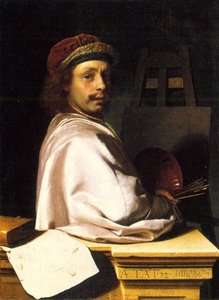
Frans van Mieris
1635 - 1681 , Nederländerna
Kort om konstnären
- Artistic Movement Or Style: Fijnschilder
- Artists Or Movements Influenced By This Artist: ['Gerrit Dou']
- Artists Who Influenced This Artist: ['Gerrit Dou']
- Date Of Birth: Leiden, 1635
- Date Of Death: Leiden, 1681
- Full Name: Frans Jansz. van Mieris
- Nationality: Nederländska
- Notable Artworks:
- Doktorbesök
- Porträtt av konstnären själv
- Place Of Birth: Nederländerna