

 Förhandsvisa
 Skicka
 Dela
Dela
 Visa detaljer
 Guide
Guide

 Ladda ner
 Liknande objekt
 Röntgen
 Bildspel
 Statistik
Boy Blowing Bubbles
 Oil On Panel
- Dutch Golden Age
 1663
1663 26.0 x 19.0 cm
 Mauritshuis
 Visa mer
Giclée / Konsttryck
Giclée- eller canvasprint av museumskvalitet med snabb produktion och flexibla ytbehandlingsalternativ. ( Beställ handmålad reproduktion Byt till digital bild)




P118B Skr10

P118H Skr10

P118W Skr10

P438Z Skr10

P508JH Skr12

P508YH Skr12

P805H Skr10

P805Z Skr10

P919BZ Skr10

P919G Skr10

P919XJ Skr10

P959ZH Skr10

P968JZ Skr12

W106C Skr8

W218G Skr10

W218JH Skr8

W218Y Skr10

W307PJ Skr10

W316G Skr10

W316PJ Skr8

W316Y Skr10

W398PJ Skr8

W4111J Skr10

W500HY Skr15

W500JH Skr15

W692G Skr12

W849H Skr8

W940BG Skr15

W953PJ Skr8




Välj bland våra förinställda storlekar som motsvarar konstverkets ursprungliga proportioner.

Ange den bredd och höjd du behöver för att passa din ram eller vägg. Ett tryck kan endast beskäras, aldrig göras större än originalbilden, vilket innebär att ett format med en annan proportion leder till att en del av bilden går förlorad. Vi skickar en digital mockup för godkännande innan vi påbörjar tryckningen. Bilden som visas på denna sida visar inte den faktiska beskärningen — det är endast mockuppen som gör det.
Leverans över hela världen () på 2 veckor istället för standard 4/5 veckor. (26 oktober)

Fri expressfrakt över hela världen

Högkvalitativ linnecanvas

Fullständig fraktförsäkring

Garantier för återbetalning av tullavgifter

Garantier för exakt färgåtergivning

100 dagars returrätt (endast vid fel)

100% pengarna tillbaka-garanti

Mängdrabatt erbjuds
 Glasalternativet är endast tillgängligt i storlekar under 110 cm.

Boy Blowing Bubbles
Giclée / Konsttryck
Storlek på reproduktion
-


Slutgiltigt pris
Skr 793
The Enigmatic Charm of Frans van Mieris’ “Boy Blowing Bubbles”
Frans van Mieris the Elder's "Boy Blowing Bubbles," painted in 1663, isn’t merely a charming depiction of childhood; it’s a meticulously crafted window into the heart of the Dutch Golden Age. This oil on panel painting, now residing within the hallowed halls of the Mauritshuis museum in The Hague, transcends simple portraiture to become a profound meditation on transience, innocence, and the subtle beauty found within everyday life. Van Mieris, a master of the *fijnschilder* style – renowned for its exquisite detail and nuanced observation – has created an image that continues to captivate viewers centuries after its creation.
The painting immediately draws the eye to the central figure: a young boy lost in the simple pleasure of blowing bubbles. His posture, his focused gaze, and the delicate spheres floating around him evoke a sense of pure joy and unburdened innocence. Yet, beneath this apparent lightness lies a carefully constructed symbolism. The artist’s genius lies not just in capturing a fleeting moment but in imbuing it with layers of meaning rooted in the artistic conventions of his time.
A Window into Dutch Society: Context and Style
To fully appreciate “Boy Blowing Bubbles,” one must understand the context within which it was created. The Dutch Golden Age, spanning roughly from the mid-16th to the early 18th centuries, witnessed an unprecedented flourishing of art, commerce, and intellectual life. Artists like Van Mieris were tasked with documenting this era, capturing not only the grandeur of courtly life but also the quiet rhythms of domestic existence. Van Mieris’s style exemplifies this commitment to realism, yet it's elevated by a remarkable sensitivity to light, color, and texture – hallmarks of the *fijnschilder* movement.
The painting’s composition is deliberately balanced, drawing attention to the intricate details within the background. The ornate window frame, adorned with flowers, a birdcage, and a vase, serves as a miniature landscape in itself, reflecting the wealth and sophistication of the era. Notice how Van Mieris masterfully uses light to create depth and dimension, casting soft shadows that enhance the realism of the scene. The subtle variations in color – from the earthy tones of the furniture to the vibrant hues of the flowers – contribute to the painting’s overall harmony.
Symbolism and the Language of Vanitas
“Boy Blowing Bubbles” is deeply intertwined with the concept of *vanitas*, a prevalent theme in Dutch Golden Age art. *Vanitas* paintings served as reminders of mortality, urging viewers to contemplate the fleeting nature of earthly pleasures and possessions. The bubbles themselves are potent symbols of this transience – beautiful, ephemeral, and destined to disappear. The broken pot in the background further reinforces this idea, representing decay and loss.
However, Van Mieris doesn’t present a purely pessimistic view. The boy's joy is palpable, suggesting that even amidst the awareness of mortality, there is value in embracing the simple pleasures of life. The painting can be interpreted as a celebration of youth, innocence, and the beauty of fleeting moments – a poignant reminder to cherish the present.
A Timeless Masterpiece: Reproduction and Legacy
“Boy Blowing Bubbles” has resonated with audiences for centuries, inspiring countless reproductions and interpretations. Its enduring appeal lies in its ability to evoke a sense of nostalgia, wonder, and quiet contemplation. Today, high-quality reproductions capture the painting’s exquisite detail and luminous quality, allowing art lovers to bring this masterpiece into their homes or offices.
Whether displayed as a statement piece in a contemporary interior or studied for its historical significance, “Boy Blowing Bubbles” remains a testament to Frans van Mieris's artistic genius and a captivating window into the soul of the Dutch Golden Age. Its delicate beauty and profound symbolism continue to inspire and delight viewers around the world.
Frågor och svar
Vilket motiv och vilken atmosfär förenar "Boy Blowing Bubbles" av Frans van Mieris?
"Boy Blowing Bubbles" av Frans van Mieris förenar bubbles, childhood, dutch art, leisure, transience, window, detail med en Calm atmosfär.
Hur förhåller sig "Boy Blowing Bubbles" till Frans van Mieriss samlade konstnärskap?
Inom Frans van Mieriss produktion är "Boy Blowing Bubbles" skapad i Dutch Golden Age-stil, med de återkommande temana vanitas, dutch golden age, symbolism, moral reflection, genre scene, everyday life, millais, childhood innocence.
Var kan jag hitta en guide till "Boy Blowing Bubbles"?
Sidan Faktablad för elever för "Boy Blowing Bubbles" av Frans van Mieris erbjuder ett utskrivbart faktablad på två sidor: konstverket med sin identitetstabell, en tidslinje som placerar det i konstnärens livstid, andra verk av konstnären, den mätta färgpaletten samt färdiga citatmallar i fyra olika stilar.
Konstnärsbiografi
Ett liv försänkt i detaljer: Frans van Mieris den äldres värld
Frans van Mieris den äldre, ett namn synonymt med minutiös detaljrikedom och förfinat konstnärskap, intar en betydelsefull position inom den nederländska guldåldern. Han föddes i Leiden 1635, och hans livsväg kom att avvika från familjens tradition av guldsmedshantverk – ett yrke som utövades av hans far, Jan Bastiaensz van Mieris – mot måleriets fängslande värld. Denna tidiga fallenhet för teckning lade grunden för en karriär som skulle komma att definiera ”fijnschilder”-stilen och erbjuda en intim blick in i 1600-talets nederländska samhälle. Hans första utbildning under Abraham Toorenvliet, följd av avgörande undervisning från den högt aktade Gerrit Dou, skapade en solid grund varpå han kunde bygga sin särpräglade konstnärliga röst. Dessa formativa år gav honom inte bara teknisk skicklighet utan också en djup uppskattning för berättelsens nyanser och kraften i den subtila observationen.Framväxten av en ”fijnschilder”
Van Mieris blev snabbt hyllad som en mästare av fijnschilder – en nederländsk term som betecknar ”finmåleri”. Denna teknik kännetecknades av en nästan besatt uppmärksamhet på detaljer, ett slätt och polerat penseldrag samt en preferens för mindre dukar. Det handlade inte enbart om att återge verkligheten; det handlade om att förhöja den genom en mödosam precision. Ytorna i hans målningar tycks skimra av liv – den glänsande lystern i satin, sammetens delikata textur, metallens glimt – allt framställt med en häpnadsväckande noggrannhet. Han målade inte bara ett rum; han återskapade själva atmosfären i det och bjöd in betraktaren till scener av hemtrevnad och välstånd. Hans motiv kretsade ofta kring de förmögna klassernas liv: eleganta sammankomster, påkostade interiörer och porträtt som fångade inte bara ett utseende utan även en karaktär. Återkommande motiv som ostronluncher, läkare som vårdar patienter och kvinnor upptagna med vardagliga sysslor fungerade som fönster mot de övre klassernas vanor och sociala ritualer. Även om han initialt var starkt influerad av Gerrit Dous stil, utvecklade Van Mieris gradvis sitt eget unika tillvägagångssätt. Han rörde sig bort från en överflöd av detaljer mot en större betoning på interaktionen mellan figurerna och de berättelser som utspelade sig inom hans kompositioner. Senare verk uppvisar ibland mörkare tonala kvaliteter jämfört med de ljusare paletterna i hans tidigare målningar, vilket speglar en växande mognad och konstnärlig utforskning.Betydande verk och ett bestående arv
Flera nyckelverk står som vittnesbörd om Van Mieris skicklighet och föränderliga stil. Doctor's Visit (1657), som betraktas som ett av hans tidigaste daterade och viktigaste verk, visar på hans framväxande självständighet från Dous inflytande. Målningen är en mästerklass i att fånga den tysta spänningen under en medicinsk undersökning, utförd med en häpnadsväckande realism. Hans Självporträtt med en cittern är lika fängsande och demonstrerar hans förmåga att avbilda påkostade kläder samtidigt som han förmedlar en känsla av personlighet och introspektion. Porträtt av konstnärens hustru, Cunera van der Cock, exemplifierar hans mästerskap inom porträttkonsten genom att lyfta fram både teknisk skicklighet och en förståelse för chiaroscuro – det dramatiska samspelet mellan ljus och skugga. Utöver genremålningar och porträtt vågade Van Mieris även ge sig in i allegoriska målningar, såsom de som skildrar laster som dryckenskap, rökning och spel, vilket demonstrerade bredden i hans konstnärliga förmågor. Inflytandet från Frans van Mieris sträckte sig långt bortom hans egen livstid. Hans inflytande resonerade inom hans egen familj; hans son Willem van Mieris (1662–1747) och sonson Frans van Mieris den yngre (1689–1763) blev båda framstående genremålare som förde den konstnärliga traditionen vidare. Hans stils popularitet födde även många efterföljare, mest märkbart A. D. Snaphaan, som verkade i Leipzig och åtnjöt beskydd från hovet i Anhalt-Dessau.Ett bestående bidrag till den nederländska konsten
Frans van Mieris spelade en avgörande roll i formandet av fijnschilder-rörelsen inom det nederländska guldåldersmåleriet. Hans hängivenhet till minutiösa detaljer, de realistiska skildringarna av vardagslivet och överklassens samhälle, samt hans tekniska briljans, bidrog signifikant till en era som redan var känd för sin konstnärliga innovation. Han åtnjöt beskydd av framstående gestalter, däribland ärkehertig Leopold och Cosimo III de' Medici, vilket är ett bevis på den internationella erkänslan av hans talang. Även idag fortsätter hans verk att fängsla publiken med sitt utsökta hantverk och sin insiktsfulla skildring av 1600-talets kultur. Stölden av ett självporträtt från Art Gallery of New South Wales i Sydney fungerar som en gripande påminnelse om hans konsts bestående värde och lockelse – ett arv som fortsätter att inspirera och fascinera samlare och konstälskare lika mycket. Hans målningar är inte bara historiska artefakter; de är fönster mot en svunnen era, minutiöst skapade och genomströmmade av en tidlös skönhet.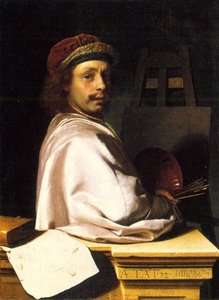
Frans van Mieris
1635 - 1681 , Nederländerna
Kortfakta
- Artistic Movement Or Style: Fijnschilder
- Artists Or Movements Influenced By This Artist: ['Gerrit Dou']
- Artists Who Influenced This Artist: ['Gerrit Dou']
- Date Of Birth: Leiden, 1635
- Date Of Death: Leiden, 1681
- Full Name: Frans Jansz. van Mieris
- Nationality: Nederländska
- Notable Artworks:
- Doktorbesök
- Porträtt av konstnären själv
- Place Of Birth: Nederländerna
Relaterade artiklar

Rembrandts 25 Mästerverk: En Konsthistorisk Resa för Hemmet
Utforska Rembrandts 25 mest ikoniska målningar! Lär känna historien bakom mästerverken, hans unika teknik och barockens ljusspel. Köp exklusiva konsttryck & tavlor online på OriginalUniqueArt.com – för en tidlös inredning.

Illuminating Innovation: Exploring the Dutch Golden Age of Painting
Explore the Dutch Golden Age of painting with OriginalUniqueArt. Discover Rembrandt, Vermeer & other Masters. Learn about key characteristics, iconic artworks, and lasting influence. Expert insights for collectors & enthusiasts.

Mastering Light & Shadow: A Journey Through the Dutch Golden Age's Luminous Legacy
Embark on a cultural journey through the Dutch Golden Age. Explore the masterful interplay of light and shadow in 17th-century masterpieces, from Rembrandt to Vermeer, and discover how this era of profound realism continues to inspire fine art collectors today.

Nederländsk Guldålder: Topp 10 mästerverk som definierade epoken – konst & heminredning
Utforska de 10 ikoniska mästerverken från den nederländska guldåldern! Lär känna Rembrandt, Vermeer och Hals – deras teknik & berättelser. Hitta konsttryck och inspiration för din heminredning på OriginalUniqueArt.com. Upptäck hela samlingen online!

Golden Light & Dutch Skies: The Timeless Magic of Dutch Golden Age Landscapes
Discover the breathtaking beauty of Dutch Golden Age landscapes. Explore the mastery of light, chiaroscuro, and 17th-century realism through an expert art history lens, celebrating the enduring legacy of the Dutch Masters for discerning collectors and art lovers.
