Visa i rummet
 Skicka
 Dela
Dela
 Detaljer
 Studentguide för konstverk

 Ladda ner
 Liknande objekt
 Röntgen
 Bildspel
 Besökstatistik
Stephanus Geraerdts
 Oil On Canvas
- WallArt
- Dutch Golden Age Portraiture
 1650
1650- Early Modern
 115.0 x 87.0 cm
 Koninklijk Museum voor Schone Kunsten
 Läs mer
Giclée / Konsttryck
Giclée- eller canvasprint av museumskvalitet med snabb produktion och flexibla ytbehandlingsalternativ. ( Köp handmålat konstverk Byt till digital bildförsäljning)




P118B Skr10

P118H Skr10

P118W Skr10

P438Z Skr10

P508JH Skr12

P508YH Skr12

P805H Skr10

P805Z Skr10

P919BZ Skr10

P919G Skr10

P919XJ Skr10

P959ZH Skr10

P968JZ Skr12

W106C Skr8

W218G Skr10

W218JH Skr8

W218Y Skr10

W307PJ Skr10

W316G Skr10

W316PJ Skr8

W316Y Skr10

W398PJ Skr8

W4111J Skr10

W500HY Skr15

W500JH Skr15

W692G Skr12

W849H Skr8

W940BG Skr15

W953PJ Skr8




Välj bland våra förinställda storlekar som motsvarar konstverkets ursprungliga proportioner.

Ange den bredd och höjd du behöver, för att passa din ram eller din vägg. Ett tryck kan endast beskäras, aldrig göras större än bilden, vilket innebär att ett format med en annan formform leder till att en del av bilden går förlorad. Vi skickar en digital mockup för godkännande innan vi trycker något. Bilden som visas på denna sida visar inte den faktiska beskärningen — det är endast mockuppen som gör det.
Leverans över hela världen () på 2 veckor istället för standard 4/5 veckor. (23 oktober)

Fri expressfrakt över hela världen

Högkvalitativ linnecanvas

Fullständig fraktförsäkring

Garantier för återbetalning av tullavgifter

Garantier för exakt färgåtergivning

100 dagars returrätt vid fabrikationsfel

100% pengarna tillbaka-garanti

Mängdrabatt erbjuds
 Glasalternativet är endast tillgängligt i storlekar under 110 cm.

Stephanus Geraerdts
Giclée / Konsttryck
Reproduktionsstorlek
-


Totalpris
Skr 793
A Glimpse into the Dutch Golden Age Portraiture
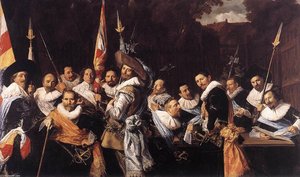
To stand before a portrait such as Stephanus Geraerdts is to step directly across the threshold of the 17th century, into the vibrant, complex world of the Dutch Golden Age. This painting, executed around 1650, is far more than a mere likeness; it is a carefully constructed tableau vivant, capturing not just the man himself, but the very atmosphere of his time—an era marked by burgeoning mercantile wealth, intellectual curiosity, and profound social ritual.
The subject, Stephanus Geraerdts, commands attention with an air of distinguished composure. His attire, particularly the crisp white shirt with its delicate ruffles, speaks to a certain level of bourgeois refinement. Yet, it is his gaze—direct, engaging, and seemingly knowing—that truly connects him across the centuries. He seems caught in a moment of quiet contemplation, perhaps pausing mid-conversation, allowing the viewer an intimate, almost conspiratorial look into his soul.
Mastery of Brushwork and Dramatic Composition
The technical brilliance evident in this work is breathtaking. While Frans Hals I, the presumed hand behind this masterpiece, was celebrated for his spontaneous energy, here we see that characteristic looseness applied with remarkable control. The brushstrokes do not merely describe form; they imbue it with life itself. Observe how the dark background serves to push the figures forward, creating an immediate sense of depth and drama. This dramatic chiaroscuro effect focuses all emotional weight onto the faces and gestures in the foreground.
The inclusion of secondary elements—the clock hanging above, perhaps symbolizing the relentless march of time, and the enigmatic object held in his hand, be it a skull or an ornate piece of jewelry—adds layers of narrative complexity. These props invite scholarly speculation, prompting us to question the man's status, his preoccupations, and the philosophical undercurrents that permeated daily life.
Symbolism and Social Context
The portrait functions as a rich tapestry of symbolism common to Dutch genre painting. The presence of other figures flanking Geraerdts suggests a social gathering or an important commission, grounding the individual within his community structure. In this era, portraits were statements of identity, wealth, and virtue. The juxtaposition of the living man against symbols of mortality (if the object is indeed a skull) speaks to the pervasive *memento mori* theme—a constant reminder of life's fleeting nature set against the backdrop of earthly success.
For the modern collector or designer, this piece offers an unparalleled opportunity to integrate historical gravitas into contemporary décor. It whispers tales of Dutch merchant culture and artistic zenith, lending any space a patina of cultivated history and intellectual depth.
An Emotional Resonance for the Modern Home
Owning a reproduction of Stephanus Geraerdts is not simply acquiring art; it is curating an atmosphere. The emotional impact of this painting lies in its masterful balance: the formality required by portraiture meeting the raw, spontaneous energy captured by Hals’s technique. It possesses a quiet power—a sense of enduring presence that elevates any room from merely decorated to truly inhabited with character and narrative weight. It is a conversation starter, an object that demands contemplation, inviting every passerby to pause and wonder about the life lived within its painted frame.
Frågor och svar
Vilka är måtten på originalet av "Stephanus Geraerdts" av Frans Hals I?
Originalet av "Stephanus Geraerdts" av Frans Hals I mäter 115 x 87 cm.
Vilket stämningsläge uttrycker "Stephanus Geraerdts" av Frans Hals I inom Dutch Golden Age Portraiture?
Inom Dutch Golden Age Portraiture-rörelsen är "Stephanus Geraerdts" nedtecknad med en Reflective ton.
Vilken färgpalett används i "Stephanus Geraerdts" av Frans Hals I?
Färgerna i "Stephanus Geraerdts" utgör en Earthy palett. Denna klassificering beskriver de dominerande färggrupperna.
Om konstnären
Frans Hals I: A Life in Paint
Frans Hals I was a Dutch painter born in Antwerp, Belgium, around 1580. Though his early life remains somewhat shrouded in mystery, he rose to become one of the most important figures of the Dutch Golden Age, celebrated for his innovative portraiture and genre scenes. His artistic legacy continues to inspire artists today.Early Life and Training
Details surrounding Hals’s formative years are scarce. It is believed he received initial artistic training in Antwerp, a prominent center for painting at the time – a place brimming with artistic ambition and experimentation. However, due to religious and political upheaval, his family relocated to Haarlem in the Netherlands. He became a member of the Haarlem Guild of St. Luke in 1610, marking the formal beginning of his professional career and solidifying his position within the influential artistic community of Haarlem.Artistic Style and Development
Hals distinguished himself through a remarkably fresh and spontaneous style. Unlike many of his contemporaries who favored meticulous detail, Hals employed a loose and expressive brushstroke. This technique imbued his paintings with a sense of immediacy and vitality, capturing the personality and character of his subjects in a way that was revolutionary for its time. He wasn’t merely recreating appearances; he sought to convey emotion and spirit. His portraits weren't simply likenesses; they were psychological studies—a daring departure from traditional artistic conventions. Hals excelled at depicting fleeting moments – laughter, conversation, or contemplation – as if frozen in time. Furthermore, his masterful use of light and shadow added depth and drama to his compositions, creating an atmosphere that drew viewers into the scene.Notable Works
While Hals produced a wide range of works, he is best known for his portraits. Some of his most celebrated paintings include:- The Laughing Cavalier (1624) – This iconic masterpiece exemplifies Hals’s ability to capture character and movement with breathtaking realism. The subject's joyous expression embodies the spirit of the era, showcasing Hals’s unparalleled skill in portraying human emotion.
- Malle Babbe (c. 1633-1635) – A striking portrayal of an elderly woman, Malle Babbe, exemplifies Hals’s profound understanding of age and personality. The painting captures the subtle nuances of expression and gesture, revealing a remarkable sensitivity to human experience.
- Portraits of the Regents of the Old Men's Home in Haarlem (1664) – Demonstrating his mastery of group portraiture, Hals skillfully captured the dignity and camaraderie of these distinguished figures. The composition is dynamic and engaging, reflecting Hals’s innovative approach to depicting multiple subjects simultaneously.
Influences and Legacy
Determining Hals’s direct influences is challenging, as he developed a highly individual style. However, it’s likely he was aware of the work of earlier Flemish painters like Pieter Bruegel the Elder – artists who similarly embraced realism and dramatic storytelling. His innovative approach to portraiture profoundly impacted subsequent generations of artists. Hals influenced figures such as Adriaen Brouwer and Johannes Vermeer, fostering a tradition of expressive brushwork and psychological insight. He championed a style that prioritized capturing emotion over mere representation, paving the way for Impressionist painters who sought to convey atmosphere and feeling. His legacy endures in museums across Europe and beyond, ensuring that Hals’s groundbreaking vision continues to inspire admiration and study.
Frans Hals I
1580 - 1585 , Belgien
Snabbfakta
- Artistic Movement Or Style: Dutch Gouda Åldern
- Artists Or Movements Influenced By This Artist:
- Adriaen Brouwer
- Johannes Vermeer
- Artists Who Influenced This Artist: ['Pieter Bruegel den Äldre']
- Date Of Birth: c. 1580
- Full Name: Frans Hals I
- Nationality: Nederländska
- Notable Artworks:
- Leende Riddaren
- En äldre man med en rik sammetsmössa
- Place Of Birth: Antwerp, Belgien
Relaterade artiklar

Illuminating Innovation: Exploring the Dutch Golden Age of Painting
Explore the Dutch Golden Age of painting with OriginalUniqueArt. Discover Rembrandt, Vermeer & other Masters. Learn about key characteristics, iconic artworks, and lasting influence. Expert insights for collectors & enthusiasts.

Golden Age Reflections: Dutch Baroque Painting & Cultural Innovation
Explore the Dutch Golden Age of painting! Discover key artists like Vermeer & ter Borch, their innovative techniques, and the rich cultural context behind these Baroque masterpieces. Learn about collecting & appreciating this iconic art period.

Frans Hals I: Innovation, Intimacy & the Dutch Golden Age Portrait
Explore the revolutionary portraiture of Frans Hals I, a master of the Dutch Golden Age. Discover his innovative techniques, captivating character studies & lasting impact on art history. Learn more at OriginalUniqueArt.

Nederländsk Guldålder: Topp 10 mästerverk som definierade epoken – konst & heminredning
Utforska de 10 ikoniska mästerverken från den nederländska guldåldern! Lär känna Rembrandt, Vermeer och Hals – deras teknik & berättelser. Hitta konsttryck och inspiration för din heminredning på OriginalUniqueArt.com. Upptäck hela samlingen online!

Golden Light & Dutch Skies: The Timeless Magic of Dutch Golden Age Landscapes
Discover the breathtaking beauty of Dutch Golden Age landscapes. Explore the mastery of light, chiaroscuro, and 17th-century realism through an expert art history lens, celebrating the enduring legacy of the Dutch Masters for discerning collectors and art lovers.