Förhandsvisa
 Skicka
 Dela
Dela
 Visa detaljer

 Ladda ner
 Liknande objekt
 Röntgen
 Bildspel
Lucas de Clercq
 Oil
Oil- WallArt
- Dutch Golden Age Portraiture
 1635
1635- Early Modern
 126.0 x 93.0 cm
 Rijksmuseum
 Visa mer
Handgjord oljereproduktion
Handmålad olja på duk i din valda storlek och ram, tillverkad efter beställning av våra konstnärer. ( Beställ tryck Köp högupplöst bild)




P118B $10

P118H $10

P118W $10

P438Z $10

P508JH $12

P508YH $12

P805H $10

P805Z $10

P919BZ $10

P919G $10

P919XJ $10

P959ZH $10

P968JZ $12

W106C $8

W218G $10

W218JH $8

W218Y $10

W307PJ $10

W316G $10

W316PJ $8

W316Y $10

W398PJ $8

W4111J $10

W500HY $15

W500JH $15

W692G $12

W849H $8

W940BG $15

W953PJ $8




Välj bland våra förinställda storlekar som motsvarar konstverkets ursprungliga proportioner.

Du kan ange egna mått för att passa en specifik ram eller yta. Om den valda storleken inte matchar originalbildens proportioner kommer vi antingen att beskära konstverket eller utöka målningen med ytterligare handmålade element. En digital skiss skickas till dig för godkännande innan produktionen påbörjas.
Observera att förhandsvisningen på skärmen inte återspeglar den faktiska beskärningen eller utökningen. Endast skissen visar den slutgiltiga kompositionen korrekt.
Även om anpassade storlekar är möjliga, rekommenderar vi att du väljer en dimension från den fördefinierade listan för att bevara originalproportionerna.
Efter beställning kommer OriginalUniqueArt.com team att mejla kunden för instruktioner och tillhandahålla en skissförhandsvisning
Leverans över hela världen () på 3–4 veckor istället för standard 5 veckor. (27 augusti). Inga kompromisser med kvaliteten.

Fri expressfrakt över hela världen

Högkvalitativ linnecanvas

Fullständig fraktförsäkring

Garantier för återbetalning av tullavgifter

Garantier för exakt färgåtergivning

60 dagars returrätt (endast vid fabrikationsfel)

100% pengarna tillbaka-garanti

Mängdrabatt erbjuds
 Glasalternativet är endast tillgängligt i storlekar under 110 cm.

Lucas de Clercq
Reproduktionsmedium
Storlek på reproduktion
-


Slutgiltigt pris
$ 300
A Glimpse into Haarlem’s Golden Soul
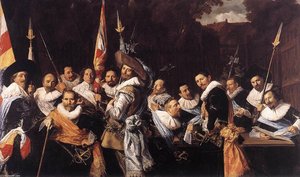
In the heart of the Dutch Golden Age, amidst the bustling commerce and burgeoning intellectual fervor of 17th-century Haarlem, Frans Hals I captured something far more profound than a mere likeness. His portrait of Lucas de Clercq stands as a breathtaking testament to an era defined by both prosperity and piety. As we gaze upon this masterpiece, we are not simply looking at a man, but rather stepping into the very soul of a period where the lines between mercantile success and spiritual devotion were beautifully intertwined. De Clercq, a prominent Mennonite businessman, is presented with a striking sense of presence that commands the room, offering a window into the understated elegance and quiet confidence of the Haar/Mennonite community.
The painting serves as a poignant historical document, reflecting the social fabric of a society navigating the turbulent waters of religious and political change. Through Hals’s lens, we see the dignity of the merchant class—a group whose wealth was built on industry yet whose lifestyle was anchored in the sober, disciplined values of their faith. This tension between worldly achievement and spiritual humility is palpable in every stroke, making the work an essential piece for any collector who appreciates art that tells a deep, human story.
The Mastery of the Expressive Brush
What truly distinguishes this work from the meticulous, almost photographic precision of his contemporaries is Hals’s revolutionary approach to technique. He was a master of the alla prima style, utilizing a loose, spontaneous brushstroke that feels remarkably modern even centuries later. Rather than hiding his hand behind layers of smooth, blended glazes, Hals deliberately left visible traces of his movement across the canvas. This creates a palpable energy, a sense of vitality that makes the subject feel as though he might breathe or shift at any moment.
The artist’s use of chiaroscuro—the dramatic interplay between light and shadow—is nothing short of cinematic. Light cascades across De Clercq’s face and torso, sculpting his muscular physique and highlighting the textures of his attire with brilliant clarity. This strategic illumination does more than just define form; it directs the viewer's emotional journey, pulling our eyes toward the subject's gaze and the subtle details of his expression. For interior designers, this dramatic lighting provides a focal point that can transform the atmosphere of a room, adding depth, sophistication, and a sense of classical grandeur to any curated space.
Symbolism and the Spirit of the Age
Every element within the composition is imbued with a layer of meaning that rewards the attentive observer. The inclusion of a pipe in De Clercq’s hand is far from a casual accessory; it serves as a sophisticated symbol of both status and contemplation. In the context of the 17th century, such an object suggested a man of intellect and leisure, someone capable of quiet reflection amidst a life of active commerce. This subtle nod to the humanist ideals of the era adds a layer of intellectual richness to the portrait.
Furthermore, the attire—the crisp white collar and the rich red cravat—speaks to the "understated elegance" favored by the Mennonite elite. It is a study in controlled opulence, where wealth is displayed through quality and texture rather than gaudy ornamentation. To possess a reproduction of this work is to invite a piece of history into one's home that celebrates the enduring values of character, stability, and refined taste. Whether placed in a private study or a grand living area, the portrait of Lucas de Clercq acts as an anchor of timelessness, bridging the gap between the triumphs of the Dutch Golden Age and the aesthetic desires of the modern connoisseur.
Konstnärsbiografi
Frans Hals I: A Life in Paint
Frans Hals I was a Dutch painter born in Antwerp, Belgium, around 1580. Though his early life remains somewhat shrouded in mystery, he rose to become one of the most important figures of the Dutch Golden Age, celebrated for his innovative portraiture and genre scenes. His artistic legacy continues to inspire artists today.Early Life and Training
Details surrounding Hals’s formative years are scarce. It is believed he received initial artistic training in Antwerp, a prominent center for painting at the time – a place brimming with artistic ambition and experimentation. However, due to religious and political upheaval, his family relocated to Haarlem in the Netherlands. He became a member of the Haarlem Guild of St. Luke in 1610, marking the formal beginning of his professional career and solidifying his position within the influential artistic community of Haarlem.Artistic Style and Development
Hals distinguished himself through a remarkably fresh and spontaneous style. Unlike many of his contemporaries who favored meticulous detail, Hals employed a loose and expressive brushstroke. This technique imbued his paintings with a sense of immediacy and vitality, capturing the personality and character of his subjects in a way that was revolutionary for its time. He wasn’t merely recreating appearances; he sought to convey emotion and spirit. His portraits weren't simply likenesses; they were psychological studies—a daring departure from traditional artistic conventions. Hals excelled at depicting fleeting moments – laughter, conversation, or contemplation – as if frozen in time. Furthermore, his masterful use of light and shadow added depth and drama to his compositions, creating an atmosphere that drew viewers into the scene.Notable Works
While Hals produced a wide range of works, he is best known for his portraits. Some of his most celebrated paintings include:- The Laughing Cavalier (1624) – This iconic masterpiece exemplifies Hals’s ability to capture character and movement with breathtaking realism. The subject's joyous expression embodies the spirit of the era, showcasing Hals’s unparalleled skill in portraying human emotion.
- Malle Babbe (c. 1633-1635) – A striking portrayal of an elderly woman, Malle Babbe, exemplifies Hals’s profound understanding of age and personality. The painting captures the subtle nuances of expression and gesture, revealing a remarkable sensitivity to human experience.
- Portraits of the Regents of the Old Men's Home in Haarlem (1664) – Demonstrating his mastery of group portraiture, Hals skillfully captured the dignity and camaraderie of these distinguished figures. The composition is dynamic and engaging, reflecting Hals’s innovative approach to depicting multiple subjects simultaneously.
Influences and Legacy
Determining Hals’s direct influences is challenging, as he developed a highly individual style. However, it’s likely he was aware of the work of earlier Flemish painters like Pieter Bruegel the Elder – artists who similarly embraced realism and dramatic storytelling. His innovative approach to portraiture profoundly impacted subsequent generations of artists. Hals influenced figures such as Adriaen Brouwer and Johannes Vermeer, fostering a tradition of expressive brushwork and psychological insight. He championed a style that prioritized capturing emotion over mere representation, paving the way for Impressionist painters who sought to convey atmosphere and feeling. His legacy endures in museums across Europe and beyond, ensuring that Hals’s groundbreaking vision continues to inspire admiration and study.
Frans Hals I
1580 - 1585 , Belgien
Kortfakta
- Artistic Movement Or Style: Dutch Gouda Åldern
- Artists Or Movements Influenced By This Artist:
- Adriaen Brouwer
- Johannes Vermeer
- Artists Who Influenced This Artist: ['Pieter Bruegel den Äldre']
- Date Of Birth: c. 1580
- Full Name: Frans Hals I
- Nationality: Nederländska
- Notable Artworks:
- Leende Riddaren
- En äldre man med en rik sammetsmössa
- Place Of Birth: Antwerp, Belgien
Relaterade artiklar

Frans Hals I: Innovation, Intimacy & the Dutch Golden Age Portrait
Explore the revolutionary portraiture of Frans Hals I, a master of the Dutch Golden Age. Discover his innovative techniques, captivating character studies & lasting impact on art history. Learn more at OriginalUniqueArt.

Nederländsk Guldålder: Topp 10 mästerverk som definierade epoken – konst & heminredning
Utforska de 10 ikoniska mästerverken från den nederländska guldåldern! Lär känna Rembrandt, Vermeer och Hals – deras teknik & berättelser. Hitta konsttryck och inspiration för din heminredning på OriginalUniqueArt.com. Upptäck hela samlingen online!

Golden Light & Dutch Skies: The Timeless Magic of Dutch Golden Age Landscapes
Discover the breathtaking beauty of Dutch Golden Age landscapes. Explore the mastery of light, chiaroscuro, and 17th-century realism through an expert art history lens, celebrating the enduring legacy of the Dutch Masters for discerning collectors and art lovers.

Illuminating Innovation: Exploring the Dutch Golden Age of Painting
Explore the Dutch Golden Age of painting with OriginalUniqueArt. Discover Rembrandt, Vermeer & other Masters. Learn about key characteristics, iconic artworks, and lasting influence. Expert insights for collectors & enthusiasts.
Illuminating Realism: Exploring the Dutch Golden Age of Painting (1600-1700)
Explore the Dutch Golden Age of painting (1600-1700) with OriginalUniqueArt. Discover Rembrandt, Vermeer & other masters. Learn about techniques, history & find museum-quality reproductions.