Visa i rummet
 Skicka
 Dela
Dela
 Detaljer
 Studentguide för konstverk

 Ladda ner
 Liknande objekt
 Röntgen
 Bildspel
 Besökstatistik
Jasper Schade
 Oil On Canvas
- WallArt
- Baroque
 1645
1645 80.0 x 67.0 cm
 National Gallery Prague
 Läs mer
Handgjord oljereproduktion
Handmålad olja på duk i din valda storlek och ram, tillverkad efter beställning av våra konstnärer. ( Byt till tryckta exemplar Byt till digital bildförsäljning)




P118B Skr10

P118H Skr10

P118W Skr10

P438Z Skr10

P508JH Skr12

P508YH Skr12

P805H Skr10

P805Z Skr10

P919BZ Skr10

P919G Skr10

P919XJ Skr10

P959ZH Skr10

P968JZ Skr12

W106C Skr8

W218G Skr10

W218JH Skr8

W218Y Skr10

W307PJ Skr10

W316G Skr10

W316PJ Skr8

W316Y Skr10

W398PJ Skr8

W4111J Skr10

W500HY Skr15

W500JH Skr15

W692G Skr12

W849H Skr8

W940BG Skr15

W953PJ Skr8




Välj bland våra förinställda storlekar som motsvarar konstverkets ursprungliga proportioner.

Ange den bredd och höjd du behöver för att passa din ram eller din vägg. Eftersom detta är handmålat kan konstnären vid en annan form måla lite mer runt bilden eller beskära den något – du väljer själv. Vi skickar en digital mockup för godkännande innan målningen påbörjas. Bilden som visas på denna sida representerar inte det slutgiltiga resultatet — det är endast mockuppen som visar det.
Efter beställning kommer OriginalUniqueArt.com team att mejla kunden för instruktioner och tillhandahålla en skissförhandsvisning
Leverans över hela världen () på 3–4 veckor istället för standard 5 veckor. (22 oktober). Inga kompromisser med kvaliteten.

Fri expressfrakt över hela världen

Högkvalitativ linnecanvas

Fullständig fraktförsäkring

Garantier för återbetalning av tullavgifter

Garantier för exakt färgåtergivning

100 dagars returrätt vid fabrikationsfel

100% pengarna tillbaka-garanti

Mängdrabatt erbjuds
 Glasalternativet är endast tillgängligt i storlekar under 110 cm.

Jasper Schade
Tryckteknik
Reproduktionsstorlek
-


Totalpris
Skr 2972
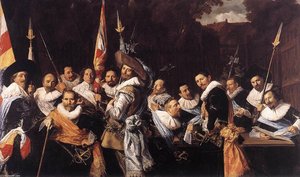
A Window into the Dutch Golden Age: Frans Hals’s Portrait of Jasper Schade van Westrum
Frans Hals I's 1645 portrait of Jasper Schade van Westrum is more than just a likeness; it’s a vibrant snapshot of a pivotal moment in Dutch history and a masterful demonstration of the artist’s revolutionary approach to portraiture. Housed within the National Gallery in Prague, this painting immediately captivates with its dynamic energy and remarkably intimate portrayal of its subject – a representative of the States-General, a man deeply embedded in the political and social fabric of Utrecht during the height of the Dutch Golden Age.
Hals’s genius lies not merely in his technical skill but in his ability to distill personality onto canvas. Jasper Schade is presented as a young man brimming with quiet intensity, his gaze direct and unwavering. He wears a dark, meticulously tailored coat adorned with a striking feathered hat – symbols of his status and civic responsibility. The loose brushwork, particularly evident in the rendering of the gold brocade fabric, speaks volumes about Hals’s innovative technique: ‘alla prima,’ or wet-on-wet painting. This method, eschewing meticulous layering, allowed for an immediacy and spontaneity rarely seen in portraiture at the time, capturing not just a physical likeness but also the very essence of Schade's character – his seriousness, perhaps even a hint of intellectual curiosity.
The Language of Dress: Symbolism and Status
Beyond the individual’s appearance, the painting is rich in symbolic detail. The elaborate attire—the dark coat, the feathered hat, the gold brocade—clearly denotes Schade's position within Utrecht society. Notably, the prominent display of his family arms – sable with a fess or and two realistic lions as supporters – underscores his lineage and heraldic importance. These symbols weren’t merely decorative; they were visual shorthand communicating social standing and civic duty. Hals expertly integrates these elements into the composition, elevating the portrait beyond a simple likeness to a carefully constructed statement about Schade's identity.
A Revolutionary Technique: Hals’s ‘Alla Prima’ Approach
What truly distinguishes this painting is Hals’s masterful use of ‘alla prima.’ He abandoned the traditional practice of building up layers of paint, opting instead for a rapid, direct application. This technique results in a remarkably vibrant and textured surface – the brushstrokes are visible, energetic, and full of life. The loose handling of the brocade fabric is particularly noteworthy; Hals doesn’t meticulously render every thread but rather captures its shimmering quality through quick, confident strokes. This approach wasn't simply about speed; it was about capturing a fleeting moment, an impression of the subject’s personality – a characteristic that would become hallmarks of Hals’s distinctive style.
A Legacy of Character: Reflecting on a Masterpiece
The portrait of Jasper Schade van Westrum offers a compelling glimpse into the Dutch Golden Age. It's a testament to Frans Hals’s ability to capture not just outward appearances but also the inner life of his subjects. Today, this painting continues to resonate with viewers, inviting us to contemplate the complexities of human character and the enduring power of art to reveal the soul. Its historical significance is matched by its artistic merit – a vibrant example of a revolutionary technique and a captivating portrait that embodies the spirit of an era.
Frågor och svar
Kan jag förhandsgranska "Jasper Schade" av Frans Hals I innan jag beställer?
En förhandsvisning av "Jasper Schade" av Frans Hals I finns tillgänglig på konstverkets Förhandsvisning-sida.
Använder "Jasper Schade" av Frans Hals I starka kontraster eller mjuka harmonier?
Färganalysen av "Jasper Schade" av Frans Hals I uppvisar en Serene kontrast och en Discordant Palette harmoni.
Var i Frans Hals Is karriär placeras "Jasper Schade", med tanke på dess datum?
Med tanke på sitt datum från 1645, tillhör "Jasper Schade" Frans Hals Is Mature Period.
Om konstnären
Frans Hals I: A Life in Paint
Frans Hals I was a Dutch painter born in Antwerp, Belgium, around 1580. Though his early life remains somewhat shrouded in mystery, he rose to become one of the most important figures of the Dutch Golden Age, celebrated for his innovative portraiture and genre scenes. His artistic legacy continues to inspire artists today.Early Life and Training
Details surrounding Hals’s formative years are scarce. It is believed he received initial artistic training in Antwerp, a prominent center for painting at the time – a place brimming with artistic ambition and experimentation. However, due to religious and political upheaval, his family relocated to Haarlem in the Netherlands. He became a member of the Haarlem Guild of St. Luke in 1610, marking the formal beginning of his professional career and solidifying his position within the influential artistic community of Haarlem.Artistic Style and Development
Hals distinguished himself through a remarkably fresh and spontaneous style. Unlike many of his contemporaries who favored meticulous detail, Hals employed a loose and expressive brushstroke. This technique imbued his paintings with a sense of immediacy and vitality, capturing the personality and character of his subjects in a way that was revolutionary for its time. He wasn’t merely recreating appearances; he sought to convey emotion and spirit. His portraits weren't simply likenesses; they were psychological studies—a daring departure from traditional artistic conventions. Hals excelled at depicting fleeting moments – laughter, conversation, or contemplation – as if frozen in time. Furthermore, his masterful use of light and shadow added depth and drama to his compositions, creating an atmosphere that drew viewers into the scene.Notable Works
While Hals produced a wide range of works, he is best known for his portraits. Some of his most celebrated paintings include:- The Laughing Cavalier (1624) – This iconic masterpiece exemplifies Hals’s ability to capture character and movement with breathtaking realism. The subject's joyous expression embodies the spirit of the era, showcasing Hals’s unparalleled skill in portraying human emotion.
- Malle Babbe (c. 1633-1635) – A striking portrayal of an elderly woman, Malle Babbe, exemplifies Hals’s profound understanding of age and personality. The painting captures the subtle nuances of expression and gesture, revealing a remarkable sensitivity to human experience.
- Portraits of the Regents of the Old Men's Home in Haarlem (1664) – Demonstrating his mastery of group portraiture, Hals skillfully captured the dignity and camaraderie of these distinguished figures. The composition is dynamic and engaging, reflecting Hals’s innovative approach to depicting multiple subjects simultaneously.
Influences and Legacy
Determining Hals’s direct influences is challenging, as he developed a highly individual style. However, it’s likely he was aware of the work of earlier Flemish painters like Pieter Bruegel the Elder – artists who similarly embraced realism and dramatic storytelling. His innovative approach to portraiture profoundly impacted subsequent generations of artists. Hals influenced figures such as Adriaen Brouwer and Johannes Vermeer, fostering a tradition of expressive brushwork and psychological insight. He championed a style that prioritized capturing emotion over mere representation, paving the way for Impressionist painters who sought to convey atmosphere and feeling. His legacy endures in museums across Europe and beyond, ensuring that Hals’s groundbreaking vision continues to inspire admiration and study.
Frans Hals I
1580 - 1585 , Belgien
Snabbfakta
- Artistic Movement Or Style: Dutch Gouda Åldern
- Artists Or Movements Influenced By This Artist:
- Adriaen Brouwer
- Johannes Vermeer
- Artists Who Influenced This Artist: ['Pieter Bruegel den Äldre']
- Date Of Birth: c. 1580
- Full Name: Frans Hals I
- Nationality: Nederländska
- Notable Artworks:
- Leende Riddaren
- En äldre man med en rik sammetsmössa
- Place Of Birth: Antwerp, Belgien
Relaterade artiklar

Illuminating Innovation: Exploring the Dutch Golden Age of Painting
Explore the Dutch Golden Age of painting with OriginalUniqueArt. Discover Rembrandt, Vermeer & other Masters. Learn about key characteristics, iconic artworks, and lasting influence. Expert insights for collectors & enthusiasts.

Golden Light & Dutch Skies: The Timeless Magic of Dutch Golden Age Landscapes
Discover the breathtaking beauty of Dutch Golden Age landscapes. Explore the mastery of light, chiaroscuro, and 17th-century realism through an expert art history lens, celebrating the enduring legacy of the Dutch Masters for discerning collectors and art lovers.

Golden Age Reflections: Dutch Baroque Painting & Cultural Innovation
Explore the Dutch Golden Age of painting! Discover key artists like Vermeer & ter Borch, their innovative techniques, and the rich cultural context behind these Baroque masterpieces. Learn about collecting & appreciating this iconic art period.

Frans Hals I: Innovation, Intimacy & the Dutch Golden Age Portrait
Explore the revolutionary portraiture of Frans Hals I, a master of the Dutch Golden Age. Discover his innovative techniques, captivating character studies & lasting impact on art history. Learn more at OriginalUniqueArt.

Nederländsk Guldålder: Topp 10 mästerverk som definierade epoken – konst & heminredning
Utforska de 10 ikoniska mästerverken från den nederländska guldåldern! Lär känna Rembrandt, Vermeer och Hals – deras teknik & berättelser. Hitta konsttryck och inspiration för din heminredning på OriginalUniqueArt.com. Upptäck hela samlingen online!