

 Förhandsvisa
 Skicka
 Dela
Dela
 Visa detaljer
 Guide
Guide

 Ladda ner
 Liknande objekt
 Röntgen
 Bildspel
 Statistik
Grasshopper and Alligator
 Paper
Paper- WallArt
- Contemporary Realism
 2002
2002- Contemporary
 43.0 x 26.0 cm
 USC Fisher Museum of Art
 Visa mer
Konstverket som visas på denna sida skyddas av upphovsrättslagen, vilket innebär att vi inte lagligt kan skapa eller sälja en identisk reproduktion. Detta skydd upprätthålls genom internationella avtal såsom den Bernkonventionen och genom nationella lagar, inklusive de som fastställs av Amerikansk upphovsrättslag – Titel 17. Alla rättigheter förbehållna. Återgivning av konstverk är förbjuden utan skriftligt tillstånd från WahooArt.
Denna metod följer fullt ut upphovsrättsliga regler eftersom den inte innebär kopiering eller duplicering av det skyddade konstverket. Istället är det en kreativ nytolkning – en ny målning som är influerad av originalet men inte identisk med det.
Giclée / Konsttryck
Giclée- eller canvasprint av museumskvalitet med snabb produktion och flexibla ytbehandlingsalternativ. ( Beställ handmålad reproduktion Byt till digital bild)




P118B Skr10

P118H Skr10

P118W Skr10

P438Z Skr10

P508JH Skr12

P508YH Skr12

P805H Skr10

P805Z Skr10

P919BZ Skr10

P919G Skr10

P919XJ Skr10

P959ZH Skr10

P968JZ Skr12

W106C Skr8

W218G Skr10

W218JH Skr8

W218Y Skr10

W307PJ Skr10

W316G Skr10

W316PJ Skr8

W316Y Skr10

W398PJ Skr8

W4111J Skr10

W500HY Skr15

W500JH Skr15

W692G Skr12

W849H Skr8

W940BG Skr15

W953PJ Skr8




Välj bland våra förinställda storlekar som motsvarar konstverkets ursprungliga proportioner.

Ange den bredd och höjd du behöver för att passa din ram eller vägg. Ett tryck kan endast beskäras, aldrig göras större än originalbilden, vilket innebär att ett format med en annan proportion leder till att en del av bilden går förlorad. Vi skickar en digital mockup för godkännande innan vi påbörjar tryckningen. Bilden som visas på denna sida visar inte den faktiska beskärningen — det är endast mockuppen som gör det.
Leverans över hela världen () på 2 veckor istället för standard 4/5 veckor. (25 oktober)

Fri expressfrakt över hela världen

Högkvalitativ linnecanvas

Fullständig fraktförsäkring

Garantier för återbetalning av tullavgifter

Garantier för exakt färgåtergivning

100 dagars returrätt (endast vid fel)

100% pengarna tillbaka-garanti

Mängdrabatt erbjuds
 Glasalternativet är endast tillgängligt i storlekar under 110 cm.

Grasshopper and Alligator
Giclée / Konsttryck
Storlek på reproduktion
-


Slutgiltigt pris
Skr 793
A Dialogue of Silhouettes: The Poetic Contrast in Toledo’s Diptych
In the evocative diptych Grasshopper and Alligator, the legendary Mexican master Francisco Toledo invites us into a world where the boundaries between the organic and the graphic dissolve. Created in 2002, this work serves as a profound meditation on the duality of nature. The piece presents two distinct yet harmoniously linked book covers, each acting as a window into a simplified, primordial reality. Through the use of stark black silhouettes set against the warm, tactile embrace of beige and brown textured paper, Toledo strips away the unnecessary noise of the natural world to reveal its essential, skeletal truths. It is a composition that breathes with a quiet, rhythmic pulse, capturing the viewer's attention through a masterful balance of negative space and bold, decisive forms.
The technique employed here speaks to the artist’s deep connection to the artisanal traditions of Oaxaca. There is a palpable sense of the handmade in every fiber of the work; the rough, uneven surfaces of the paper provide a sensory depth that prevents the flat silhouettes from feeling static. The method—reminiscent of stenciling or precise paper cutting—creates clean, graphic outlines that define the alligator and the grasshopper with surgical precision. This interplay between the smooth, dark ink of the subjects and the rugged, aged texture of the substrate creates a visual tension that is both sophisticated and primal. For the collector or interior designer, this piece offers a unique textural element, providing a focal point that feels both ancient and strikingly modern.
Symbolism and the Soul of the Oaxacan Landscape
Beyond its aesthetic brilliance, Grasshopper and Alligator is steeped in the symbolic language that defined Toledo’s illustrious career. As an artist whose life was inextricably woven into the Zapotec soul of Mexico, Toledo often utilized fauna to represent the complex hierarchies and survival instincts of the natural world. The pairing of the grasshopper—a creature of lightness, agility, and ephemeral existence—with the alligator—a symbol of prehistoric strength, patience, and grounded power—creates a captivating narrative of contrasts. This is not merely an illustration of insects and reptiles; it is a symbolic exploration of life’s extremes, from the delicate to the formidable.
The emotional impact of the work lies in its deceptive simplicity. There is a certain whimsy in the pairing, yet a profound gravity in the execution. The muted, earthy palette evokes a sense of nostalgia and permanence, as if these figures have emerged from the very soil of Mexico to tell a story of coexistence. For those seeking to adorn a space with art that inspires contemplation, this diptych offers a sophisticated way to introduce themes of nature, resilience, and balance. It is a piece that does not demand attention through loudness, but rather commands it through a quiet, undeniable presence, making it an exquisite addition to any curated collection or thoughtfully designed interior.
Frågor och svar
När skapades "Grasshopper and Alligator" av Francisco Toledo?
"Grasshopper and Alligator" av Francisco Toledo skapades år 2002.
Vem skapade "Grasshopper and Alligator" och under vilket år?
"Grasshopper and Alligator" är skapad av Francisco Toledo och daterad till 2002.
Vilka färger dominerar i "Grasshopper and Alligator" av Francisco Toledo?
Färgidentiteten i "Grasshopper and Alligator" av Francisco Toledo: en Earthy-palett, dominerad av Gray (#848899).
Konstnärsbiografi
A Life Woven into the Soul of Oaxaca
Francisco Benjamín López Toledo, born in Mexico City (Distrito Federal) in 1940, wasn’t merely an artist; he was a cultural architect, a passionate advocate for his homeland, and one of Mexico's most profoundly influential contemporary figures. His life story is inextricably linked to the vibrant traditions and often-overlooked complexities of Oaxacan culture, a heritage that permeates every brushstroke, sculpted form, and woven thread of his extensive oeuvre. Toledo’s artistic journey began early, nurtured by the rich visual language of his Zapotec upbringing and formalized through studies at the Escuela de Bellas Artes de Oaxaca and later at the Centro Superior de Artes Aplicadas del Instituto Nacional de Bellas Artes in Mexico City under the guidance of Guillermo Silva Santamaría. However, formal training only provided a foundation; Toledo’s true education came from immersing himself in the world around him – the landscapes, folklore, and social realities of his native state.Early Life and Artistic Roots
Toledo's formative years were steeped in Zapotec traditions—a heritage that would profoundly shape his artistic sensibility. Growing up in Juchitán de Zaragoza, a town renowned for its intricate textiles and vibrant cultural identity, exposed him to the visual vocabulary of indigenous art forms. This early immersion instilled within him a deep appreciation for symbolism, storytelling, and the interconnectedness between humanity and nature—elements that would become central to his artistic practice throughout his career. His formal education at the Escuela de Bellas Artes de Oaxaca and INBAL honed his technical skills while simultaneously broadening his intellectual horizons. Notably, he studied under Guillermo Silva Santamaría, whose teachings emphasized observation, experimentation, and a commitment to exploring diverse artistic mediums. Recognizing the importance of international exposure, Toledo embarked on a journey to Paris in 1960 where he encountered influential artists like Rufino Tamayo and Octavio Paz—figures who championed avant-garde ideas and encouraged him to push beyond conventional boundaries.A Synthesis of Influences: Surrealism and Beyond
Toledo’s artistic style defies easy categorization, reflecting a remarkable synthesis of influences that transcend stylistic conventions. While deeply rooted in Pre-Columbian iconography—particularly the stylized figures and symbolic motifs of Zapotec art—he embraced elements of Surrealism, allowing dreamlike compositions and explorations of the subconscious to surface in his paintings and graphic works. This daring approach mirrored broader artistic trends of the era, yet Toledo maintained a distinctive voice that distinguished him from his peers. He skillfully blended techniques borrowed from various traditions, creating images that are simultaneously evocative and intellectually stimulating. Recurring motifs included fantastical creatures, distorted perspectives, and juxtapositions of disparate elements—a stylistic hallmark that cemented his place within the Breakaway Generation of Mexican art.Major Achievements: From Textiles to Sculpture
Toledo’s artistic output spanned a remarkable range of mediums, demonstrating his versatility as an artist and his unwavering dedication to experimentation. He excelled in pottery, sculpture, weaving, graphic arts, and painting—each discipline serving as a vehicle for conveying complex ideas about identity, society, and the natural world. His monumental sculptures, particularly those commissioned for public spaces throughout Mexico and internationally, stand as enduring symbols of cultural heritage and artistic innovation. Among his most celebrated artworks are “Grasshopper and Alligator,” a captivating depiction of Zapotec mythology; “Two People Squatting…” which confronts themes of intimacy and social commentary; and “Redes con Cangrejos...”—a masterful exploration of texture and color inspired by the intricate patterns of Oaxacan textiles. His graphic works, characterized by bold lines and striking visual metaphors, further solidified his reputation as a visionary artist who challenged conventional artistic norms.Legacy: An Artist for Culture and Community
Francisco Toledo’s contribution to Mexican art extends far beyond individual masterpieces; he established several pivotal institutions that continue to enrich the cultural landscape of Oaxaca and inspire future generations of artists. The Instituto de Artes Gráficas de Oaxaca (IAGO), founded in 1978, serves as a beacon of artistic excellence and fosters dialogue between tradition and innovation—a testament to Toledo’s unwavering belief in the transformative power of art. Similarly, Museo de Arte Contemporáneo de Oaxaca (MACO) showcases cutting-edge artistic creations while promoting cultural understanding. Patronato Pro-Defensa y Conservación del Patrimonio Cultural de Oaxaca champions the preservation of Oaxacan heritage and underscores Toledo's commitment to safeguarding cultural traditions. His legacy is not merely found in the museums that house his artworks, but in the countless individuals whose lives he touched through his artistic endeavors and unwavering advocacy for social justice—a testament to an artist who truly embodied the spirit of Oaxaca and cemented his place as one of Mexico’s most influential figures.
Francisco Toledo
1940 - , Mexiko
Kortfakta
- Artistic Movement Or Style: Surrealism och Folkkonst
- Artists Who Influenced This Artist:
- Rufino Tamayo
- Jean Dubuffet
- Date Of Birth: 17 juli 1940
- Date Of Death: 5 september 2019
- Full Name: Francisco Benjamín López Toledo
- Nationality: Mexikaner
- Notable Artworks:
- Grashoppa och alligator
- Två personer hukar...
- Röda nät med krabban...
- Place Of Birth: Mexico City
Relaterade artiklar

The Refined Aesthetic of Victorian Illustration: A Study in Narrative & Technique
Explore the captivating world of Victorian illustration! Discover Pre-Raphaelite influences, key artists like Rossetti & Stephens, and the era's rich narrative detail. A deep dive for art enthusiasts.
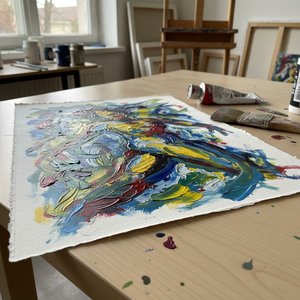
Acrylic on Paper: A Modern Canvas for Contemporary Expression
Explore the versatility of acrylic painting on paper! Discover expert techniques, artist insights & archival practices for creating stunning contemporary art. Learn more at OriginalUniqueArt.

Goyas 25 Mästerverk: En Konstnärlig Resa Genom Spansk Historia | OriginalUniqueArt
Utforska Goyas 25 mest ikoniska målningar! Fördjupa dig i spansk konsthistoria, romantikens dramatik och mörka färger. Köp museumkvalitativa reproduktioner & inred med tidlösa klassiker på OriginalUniqueArt.com.

Angelo Chiacchio: A Mid-Century American Illustration Master & the Rise of Commercial Art
Explore the captivating world of Angelo Chiacchio, a master of mid-century American illustration. Discover his evolution, signature style, and lasting impact on commercial art & design. Learn about his legacy at the Museum of American Illustration.

Kay Rasmus Nielsen: A Golden Age Illustrator's Enchanting Legacy of Symbolism & Narrative
Explore the captivating world of Kay Rasmus Nielsen, a celebrated Golden Age illustrator renowned for his Art Nouveau fairy tale art & Disney contributions. Discover his unique style, enduring legacy, and how to collect his enchanting works.


