
 Förhandsvisa
 Skicka
 Dela
Dela
 Visa detaljer
 Guide
Guide

 Ladda ner
 Liknande objekt
 Röntgen
 Bildspel
 Frågor och svar
 Statistik
Diana and Endymion

- 2328.0 x 1790.0 cm


 Visa mer
Giclée / Konsttryck
Giclée- eller canvasprint av museumskvalitet med snabb produktion och flexibla ytbehandlingsalternativ. ( Beställ handmålad reproduktion Byt till digital bild)




P118B Skr10

P118H Skr10

P118W Skr10

P438Z Skr10

P508JH Skr12

P508YH Skr12

P805H Skr10

P805Z Skr10

P919BZ Skr10

P919G Skr10

P919XJ Skr10

P959ZH Skr10

P968JZ Skr12

W106C Skr8

W218G Skr10

W218JH Skr8

W218Y Skr10

W307PJ Skr10

W316G Skr10

W316PJ Skr8

W316Y Skr10

W398PJ Skr8

W4111J Skr10

W500HY Skr15

W500JH Skr15

W692G Skr12

W849H Skr8

W940BG Skr15

W953PJ Skr8




Välj bland våra förinställda storlekar som motsvarar konstverkets ursprungliga proportioner.

Ange den bredd och höjd du behöver för att passa din ram eller vägg. Ett tryck kan endast beskäras, aldrig göras större än originalbilden, vilket innebär att ett format med en annan proportion leder till att en del av bilden går förlorad. Vi skickar en digital mockup för godkännande innan vi påbörjar tryckningen. Bilden som visas på denna sida visar inte den faktiska beskärningen — det är endast mockuppen som gör det.
Leverans över hela världen () på 2 veckor istället för standard 4/5 veckor. (6 november)

Fri expressfrakt över hela världen

Högkvalitativ linnecanvas

Fullständig fraktförsäkring

Garantier för återbetalning av tullavgifter

Garantier för exakt färgåtergivning

100 dagars returrätt (endast vid fel)

100% pengarna tillbaka-garanti

Mängdrabatt erbjuds
 Glasalternativet är endast tillgängligt i storlekar under 110 cm.

Diana and Endymion
Giclée / Konsttryck
Storlek på reproduktion
-


Slutgiltigt pris
Skr 809
Francesco Solimena’s *Diana and Endymion*: A Neapolitan Baroque Masterpiece
Francesco Solimena's 1710 painting, *Diana and Endymion*, is a breathtaking testament to the grandeur of Neapolitan Baroque art. Executed with meticulous detail and imbued with profound mythological symbolism, this work offers a captivating glimpse into the world of Greek legend and the artistic sensibilities of one of Italy’s most celebrated painters. Measuring an impressive 2328 x 1790 cm, the scale alone commands attention, drawing the viewer into a scene brimming with movement, emotion, and divine beauty.
- Subject Matter: The painting depicts the poignant love story of Diana, the goddess of the hunt and the moon, and Endymion, a mortal shepherd. Traditionally, Endymion was granted eternal youth by Diana, who fell deeply in love with him. This narrative explores themes of immortality, desire, and the delicate balance between the divine and human realms.
- Style & Technique: Solimena’s style is characterized by its dramatic lighting, rich color palette, and remarkably realistic depiction of figures and animals. He employs a technique known as *sfumato*, subtly blending colors to create soft transitions and atmospheric effects, particularly evident in the rendering of the drapery and the luminous skin tones. The composition is meticulously balanced, guiding the eye through a complex arrangement of figures and elements.
A Window into Neapolitan Baroque Patronage
Solimena’s rise to prominence was inextricably linked to the patronage system that flourished in Naples during the 17th and 18th centuries. His early training under his father, Angelo Solimena, and subsequent studies with established masters like Francesco di Maria and Giacomo del Po, provided him with a solid foundation in classical technique and composition. However, it was the support of Cardinal Vincenzo Orsini that truly propelled him to artistic recognition. Orsini’s patronage allowed Solimena to undertake increasingly ambitious fresco commissions, establishing his reputation as one of the leading artists of his time. This painting itself likely originated from a private commission, reflecting the wealthy tastes and aesthetic preferences of influential patrons.
Symbolism and Narrative Depth
The scene is rich in symbolic detail, reflecting the complex mythology at its core. Diana, depicted with her characteristic bow and arrow, embodies power, grace, and divine authority. Endymion, reclining peacefully, represents earthly beauty and vulnerability. The presence of the horses, dog, and bird further enriches the narrative, evoking images associated with the hunt, loyalty, and freedom – all elements integral to Diana’s domain. The overall atmosphere is one of serene contemplation punctuated by moments of intense emotion, capturing the essence of this timeless love story.
Emotional Impact and Artistic Legacy
*Diana and Endymion* remains a powerfully evocative work of art, demonstrating Solimena's mastery of Baroque aesthetics. Its dramatic composition, luminous colors, and nuanced portrayal of human emotion continue to captivate viewers centuries later. As a hand-painted reproduction offered by OriginalUniqueArt.com, this artwork provides an unparalleled opportunity to experience the beauty and artistry of one of Neapolitan Baroque’s greatest masters – a timeless masterpiece that speaks to the enduring power of myth and love.
Frågor och svar
Vilken konststil tillhör "Diana and Endymion" av Francesco Solimena?
"Diana and Endymion" av Francesco Solimena tillhör Baroque Grandeur-rörelsen. Denna rörelse ger det stilistiska sammanhanget för verket.
Vilken storlek rekommenderas för tryck av "Diana and Endymion"?
En reproduktion i storleken Large rekommenderas för "Diana and Endymion" av Francesco Solimena. Storleken kan justeras med bibehållna proportioner.
Vilken placering passar bäst för formatet på "Diana and Endymion" av Francesco Solimena?
Formatet Landscape för "Diana and Endymion" av Francesco Solimena rekommenderas för ett Living Room. Format och rymd samverkar för att vägleda placeringen av en reproduktion.
Konstnärsbiografi
A Neapolitan Master of Baroque Grandeur
Francesco Solimena, född i den lilla italienska staden Canale di Serino nära Avellino år 1657, steg fram som en av de mest betydelsefulla figurerna inom neapolitisk målar konst under det sena barocken. Hans konstnärliga resa började inom en familj redan djupt rotad i konsttradition; hans far, Angelo Solimena, fungerade som hans första lärare och samarbetade med honom på tidiga projekt som Paradisfresken för Nocera katedralens väggar. Denna grundläggande erfarenhet lade en djup uppskattning för teknik och komposition i ungmans hjärta. Han vidareutvecklade sina färdigheter under dennes lärdom hos Francesco di Maria och Giacomo del Po, absorberade olika influenser som skulle forma hans distinkta stil. Kardinal Vincenzo Orsinis försorg var avgörande, vilket gav uppmuntran och möjligheter som tillät Solimena att etablera sig som en oberoende konstnär redan på 1680-talet, genomförde alltmer ambitiösa freskomissioner.Forging a Style: Echoes of Rome in Neapolitan Splendor
Solimenas konstnärliga röst är omedelbart igenkännbar genom dess varma, brunaktiga skuggning och dramatiska användning av ljus – kvaliteter djupt skyldiga till de romerska barockmästarna Luca Giordano och Giovanni Lanfranco. Men han kopierade inte bara; istället syntetiserade han dessa influenser till en unikt neapolitisk estetik. Hans verkens kännetecken inkluderar dynamiska kompositioner fyllda av emotionell intensitet, som återspeglar barockperiodens benägenhet för prådighet och teaterliknande dramatik. Han besatt en exceptionell förmåga att fånga rörelse och drama inom sina scener, vilket drog in betraktarna i berättelser både heliga och mytologiska. Från 1690-talet framåt blev Solimenas studio en dominerande kraft i Neapel, som formade stadens konstnärliga landskap i decennier. Hans verkstad var otroligt produktiv, producerade altarpiecer, fresker och målningar som dekorerade kyrkor och palats över hela regionen. En nyckelaspekt av hans kompositionsstil var att antyda miljöer med minimal detaljering, strategiskt rikta betraktarens uppmärksamhet mot figurerna själva och deras utsmyckade draperingar – ofta belysta med noggrant placerat ljus för att förstärka deras inverkan.A Prolific Output: Frescoes, Altarpieces, and Mythological Visions
Francesco Solimena var en otroligt produktiv konstnär, lämnande efter sig ett omfattande verk som spänner över en rad ämnen och format. Han utmärkte sig i stora freskomålningar, förvandlade Neapels interiörer till livfulla uttryck för religiös passion och aristokratisk prådighet. Hans altarpiecer är särskilt värdefulla för sin förmåga att förmedla komplexa teologiska berättelser med både emotionell djup och teknisk briljans. Utöver sina religiösa verk visade Solimena också en mästarkonst i mytologiska scener, infogade klassiska berättelser med dramatisk energi och sinnlig skönhet. Bland hans mest kända verk är *Allegorien av Styret*, som för närvarande finns på State Hermitage Museum i St Petersburg – ett testamente till hans skicklighet i allegorisk representation och sofistikerad komposition. Hans scener av bröllop och courtliknande evenemang visar ytterligare hans mångsidighet, fångar Neapels societets elegans och prådighet. Verk som "St John the Baptist" och "The Assumption and Coronation of the Virgin" exemplifierar hans behärskning av chiaroscuro och dynamiska kompositioner.Influences and Development
Solimenas stil var starkt influerad av de romerska barockmästarna Luca Giordano och Giovanni Lanfranco, men han utvecklade också en distinkt neapolitisk estetik. Han studerade verk av Caravaggio och Annibale Carracci, och hans kompositioner återspeglar ofta deras dynamiska rörelser och dramatiska ljussättning. Han var också påverkad av den holländska måleriet, särskilt de som arbetade med landskap och porträtt. Solimena var en skicklig lärare och han hade många elever, inklusive Francesco de Mura, Giuseppe Bonito och Corrado Giaquinto. Hans verkstad blev ett centrum för konstnärligt lärande i Neapel, och hans elever fortsatte att utveckla sin egen stil baserat på hans undervisning.Legacy and Historical Significance
Solimenas inflytande sträckte sig bortom hans egna konstverk. Hans stora, välsorterade verkstad fungerade som en verklig akademi, spelade en avgörande roll i stadens kulturella liv. Han tränade många elever som blev framstående konstnärer i sina egna rättigheter, vilket etablerade honom som en central figur i 1700-talets italienska konst. Notable bland hans elever var Francesco de Mura, Giuseppe Bonito och Corrado Giaquinto – alla bidrog betydelsefullt till utvecklingen av neapolitisk konst. Solimenas framgång sträckte sig bortom konstnärliga erkännanden; han uppnådde betydande ekonomiskt välstånd under sin livstid och fick titeln baron och levde ett liv i linje med sin berömmelse. Han dog 1747 i Barra, nära Neapel, lämnade efter sig ett bestående arv som fortfarande firas genom utställningar, vetenskapliga studier och reproduktioner tillgängliga idag. Han står som en av de mest betydelsefulla figurerna inom neapolitisk barockmåleri, lyckades syntetisera romerska influenser med lokala traditioner för att skapa en distinkt stil som definierade konstproduktionen i Neapel i decennier framöver. Hans verk är fortfarande beundrade för sin dramatiska flair, tekniska beherskande och bestående skönhet – ett testamente till hans geni och hans varaktiga bidrag till konsthistorien.
Francesco Solimena
1657 - 1747 , Italien
Kortfakta
- Artistic Movement Or Style: Barock
- Artists Or Movements Influenced By This Artist:
- Francesco de Mura
- Giuseppe Bonito
- Artists Who Influenced This Artist:
- Luca Giordano
- Giovanni Lanfranco
- Date Of Birth: 4 okt 1657
- Date Of Death: 3 apr 1747
- Full Name: Francesco Solimena
- Nationality: Italiensk
- Notable Artworks:
- Allegori av Rätt
- Freskar i Neapel
- Place Of Birth: Canale di Serino, Italien
Relaterade artiklar

Barockens Mästerverk: Topp 10 konstverk som definierade en epok – OriginalUniqueArt.se
Upptäck barockens 10 största mästerverk! Caravaggio, Rembrandt, Bernini och fler. Lär känna historien bakom ikoniska målningar & skulpturer. Köp reproduktioner av hög kvalitet på OriginalUniqueArt.com – för en lyxig heminredning.

The Visceral Stage: Exploring Dramatic Narratives & Emotional Intensity in Baroque Art
Explore the dramatic world of Baroque art! Discover iconic masters like Caravaggio & Rembrandt, their techniques, and the movement's lasting impact. Expert insights for collectors & enthusiasts at OriginalUniqueArt.
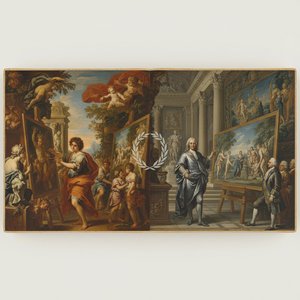
Simon Vouet: A Baroque Master's Journey from Italian Influence to French Classicism
Explore the life & art of Simon Vouet, a pivotal French Baroque painter who introduced Italian styles to France. Discover his masterpieces and lasting influence on 17th-century art.

The Dramatic Flourish: Exploring the Baroque Movement's Enduring Legacy in Art History
Explore the dramatic world of Baroque art! Discover iconic artists like Caravaggio & Rubens, defining techniques, and its lasting impact on art history. Expert insights for collectors & enthusiasts at OriginalUniqueArt.

Barockens dramatik: Att föra prakt och känsla in i samtida interiörer
Upptäck barockens dramatik och lyx! Lär dig hur du integrerar denna klassiska stil i ditt hem med våra experttips och inspirerande exempel. Skapa en palatskänsla idag!