

 Visa i rummet
 Skicka
 Dela
Dela
 Detaljer
 Studentguide för konstverk

 Ladda ner
 Liknande objekt
 Röntgen
 Bildspel
 Besökstatistik
Annunciation


 Läs mer
Giclée / Konsttryck
Giclée- eller canvasprint av museumskvalitet med snabb produktion och flexibla ytbehandlingsalternativ. ( Köp handmålat konstverk Byt till digital bildförsäljning)




P118B Skr10

P118H Skr10

P118W Skr10

P438Z Skr10

P508JH Skr12

P508YH Skr12

P805H Skr10

P805Z Skr10

P919BZ Skr10

P919G Skr10

P919XJ Skr10

P959ZH Skr10

P968JZ Skr12

W106C Skr8

W218G Skr10

W218JH Skr8

W218Y Skr10

W307PJ Skr10

W316G Skr10

W316PJ Skr8

W316Y Skr10

W398PJ Skr8

W4111J Skr10

W500HY Skr15

W500JH Skr15

W692G Skr12

W849H Skr8

W940BG Skr15

W953PJ Skr8




Välj bland våra förinställda storlekar som motsvarar konstverkets ursprungliga proportioner.

Ange den bredd och höjd du behöver, för att passa din ram eller din vägg. Ett tryck kan endast beskäras, aldrig göras större än bilden, vilket innebär att ett format med en annan formform leder till att en del av bilden går förlorad. Vi skickar en digital mockup för godkännande innan vi trycker något. Bilden som visas på denna sida visar inte den faktiska beskärningen — det är endast mockuppen som gör det.
Leverans över hela världen () på 2 veckor istället för standard 4/5 veckor. (24 oktober)

Fri expressfrakt över hela världen

Högkvalitativ linnecanvas

Fullständig fraktförsäkring

Garantier för återbetalning av tullavgifter

Garantier för exakt färgåtergivning

100 dagars returrätt vid fabrikationsfel

100% pengarna tillbaka-garanti

Mängdrabatt erbjuds
 Glasalternativet är endast tillgängligt i storlekar under 110 cm.

Annunciation
Giclée / Konsttryck
Reproduktionsstorlek
-


Totalpris
Skr 793
The Annunciation: A Renaissance Dialogue of Light and Grace
Filippino Lippi’s “Annunciation,” painted in 1489 for the Medici family’s villa near Florence, is more than just a depiction of a pivotal biblical moment; it's a masterful orchestration of light, color, and human emotion. This fresco, now residing within the serene walls of Santa Maria sopra Minerva, offers a glimpse into the burgeoning artistic spirit of the High Renaissance – a period defined by its renewed interest in classical ideals and a profound exploration of human experience.
The scene itself is instantly recognizable: the angel Gabriel, rendered with an almost startlingly youthful energy, delivers the momentous news to Mary. Lippi’s genius lies not merely in his accurate portrayal of the figures but in his manipulation of space and atmosphere. The interior setting, though somewhat simplified, feels remarkably real – a modest chamber furnished with a chair, books, and a table, suggesting a domestic tranquility disrupted by this divine visitation. Note the careful attention to detail: the folds of Mary’s garments, the delicate rendering of Gabriel's wings, and the subtle play of light on the objects within the room all contribute to an immersive experience for the viewer.
A Symphony of Color and Technique
Lippi was a master of tempera paint, a medium known for its luminous quality and ability to achieve rich, vibrant colors. He employed a technique called *sfumato*, blurring lines and softening edges to create an ethereal effect – particularly evident in the hazy light that bathes the scene. The palette is dominated by warm hues: reds, golds, and ochres—reflecting the importance of Mary’s role as the Mother of God. The use of perspective, though not entirely rigorous by Renaissance standards, creates a sense of depth and spatial awareness, drawing the viewer into the heart of the narrative.
Furthermore, Lippi's brushwork is remarkably expressive. Observe how he captures the movement of Gabriel’s hand as he presents the message to Mary, or the gentle curve of her neck in response. These subtle gestures convey a profound sense of emotion and vulnerability – a testament to Lippi’s ability to imbue his figures with life.
Symbolism and Spiritual Resonance
The “Annunciation” is rich in symbolic meaning. Gabriel, often depicted as youthful and radiant, represents divine grace and the messenger of God's will. Mary, presented as a modest and contemplative figure, embodies humility and acceptance. The dove hovering above them symbolizes the Holy Spirit – the source of life and inspiration. The open book on the table is a subtle reference to scripture and the importance of faith.
Beyond these immediate symbols, the painting speaks to broader themes of communication, revelation, and the transformative power of divine grace. It’s a moment of profound significance—the beginning of a new era in Christian theology and art. The composition itself can be interpreted as a dialogue between heaven and earth, between the spiritual realm and the human world.
A Timeless Masterpiece for Reflection
“Annunciation” by Filippino Lippi remains a powerful and moving work of art. Its beauty lies not only in its technical brilliance but also in its ability to evoke a sense of wonder and contemplation. Whether viewed as a historical document, a religious icon, or simply a stunning example of Renaissance artistry, this fresco continues to captivate audiences centuries after its creation. Reproductions offer an accessible way to experience the depth and nuance of Lippi’s vision, bringing this timeless dialogue of light and grace into any space.
Useful Links:
- Annunciation (Filippo Lippi, London) - Wikipedia
- Annunciation 1489-91 Reproduction For Sale | 1st Art Gallery
- The National Gallery, London
Additional Research:
Frågor och svar
Vilka andra namn eller alias använder sig Filippino Lippi av?
Filippino Lippi förekommer även under namnen Filippo Di Tommaso Lippi, Filippo Lippi Den Yngre.
Var i Filippino Lippis karriär placerar sig "Annunciation"?
Inom Filippino Lippis karriär tillhör "Annunciation" perioden Mature Renaissance. Denna fas underlättar jämförelser med konstnärens övriga verk.
Hur mättad är färgpaletten i "Annunciation"?
Färgpaletten i "Annunciation" har en mättnad på Balanced Soft.
Om konstnären
Filippino Lippis tidiga liv och utbildning
- Född: April 1457, Prato, Italien
- Död: April 1504
- Föräldrar: Fra Filippo Lippi (målare) och Lucrezia Buti
- Filippino var den utomäktliga sonen till en berömd målare.
- Den tidiga utbildningen under hans far lade grunden för hans konstnärliga karriär. Fra Filippo Lippi, känd för sin lyriska stil och innovativa kompositioner, introducerade Filippino i renässansens tekniker och ideal.
Konstnärlig karriär och utveckling
- Tidiga perioden (1475-1480): Tidiga verk, såsom madonnor, visade en mindre förfinad stil. Dessa tillskrevs initialt en anonym konstnär känd som "amico di Sandro". Denna tid präglades av att Filippino sökte sin egen röst samtidigt som han absorberade influenser från samtida mästare.
- Utveckling (1480-1485): Utvecklingen mot en mer personlig och effektiv stil i verk som *Tobias resor*. Under denna fas började Filippino experimentera med dramatiska ljuseffekter och komplexa narrativer, vilket visade hans växande konstnärliga mognad.
- Mognad (1485-1504): Bemästrande av High Renaissance-stilen, exemplifierat av *Kristi uppenbarelse för Jungfru Maria*. Filippino nådde höjdpunkten av sin karriär och skapade verk som kännetecknades av en harmonisk balans mellan form, färg och komposition.
Stora verk och samarbeten
- Samarbete med Perugino, Ghirlandaio och Botticelli på fresker i Lorenzo de' Medicis villa. Detta prestigefyllda uppdrag gav Filippino möjlighet att arbeta sida vid sida med några av renässansens mest framstående konstnärer och utbyta idéer och tekniker.
- Fullbordan av Masaccios ofullständiga dekoration i Brancacci-kapellet tillsammans med Masolino. Detta projekt var en viktig milstolpe i Filippinos karriär, eftersom det innebar att han fortsatte arbetet med en av renässansens mest inflytelserika freskcykler.
- Anmärkningsvärda verk inkluderar: *Jungfru Marias kröning*, *Tobias och ängeln*, *Sankt Jeronymus* och *Scen ur Sankt Tomas av Aquinos liv*. Dessa verk visar Filippinos mångsidighet och hans förmåga att hantera en mängd olika ämnen och kompositioner.
Influenser och konstnärlig stil
- Tidiga influenser: Sandro Botticelli, Fra Filippo Lippi. Båda dessa mästare hade en djupgående inverkan på Filippinos tidiga utveckling, särskilt när det gäller hans användning av linjer och färg.
- Stilistiska drag: Animering av form och linje, varm kolorism, detaljerade landskap, uttrycksfulla figurer och en blandning av perspektivgeometri med intima interiörer. Filippinos stil kännetecknades av en dynamisk energi och en känsla för realism som var unik för hans tid.
- Romantiska antikviteter: Studier efter romerska antikviteter under hans vistelse i Rom påverkade hans verk, genom att införliva ett antikt vokabulär i sin konst. Detta bidrog till en ökad känsla av monumentalitet och klassisk skönhet i hans kompositioner.
Historisk betydelse och arv
- En ledande florentinsk förespråkare för traditionen med stora freskcykler. Filippino var känd för sin förmåga att skapa storskaliga, komplexa narrativer som fängslade betraktaren.
- Hans inflytande på High Renaissance är obestridligt. Hans verk inspirerade en generation av konstnärer och bidrog till utvecklingen av renässansens stil.
- Verk finns i museer över hela världen, inklusive Uffizigalleriet i Florens. Detta vittnar om hans varaktiga popularitet och betydelse inom konsthistorien.
- Känd för att överbrygga klyftan mellan tidigare renässansstilar och den framväxande High Renaissance-estetiken. Filippino representerade en övergångsperiod i konsten, som kombinerade traditionella tekniker med nya idéer och perspektiv.
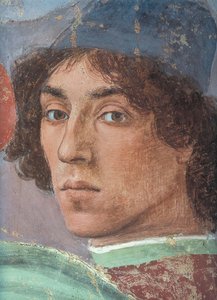
Filippino Lippi
1457 - 1504 , Italien
Snabbfakta
- Artistic Movement Or Style: Högrenässans
- Artists Or Movements Influenced By This Artist: ['Raffaellino del Garbo']
- Artists Who Influenced This Artist:
- Fra Filippo Lippi
- Sandro Botticelli
- Date Of Birth: April 1457
- Date Of Death: April 1504
- Full Name: Filippino Lippi
- Nationality: Italiensk
- Notable Artworks:
- Coronation of the Virgin
- Tobias och ängeln
- St Jerome
- Place Of Birth (City And Country): Prato, Italien
Relaterade artiklar

Dante Gabriel Rossettis 25 Mästerverk: Konst, Symbolik & Heminredning
Utforska Dante Gabriel Rossettis 25 mest ikoniska konstverk! Upptäck prerafaeliternas symbolik, romantisk konst och tidlösa berättelser bakom mästerverken. Köp museumkvalitativa tryck & inred med vacker väggkonst på OriginalUniqueArt.com.

Celestial Messengers: A Comprehensive Exploration of Angelic Representation in Art History
Explore the captivating history of angels in art! Discover symbolism, iconic Renaissance masterpieces & renowned artists. Expert insights for art lovers & collectors at OriginalUniqueArt.
Frescens arv som familjetradition: Måla din historia på väggarna
Utforska väggmålningens historia och teknik! Lär dig skapa din egen familjetradition med konst på väggen. Expertguider, inspiration & tips.

Celestial Messengers: Angels in Painting – A Historical & Artistic Exploration
Explore the captivating history of angels in painting! Discover symbolism, iconic Renaissance & Byzantine masterpieces, and renowned artists. Expert insights for art lovers & collectors at OriginalUniqueArt.
The Enduring Legacy of Fresco Painting: Techniques, History & Contemporary Relevance
Explore the rich history & enduring artistry of fresco painting – from Giotto to Michelangelo! Discover techniques, conservation efforts, & modern applications. Learn how OriginalUniqueArt brings this timeless art form to your home.
