
 Förhandsvisa
 Skicka
 Dela
Dela
 Visa detaljer
 Guide
Guide

 Ladda ner
 Liknande objekt
 Röntgen
 Bildspel
 Q&A
Q&A Statistik
Bistro

- 38.0 x 46.0 cm


 Visa mer
Konstverket som visas på denna sida skyddas av upphovsrättslagen, vilket innebär att vi inte lagligt kan skapa eller sälja en identisk reproduktion. Detta skydd upprätthålls genom internationella avtal såsom den Bernkonventionen och genom nationella lagar, inklusive de som fastställs av Amerikansk upphovsrättslag – Titel 17. Alla rättigheter förbehållna. Återgivning av konstverk är förbjuden utan skriftligt tillstånd från WahooArt.
Denna metod följer fullt ut upphovsrättsliga regler eftersom den inte innebär kopiering eller duplicering av det skyddade konstverket. Istället är det en kreativ nytolkning – en ny målning som är influerad av originalet men inte identisk med det.
Giclée / Konsttryck
Giclée- eller canvasprint av museumskvalitet med snabb produktion och flexibla ytbehandlingsalternativ. ( Beställ handmålad reproduktion Byt till digital bild)




P118B Skr10

P118H Skr10

P118W Skr10

P438Z Skr10

P508JH Skr12

P508YH Skr12

P805H Skr10

P805Z Skr10

P919BZ Skr10

P919G Skr10

P919XJ Skr10

P959ZH Skr10

P968JZ Skr12

W106C Skr8

W218G Skr10

W218JH Skr8

W218Y Skr10

W307PJ Skr10

W316G Skr10

W316PJ Skr8

W316Y Skr10

W398PJ Skr8

W4111J Skr10

W500HY Skr15

W500JH Skr15

W692G Skr12

W849H Skr8

W940BG Skr15

W953PJ Skr8




Välj bland våra förinställda storlekar som motsvarar konstverkets ursprungliga proportioner.

Ange den bredd och höjd du behöver för att passa din ram eller vägg. Ett tryck kan endast beskäras, aldrig göras större än originalbilden, vilket innebär att ett format med en annan proportion leder till att en del av bilden går förlorad. Vi skickar en digital mockup för godkännande innan vi påbörjar tryckningen. Bilden som visas på denna sida visar inte den faktiska beskärningen — det är endast mockuppen som gör det.
Leverans över hela världen () på 2 veckor istället för standard 4/5 veckor. (2 november)

Fri expressfrakt över hela världen

Högkvalitativ linnecanvas

Fullständig fraktförsäkring

Garantier för återbetalning av tullavgifter

Garantier för exakt färgåtergivning

100 dagars returrätt (endast vid fel)

100% pengarna tillbaka-garanti

Mängdrabatt erbjuds
 Glasalternativet är endast tillgängligt i storlekar under 110 cm.

Bistro
Giclée / Konsttryck
Storlek på reproduktion
-


Slutgiltigt pris
Skr 803
A Vibrant Symphony of Parisian Life
In the evocative masterpiece Bistro, created in 1952, the Turkish avant-garde master Fikret Muallâ Saygı invites us into a world where color and movement dance together on the canvas. The painting serves as a window into a lively social gathering, capturing the quintessential essence of a bustling café or bistro setting. Through his expressive brushwork, Muallively reconstructs a scene of communal joy, where figures are gathered around a table laden with the humble artifacts of daily life—cups, bowls, and bottles that suggest a shared moment of respite. The composition is not merely a depiction of a meal, but a rhythmic arrangement of souls, where the presence of individuals in ties hints at the sophisticated yet casual atmosphere of mid-century European social life.
The technique employed in this work is a breathtaking testament to the influence of Fauvism and Expressionism. Muallâ does not seek to replicate reality with photographic precision; instead, he utilizes a bold, saturated palette to convey the emotional temperature of the room. The greenery of potted plants provides a refreshing organic contrast to the structured social interaction, while the figures on the periphery add depth and a sense of an unfolding narrative that extends beyond the frame. Each stroke feels deliberate yet spontaneous, contributing to an overall atmosphere that is both energetic and deeply nostalgic, making it a captivating centerpiece for any collection focused on the emotive power of color.
The Soul Behind the Canvas
To truly appreciate Bistro, one must understand the poignant duality of Fikret Muallâ’s life. Born in Kadıköy, Istanbul, his journey was marked by profound personal tragedy and a subsequent migration to the heart of the art world: Paris. The shadows of his early life—marked by physical injury and the loss of his mother—often haunted his psyche, yet they also fueled his ability to find beauty in the transient moments of street life and social gatherings. This painting represents the triumph of light over shadow; it is an exploration of the "joie de vivre" that Muallâ sought to capture amidst his own internal emotional turmoil. The lively, social atmosphere of the bistro serves as a sanctuary of connection, a stark and beautiful contrast to the artist's often solitary struggles.
For the discerning collector or interior designer, this reproduction offers more than just aesthetic appeal; it offers a piece of art history that resonates with emotional depth. The work’s ability to anchor a room with its warm tones and dynamic energy makes it an ideal choice for sophisticated living spaces, boutique hotels, or curated galleries. It is a conversation starter that bridges the gap between the historical significance of the Turkish avant-garde and the timeless allure of Parisian cafe culture. Owning a piece of Muallâ’s vision is to possess a fragment of a world where every color tells a story of resilience, community, and the enduring beauty of the human spirit.
Frågor och svar
Vilken teknik har använts för "Bistro"?
Fikret Muallâ Saygı använde tekniken Oil On Board för "Bistro". Tekniken definierar det ursprungliga verkets materiella karaktär.
Ur vilket land kommer Expressionism-verket "Bistro"?
"Bistro" skapades av Fikret Muallâ Saygı, född i Turkiet, inom Expressionism-rörelsen. Konstnärens ursprung knyter verket till Expressionism så som det utövades av konstnärer från Turkiet.
Var placerar sig "Bistro" av Fikret Muallâ Saygı i konsthistorien?
Historiskt sett är "Bistro" ett Expressionism-verk från den bredare Modern-eran.
Konstnärsbiografi
tidigt liv och prövningar
Fikret Muallâ Saygı, en avantgardistisk målare av turkiskt ursprung under 1900-talet, föddes den 20 juli 1903 i Kadıköy, Istanbul, i det Osmanska riket. Hans liv präglades tidigt av en olycka vid tolv års ålder som lämnade honom med en funktionsnedsättning i höger fot, samt förlusten av hans mor i en influensaepidemi kort däreftill. Dessa händelser satte djupa spår i hans mentala hälsa och personlighet.den konstnärliga resan
Muallâ Saygıs konstnärliga resa tog sin början med influenser från expressionism och fauvism, där han fokuserade på livet på Paris gator, sociala sammankomster och teman som kaféer och cirkusar. Hans verk kännetecknas av ett emotionellt djup och en subjektiv tolkning som speglar hans egna strider med psykisk ohälsa och inre känslomässig turbulens.- Paris, Sacré-Cœur (35 x 28 cm, olja på pannå, Sakıp Sabancı Museum, Istanbul, Turkiet), exemplifierar hans fascination för stadens liv.
- Hans verk Cannes (37 x 50 cm, olja på duk, Sakıp Sabancı Museum, Istanbul, Turkiet) visar hans förmåga att fånga essensen av sociala tillställningar.
- Bistro (38 x 46 cm, blandteknik, Sakıp Sabancı Museum, Istanbul, Turkiet), demonstrerar ytterligare hans skicklighet i att skildra stadslivet ur ett unikt perspektiv.
utmaningar och beskyddare
Muallâ Saygıs liv kantades av alkoholberoende, mental alienation och kognitiv dissonans. Trots detta fann han tröst i sin konst och stöd från beskyddare som Madame Angles, vilket gjorde det möjligt för honom att försörja sig på sitt skapande.eftermäle och betydelsefulla omnämnanden
- Han blev vän med berömda konstnärer, däribland Pablo Picasso, och sägs till och med ha sålt ett signerat fotografi av Picasso i utbyte mot en flaska vin.
- Hans andra utställning markerade början på hans erkännande som målare, trots hans ökända rykte som en dryckesman och galning.
- Slutligen försämrades Muallâ Saygıs hälsa, vilket ledde till förlamning 1962 och hans bortgång den 20 juli 1967 i Reillanne, Frankrike.
att minnas Fikret Muallâ Saygı
Muallâ Saygı betraktas som en av de främsta representanterna för turkisk konst under 1900-talet, tillsammans med Abidin Dino. Hans arv fortsätter att inspirera både konstnärer och konstälskare, och hans verk står som ett vittnesbörd om den konstnärliga uttrycksfullhetens kraft i mötet med motgångar.- Se mer av Fikret Muallâ Saygıs konst på OriginalUniqueArt.com
- Utforska expressionismens och fauvismens värld genom de 5 mest kända expressionistiska konstnärerna genom tiderna

Fikret Muallâ Saygı
1903 - 1967 , Turkiet
Kortfakta
- Artistic Movement Or Style:
- Postimpressionism
- Symbolism
- Artists Or Movements Influenced By This Artist:
- Paul Cézanne
- Fauvism
- Artists Who Influenced This Artist:
- Camille Pissarro
- Vincent van Gogh
- Date Of Birth: 1903
- Date Of Death: 1967
- Full Name: Eugène Henri Paul Gauguin
- Nationality: Fransk
- Notable Artworks:
- Vision av predikan
- Iahona och hennes son
- Place Of Birth: Kadıköy, Turkiet
Relaterade artiklar
Cultivating Ambiance: The Strategic Role of Art in Shaping Guest Experience within Restaurant & Dining Environments
Discover how strategic art selection & design elevate the restaurant experience. Expert insights on color psychology, acoustics, layout & commissioning artwork to create lasting impressions and boost your brand.

Atmosfärisk Resonans: Konst som Narrativ Katalysator i Modern Restaurangdesign
Utforska hur konst och design skapar unika restaurangupplevelser. Lär dig av ledande exempel som Noma & Alchemist och upptäck strategier för atmosfär, hållbarhet och emotionell koppling.
Den gastronomiska scenen: Inredningsdesign som narrativ ram i den samtida restaurangupplevelsen
Skapa en minnesvärd restaurangupplevelse! Vi erbjuder expertkonsultation inom inredningsdesign, konceptutveckling och hållbara lösningar. För hotell & premiumrestauranger.
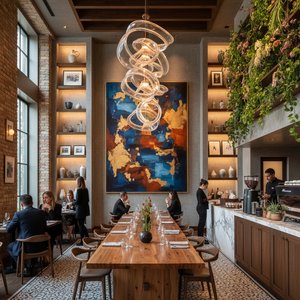
Förhöjda matupplevelser: Integrera konst i din restaurangdesign
Förvandla din restaurang med konst! Upptäck hur rätt design och konstverk skapar en unik atmosfär som lockar gäster. erbjuder skräddarsydda lösningar för restauranger & caféer.
Från duk till identitet: Storskalig muralmålning som ikonisk varumärkesbyggare inom restaurangbranschen
Upptäck hur storskalig muralmålning kan transformera din restaurang till ett ikoniskt varumärke. Expertinsikter om design, konstnärssamarbete och mätbara resultat för ökad kundtillströmning och lojalitet.