

 Förhandsvisa
 Skicka
 Dela
Dela
 Visa detaljer
 Guide
Guide

 Ladda ner
 Liknande objekt
 Röntgen
 Bildspel
 Statistik
Leo


 Visa mer
Giclée / Konsttryck
Giclée- eller canvasprint av museumskvalitet med snabb produktion och flexibla ytbehandlingsalternativ. ( Beställ handmålad reproduktion Byt till digital bild)




P118B Skr10

P118H Skr10

P118W Skr10

P438Z Skr10

P508JH Skr12

P508YH Skr12

P805H Skr10

P805Z Skr10

P919BZ Skr10

P919G Skr10

P919XJ Skr10

P959ZH Skr10

P968JZ Skr12

W106C Skr8

W218G Skr10

W218JH Skr8

W218Y Skr10

W307PJ Skr10

W316G Skr10

W316PJ Skr8

W316Y Skr10

W398PJ Skr8

W4111J Skr10

W500HY Skr15

W500JH Skr15

W692G Skr12

W849H Skr8

W940BG Skr15

W953PJ Skr8




Välj bland våra förinställda storlekar som motsvarar konstverkets ursprungliga proportioner.

Ange den bredd och höjd du behöver för att passa din ram eller vägg. Ett tryck kan endast beskäras, aldrig göras större än originalbilden, vilket innebär att ett format med en annan proportion leder till att en del av bilden går förlorad. Vi skickar en digital mockup för godkännande innan vi påbörjar tryckningen. Bilden som visas på denna sida visar inte den faktiska beskärningen — det är endast mockuppen som gör det.
Leverans över hela världen () på 2 veckor istället för standard 4/5 veckor. (25 oktober)

Fri expressfrakt över hela världen

Högkvalitativ linnecanvas

Fullständig fraktförsäkring

Garantier för återbetalning av tullavgifter

Garantier för exakt färgåtergivning

100 dagars returrätt (endast vid fel)

100% pengarna tillbaka-garanti

Mängdrabatt erbjuds
 Glasalternativet är endast tillgängligt i storlekar under 110 cm.

Leo
Giclée / Konsttryck
Storlek på reproduktion
-


Slutgiltigt pris
Skr 793
Fernando Gallego’s “The Sky of Salamanca”: A Celestial Tapestry
Within the hallowed halls of the University of Salamanca resides a masterpiece of late 15th-century Spanish art – Fernando Gallego's "El Cielo de Salamanca," or “The Sky of Salamanca.” More than just a decorative ceiling, this vast mural is an ambitious cosmological depiction, a testament to the burgeoning scientific curiosity and artistic skill of its time. Commissioned around 1480 during a period of intense intellectual exchange between Europe and Spain, the painting transcends mere ornamentation; it’s a vibrant synthesis of religious symbolism, classical learning, and nascent astronomical observation.
Gallego, a master painter working within the influential Hispano-Flemish style, skillfully blended Northern European realism with the established traditions of Spanish art. He was deeply influenced by the meticulous detail and illusionistic techniques characteristic of Flemish artists like Rogier van der Weyden, yet he infused his work with a distinctly Iberian sensibility – a richness in color, a dramatic use of light, and an emphasis on narrative clarity. The sheer scale of “The Sky of Salamanca” – spanning approximately 130 square meters – demanded a masterful command of perspective and composition, showcasing Gallego’s technical prowess.
A Window into Renaissance Astronomy
“El Cielo de Salamanca” isn't simply a depiction of the night sky; it’s an attempt to represent the cosmos as understood by scholars during the late 15th century. Based on Ptolemy’s “Almagest,” a foundational text in astronomy, the mural charts 48 constellations and the known planets – Sun, Moon, Mercury, Venus, Mars, Jupiter, and Saturn. Gallego meticulously rendered each celestial body, imbuing them with symbolic significance rooted in classical mythology and religious iconography. The figures are not merely astronomical objects; they’re presented as characters within a grand narrative of creation and divine order.
Notably, the painting reflects the prevailing belief that planets were not distant spheres but rather inhabited by gods and spirits. This perspective is evident in the depiction of Mars as a warrior figure, Jupiter as a regal king, and Venus as an angelic being. The artist’s attention to detail extends beyond the constellations themselves; he incorporates elements like the Milky Way, rendered with shimmering gold leaf, further enhancing the illusion of depth and grandeur.
Symbolism and Narrative
Beyond its astronomical accuracy, “El Cielo de Salamanca” is rich in symbolic meaning. The central figure, Christ, is positioned at the heart of the cosmos, symbolizing divine authority and the foundation of all creation. Surrounding him are figures from Christian mythology – St. Andrew, St. Peter, and St. Bartholomew – reinforcing the painting’s religious message. The inclusion of classical deities like Apollo and Hercules further underscores the synthesis of ancient and Christian thought that characterized Renaissance learning.
The mural's narrative unfolds through a series of interconnected scenes, depicting key moments in the biblical story from creation to the Last Judgment. This didactic purpose – intended to educate viewers about both religious doctrine and astronomical knowledge – is characteristic of many altarpieces commissioned during this period. The meticulous detail with which Gallego portrays each figure and scene speaks volumes about his artistic skill and dedication.
A Legacy in Paint
Despite its grandeur, “El Cielo de Salamanca” suffered significant damage over the centuries due to a fire in 1869 that destroyed much of the University’s library. Only approximately one-third of the original mural remains intact today. However, the surviving fragments offer an extraordinary glimpse into the artistic and intellectual world of 15th-century Spain. Restoration efforts continue to unveil more of this remarkable masterpiece, allowing us to appreciate Gallego's vision and his pivotal role in shaping the visual landscape of the University of Salamanca.
Reproductions of “El Cielo de Salamanca” provide a stunning opportunity to bring this celestial tapestry into your home or office. Whether you seek an evocative piece for a study, a grand statement for a living room, or simply a beautiful reminder of the wonders of the universe, a high-quality reproduction captures the essence and majesty of Gallego’s extraordinary creation.
Frågor och svar
Vad föreställer "Leo" av Fernando Gallego och vilken stämning förmedlar det?
"Leo" visar lion, stars, figures, mural, composition, celestial, iberian och dess förmedlade stämning är Calm.
Var kan jag köpa ett tryck av "Leo" av Fernando Gallego?
För att beställa ett tryck av "Leo" av Fernando Gallego, gå helt enkelt till dess sida för Konsttryck i hög kvalitet: ett konsttryck på bomullscanvas eller arkivbeständigt canvaspapper.
Hur många personer ser "Leo"?
Sidan Besöksstatistik för "Leo" av Fernando Gallego presenterar statistik över publika besök: månatliga besök för detta konstverk, en jämförelse med konstnärens mest sedda verk samt varifrån besökarna kommer.
Konstnärsbiografi
Fernando Gallego: En mästare av den hispanoflandriska stilen
Fernando Gallego, ett namn som ofta är höljt i mystik men som ändå ekar djupt inom den spanska konsthistorien, var en kastiliansk målare som blomstrade under det sena 1400-talet och tidiga 1500-talet. Han föddes omkring 1440 i Salamanca och gick tragiskt bort någon gång före 1507, och hans liv spände över en avgörande era av konstnärlig övergång – mötet mellan nordeuropeisk realism och de framväxande italienska renässansidealen. Gallegos arv definieras inte av stora, ensamma mästerverk, utan snarare av en produktiv produktion av noggrant utformade religiösa paneler, särskilt altartavlor och retablos, som erbjuder ovärderliga inblickar i sin tids visuella kultur. Även om definitiva biografiska detaljer förblir sällsynta, målar spårandet av hans verk genom tillskrivningar och historiska dokument en fängsande bild av en konstnär djupt influerad av flamländskt måleri, särskilt verken av Rogier van der Weyden, men samtidigt stadigt rotad i den spanska konsttraditionen.Tidigt liv och konstnärlig skolning – En skugga av osäkerhet
De exakta rötterna till Fernando Gallegos konstnärliga utbildning förblir svårfångade, en egenskap som länge har fascinerat konsthistoriker. Trots spekulationer som länkar honom till verkstäder i Salamanca och bortom, är konkreta bevis anmärkningsvärt begränsade. Han började sannolikt sin karriär i den livliga konstnärliga miljön i Kastilien och Extremadura, regioner kända för sitt rika religiösa mecenatskap under denna period. Den rådande teorin antyder en stark koppling till flamländskt måleri, särskilt den naturalistiska hanteringen av form och den tekniska mästerskap som framgår i Rogier van der Weydens verk – en stil kännetecknad av sin minutiösa detaljrikedom, djupa emotionella resonans och sofistikerade användning av ljus och skugga. Det tidiga nederländska måleriet, med sin levande illusionism och komplexa ikonografi, utövade ett genomgripande inflytande på Gallegos sätt att närma sig komposition och gestaltning av figurer. Det tros att han kan ha tillbringat tid med att studera i Flandern, även om detta förblir obekräftat. Intressant nog delar de verk som tillskrivs honom ofta stilistiska likheter med Francisco Gallego, hans troliga assistent i verkstaden – en relation som tillför ytterligare ett lager av komplexitet till förståelsen av Gallegos konstnärliga utveckling.En blomstrande karriär: Altartavlor och retablos
Gallegos karriär var till stor del tillägnad skapandet av mindre paneler avsedda att ingå i större altartavlor, eller retablos. Dessa hängivna verk var centrala för det religiösa livet i 1500-talets Spanien och fungerade som fokuspunkter för tillbedjan och visuella berättelser inom kyrkor och kapell. Gallegos skicklighet låg inte bara i hans tekniska färdighet – bevisad genom den mjuka appliceringen av färg, den precisa återgivningen av draperier och den realistiska porträtteringen av mänskliga figurer – utan också i hans förmåga att genomsyra dessa scener med en påtaglig känsla av drama och emotionell intensitet. Han avbildade ofta bibliska berättelser, helgonlegender och episoder ur kristen historia, där han ofta använde en noggrant orkestrerad balans mellan realism och symbolisk representation. Ett särskilt anmärkningsvärt exempel är Retablo of Ciudad Rodrigo, ett monumentalt verk utfört i samarbete med mästaren Bartolomé, som visar upp Gallegos minutiösa öga för detaljer och hans förmåga att integrera flera berättelser inom en enda panel. Projektets omfattning – ett bevis på den religiösa konstens betydelse vid denna tid – understryker Gallegos ställning som en ledande konstnär i Kastilien.Betydande verk och konstnärliga tekniker
Bland Gallegos bevarade verk utmärker sig flera för sin konstnärliga förtjänst och historiska betydelse. ”Madonna av de katolska kungarna”, som finns på Getty Museum, exemplifierar hans mästerliga användning av färg, ljus och komposition för att skapa en djupt rörande skildring av Jungfru Maria och Jesusbarnet. ”Ara” (Himmelen i Salamanca), en vidsträckt takmålning som pryder universitetet i Salamanca, representerar en exceptionell prestation – ett monumentalt företag som demonstrerar Gallegos ambition och tekniska skicklighet. Denna fresk, som avbildar astronomiska scener och stjärnbilder, visar hans förmåga att översätta komplexa vetenskapliga koncept till visuellt engagerande bilder. Gallego arbetade främst med olja på träpanel, även om han också använde tempera i sina tidiga verk. Hans noggranna uppmärksamhet på detaljer, kombinerat med hans förståelse för perspektiv och rumsliga relationer, resulterade i en anmärkningsvärt realistisk och livfull kvalitet i hans målningar. Han var känd för att mödosamt individualisera figurerna i sina scener, vilket förstärkte deras dramatiska tilltal samtidigt som han demonstrerade sin tekniska skicklighet.Arv och historisk betydelse
Fernando Gallegos inverkan på spansk konst är betydande trots den begränsade dokumentationen kring hans liv. Han representerar en avgörande länk mellan de tidiga flamländska influenserna som formade 1400-talets Spanien och den framväxande renässansstil som snart skulle dominera det konstnärliga landskapet. Hans arbete ger värdefulla inblickar i sin tids religiösa övertygelser, sociala seder och konstnärliga praktiker. Även om han ofta hamnat i skuggan av mer berömda samtida, är Gallegos bidrag till den spanska måleriets utveckling obestridligt. Den fortsatta studien av hans retablos och paneler erbjuder ett fönster mot den hängivna världen i 1400-talets Spanien, och avslöjar en rikedom av information om religiös ikonografi, konstnärliga tekniker och livet för dem som beställde och betraktade dessa kraftfulla konstverk. Hans arv lever vidare genom skönheten och den emotionella resonansen i hans målningar, och påminner oss om den bestående kraften i visuellt berättande för att knyta an till publiker genom århundradena.
Fernando Gallego
1440 - 1507 , Spanien
Kortfakta
- Artistic Movement Or Style: Hispano-flamländsk
- Artists Who Influenced This Artist: ['Rogier van der Weyden']
- Date Of Birth: ca 1440, Salamanca
- Date Of Death: 1507, Salamanca
- Full Name: Fernando Gallego
- Nationality: Kastiliansk
- Notable Artworks:
- Salamancas himmel
- Retablo de Ciudad Rodrigo
- Pietà (Getty Museum)
- Place Of Birth: Salamanca, Spanien
Relaterade artiklar

MOMA:s 25 Mästerverk – Konsthistoriens Höjdpunkter för Ditt Hem
Upptäck MOMA:s 25 mest ikoniska konstverk – från van Gogh till Warhol! Lär känna historien bakom mästerverken och hitta inspiration för din heminredning. Köp museumskvalitativa reproduktioner på OriginalUniqueArt.com.

George Stubbs: Anatomical Precision & Romantic Vision in 18th-Century British Art
Explore the captivating world of George Stubbs, the 18th-century master renowned for his anatomical precision & Romantic animal paintings. Discover his legacy and investment potential.
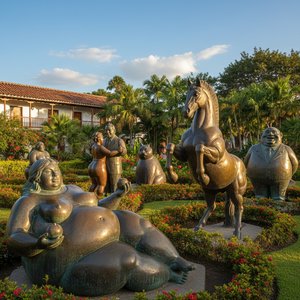
Fernando Botero: Celebrating Volume, Form & Colombian Identity
Explore the captivating world of Fernando Botero! Discover his iconic 'Boterismo' style, Colombian influences, investment potential & lasting legacy. Expert insights for art collectors.

Postimpressionismens 10 Mästerverk: Konst som Definierade en Epok | OriginalUniqueArt.se
Utforska postimpressionismens 10 mest ikoniska mästerverk med Van Gogh, Monet & Cézanne. Lär känna historien bakom konstverken och deras unika tekniker. Köp museumkvalitativa reproduktioner på OriginalUniqueArt.com – för en tidlös inredning.

Majestic Lions: Capturing the Power and Soul of the King of Beasts through Art History
Explore the majesty of the King of Beasts through art history. From Baroque drama to Romantic realism, discover how master painters capture the power and soul of lions in exquisite oil reproductions and fine art prints for discerning collectors.