

 Förhandsvisa
 Skicka
 Dela
Dela
 Visa detaljer
 Guide
Guide

 Ladda ner
 Liknande objekt
 Röntgen
 Bildspel
 Statistik
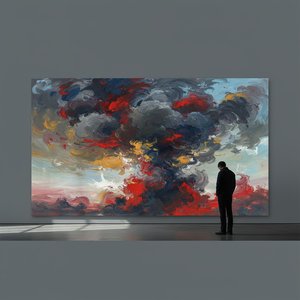
Duino-Nueve (Orrantia/92)


 Visa mer
Konstverket som visas på denna sida skyddas av upphovsrättslagen, vilket innebär att vi inte lagligt kan skapa eller sälja en identisk reproduktion. Detta skydd upprätthålls genom internationella avtal såsom den Bernkonventionen och genom nationella lagar, inklusive de som fastställs av Amerikansk upphovsrättslag – Titel 17. Alla rättigheter förbehållna. Återgivning av konstverk är förbjuden utan skriftligt tillstånd från WahooArt.
Denna metod följer fullt ut upphovsrättsliga regler eftersom den inte innebär kopiering eller duplicering av det skyddade konstverket. Istället är det en kreativ nytolkning – en ny målning som är influerad av originalet men inte identisk med det.
Giclée / Konsttryck
Giclée- eller canvasprint av museumskvalitet med snabb produktion och flexibla ytbehandlingsalternativ. ( Beställ handmålad reproduktion Byt till digital bild)




P118B Skr10

P118H Skr10

P118W Skr10

P438Z Skr10

P508JH Skr12

P508YH Skr12

P805H Skr10

P805Z Skr10

P919BZ Skr10

P919G Skr10

P919XJ Skr10

P959ZH Skr10

P968JZ Skr12

W106C Skr8

W218G Skr10

W218JH Skr8

W218Y Skr10

W307PJ Skr10

W316G Skr10

W316PJ Skr8

W316Y Skr10

W398PJ Skr8

W4111J Skr10

W500HY Skr15

W500JH Skr15

W692G Skr12

W849H Skr8

W940BG Skr15

W953PJ Skr8




Välj bland våra förinställda storlekar som motsvarar konstverkets ursprungliga proportioner.

Ange den bredd och höjd du behöver för att passa din ram eller vägg. Ett tryck kan endast beskäras, aldrig göras större än originalbilden, vilket innebär att ett format med en annan proportion leder till att en del av bilden går förlorad. Vi skickar en digital mockup för godkännande innan vi påbörjar tryckningen. Bilden som visas på denna sida visar inte den faktiska beskärningen — det är endast mockuppen som gör det.
Leverans över hela världen () på 2 veckor istället för standard 4/5 veckor. (28 oktober)

Fri expressfrakt över hela världen

Högkvalitativ linnecanvas

Fullständig fraktförsäkring

Garantier för återbetalning av tullavgifter

Garantier för exakt färgåtergivning

100 dagars returrätt (endast vid fel)

100% pengarna tillbaka-garanti

Mängdrabatt erbjuds
 Glasalternativet är endast tillgängligt i storlekar under 110 cm.

Duino-Nueve (Orrantia/92)
Giclée / Konsttryck
Storlek på reproduktion
-


Slutgiltigt pris
Skr 799
Fernando de Szyszlo: Bridging Ancient Echoes and Modern Expression
Fernando de Szyszlo (1925-2017) stands as a monumental figure in Peruvian art history, recognized for his pioneering role in establishing abstract expressionism within Latin America while simultaneously honoring the profound legacy of Andean culture. Born in Lima to a Peruvian mother of Spanish-Indian descent and a Polish father, Szyszlo’s formative years instilled in him an appreciation for both European intellectual traditions and indigenous heritage—a duality that would profoundly shape his artistic vision. This confluence of influences is palpable throughout his oeuvre, resulting in canvases that resonate with a unique blend of formal innovation and symbolic depth. Szyszlo's journey into art began at the National University of Engineering but was swiftly redirected by an irresistible passion for architecture before he decisively embraced the School of Plastic Arts of Pontifical Catholic University of Peru. Graduating in 1948, he embarked on a transformative voyage across Europe, immersing himself in the groundbreaking works of masters like Rembrandt and Titian—artists who championed dramatic chiaroscuro and psychological realism. These encounters ignited Szyszlo’s imagination and fueled his determination to forge a path distinct from established artistic conventions. His stylistic evolution culminated in the embrace of abstract expressionism during the mid-1950s, marking a pivotal moment in Peruvian art. Rejecting representational accuracy, Szyszlo sought to convey emotion and experience directly onto the canvas through spontaneous gestures and bold color palettes—a technique championed by artists like Jackson Pollock and Willem de Kooning. However, unlike his contemporaries who often prioritized purely formal experimentation, Szyszlo consistently incorporated elements of Andean iconography and symbolism into his paintings. Recurring motifs such as llamas, condors, and geometric patterns hark back to the rich artistic traditions of Peru’s pre-Columbian past, grounding his abstract explorations in a tangible connection to Peruvian cultural heritage. The painting "Duino-Nueve (Orrantia/92)" exemplifies Szyszlo's distinctive approach. The image depicts a solitary figure wielding a knife—a potent symbol representing both vulnerability and decisive action—against a dark backdrop punctuated by flashes of intense color. The artist’s meticulous attention to detail, particularly in capturing the texture and contours of the hand holding the blade, underscores his commitment to conveying palpable physicality alongside conceptual ideas. Furthermore, Szyszlo's masterful use of pigment creates an atmosphere of dramatic tension, mirroring the psychological complexities inherent in the subject matter. Szyszlo’s artistic legacy extends beyond stylistic innovation; he served as a crucial catalyst for fostering dialogue between Peruvian art and Andean culture—a contribution that continues to inspire artists and scholars alike. His unwavering dedication to exploring the expressive potential of abstraction combined with his reverence for indigenous traditions solidified his position as one of Peru's most influential visual artists, ensuring that his work remains relevant and captivating for generations to come.- Artist: Fernando de Szyszlo
- Born Year: 1925
- Death Year: 2017
- Birth City: Lima
- Birth Country: Peru
Historical Context
Szyszlo’s artistic endeavors unfolded during the formative years of Peruvian art history—a period marked by burgeoning interest in European modernism alongside an increasing awareness of Andean cultural identity. The influence of Surrealist artists like René Magritte and Salvador Dalí can be discerned in Szyszlo's exploration of dreamlike imagery and subconscious symbolism, reflecting a broader artistic preoccupation with psychological depth and imaginative vision.Style & Technique
Szyszlo’s signature style—abstract expressionism infused with Andean motifs—characterized by spontaneous brushstrokes, bold color combinations, and textural layering—represents a radical departure from traditional Peruvian painting practices. He skillfully manipulated pigment to create luminous surfaces that capture the essence of emotion and experience, mirroring the expressive dynamism found in the works of European masters like Willem de Kooning and Franz Kline.Symbolism
Recurring motifs such as llamas, condors, and geometric patterns—elements drawn from Andean iconography—serve as powerful symbols representing resilience, spiritual aspiration, and connection to ancestral traditions. Szyszlo’s deliberate incorporation of these visual cues underscores his commitment to honoring Peruvian cultural heritage while simultaneously elevating abstract expressionism beyond purely formal considerations.Emotional Impact
“Duino-Nueve (Orrantia/92)” evokes a profound sense of contemplation and unease—a reflection of Szyszlo’s masterful ability to convey psychological complexity through visual language. The painting's dramatic chiaroscuro contrasts heighten the tension between vulnerability and determination, prompting viewers to confront existential questions about human experience and artistic expression.Frågor och svar
Hur förhåller sig "Duino-Nueve (Orrantia/92)" till Fernando de Szyszlos återkommande motiv?
"Duino-Nueve (Orrantia/92)" skildrar landscape, knife, figure, wall, darkness, power, symbolism, peru, medan Fernando de Szyszlos dokumenterade teman är european modernism, andean heritage, symbolic imagery, exploring identity, central role. En jämförelse mellan dessa visar hur verket förhåller sig till konstnärens vanliga motiv.
Vilket rum föreslås för visning av "Duino-Nueve (Orrantia/92)", med tanke på dess färgpalett?
Med tanke på dess Monochrome färger rekommenderas "Duino-Nueve (Orrantia/92)" för ett Living Room.
Hur mycket ljus verkar färgerna i "Duino-Nueve (Orrantia/92)" reflektera?
Färgerna i "Duino-Nueve (Orrantia/92)" har en Dark luminans.
Konstnärsbiografi
The Alchemist of Andean Abstraction
Fernando de Szyszlo (1925-2017) stands as a monumental figure in Peruvian art history, recognized for his pioneering role in establishing abstract expressionism within Latin America while simultaneously honoring the profound legacy of Andean culture. Born in Lima to a Peruvian mother of Spanish-Indian descent and a Polish father, Szyszlo’s formative years instilled in him an appreciation for both European intellectual traditions and indigenous heritage—a duality that would profoundly shape his artistic vision. His early education at the National University of Engineering was briefly interrupted by a passion for architecture before he decisively embraced the School of Plastic Arts of Pontifical Catholic University of Peru, where he honed his skills and embarked on a journey toward profound artistic exploration.
The trajectory of Szyszlo’s career was irrevocably altered by his travels throughout Europe in the late 1940s. Immersing himself in the works of Old Masters like Rembrandt, Titian, and Tintoretto, he absorbed a mastery of dramatic lighting and emotional intensity that would later inform his unique approach to shadow and depth. His time in Paris and Florence between 1948 and 1955 placed him at the heart of the vibrant Latin American avant-garde scene centered around Café Flore. Engaging in spirited dialogues with luminaries such as the Surrealist poet Octavio Paz and André Breton, Szyszlo grappled with a central, defining tension: how to reconcile international modernist ideals with the preservation of a distinct Latin American cultural identity.
A Synthesis of Modernity and Myth
Upon returning to Peru, Szyszlo became a catalyst for artistic renewal, pushing boundaries by expressing Peruvian subjects in non-representational forms. This was a bold departure from the prevailing stylistic conventions of indigenism that dominated the era. His work sought to reinvent Surrealist themes within a Latin American context, focusing less on mere artistic conceit and more on the deep-seated feelings connected to indigenous mysticism. By weaving pre-Columbian imagery and Incan motifs into the fabric of abstraction, he created a visual language that felt both ancient and avant-garde.
His technique was characterized by a masterful manipulation of texture and light. Through the use of thick impasto, layered colors, and a frequently muted palette, Szyszlo evoked the weathered surfaces of archaeological relics and the atmospheric weight of Andean landscapes. His paintings often feature:
- Lyrical color palettes that balance earthy tones with sudden, striking hues.
- Geometric forms that suggest the structural permanence of ancient architecture.
- Textural richness created through heavy layering to evoke a sense of geological time.
- Ambiguous shapes that invite the viewer into a state of contemplative, surrealist wonder.
Legacy and Historical Significance
The historical significance of Fernando de Szyszlo cannot be overstated; he was the bridge between the ancestral past and the modern future. His ability to articulate modernity through pre-Columbian symbolism generated a profound rupture with tradition while simultaneously entering into a deep, respectful dialogue with it. He did not merely paint abstractly; he sought to find the "soul" of Peru within the language of international abstraction, ensuring that the indigenous spirit was not lost in the transition to modernism.
Beyond his canvas, Szyszlo was a humanist and an educator, serving as a professor of art at Cornell University and contributing significantly to the intellectual life of his country. Today, his legacy is preserved in some of the world's most prestigious institutions, including The Museum of Modern Art (MoMA) in New York, the Museum of Fine Arts in Houston, and the Museo de Arte Contemporaneo Arequipa. As we approach the centenary of his birth, Szyszlo remains a vital subject of study, reminding us that true innovation often lies in the courageous act of remembering.

Fernando de Szyszlo
1925 - 2017 , Peru
Kortfakta
- Full Name: Fernando de Szyszlo Valdelomar
- Nationality: Peruvian
- Date Of Birth: 1925
- Date Of Death: 2017
- Place Of Birth: Lima, Peru
- Notable Artworks:
- Trashumantes
- Untitled, SZY #1
- Camino a Mendieta V
- Artistic Movement Or Style: Abstract Expressionism
- Artists Who Influenced This Artist:
- Rembrandt
- Titian
- Tintoretto
- Artists Or Movements Influenced By This Artist:
- Cubism
- Surrealism
- Informalism
Relaterade artiklar

Goyas 25 Mästerverk: En Konstnärlig Resa Genom Spansk Historia | OriginalUniqueArt
Utforska Goyas 25 mest ikoniska målningar! Fördjupa dig i spansk konsthistoria, romantikens dramatik och mörka färger. Köp museumkvalitativa reproduktioner & inred med tidlösa klassiker på OriginalUniqueArt.com.
Beyond Representation: Exploring the Emotional Landscape of Abstract Expressionism
Explore the profound emotional world of Abstract Expressionism with OriginalUniqueArt. Discover key artists like Pollock & Rothko, learn about collecting, and find museum-quality reproductions to inspire your space.

Topp 10 mästerverk inom abstrakt expressionism – konst för ditt hem | OriginalUniqueArt.com
Utforska de 10 mest inflytelserika verken inom abstrakt expressionism – från Rothkos färgfält till Pollocks action painting. Lär känna konstnärerna och deras teknik. Hitta museumskvalitativa tryck på OriginalUniqueArt.com och förvandla ditt hem med tidlös konst!

Willem de Kooning: Abstraction, Gesture & the Evolution of Post-War American Painting
Explore the evolution of Willem de Kooning's iconic Abstract Expressionist paintings. Discover his signature style, key themes & investment potential with expert insights for discerning art collectors.

Kandinskys 25 Mästerverk: En Färgstark Resa i Abstrakt Konst | OriginalUniqueArt
Utforska Wassily Kandinskys 25 mest ikoniska verk – från expressionism till abstrakt konst. Lär känna historien bakom mästerverken och hitta inspiration för din heminredning med OriginalUniqueArt.com. Upptäck hela samlingen online!