

 Förhandsvisa
 Skicka
 Dela
Dela
 Visa detaljer

 Ladda ner
 Liknande objekt
 Röntgen
 Bildspel
 Statistik
Pierrot the Photographer


 Visa mer
Giclée / Konsttryck
Giclée- eller canvasprint av museumskvalitet med snabb produktion och flexibla ytbehandlingsalternativ. ( Beställ handmålad reproduktion Byt till digital bild)




P118B $10

P118H $10

P118W $10

P438Z $10

P508JH $12

P508YH $12

P805H $10

P805Z $10

P919BZ $10

P919G $10

P919XJ $10

P959ZH $10

P968JZ $12

W106C $8

W218G $10

W218JH $8

W218Y $10

W307PJ $10

W316G $10

W316PJ $8

W316Y $10

W398PJ $8

W4111J $10

W500HY $15

W500JH $15

W692G $12

W849H $8

W940BG $15

W953PJ $8




Välj bland våra förinställda storlekar som motsvarar konstverkets ursprungliga proportioner.

Du kan ange egna mått för att passa en specifik ram eller yta. Om det valda måttet inte överensstämmer med originalbildens proportioner kommer vi antingen att beskära konstverket eller utöka bilden med en speglad eller enfärgad kant. En digital mockup skickas för ditt godkännande innan produktionen påbörjas.
Vänligen notera att förhandsvisningen på skärmen inte återspeglar den faktiska beskärningen eller utökningen. Endast mockuppen visar den slutgiltiga kompositionen korrekt.
Även om anpassade storlekar är möjliga, rekommenderar vi att du väljer ett mått från den fördefinierade listan för att bevara de ursprungliga proportionerna.
Leverans över hela världen () på 2 veckor istället för standard 4/5 veckor. (17 september)

Fri expressfrakt över hela världen

Högkvalitativ linnecanvas

Fullständig fraktförsäkring

Garantier för återbetalning av tullavgifter

Garantier för exakt färgåtergivning

100 dagars returrätt (endast vid defekter)

100% pengarna tillbaka-garanti

Mängdrabatt erbjuds
 Glasalternativet är endast tillgängligt i storlekar under 110 cm.

Pierrot the Photographer
Giclée / Konsttryck
Storlek på reproduktion
-


Slutgiltigt pris
$ 80
The Enigmatic Figure: Unveiling “Pierrot the Photographer”
Félix Nadar’s “Pierrot the Photographer,” created in 1854, isn't merely a portrait; it’s a meticulously constructed tableau vivant—a staged scene brimming with quiet observation and subtle commentary on the burgeoning world of photography. The image immediately draws the eye to Pierrot, a figure both familiar and unsettlingly modern, holding a camera poised as if capturing not just a likeness but an essence. He embodies the nascent spirit of the photographer himself – a blend of artist, observer, and documentarian, all wrapped in the playful guise of a traditional clown. The photograph’s power lies not simply in its technical execution, but in the carefully orchestrated narrative it presents, inviting us to contemplate the very nature of representation and identity.
The work's historical context is crucial to understanding its significance. Nadar was a pioneer, pushing against the conventions of portraiture prevalent during the mid-19th century. He rejected the opulent backdrops and theatrical poses favored by his contemporaries, instead opting for natural light and an intimate approach that prioritized capturing the sitter’s personality. “Pierrot the Photographer” exemplifies this shift—a deliberate departure from traditional formality, suggesting a new era of visual storytelling.
A Dance of Light and Shadow: Technical Details & Artistic Choices
Examining the photographic process reveals layers of artistry. “Pierrot the Photographer” was undoubtedly produced using one of the early wet collodion techniques, a demanding method requiring immediate development after exposure. This explains the image’s distinctive grainy texture—a hallmark of photographs from this period—and the subtle variations in tone that contribute to its aged and evocative quality. The careful control of light is particularly noteworthy; diffused illumination creates a soft, almost melancholic atmosphere, highlighting the textures of Pierrot's costume and casting gentle shadows that add depth and dimension.
Nadar’s compositional choices further enhance the photograph’s impact. The tripod, a stark vertical element, anchors the scene while simultaneously creating a sense of formality and precision. Pierrot’s slight tilt of his head—a subtle gesture of engagement—draws us into the frame, inviting us to share in his moment of observation. The two indistinct figures in the background offer a hint of context without disrupting the central focus, suggesting a studio setting and hinting at the collaborative nature of photographic production.
Symbolism & Emotional Resonance: Beyond the Surface
“Pierrot the Photographer” is rich with symbolic meaning. The clown costume itself—a traditional symbol of playfulness and theatricality—contrasts sharply with the seriousness of the act of photography, creating a fascinating tension. The camera becomes an extension of Pierrot’s personality, transforming him into both subject and observer. The image speaks to the evolving role of the photographer in society – moving from mere recorder of reality to active participant in shaping it.
Furthermore, the photograph evokes a sense of nostalgia and timelessness. Its aged appearance—the subtle imperfections and tonal variations—suggests that it has witnessed countless moments, carrying with it the weight of history. “Pierrot the Photographer” is not simply a portrait; it’s a meditation on memory, identity, and the enduring power of visual representation.
A Legacy in Reproduction: Bringing Nadar's Vision to Life
Reproductions of “Pierrot the Photographer” offer a unique opportunity to experience the artistry of Félix Nadar firsthand. The meticulous detail captured in this early photograph—the textures of the costume, the subtle nuances of light and shadow—are faithfully reproduced in high-quality prints, allowing viewers to appreciate the depth and complexity of Nadar’s vision. Whether displayed as a statement piece in a contemporary interior or studied as an historical artifact, this iconic image continues to captivate and inspire.
Konstnärsbiografi
Félix Nadar: En pionjär inom fotografin
Tidigt liv och början
- Född: Gaspard-Félix Tournachon den 5 april 1820 i Paris (även om vissa källor tyder på Lyon).
- Hans far, Victor Tournachon, var boktryckare och bokhandlare.
- Studerade ursprungligen medicin men tvingades överge studierna på grund av ekonomiska svårigheter efter faderns död.
- Nadar, som han senare blev känd under, inledde sin karriär som karikatyrtecknare och romanförfattare med bidrag till olika tidningar.
Från karikatyr till fotografi
- Började experimentera med fotografi omkring sci 1853.
- Öppnade sin första fotostudio 1854 på 113 rue St. Lazare, och flyttade senare till 35 Boulevard des Capucines år 1860.
- Uppnådde snabbt erkännande för sina slående och psykologiskt insiktsfulla porträtt.
- Ett avståndstagande från konventioner: Nadar undvek de påkostade bakgrunder som var vanliga inom porträttkonsten; han föredrog istället naturligt ljus och ett fokus på den avbildades personlighet.
Pionjär inom luftfotografering
- År 1858 blev Nadar den första personen att ta luftfotografier med hjälp av luftballonger.
- Han övervann de tekniska utmaningarna med att framkalla fotografiska plåtar på hög höjd genom att uppfinna ett gasbeständigt bomullsskydd för sina ballongkorgar.
- Han var även en pionjär inom användningen av artificiellt ljus i fotografi, särskilt i de parisiska katakomberna.
- Le Géant: År 1863 beställde han konstruktionen av en massiv ballong vid namn ”Le Géant” (Jätten), vilket tjänade som inspiration till Jules Vernes *Fem veckor i en ballong*.
Stora prestationer och inflytande
- Porträttkonst: Fotograferade ett flertal framstående personer, däribland Victor Hugo, Charles Baudelaire, Sarah Bernhard och Gustave Courbet.
- Etablerade världens första luftposttjänst under belägringen av Paris (1870–71) genom att använda ballongflygningar.
- Värd för den första impressionistutställningen i sin studio 1874, vilket gav en avgörande plattform för framväxande konstnärer.
- Publicerade vad som anses vara det första fotointervjun år 1886, med kemisten Michel Eugène Chevreul.
Senare liv och arv
- Flyttade sin studio till Marseille från 1895 till 1909.
- Avled den 20 mars 1910 i Paris och är begravd på kyrkogården Père Lachaise.
- Hans son, Paul Nadar, fortsatte att driva studion efter hans död.
- Quand j’étais photographe: Publicerade en memoar där han reflekterade över sitt liv och sitt arbete, vilket erbjuder värdefulla inblickar i 1800-talets fotografi.
- Historisk betydelse: Nadars innovativa tekniker och konstnärliga vision fick en djupgående inverkan på fotografins utveckling som konstform. Hans porträtt förblir ikoniska representationer av de parisiska intellektuella och konstnärliga kretsarna.
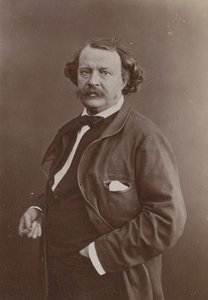
Félix Nadar
1820 - 1910
Kortfakta
- Birth Date: 5 april 1820
- Death Date: 20 mars 1910
- Influenced: ['Jules Verne']
- Movement:
- Fotografi
- Karikatyr
- Impressionism (associerad)
- Name: Félix Nadar
- Nationality: Fransk
- Notable Works:
- Porträtt av Baudelaire, Hugo, Delacroix
- Flygfotografering
- Fotointervju med Chevreul
Relaterade artiklar

Beyond the Lens: Photography's Enduring Influence on Modern & Contemporary Art
Explore photography's pivotal role in shaping modern & contemporary art. Discover key movements, influential artists like Stieglitz, and expert collecting advice from OriginalUniqueArt.
Beyond Color: The Timeless Power and Artistry of Black and White Photography
Explore the profound artistry of black and white photography. From the chemistry of gelatin silver to the chiaroscuro of the Old Masters, discover how monochrome captures the eternal essence of light, form, and emotion for the discerning art collector.
Timeless Shadows: The Artistry, History, and Emotional Resonance of Black and White Photography
Explore the profound artistry of black and white photography. From historical mastery to the interplay of light and shadow, discover how monochrome captures timeless emotion and form through a sophisticated lens of art history.

Beyond the Portrait: Félix Nadar & the Psychological Depths of 19th-Century Photography
Explore the revolutionary photography of Félix Nadar – pioneer of portraiture, aerial imaging & psychological depth. Discover his iconic portraits of Baudelaire, Hugo & more. A deep dive into 19th-century art history.

Monochrome Visions: Exploring the Aesthetic & Historical Significance of Black & White Photography
Explore the rich history & artistic power of black and white photography. From early techniques to iconic masters like Ansel Adams, discover why monochrome continues to captivate art lovers today. Expert insights for collectors.